Introduction
As soon as you arrive in Mola di Bari, the Angevin Castle greets you with its imposing presence. It’s not just a fortress, but a landmark that overlooks the small harbor, almost as if protecting the old town. The view from the sea is spectacular, with its walls seeming to emerge directly from the water. I was immediately struck by the atmosphere: here, history and daily life blend together, with fishermen mending their nets right beneath its towers. Its location is its greatest strength, offering unique glimpses both towards the historic center and over the Adriatic Sea. It’s not a static museum, but a living place that tells centuries of stories in every stone. If you’re looking for an authentic corner of Puglia, away from the crowds, this castle will win you over. The feeling is that of discovering a hidden treasure, without too many tourist frills.
Historical Overview
Its history begins in 1277, when Charles I of Anjou ordered its construction to control the coastline. It was not just a residence, but a strategic military outpost. In the 16th century, under Aragonese rule, it was reinforced to withstand attacks from Saracen pirates who infested the Adriatic. Over the centuries, it has changed functions multiple times: from fortress to prison, eventually becoming the town hall in the 19th century. Today it hosts cultural events and exhibitions.
Its architecture is a palimpsest, with visible stratifications: you can still see the gun loops for arquebuses and the angular bastions added later. This is not a fairytale castle, but a practical building, born to endure. The timeline summary:
- 1277: Foundation by order of Charles I of Anjou.
- 16th century: Aragonese fortification against pirate raids.
- 19th century: Transformation into town hall.
- Today: Venue for events and cultural space open to the public.
The Inner Courtyard and Its Stories
Once you pass through the entrance gate, you find yourself in a spacious, silent courtyard. This is where you truly feel the weight of history. The walls, made of local limestone—pale and porous—tell tales of centuries of salt air and wind. The well at the center is not merely decorative: it was vital during sieges, ensuring a water supply. Looking up, you’ll notice the murder holes, those openings from which boiling oil was poured onto enemies. Today, the courtyard often hosts summer concerts or small theatrical performances—the acoustics are surprisingly good. I like to think that while you listen to music, you’re standing in the same space where people once prepared for defense. There are no fake reconstructions or heavy installations: its simplicity is its strength. Sometimes, if you’re lucky, you can see seagulls perched on the battlements, like modern sentinels.
The Walk on the Walls and the Panorama
If there’s one thing you can’t miss, it’s climbing up the perimeter walls. The view from up there rewards every step. On one side, the blue Adriatic stretches endlessly, with fishing boats dotting the horizon; on the other, the maze of narrow streets in Mola’s historic center, with its typical white chimneys. On clear days, you can even make out the silhouette of Bari in the distance. The walls aren’t just a viewpoint: walking along them, you can feel the thickness of the fortifications, designed to withstand cannon fire. I noticed that, towards sunset, the grazing light highlights the stone textures, offering magnificent photo opportunities. Be careful, though: in some sections, the parapet is low, so keep an eye out if you’re with small children. It’s a simple experience, but one that makes you feel part of the place’s history, even if just for a few minutes.
Why Visit It
First: it is a rare example of medieval military architecture perfectly integrated with the urban fabric. It is not isolated on a hill but blends with the village houses, offering an authentic glimpse into how a coastal community lived. Second: the visit is quick and intense. In about an hour, you see the essentials without that ‘too much culture’ fatigue that sometimes overwhelms in giant museums. Third: the contrast between the solemnity of the walls and the vitality of the small harbor in front creates a unique atmosphere. While exploring the castle, you hear the voices of fishermen, smell the sea—it is not an embalmed relic but a piece of Mola life. Perfect if you want to combine culture and a seaside view without having to travel kilometers.
When to Go
I recommend late afternoon, especially in spring or early autumn. The light is warmer and the summer heat subsides, making the climb up the walls more pleasant. In summer, early mornings are ideal for avoiding crowds – though, to be honest, you’ll never find endless queues here. In winter, on sunny days, the castle takes on gray, melancholic tones, perfect for atmospheric photos. Avoid days with strong mistral winds: the seaside exposure can make the visit uncomfortable. A secret tip? If there’s an evening event in the courtyard, take advantage: the nighttime lighting creates an almost magical aura.
In the Surroundings
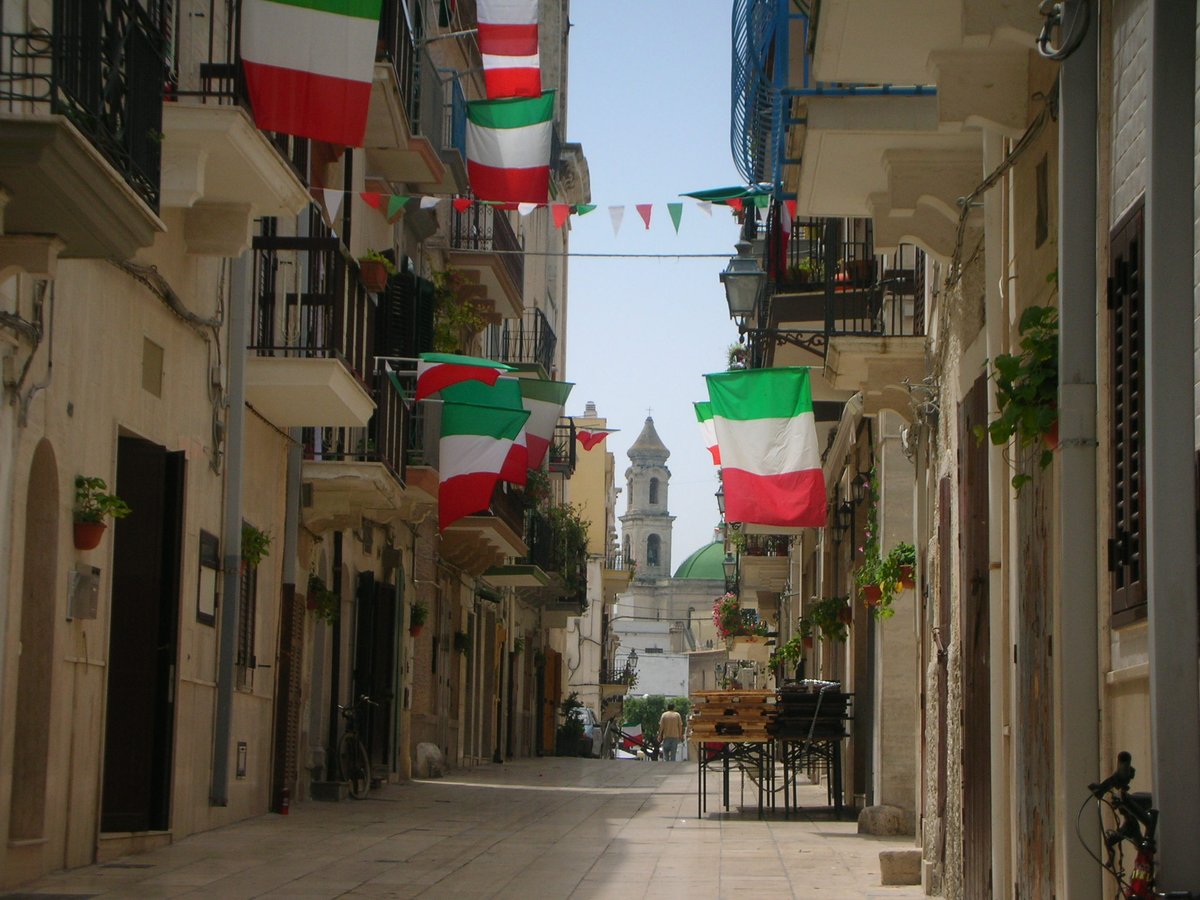
After leaving the castle, take a stroll through the historic center of Mola, a maze of white alleys where you’ll find artisan workshops and small local spots. Try the famous Mola panzerotto, a baked specialty that’s an institution here. Not far away is the Torre Canne Nature Reserve, a protected area with dunes and Mediterranean vegetation, perfect for a refreshing walk after your cultural visit. If you enjoy the sea, Santo Stefano beach, with its fine sand, is just a few minutes’ drive away. Nothing overly touristy, just genuine corners that complete the experience.