Arengo Palace Ascoli Piceno: Medieval Architecture and 13th-Century Loggia

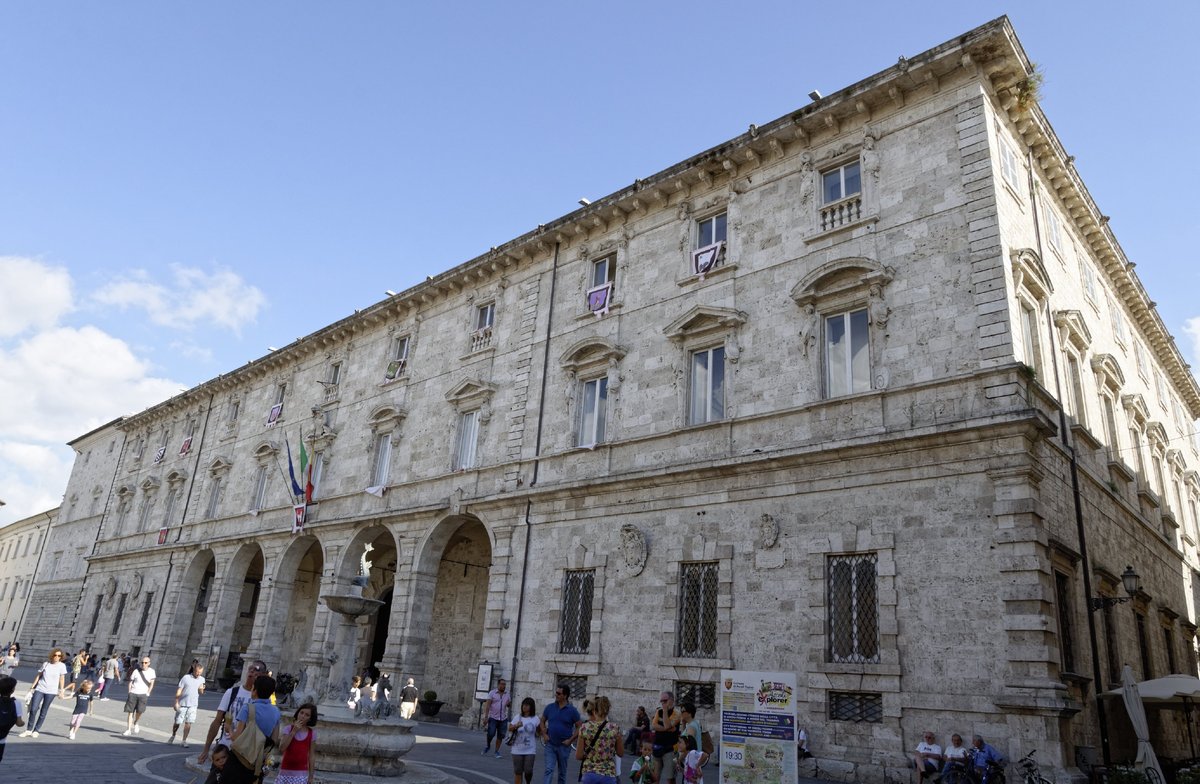
The Arengo Palace is a 13th-century architectural landmark dominating Piazza del Popolo, one of Italy’s most beautiful squares. Its travertine facade and pointed-arch loggia narrate centuries of Ascoli’s civic history. Today, the palace hosts exhibitions and cultural events, seamlessly integrated into the historic center’s life.

  • 13th-century medieval building with travertine facade
  • Ground-floor loggia with pointed arches for public assemblies
  • Central location in Piazza del Popolo, heart of Ascoli Piceno
  • Regularly hosts exhibitions and cultural events

Copertina itinerario Arengo Palace Ascoli Piceno: Medieval Architecture and 13th-Century Loggia
13th-century medieval palace in Piazza del Popolo, featuring a travertine facade and pointed-arch loggia. Historic government seat, now hosting exhibitions and cultural events in the heart of Ascoli Piceno.

Good to know


Introduction

Do you ever walk into a square and immediately feel at the center of everything? I do, and it happens right in Piazza del Popolo in Ascoli Piceno, where the Palazzo dell’Arengo dominates with its medieval grandeur. It’s not just a building; it’s a symbol that tells you centuries of civic history, with that travertine facade shining in the sun and those arches that seem to embrace the space. Walking around it gives you a sense of greatness—you almost feel part of something important. For me, it’s one of those places that instantly captures your attention, even if you’re just passing through—and believe me, it’s worth stopping for.

Historical Overview

The Palazzo dell’Arengo wasn’t built yesterday: its construction dates back to the 13th century, when Ascoli was a free Commune and needed a place for civic assemblies. Important decisions were made here, justice was administered, and public life was managed. Over time, it underwent modifications – such as the addition of the loggia in the 15th century – but it always maintained that central role. Imagine that, during the Renaissance, it also hosted the covered market on the ground floor. Today, after restorations, it serves as a venue for exhibitions and cultural events, but its medieval soul is still palpable.

  • 13th century: construction as the seat of the communal government
  • 15th century: addition of the loggia and expansions
  • Subsequent centuries: use as a courthouse and public space
  • Today: cultural center for exhibitions and activities

Architecture That Speaks

What strikes me most is how architecture tells stories without needing words. The facade is stern yet elegant, with those mullioned windows that seem like eyes watching over the square. Ascending to the loggia, you’ll notice the details in carved stone – sometimes I wonder how they managed, without today’s technologies, to create something so precise. Inside, the spaces are spacious and sober, with cross vaults that give a sense of solemnity. It’s not an opulent palace, but it has a dignity that immediately makes you understand its importance. If you look closely, you’ll also see coats of arms and inscriptions that refer to different families and historical periods – small clues to decipher.

Life Around the Palace

The Palazzo dell’Arengo is not an isolated monument: it is the beating heart of Piazza del Popolo, which in turn is Ascoli’s living room. Here, life flows naturally—there are historic venues for enjoying a coffee, people chatting, and often events or markets that animate the area. I like to sit on a bench and observe: tourists looking up to admire the building, children running around, elderly people stopping to talk. It’s a place where history and the present blend effortlessly. In the evening, when the lights come on, the atmosphere becomes even more magical—almost like a movie. I recommend visiting at different times of day to appreciate its various nuances.

Why Visit It

Why should you include it in your itinerary? First, to experience firsthand the civic history of Le Marche – it’s not just sacred art; here, you can feel the pride of a community. Then, for the visual impact: seeing this palace in such a harmonious square is an unforgettable experience. Finally, because it’s an ideal starting point for exploring Ascoli: from here, you can easily reach other gems like the Duomo or the streets of the historic center on foot. It’s accessible to everyone, without the need for complicated guides – just look and let yourself be carried away. Personally, I find it more authentic than many overcrowded museums.

When to Go

There’s no wrong time, but if you want a personal recommendation, try visiting in the late afternoon of autumn. The light is warm, the travertine of the square takes on golden tones, and the cool air makes the stroll pleasant without the summer crowds. In winter, with the early evening lights, the atmosphere is intimate and evocative. I’d avoid the midday hours on a sweltering August day – you might find too many people and heat. In spring, however, it’s lovely to see it surrounded by the hustle and bustle of the city waking up. In short, it depends on the atmosphere you’re seeking: I prefer the quiet, but the liveliness has its charm too.

In the Surroundings

After admiring the Palazzo dell’Arengo, don’t miss two nearby experiences that complete your visit. First, make a stop at Caffè Meletti, a historic café in Piazza del Popolo where you can taste Anisetta – a typical Ascoli liqueur, perfect for a sweet break. Then, head to the Pinacoteca Civica, housed in the Palazzo Comunale, to see works by Crivelli and other artists connected to the area. If you’re in the mood for something different, not far away is the Ponte di Cecco, a Roman bridge offering photogenic views of the Tronto River. All of these are within walking distance, stress-free.

Itineraries nearby


💡 Did You Know…?

A detail few notice: look closely at the facade. Among the decorations, search for the city coat of arms with the ‘woodpecker’, the bird symbol of Ascoli. According to local legend, the first inhabitants were guided to this territory by a woodpecker. Additionally, the square it faces, Piazza del Popolo, is nicknamed ‘Ascoli’s drawing room’ for its elegance and for being the heart of social life since the Middle Ages. In the evening, with the lighting, the palace takes on a particularly suggestive atmosphere.