
The Caltanissetta Mineralogical Museum, located in the historic center’s Palazzo Moncada, preserves the memory of Sicily’s sulfur industry with a collection unique in Italy. The thematic displays present rare minerals with clear captions, making the visit accessible to everyone.
- Complete collection of Italy’s sulfur minerals with specimens from Nissene mines
- Sulfur crystals up to 15 cm from the Gessolungo mine
- Fluorescent minerals that reveal hidden colors under UV light
- Immersive setup with interactive panels and reconstructions of mining tunnels
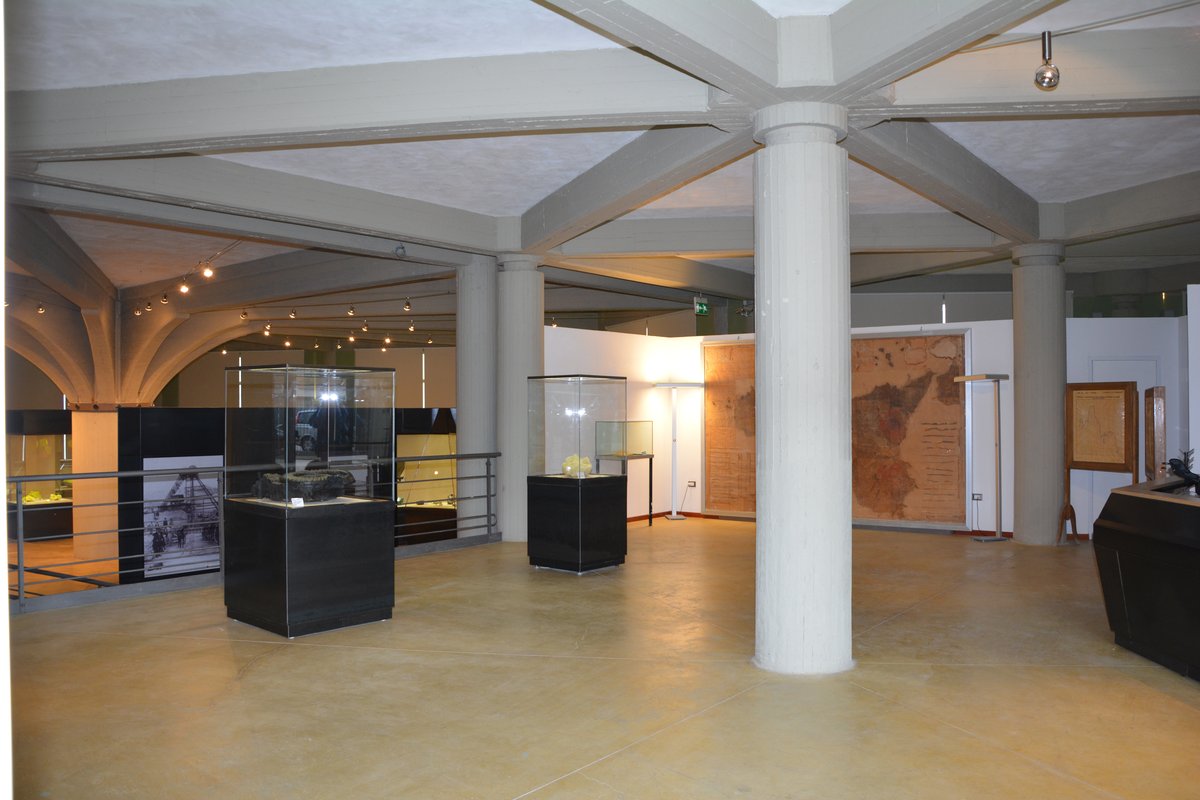
The Caltanissetta Mineralogical Museum houses one of Italy’s most comprehensive collections of sulfur minerals, featuring rare crystals from decommissioned Nissene mines. Discover the mining history of central Sicily through unique specimens like native sulfur, aragonite, and selenite gypsum.
- Viale della Regione, Caltanissetta (CL)
- Open in Google Maps
- View on Google Images Museo Mineralogico a Caltanissetta
Good to know
Introduction
Entering the Caltanissetta Mineralogical Museum is like opening a treasure chest that holds the sulfurous soul of Sicily. Don’t expect just any museum: here, sulfur crystals shimmer with an opalescent light that tells centuries of toil in the Nisseno mines. The collection, one of Italy’s most comprehensive on the subject, captivates you with rare specimens like azurite and barite from the depths of the territory. Each display case is a window into an underground world where geology blends with human history, making this place a bridge between the mining past and the cultural present.
Historical Overview
The museum was established in 1968 through the initiative of Professor Sebastiano Mottura, a geologist who collected the first specimens during explorations of local sulfur mines. His passion preserved unique minerals from obscurity, bearing witness to the golden age of Sicilian sulfur when Caltanissetta was known as the ‘world capital of sulfur’. Today, the museum is housed in the former Monastery of Santo Spirito, a 16th-century building that adds charm to the visit.
- 1860-1900: Peak of sulfur mining in Sicily
- 1968: Museum foundation
- 1990: Relocation to current premises
- 2010: Recognition as regional cultural heritage
The Sulfur Collection
The heart of the museum beats in the halls dedicated to Sicilian sulfur, with crystals reaching up to 15 cm in length, rare in nature. Standout specimens come from the Gessolungo mine, where 65 miners lost their lives in 1881, and from Trabonella, with gypsum inclusions that create iridescent effects. Each specimen is accompanied by information cards detailing its origin and physical characteristics, making the visit a journey through science and memory. Don’t miss the section dedicated to fluorescent minerals, which reveal hidden colors under UV light.
The Immersive Exhibition
The exhibition goes beyond mere display cases: interactive panels explain the formation of sulfur deposits in the Nisseno Basin, while scale reconstructions showcase mine tunnels with period tools. The central hall, with its barrel-vaulted ceiling, houses the regional collection of minerals from across Sicily, including hematite from Mount Etna and celestine from the Madonie Mountains. Carefully designed lighting enhances the transparency of quartz and the shine of pyrite, creating an atmosphere that blends scientific rigor with visual allure.
Why Visit It
Three concrete reasons: first, it’s the only museum in Sicily specializing in sulfur mineralogy, with specimens unavailable elsewhere. Second, clear labels and geological maps make it accessible even to non-experts, transforming complex concepts into engaging stories. Third, its location in the historic center allows you to combine the visit with a tour of Caltanissetta’s Liberty-style palaces, creating a thematic itinerary about the sulfur city.
When to Go
The best time is a winter afternoon, when the slanting light filters through the ancient windows and illuminates the crystals like beacons in the dark. Avoid days of heavy rain: the humidity can blur the visual experience. In summer, prefer the midday hours to find coolness within the stone walls, while in spring the nearby Villa Amedeo offers a green respite after the visit.
In the Surroundings
Just a short walk away, the Archaeological Museum of Caltanissetta completes the picture with artifacts from Sicilian necropolises, including painted vases and ritual bronzes. For a thematic experience, head to Trabonella Mine (visitable by reservation), where you can descend into the original galleries to understand the context of the minerals seen at the museum.
💡 Did You Know…?
Among the most fascinating pieces is a 15 cm sulfur crystal from the Gessolungo mine, where 65 miners lost their lives in an accident in 1881. Legend has it that some of the displayed specimens were donated by former miners who kept them as talismans. The museum also preserves fluorescent minerals that, under ultraviolet light, reveal hidden colors, creating a magical effect during evening guided tours.