Introduction
Crossing the threshold of the Nello Cassata Museum is like stepping back in time, into a rural Sicily that seems to have vanished but still breathes here. Don’t expect a cold, detached museum: this place is a living narrative of peasant life, with over 3,000 objects that speak of daily toil, ingenuity, and simplicity. I was immediately struck by the atmosphere: it feels like entering an old farmhouse, with agricultural tools hanging on the walls and kitchen utensils arranged as if the lady of the house had just stepped out. The setup is intentionally untidy, almost chaotic, and this makes everything feel more authentic. You won’t find lengthy captions or sophisticated explanatory panels, but each object has a story to tell if you pause to observe it. For me, the true value of this museum lies precisely in this immediacy: it doesn’t explain history to you, it makes you feel it. And perhaps that’s why, upon leaving, you take away a bit of that genuine Sicily that is hard to find today.
Historical Notes
The museum was born from the passion of Nello Cassata, a local teacher who spent decades collecting
objects from the daily life of the farming community in the area, saving them from oblivion. Opened to the public in 1999, it is not a state institution but a project deeply rooted in the community. Cassata dedicated his life to documenting a world that was disappearing with industrialization, creating what is now considered one of the most important ethnographic museums in northeastern Sicily. The collection was formed piece by piece, often through donations from local families who recognized in those objects the memory of their grandparents.
It is not a story of great events, but of small things that tell the story of a civilization.
- 1960s-1990s: Nello Cassata begins systematic collection of farming objects
- 1999: Official opening of the museum to the public
- Today: Over 3000 pieces displayed in reconstructed settings
The Reconstructed Environments
What makes this museum special is the faithful reconstruction of living and working environments. These aren’t just display cases with exhibited objects, but actual rooms that transport you to another era. The peasant kitchen is perhaps the most moving: there’s the hearth with terracotta pots, the worn wooden table, the tools for making bread, and even the molds for traditional holiday sweets. Then there’s the agricultural workroom, where the tools aren’t clean and shiny like in technology museums, but show signs of real use. I noticed details that tell more than any explanation: scythes with handles smoothed by the sweat of hands, grain sieves with irregular holes made by hand. Every object has a patina of authenticity that can’t be invented. I wondered many times how many stories those tools could tell, how many generations had used them, how much toil they represented.
Hidden Treasures
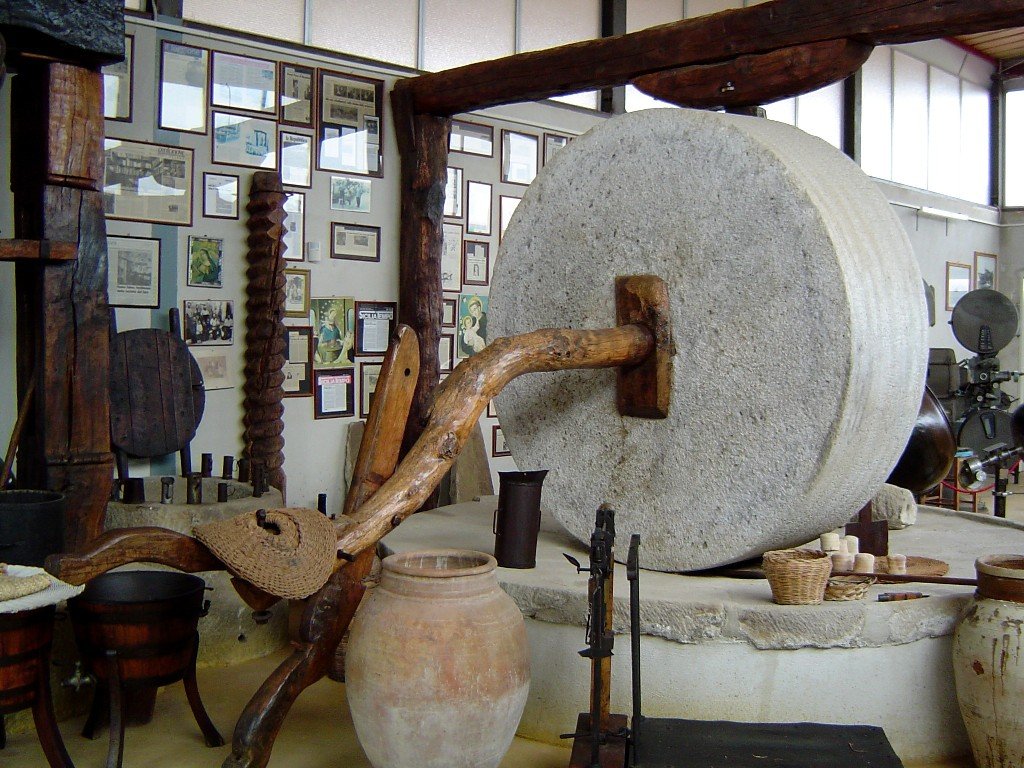
Among the 3,000 objects, some stand out more than others due to their unique stories. The collection of coal-heated irons made me smile: to think that every family had a different one, often decorated, and that their heat depended on the skill of managing the embers. Then there are the folk musical instruments, like tambourines and bagpipes, which tell of village festivals and moments of leisure after hard work in the fields. But perhaps the most significant piece is the ancient olive press, massive and imposing, dominating one of the rooms. Seeing it, I understood how central olive cultivation was in this area, and how that work was collective and ritualistic. These are not museum pieces in the classic sense: they are witnesses to a life that may seem distant today, but which, until a few decades ago, was the norm for most people in this land.
Why Visit It
Visiting the Nello Cassata Museum is worthwhile for at least three concrete reasons. First: it’s an immersive experience that goes beyond a simple museum visit – here you don’t just look at objects behind glass, but physically enter reconstructed spaces. Second: it provides a different perspective for understanding the local area. After seeing tools for lemon cultivation or wool processing, you’ll look at the fields and local products with new eyes. Third: it’s a ‘living’ and accessible museum, without the sacredness that sometimes distances visitors. The explanations are essential, the environments invite you to explore, and there’s always someone local available to share anecdotes about the exhibited objects. Perfect if you want a break from the usual tourist spots and are looking for something authentically Sicilian.
When to go
The museum is open year-round, but in my opinion it has a special charm on rainy days or during the hottest hours of summer. Stepping into those cool, quiet spaces while the scorching Sicilian sun beats down outside is an almost therapeutic experience. In winter, when there are fewer tourists, you can enjoy the visit more leisurely and perhaps have a chat with the volunteers who run the museum. Avoid August weekends if you don’t like crowds—even here, in such a niche museum, organized groups sometimes arrive. Personally, I went in the early afternoon on a sultry July day, and that hour spent among the objects of rural life gave me an unexpected sense of coolness and peace.
In the Surroundings
After the museum, continue exploring rural Sicily with two nearby thematic experiences. Just a few kilometers away, there’s the Organic Farm producing oil and citrus fruits using traditional methods – seeing the olive groves and lemon orchards today after observing the ancient tools for their cultivation gives an extraordinary sense of continuity. Or, if you want to stay on the theme of traditions, head to the nearby village of Castroreale, with its perfectly preserved medieval historic center and artisan workshops where wrought iron and ceramics are still worked as they once were. These are places that ideally dialogue with the museum, completing that journey into authentic Sicily that Nello Cassata started for you.