
Castel Rodengo, a 12th-century medieval manor in Villa, South Tyrol, offers a journey through time with unique frescoes and spectacular panoramas. Privately managed, it is open to the public with guided tours that reveal its history and secrets, ideal for families and art enthusiasts.
- Iwein Cycle Frescoes: 13th-century pictorial cycle, among the oldest and best-preserved in the Germanic area, located in the Romanesque chapel.
- Breathtaking Views: Strategic position on the rock with views over the Isarco Valley and surrounding Dolomites.
- Complete Tour Route: Historic halls, chapel, ramparts, and inner courtyard with period furnishings.
- Authentic Experience: Away from the crowds, with a welcoming atmosphere and private management that preserves authenticity.
Events nearby

08/04/2026 - 23/09/2026
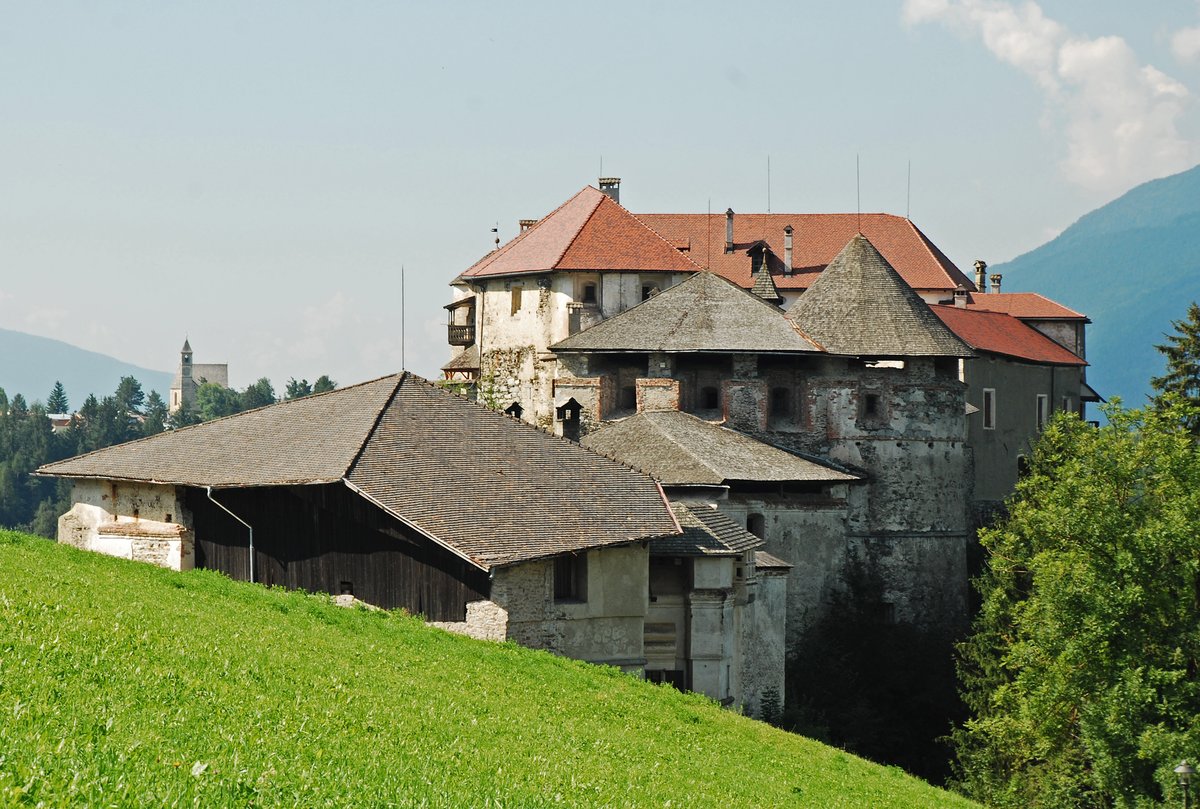
Castel Rodengo in Villa, South Tyrol, preserves 13th-century frescoes from the Iwein cycle, among the oldest in the Germanic area. Explore the historic halls, chapel, and ramparts with views of the Dolomites. Open during specific periods with guided tours.
- Schlossweg – Via del Castello, Bolzano (BZ)
- Open in Google Maps
- View on Google Images Schloss Rodenegg – Castel Rodengo a Bolzano
Good to know
Introduction
Perched on a rocky spur above the Rienza River, Castel Rodengo dominates the landscape of Villa with an imposing presence that seems straight out of a medieval fairy tale. This perfectly preserved fortress is not just a picture-perfect postcard: it’s a journey through time that welcomes you with its massive walls and strategic location. As soon as you arrive, your gaze is lost among the crenellated towers and the panoramic view over the Val Pusteria, a sight that alone makes the visit worthwhile. Inside, a unique treasure of South Tyrol awaits: the frescoes of the Iwein cycle, among the oldest and best-preserved German-language chivalric themes. This is not your typical static castle-museum, but a living place where every stone tells stories of knights, ladies, and ancient legends.
Historical Background
The origins of Castel Rodengo date back to the 12th century, when the Lords of Rodank began its construction to control the trade route to the Pusteria Valley. In 1237, it passed to the Counts of Tyrol, becoming a strategic outpost. Its peak period of splendor came in the 13th century with the creation of the Iwein frescoes, possibly commissioned by the Bishop of Bressanone. After centuries of alternating events, including sieges and changes in ownership, the castle was acquired by the von Sternbach family in 1892, who carried out a significant restoration. Today, it is privately owned but open to the public, managed with passion to preserve its authenticity.
- 12th century: Foundation by the Lords of Rodank
- 1237: Transfer to the Counts of Tyrol
- 13th century: Creation of the Iwein cycle frescoes
- 1892: Acquisition by the von Sternbach family and restoration
- Today: Privately owned and open for visits
The Iwein Frescoes: A Masterpiece to Discover
The true gem of Castel Rodengo is hidden in the Romanesque chapel: here, on the walls, unfolds the Iwein fresco cycle, inspired by Hartmann von Aue’s chivalric poem. Created around 1200, they are among the oldest surviving examples of secular painting in the German language. The scenes, vivid and rich in detail, recount the adventures of the knight Iwein, from his battle with the fountain guardian to his encounter with the lady Laudine. The colors, especially the reds and blues, have retained a surprising freshness despite the centuries. Observing them up close is an emotional experience: it feels like flipping through an ancient illustrated manuscript, but on stone walls. The care in preservation is evident, and the explanations (also available in Italian) help capture every symbol and narrative.
From the Ramparts to the Inner Courtyard
Beyond the frescoes, the castle offers a tour that lets you experience medieval life firsthand. Climbing the ramparts, protected by battlements, your gaze sweeps 360 degrees over the Pusteria Valley and the surrounding Dolomites: on clear days, you can even see the peaks of the Fanes-Sennes-Braies Natural Park. Descending into the inner courtyard, paved in stone, you breathe in the atmosphere of the era, with the central well and wooden staircases leading to the noble halls. Some rooms preserve period furnishings, such as majolica stoves and carved furniture, which tell the story of how the local lords lived. There’s also a small armory with helmets and swords, perfect for captivating children. All of this is made even more evocative by the seamless integration between original architecture and respectful restoration work.
Why Visit
Visiting Castel Rodengo is worthwhile for at least three concrete reasons. First, the Iwein frescoes are unique in their kind in South Tyrol: you won’t find a similarly well-preserved and accessible cycle in other castles in the province. Second, the location offers breathtaking views of the Pusteria Valley without requiring long hikes: from the parking area, a short uphill walk leads you to the best viewpoint. Third, it’s ideal for families: the route is safe and engaging for children, with elements like armor and towers that spark the imagination. Additionally, private management ensures a welcoming and uncrowded atmosphere, far from mass tourism.
When to Visit
The most enchanting time for a visit is an early autumn afternoon, when the slanting light enhances the colors of the frescoes and the golden leaves of the surrounding woods create a magical contrast with the manor’s gray stone. In summer, it’s best to arrive early in the morning to avoid the hottest hours and enjoy the tranquility, while in winter, with snow covering the roofs, the castle takes on a fairytale atmosphere, though some outdoor areas may be less accessible. Spring, with the meadows in bloom, offers unforgettable photographic views.
In the Surroundings
To complete the medieval experience, just a short drive away you’ll find Novacella Abbey, a 12th-century monastic complex with a Baroque church, a frescoed cloister, and cellars producing renowned wines. For a natural contrast, head to Lake Braies, in the heart of the UNESCO Dolomites: its turquoise waters and surrounding mountains offer a relaxing walk or a traditional boat ride. Both places are easily accessible and enrich the day with culture and landscape.
Itineraries nearby

💡 Did You Know…?
A local legend tells that the castle was connected by a secret passage to the nearby Novacella Abbey, used by monks in times of danger. Furthermore, during restoration work, ancient graffiti left by guard soldiers in the 15th century were discovered, including drawings of knights and inscriptions in Latin. These details make the visit even more fascinating, as if walking among the same stones trodden centuries ago.