
The Certosa di Pavia is a monastic complex from 1396 commissioned by Gian Galeazzo Visconti, blending Gothic-Renaissance architecture with a spiritual atmosphere. The richly sculpted marble facade leads to cloisters, monastic cells, and artistic masterpieces preserved for centuries.
- Facade of Candoglia marble with Renaissance statues and decorations
- Great Cloister with 24 monastic cells and historic gardens
- Funerary monument of Gian Galeazzo Visconti and Bergognone’s polyptych
- Tranquil atmosphere set in the countryside of Pavia, just a few kilometers from the city
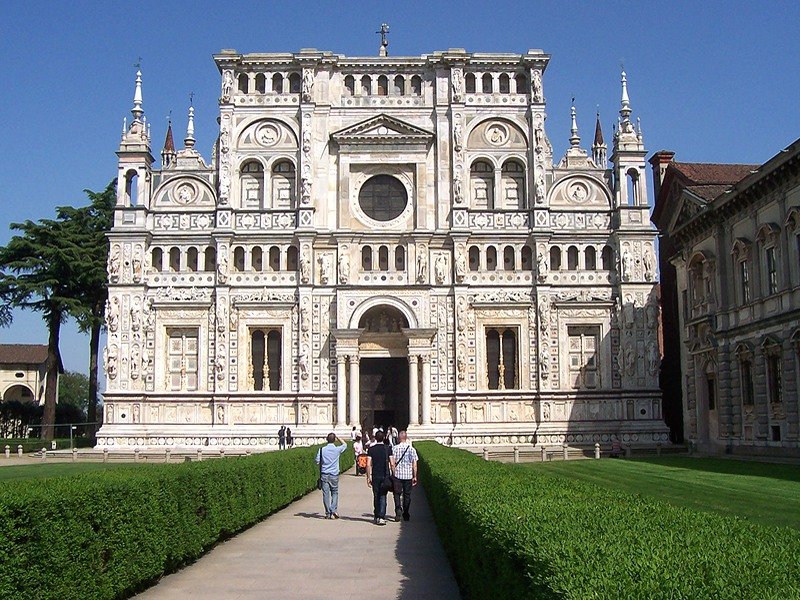
A Gothic-Renaissance monastery founded in 1396 with a facade of Candoglia marble, 24 monastic cells, cloisters, and artworks such as Bergognone’s polyptych. Located in Villanova de’ Beretti in the countryside of Pavia.
- https://www.certosadipavia.com/
- Via Monumento 4, Pavia (PV)
- +39 0382 925613
- Open in Google Maps
- View on Google Images Certosa di Pavia a Pavia
Good to know
Introduction
The Certosa di Pavia welcomes you like a jewel set in the Lombard countryside. As soon as you pass through the portal, you’re struck by the majesty of the monastic complex: a blend of Gothic and Renaissance that takes your breath away. It’s not just a monument, but an experience that engages all the senses. The silence of the cloisters, the light filtering through the columns, the sculptural details that tell centuries of history. Located in Villanova de’ Beretti, just a few kilometers from Pavia, this charterhouse is a place where art and spirituality merge in a unique way. The marble facade, rich with statues and bas-reliefs, is in itself a spectacle worth the journey. Entering here means immersing yourself in an atmosphere suspended in time, far from the daily frenzy.
Historical Overview
The Certosa di Pavia was founded in 1396 by Gian Galeazzo Visconti as a dynastic mausoleum and place of prayer. Construction spanned centuries, involving artists like Giovanni Antonio Amadeo, who shaped the façade with intricate sculptures. In the 15th century, it became a significant cultural center, hosting Carthusian monks dedicated to copying manuscripts. With the Napoleonic suppression in 1798, the monastery was secularized, but most of the artistic heritage remained intact. Today, it is managed by the Polo Museale della Lombardia and attracts visitors from around the world for its extraordinary historical and architectural value.
- 1396: Foundation by Gian Galeazzo Visconti
- 15th century: Architectural development with artists like Amadeo
- 1798: Napoleonic suppression and end of monastic life
- Today: National monument and museum open to the public
Cloisters and Atmospheres
The cloisters of the Charterhouse are the beating heart of the complex. The Great Cloister, with its colonnade of brick and marble, frames a lush garden where monks once meditated in solitude. Each monastic cell overlooking the cloister had a private vegetable garden, a symbol of self-sufficiency and contemplation. Then there’s the Small Cloister, more intimate, with terracotta decorations that tell sacred stories. Walking here is like taking a journey into silence: footsteps echo among the arches, while light plays with shadows, creating visual effects that change with the time of day. Don’t miss the monks’ cells, partially visitable, which show how they lived in seclusion, between prayer and manual work.
Art and Hidden Details
Beyond the facade, the church interior houses masterpieces such as the Bergognone polyptych in the Chapel of San Michele, with its vibrant colors and devotional figures. In the sacristy, the fifteenth-century inlaid cabinets are rare examples of Renaissance woodworking. Ascending to the upper floor, you’ll access the monks’ choir, with carved wooden stalls depicting biblical scenes. Pay attention to the mosaic floors in terracotta and marble, often overlooked but rich in geometric symbols. And don’t forget the refectory, where a fresco of the Last Supper dominates the hall: a work that blends spirituality and everyday art, typical of Carthusian life.
Why Visit It
Visit the Charterhouse for three concrete reasons. First: it’s one of the few Carthusian monasteries in Italy open to the public, with well-preserved spaces that showcase cloistered life. Second: art is everywhere, from the façade to the cloisters, without needing complicated guides—just observe to understand the mastery of Lombard artists. Third: the landscape setting, immersed in the Pavese countryside, offers moments of peace away from urban chaos. Plus, there are often temporary exhibitions that delve into historical or artistic aspects, enriching the experience at no additional cost.
When to Go
The best time to visit the Charterhouse is early morning or late afternoon, when the slanting light enhances the reliefs on the facade and the cloisters are less crowded. Avoid the midday hours, especially in summer, as the heat can make exploring the outdoor spaces quite tiring. In spring and autumn, the colors of the surrounding countryside create a perfect contrast with the marble architecture, offering unforgettable photographic opportunities. If you prefer a more intimate atmosphere, weekdays are ideal for enjoying the silence without distractions.
In the Surroundings
After visiting the Certosa, explore the historic center of Pavia, with its medieval towers and ancient University, where you can admire the Covered Bridge over the Ticino River. For a themed experience, visit the Certosa Museum in Pavia, which displays artifacts and documents about the monastery’s history, completing your understanding of the site. If you love nature, the woods of Ticino Park are nearby and perfect for a relaxing walk, with well-marked trails running along the river.
💡 Did You Know…?
Legend has it that Gian Galeazzo Visconti dreamed of the Madonna pointing him to build a monastery in that exact location. During construction, it is said that a worker fell from the scaffolding but remained unharmed, attributing the miracle to divine protection. In the old sacristy, the 15th-century marble washbasin features curious grotesque figures that, according to tradition, represent the human vices from which the monks had to guard themselves.