Church of Santa Sofia in Benevento: Lombard Star-Shaped Plan and Medieval UNESCO Frescoes

The Church of Santa Sofia in Benevento, founded in 762 AD by Lombard Duke Arechi II, is a rare example of perfectly preserved early medieval architecture, designated a UNESCO World Heritage site. Its location in the heart of the historic center makes it easily accessible during any city itinerary.

  • Unique six-apse star-shaped plan with an ambulatory surrounding the central altar
  • Medieval frescoes depicting biblical scenes of rare beauty
  • Adjacent cloister with capitals carved with vegetal motifs and animal figures
  • Reused Roman columns supporting arches in a complex geometric design
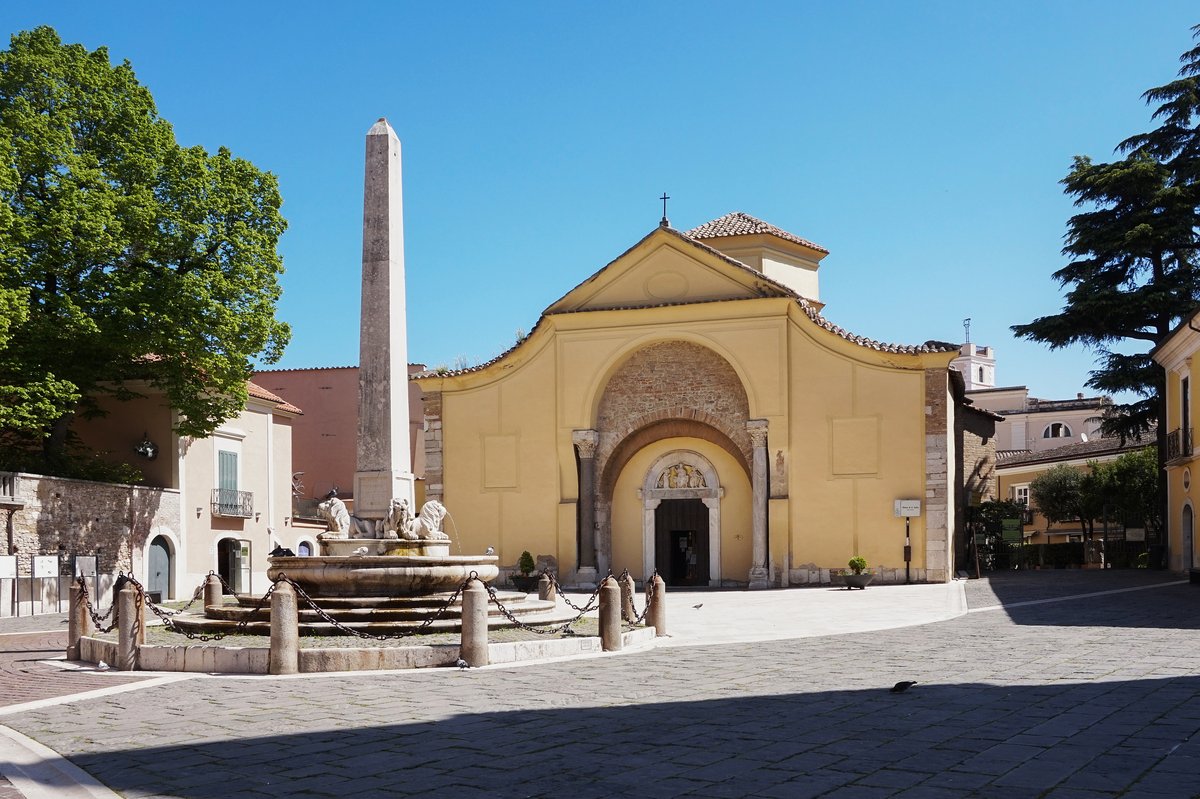
Copertina itinerario Church of Santa Sofia in Benevento: Lombard Star-Shaped Plan and Medieval UNESCO Frescoes
8th-century Lombard church with unique star-shaped plan, medieval frescoes, and adjacent cloister. UNESCO World Heritage site in Benevento’s historic center, accessible in a half-hour visit.

Good to know


Introduction

As soon as you cross the threshold of the Church of Santa Sofia in Benevento, time seems to stand still. This Lombard jewel, a UNESCO World Heritage site since 2011, welcomes you with its unique star-shaped architecture and an atmosphere that blends spirituality and history. This is not just a church: it’s a journey back to the 8th century, when the Lombards of the Duchy of Benevento built it as a symbol of their power and faith. The medieval frescoes, though partially preserved, tell biblical stories with a striking immediacy. Walking among its repurposed Roman columns and admiring the adjacent cloister with its carved capitals is an experience that stays with you. Perfect for those seeking authenticity away from the more crowded tourist trails, Santa Sofia offers direct contact with a past you can feel with every step.

Historical Overview

The Church of Santa Sofia was founded in 762 AD by Arechis II, a Lombard prince, as part of a monastic complex dedicated to Divine Wisdom. Arechis, a key figure in the Duchy of Benevento, sought to create a place of worship that blended Lombard traditions with Byzantine influences, using repurposed Roman materials for the columns. In the 12th century, the Normans transformed it into a three-nave church, but an 18th-century earthquake caused severe damage, leading to a reconstruction that partially altered its original structure. It was only in the 20th century, through restoration work, that the original Lombard star-shaped layout was rediscovered. Today, along with the adjacent cloister, it stands as a symbol of medieval Benevento, preserving frescoes such as that of Saint Mercurius.

  • 762 AD: Foundation by order of Arechis II
  • 12th century: Norman restructuring
  • 18th century: Earthquake damage and modifications
  • 20th century: Restoration and rediscovery of the Lombard structure
  • 2011: Inclusion in the UNESCO World Heritage List

Architecture and Symbols

The architecture of the Church of Santa Sofia is a masterpiece of Lombard ingenuity, featuring a central star-shaped plan with six apses that creates a unique interplay of light and shadow. The repurposed Roman columns, sourced from ancient buildings in the area, support arches that intertwine in a complex geometric pattern, symbolizing medieval cosmology. Inside, the remains of early medieval frescoes stand out, such as those in the ambulatory depicting scenes from the Childhood of Christ, with soft yet expressive colors. The adjacent cloister, part of the former monastery, is an oasis of peace with capitals carved with vegetal motifs and animal figures, typical of Beneventan art. Here, every detail speaks of cultural fusion: Lombards, Romans, and Byzantines converge in a balance that makes Santa Sofia a case study for art history enthusiasts.

The Cloister and Annexed Spaces

Adjacent to the church, the Santa Sofia Cloister is a tranquil corner that completes the visit. Built between the 12th and 13th centuries, it features arches on paired small columns with capitals decorated with acanthus leaves and symbolic figures, such as eagles and lions, which recall Lombard power. Today it houses the Sannio Museum, where local archaeological finds are displayed, including Egyptian steles and Roman artifacts, ideally connecting the history of Benevento from its Samnite origins to the medieval era. Walking here, perhaps after admiring the church, allows you to fully grasp the historical stratification of the site: not just a place of worship, but a living complex where art and history converse in every stone. Ideal for a reflective pause, away from the rush.

Why Visit It

Visiting the Church of Santa Sofia is worthwhile for at least three concrete reasons. First, it’s one of the few surviving examples of Lombard architecture in Italy, with that star-shaped floor plan you rarely find elsewhere. Second, the medieval frescoes, like those in the ambulatory, offer an authentic glimpse into 8th-century art, without modern filters or reconstructions. Third, the complex is compact: in half an hour you can see both the church and cloister, perfect if you’re short on time but want an intense experience. Plus, being less crowded, it offers moments of silence and contemplation, rare in more famous tourist sites. A takeaway? Bring a camera: the play of light between the columns creates unforgettable shots.

When to Go

The most enchanting time to visit Santa Sofia is in the early morning hours, when the low-angled sunlight streams through the windows and illuminates the frescoes, highlighting the details of the medieval artwork. Avoid days with heavy rain, as humidity can detract from the experience, but a clear spring or autumn day is ideal: the mild temperatures allow you to enjoy the cloister at a leisurely pace. If you prefer a more intimate atmosphere, try visiting during the week, away from the crowded weekends. In any case, check the opening hours on the Sannio Museum website: sometimes there are special events that enhance your visit.

In the Surroundings

After Santa Sofia, explore the historic center of Benevento, just a few minutes’ walk away, where you can admire the Arch of Trajan, a Roman triumph with bas-reliefs depicting the emperor’s deeds. For a themed experience, visit the local wineries to taste Aglianico wine, a typical product of Sannio, paired with cheeses like caciocavallo. Both places immerse you in the local culture, from Roman to enogastronomic, creating a coherent and stimulating itinerary.

💡 Did You Know…?

Legend has it that the church was built on the ruins of a temple dedicated to Isis, the Egyptian goddess particularly venerated in Benevento. The cloister preserves capitals with unique Lombard symbols, including the famous ‘Camunian rose’. During restoration work, hidden frescoes emerged showing Byzantine influences, evidence of the cultural contacts of the era. The church was the seat of the most important female monastery of the Lombard duchy, where noblewomen retired for prayer.