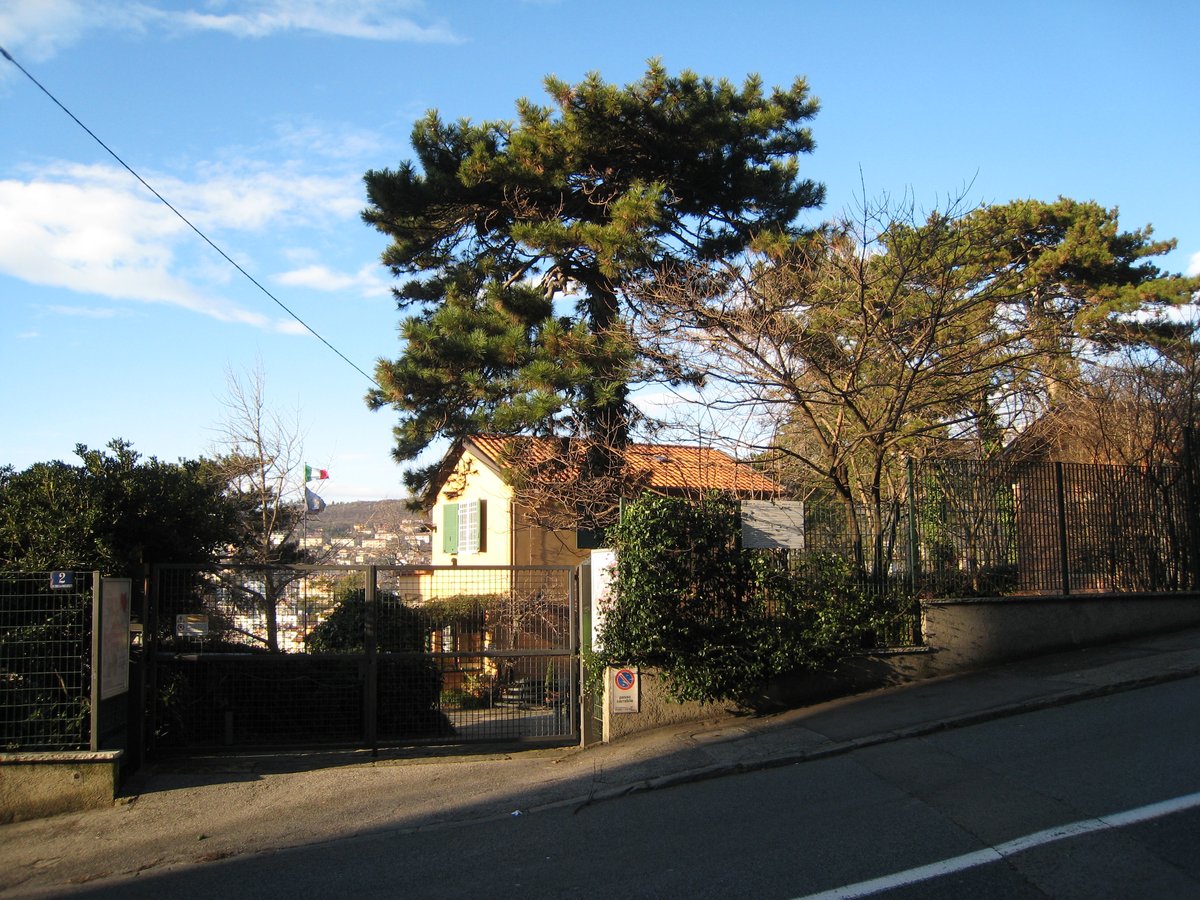
The Civic Botanical Garden of Trieste is a tranquil oasis managed by the University, with free admission. Discover themed flowerbeds, historic iron and glass greenhouses, and fragrant corners perfect for a refreshing break.
• Tropical and succulent greenhouses with tree ferns and cacti
• Collection of medicinal and aromatic plants used in local traditions
• Area dedicated to Karst flora resistant to the bora wind
• Centuries-old Cedar of Lebanon and small rose garden with heritage varieties
An Unexpected Oasis
You expect a typical garden, but the Civico Orto Botanico in Trieste is something else. As soon as you pass through the entrance on Via Carlo de’ Marchesetti, the city noise disappears. You find yourself in an incredibly quiet corner of peace, just steps from the city center. It’s not just a collection of plants: it’s a sensory experience. The air changes, becoming fresher, scented with damp earth and flowers. The space is organized into gently sloping terraces, offering ever-changing views. There are corners where you feel like you’re in a forest, others more orderly like an Italian garden. What immediately strikes you is the diversity concentrated in a not-so-large area: here, alpine, Mediterranean, and exotic plants coexist. It’s the perfect place to unplug without going far, for a restorative break you wouldn’t expect in a seaside city.
Story of a Passion
The history of this place is linked to one person:
Michele de’ Tommasini, mayor of Trieste and passionate botanist. It was he who wanted it, in the second half of the 19th century, as a place for study and conservation. It was not born as a simple park, but with a precise scientific mission. Imagine that at the beginning it was much smaller than today! Over time, it has expanded, enriching itself with species and structures. The two historic greenhouses, the tropical one and the succulent one, are true late 19th-century gems, with their iron and glass structures. They have seen generations of students and curious visitors pass through. It is a place that has always combined research with public outreach, remaining a green landmark for the city.
- 1842: Michele de’ Tommasini promotes the idea of a city botanical garden.
- Late 19th century: It is officially established and the first plantings begin on the slopes of San Vito hill.
- Early 20th century: Construction of the characteristic historic iron and glass greenhouses.
- Today: Managed by the Municipality, it is a living museum with over 1000 species for educational and conservation purposes.
Among Greenhouses and Rare Collections
The greenhouses are the beating heart, especially in winter or when it’s raining outside. Stepping into the tropical greenhouse is like taking a mini-journey: the air is warm and humid, filled with tree ferns, coffee plants, and climbing vines reaching for the light. In the succulent greenhouse, a completely different atmosphere reigns—drier, populated by cacti with bizarre shapes and imposing agaves. But don’t stop there. Outside, look for the collection of medicinal and aromatic plants: rosemary, sage, lavender, as well as less common species used in traditional practices. It’s a wonderfully fragrant corner. Then there’s the area dedicated to karst flora, typical of the Trieste plateau, with its drought-resistant plants. Every corner has its own personality. Personally, I love the central pathway, shaded by tall trees, perfect for a slow stroll while reading the labels that tell the story of each plant.
The Secret Garden of Scents
There’s an aspect of this garden that often goes unmentioned but makes all the difference to me: it’s a garden designed for touch and smell as well. It’s not just for looking at. In the herb section, you can gently brush the leaves of mint or helichrysum and feel the scent on your fingers. In spring, near the camellias and magnolias, the air is incredibly sweet. But the real surprise is the small rose garden, not huge but meticulously cared for, where heritage varieties release intense fragrances, very different from modern roses that often lack scent. It’s a place that invites you to slow down, sit on a bench (there are several, well-placed), and simply breathe. Sometimes I see students from the nearby university coming to study in the shade, or people reading a book. It has a truly special atmosphere, more intimate than a large park.
Why It’s Worth Visiting
First, because it’s an authentic, free urban refuge (yes, admission is free!), a luxury that’s not a given. Second, for the extraordinary concentration of botanical variety: in an hour, you can ‘travel’ from desert cacti to rainforest ferns, passing through the herbs of the Karst. Third, for the historic greenhouses: they’re monuments of industrial archaeology as well as gardens, and immersing yourself in them is a unique experience, especially on less sunny days. It’s perfect for a refreshing break, for photography enthusiasts (the light filtering through the leaves is magnificent), or for those traveling with children curious about nature.
The Right Moment
Avoid the midday hours on a hot summer day, unless you’re seeking refuge in the cool greenhouses. Early morning or late afternoon are magical: the light is low, long shadows trace the pathways, and the atmosphere is even more peaceful. In spring, of course, it’s a spectacle of blooms, but autumn also has its charm, with the warm colors of falling leaves. In winter, the greenhouses become a perfect destination to warm up a bit and see plants that wouldn’t survive outside. In short, there’s always a good reason, just adapt the experience to the season.
What to combine nearby
Leaving the Botanical Garden, you’re in a perfect position to continue exploring. A few minutes’ walk uphill brings you to San Giusto Castle and the Cathedral, offering the most famous view over the Gulf of Trieste. For a striking contrast, after the greenery you can head towards Molo Audace and the waterfront, for a classic dive into the maritime atmosphere and a coffee in Piazza Unità d’Italia. If you prefer to stay on the theme of ‘nature in the city’, a short stroll takes you to the Muzio de Tommasini Public Garden (another historic green lung), for an ideal route among Trieste’s secret parks.