
The Jatta National Archaeological Museum in Ruvo di Puglia preserves a unique collection of Apulian red-figure ceramics, resulting from local excavations and assembled by the Jatta family in the 19th century. The experience is intimate and authentic, with the original 1844 display transporting you to a bourgeois 19th-century living room.
- World-unique collection of Apulian red-figure ceramics from the 4th-3rd centuries BC.
- Original 19th-century display with period showcases creating a house-museum atmosphere.
- Vases decorated with vivid mythological scenes such as the famous Talos crater.
- Location in the heart of Ruvo, a village with a Romanesque cathedral and ceramic traditions.
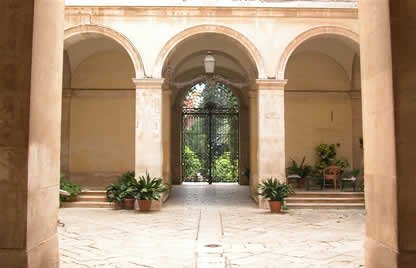
The Jatta National Archaeological Museum in Ruvo di Puglia houses the world’s most important collection of Apulian red-figure ceramics, featuring vases decorated with mythological scenes and an original 19th-century display.
- https://musei.puglia.beniculturali.it/musei/museo-archeologico-nazionale-jatta/
- pm-pug.museoruvo@beniculturali.it
- Largo Le Croci 35, Bari (BA)
- + 39 080 3612848
- Open in Google Maps
- View on Google Images Museo archeologico nazionale Jatta a Bari
Good to know
A Hidden Treasure in the Heart of Ruvo
The Story of a Family Collection
- Late 1700s – early 1800s: Giovanni Jatta begins the collection, acquiring artifacts from local excavations.
- 1844: The museum opens to the public in the family palace, as per his will.
- 1993: The Museum becomes state-owned, but the collection remains in its original location.
- Today: It is considered one of the world’s most important collections of Apulian red-figure pottery.
Vases that Tell Myths and Daily Life
The exhibition that makes you feel at home
Why It’s Worth Visiting
The Right Time to Enjoy It
What to Pair with Your Visit
💡 Did You Know…?
The collection was born by chance: in 1820, Giovanni Jatta began collecting artifacts discovered on his land, saving them from dispersion. His son, also named Giovanni, cataloged everything with meticulous precision, so much so that the original display has remained intact for nearly two centuries. The highlight, the Talos crater, depicts the bronze giant of Greek mythology in such detailed fashion that it seems to move. Legend has it that some local potters, seeing these ceramics, revived ancient techniques for their modern creations.