Evocative Introduction
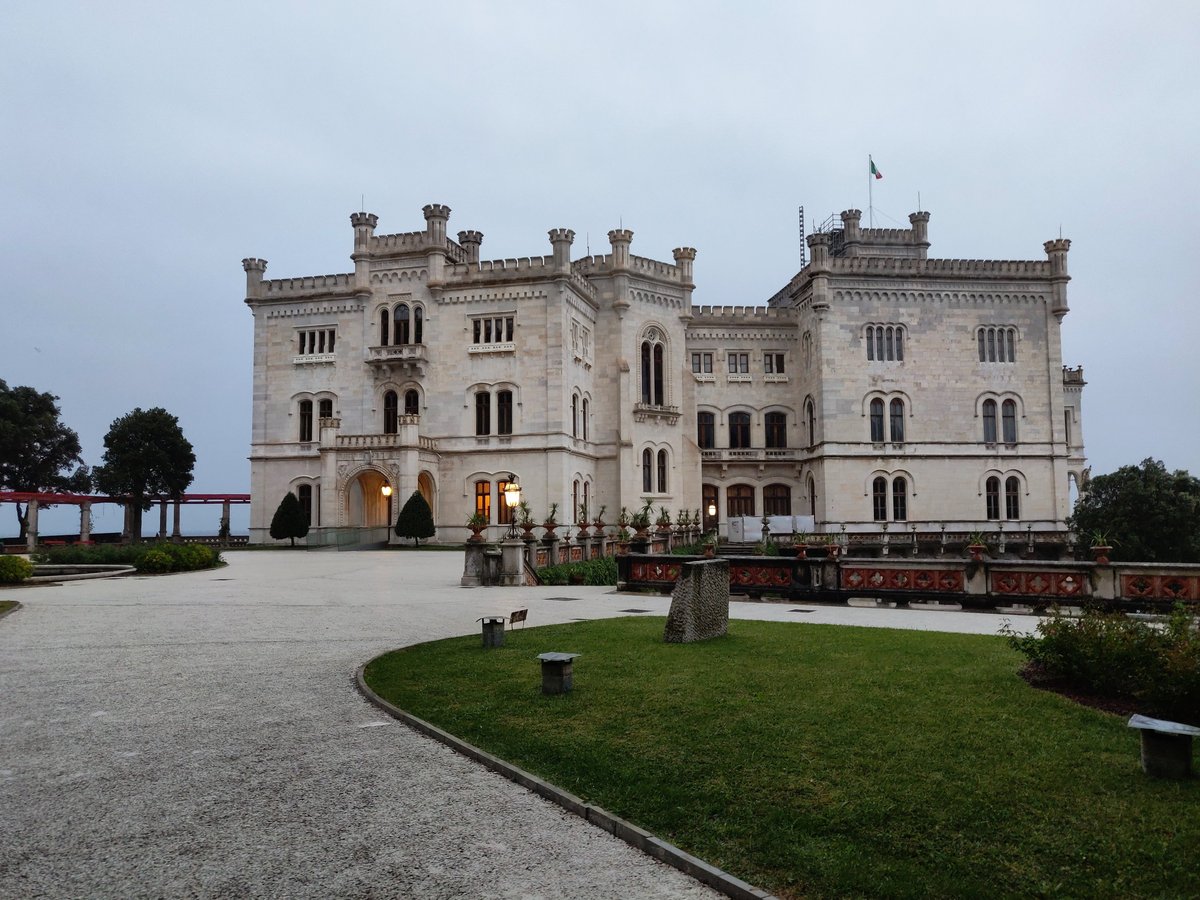
As soon as you see it, you feel like you’ve stepped into a fairy tale. The Castello di Miramare is all white, perched on a cliff overlooking the Gulf of Trieste, surrounded by a 22-hectare green park. It looks like a postcard castle, but it has a tragic story that sends chills down your spine. They say that anyone who sleeps there dies a violent death – a legend that starts with its founder, Archduke Maximilian of Habsburg. Walking through the restored rooms and exotic gardens is like stepping back into the 19th century, among love, power, and a cruel fate.
Evocative Introduction
As soon as you see it, you feel like you’ve stepped into a fairy tale. The Castello di Miramare is all white, perched on a cliff overlooking the Gulf of Trieste, surrounded by a 22-hectare green park. It looks like a postcard castle, but it has a tragic story that sends chills down your spine. They say that anyone who sleeps there dies a violent death – a legend that starts with its founder, Archduke Maximilian of Habsburg. Walking through the restored rooms and exotic gardens is like stepping back into the 19th century, among love, power, and a cruel fate.
Historical Notes
The castle was built between 1856 and 1860 for Archduke Ferdinand Maximilian of Habsburg and his wife Charlotte of Belgium. Designed by Viennese architect Carl Junker in Neo-Gothic style, it stands on the promontory of Grignano. Maximilian wanted a private residence away from court, but in 1864 he left for Mexico, where he was executed in 1867. Charlotte went mad with grief. Later, the castle housed Duke Amedeo of Aosta and during World War II was occupied by Allied troops. Since 1955, it has been a museum.
Historical Notes
The castle was built between 1856 and 1860 for Archduke Ferdinand Maximilian of Habsburg and his wife Charlotte of Belgium. Designed by Viennese architect Carl Junker in Neo-Gothic style, it stands on the promontory of Grignano. Maximilian wanted a private residence away from court, but in 1864 he left for Mexico, where he was executed in 1867. Charlotte went mad with grief. Later, the castle housed Duke Amedeo of Aosta and during World War II was occupied by Allied troops. Since 1955, it has been a museum.
The Exotic Park: A Dream Garden
The park is one of the things that struck me most. 22 hectares meticulously cared for, with plants brought from all over the world: cedars of Lebanon, giant sequoias, ginkgo biloba, and even a Kaffeehaus (the only refreshment spot) that looks like something out of a fairy tale. Maximilian was a passionate botanist and wanted to transform a barren karst landscape into an English garden. There are ancient statues (the Orante, the Venus of Capua), a swan lake, and a fountain with shells. The park is free, so you can stroll at your leisure without hurry. I recommend a walk up to the Castelletto, where the couple lived during the works.
The Exotic Park: A Dream Garden
The park is one of the things that struck me most. 22 hectares meticulously cared for, with plants brought from all over the world: cedars of Lebanon, giant sequoias, ginkgo biloba, and even a Kaffeehaus (the only refreshment spot) that looks like something out of a fairy tale. Maximilian was a passionate botanist and wanted to transform a barren karst landscape into an English garden. There are ancient statues (the Orante, the Venus of Capua), a swan lake, and a fountain with shells. The park is free, so you can stroll at your leisure without hurry. I recommend a walk up to the Castelletto, where the couple lived during the works.
Interiors and Legend: Between Dreamlike Rooms and Curses
Entering the castle is like opening a history book. On the ground floor are the private apartments, with Maximilian’s study furnished like a ship’s cabin (because he loved the sea). The Throne Room has red tapestries and sumptuous chandeliers. But the most striking thing is the legend: it is whispered that Maximilian cut down a sacred tree, bringing a curse. Whoever sleeps within these walls will die far away, a violent death. And indeed, he was executed by firing squad, Carlotta went mad, and even the Duke of Aosta died in Africa. Photography is not allowed, but you can still feel the atmosphere.
Interiors and Legend: Between Dreamlike Rooms and Curses
Entering the castle is like opening a history book. On the ground floor are the private apartments, with Maximilian’s study furnished like a ship’s cabin (because he loved the sea). The Throne Room has red tapestries and sumptuous chandeliers. But the most striking thing is the legend: it is whispered that Maximilian cut down a sacred tree, bringing a curse. Whoever sleeps within these walls will die far away, a violent death. And indeed, he was executed by firing squad, Carlotta went mad, and even the Duke of Aosta died in Africa. Photography is not allowed, but you can still feel the atmosphere.
Why Visit
Three good reasons not to skip it: 1) The breathtaking view – from the terrace, you dominate the entire gulf, it feels like being on a ship. 2) The exotic park – it’s a peaceful oasis, free, perfect for a picnic (grab something at Caffè Massimiliano). 3) The novel-like history – with love, madness, and curses, it’s much more than a simple castle. Plus, with the same ticket you can also visit the Stables with BioMa, the interactive marine museum (separate fee).
Why Visit
Three good reasons not to skip it: 1) The breathtaking view – from the terrace, you dominate the entire gulf, it feels like being on a ship. 2) The exotic park – it’s a peaceful oasis, free, perfect for a picnic (grab something at Caffè Massimiliano). 3) The novel-like history – with love, madness, and curses, it’s much more than a simple castle. Plus, with the same ticket you can also visit the Stables with BioMa, the interactive marine museum (separate fee).
When to Go
In my opinion, the best time is late spring, from April to June. The weather is mild, the park is in full bloom (daffodils, oleanders), and the days are long. If you arrive in the afternoon, the sun lights up the white facade of the castle and the sea turns deep blue. Avoid August weekends: the free parking is impossible to find and it’s much more crowded. If you want fewer people, visit in autumn, with the fall colors. The best hours? Around 4-5 PM, before the castle closes, so you can also catch the sunset.
When to Go
In my opinion, the best time is late spring, from April to June. The weather is mild, the park is in full bloom (daffodils, oleanders), and the days are long. If you arrive in the afternoon, the sun lights up the white facade of the castle and the sea turns deep blue. Avoid August weekends: the free parking is impossible to find and it’s much more crowded. If you want fewer people, visit in autumn, with the fall colors. The best hours? Around 4-5 PM, before the castle closes, so you can also catch the sunset.
Nearby
A few kilometers away is the Castello di San Giusto, another fortress on the hill of Trieste, with a museum and an amazing view. If you love the sea, don’t miss BioMa in the former Miramare stables: an interactive journey into the Marine Reserve, with aquariums and a touch tank. Perfect for kids. I paired the castle with a walk along the Barcola waterfront, ideal for an ice cream with a view. Trieste city center (Piazza Unità) is 20 minutes by bus, but if you have time, it’s worth half a day.
Nearby
A few kilometers away is the Castello di San Giusto, another fortress on the hill of Trieste, with a museum and an amazing view. If you love the sea, don’t miss BioMa in the former Miramare stables: an interactive journey into the Marine Reserve, with aquariums and a touch tank. Perfect for kids. I paired the castle with a walk along the Barcola waterfront, ideal for an ice cream with a view. Trieste city center (Piazza Unità) is 20 minutes by bus, but if you have time, it’s worth half a day.