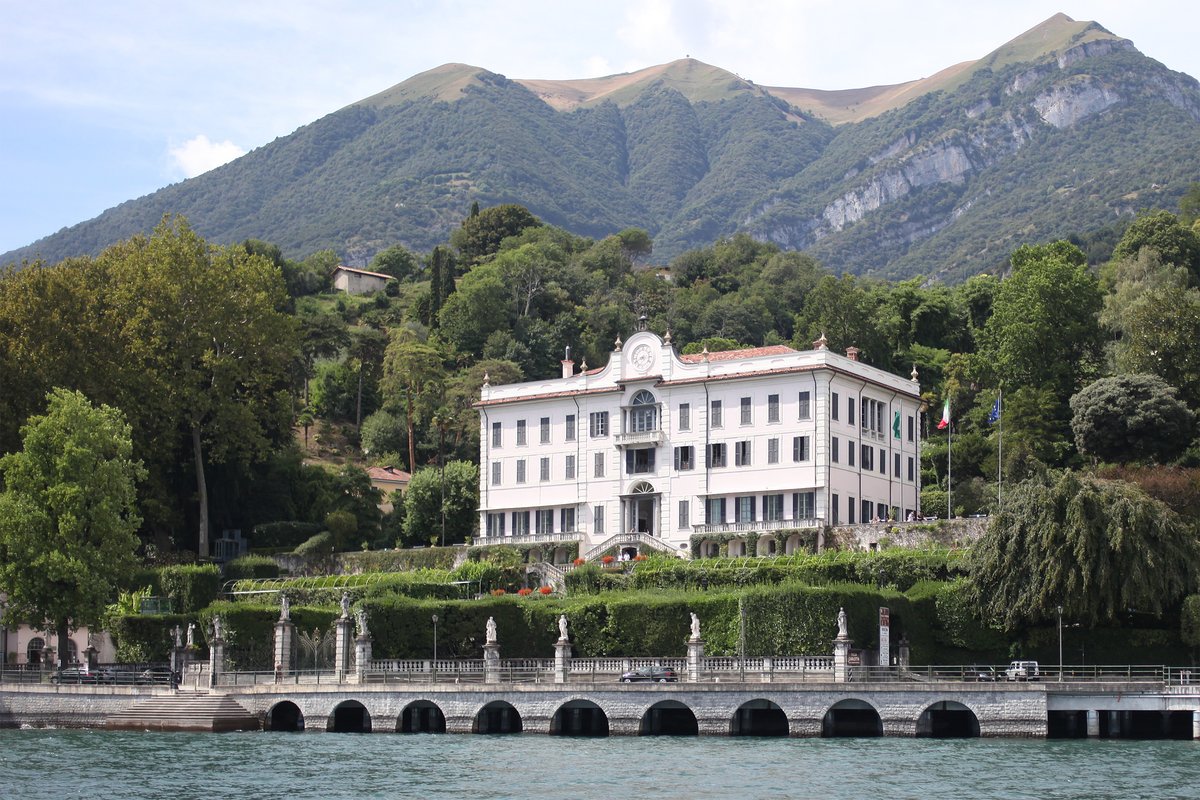
Villa Carlotta, overlooking Lake Como in Tremezzina, combines art and nature in a perfect union. Inside, works by Canova and Hayez tell the story of Neoclassicism; outside, a 70,000 sqm park amazes with over 150 varieties of rhododendrons and azaleas among statues and fountains. It is the ideal destination for a half-day trip in the name of beauty.
– Canova Sculptures: masterpieces such as the reclining Amore e Psiche and the Penitent Magdalene.
– Botanical Garden: spectacular blooms of azaleas, camellias, and rhododendrons, plus a bamboo garden.
– Lake View: from the villa, enjoy a breathtaking view of Bellagio and the Grigne mountains.
– Accessible Routes: three one-way itineraries, also suitable for families with strollers.
Evocative Introduction
Overlooking Lake Como, Villa Carlotta is a heart-stopping sight. It’s not just a villa: it’s a living museum, a fairy-tale garden, a plunge into the 19th century. 70,000 sqm of park, with over 150 varieties of rhododendrons and azaleas, frame an art collection that includes masterpieces by Canova, Hayez, and Thorvaldsen. Stroll among neoclassical statues and ancient trees, and you’ll feel like you’re inside a painting. Every corner tells a story: the scent of citrus, the rustle of bamboo, the view of the Grigne mountains. It’s the perfect place for those seeking beauty without effort, but with plenty of substance. No need to be an expert: just let yourself be enchanted.
Evocative Introduction
Overlooking Lake Como, Villa Carlotta is a heart-stopping sight. It’s not just a villa: it’s a living museum, a fairy-tale garden, a plunge into the 19th century. 70,000 sqm of park, with over 150 varieties of rhododendrons and azaleas, frame an art collection that includes masterpieces by Canova, Hayez, and Thorvaldsen. Stroll among neoclassical statues and ancient trees, and you’ll feel like you’re inside a painting. Every corner tells a story: the scent of citrus, the rustle of bamboo, the view of the Grigne mountains. It’s the perfect place for those seeking beauty without effort, but with plenty of substance. No need to be an expert: just let yourself be enchanted.
Historical Overview
The villa was built at the end of the 17th century at the behest of Marquis Giorgio Clerici, featuring an Italian garden with statues and fountains. In 1801 it passed to Gian Battista Sommariva, who transformed it into a temple of neoclassical art. In 1843 Princess Marianna of Nassau purchased it and in 1850 gave it as a gift to her daughter Carlotta on her marriage to Duke George II of Saxe-Meiningen. He, a passionate botanist, expanded the park with exotic species, rhododendrons, camellias, and palms. Since 1927 it has been managed by a charitable foundation. Here are the key moments:
Timeline- c. 1690 – Construction for the Clerici family
- 1801 – Purchase by Sommariva, arrival of Canova’s works
- 1843-1850 – Transfer to the Dutch royal family, gift to Carlotta
- Second half of the 19th century – Botanical expansion by George II
- 1927 – Entrusted to the Villa Carlotta Foundation
Historical Overview
The villa was built at the end of the 17th century at the behest of Marquis Giorgio Clerici, featuring an Italian garden with statues and fountains. In 1801 it passed to Gian Battista Sommariva, who transformed it into a temple of neoclassical art. In 1843 Princess Marianna of Nassau purchased it and in 1850 gave it as a gift to her daughter Carlotta on her marriage to Duke George II of Saxe-Meiningen. He, a passionate botanist, expanded the park with exotic species, rhododendrons, camellias, and palms. Since 1927 it has been managed by a charitable foundation. Here are the key moments:
Timeline- c. 1690 – Construction for the Clerici family
- 1801 – Purchase by Sommariva, arrival of Canova’s works
- 1843-1850 – Transfer to the Dutch royal family, gift to Carlotta
- Second half of the 19th century – Botanical expansion by George II
- 1927 – Entrusted to the Villa Carlotta Foundation
Art and Sculptures: The Museum Inside the Villa
Upon entering, you are greeted by an art collection of European breadth. The highlights are the sculptural group by Antonio Canova: ‘Reclining Cupid and Psyche’, ‘Penitent Magdalene’, ‘Palamedes’, and the ‘Muse Terpsichore’. But it doesn’t end there. Alongside Canova, works by Bertel Thorvaldsen stand out, as does the painting ‘The Last Kiss Given to Juliet by Romeo’ by Francesco Hayez, an icon of Italian Romanticism. The rooms are enriched with Neo-Renaissance and Pompeian decorations, commissioned by Duke Giorgio II. You can breathe in the atmosphere of the great 19th-century European estates, among collections of plaster cameos and Napoleonic engravings. A guided tour (also available in English) reveals the behind-the-scenes of Sommariva’s patronage and the relationship between Canova and his patrons.
Art and Sculptures: The Museum Inside the Villa
Upon entering, you are greeted by an art collection of European breadth. The highlights are the sculptural group by Antonio Canova: ‘Reclining Cupid and Psyche’, ‘Penitent Magdalene’, ‘Palamedes’, and the ‘Muse Terpsichore’. But it doesn’t end there. Alongside Canova, works by Bertel Thorvaldsen stand out, as does the painting ‘The Last Kiss Given to Juliet by Romeo’ by Francesco Hayez, an icon of Italian Romanticism. The rooms are enriched with Neo-Renaissance and Pompeian decorations, commissioned by Duke Giorgio II. You can breathe in the atmosphere of the great 19th-century European estates, among collections of plaster cameos and Napoleonic engravings. A guided tour (also available in English) reveals the behind-the-scenes of Sommariva’s patronage and the relationship between Canova and his patrons.
The Botanical Garden: An Explosion of Colors
The park is the true gem. 70,000 square meters of greenery that changes with the seasons. In spring, the 150 varieties of rhododendrons and azaleas put on a spectacular show of colors ranging from red to pink, white to purple. Some specimens reach up to 22 meters in height. But there’s much more: camellias, centuries-old cedars and sequoias, a rock garden, the fern valley, the bamboo grove, and a romantic old garden. Duke George II, a great botanist, introduced exotic species from around the world. Strolling along the paths, you discover hidden corners, statues, and fountains. There’s also a museum of agricultural tools and, since 2023, the project ‘A Step in the Park’ with PNRR initiatives. A place that smells of history and nature.
The Botanical Garden: An Explosion of Colors
The park is the true gem. 70,000 square meters of greenery that changes with the seasons. In spring, the 150 varieties of rhododendrons and azaleas put on a spectacular show of colors ranging from red to pink, white to purple. Some specimens reach up to 22 meters in height. But there’s much more: camellias, centuries-old cedars and sequoias, a rock garden, the fern valley, the bamboo grove, and a romantic old garden. Duke George II, a great botanist, introduced exotic species from around the world. Strolling along the paths, you discover hidden corners, statues, and fountains. There’s also a museum of agricultural tools and, since 2023, the project ‘A Step in the Park’ with PNRR initiatives. A place that smells of history and nature.
Why Visit It
If you love art and nature, you find everything in one place. First: a unique experience – it’s not every day you see an original Canova in a lakeside villa. Second: the park is a botanical masterpiece that makes you forget you’re in a museum. Third: the villa is easy to reach – by boat or bus – and suitable for everyone, including families. Children under 5 enter for free and the family ticket is affordable. Plus, every year there are temporary exhibitions and concerts (like the Wandelkonzert dedicated to Brahms in 2026). In short, it’s one of those visits that leave a mark and stay in your head.
Why Visit It
If you love art and nature, you find everything in one place. First: a unique experience – it’s not every day you see an original Canova in a lakeside villa. Second: the park is a botanical masterpiece that makes you forget you’re in a museum. Third: the villa is easy to reach – by boat or bus – and suitable for everyone, including families. Children under 5 enter for free and the family ticket is affordable. Plus, every year there are temporary exhibitions and concerts (like the Wandelkonzert dedicated to Brahms in 2026). In short, it’s one of those visits that leave a mark and stay in your head.
When to Go
The highlight is spring, when rhododendrons and azaleas are in full bloom and the park looks like an Impressionist painting. But autumn has its charm too, with warm leaf colors and low light over the lake. If you want to avoid the crowds, choose a weekday morning: the villa opens at 10 AM, and the early hours are the most serene. In summer, the days are long, and you can enjoy the sunset. In winter, the villa is open only by reservation for groups—an opportunity for an exclusive visit. Personally, I recommend going in mid-April: the weather is mild, the park is spectacular, and the lake is calm.
When to Go
The highlight is spring, when rhododendrons and azaleas are in full bloom and the park looks like an Impressionist painting. But autumn has its charm too, with warm leaf colors and low light over the lake. If you want to avoid the crowds, choose a weekday morning: the villa opens at 10 AM, and the early hours are the most serene. In summer, the days are long, and you can enjoy the sunset. In winter, the villa is open only by reservation for groups—an opportunity for an exclusive visit. Personally, I recommend going in mid-April: the weather is mild, the park is spectacular, and the lake is calm.
Nearby Attractions
Two must-see destinations. The first is Bellagio, the ‘pearl of the lake’, reachable by boat from Cadenabbia (not far from Villa Carlotta). Stroll through the alleys, admire Villa Melzi, and enjoy the view from the shores. The second is Villa del Balbianello, another historic residence a bit further south, famous for its terraced gardens and for being a film set. If you have time, a boat trip on the lake is always a good idea: the landscapes are postcard-perfect. And for food? In Tremezzina you’ll find excellent restaurants with local cuisine, but if you want something quick, the bars along the main road offer sandwiches and ice cream.
Nearby Attractions
Two must-see destinations. The first is Bellagio, the ‘pearl of the lake’, reachable by boat from Cadenabbia (not far from Villa Carlotta). Stroll through the alleys, admire Villa Melzi, and enjoy the view from the shores. The second is Villa del Balbianello, another historic residence a bit further south, famous for its terraced gardens and for being a film set. If you have time, a boat trip on the lake is always a good idea: the landscapes are postcard-perfect. And for food? In Tremezzina you’ll find excellent restaurants with local cuisine, but if you want something quick, the bars along the main road offer sandwiches and ice cream.