Montefiore Fortress: Malatesta stronghold with 14th-century frescoes and views of Croatia

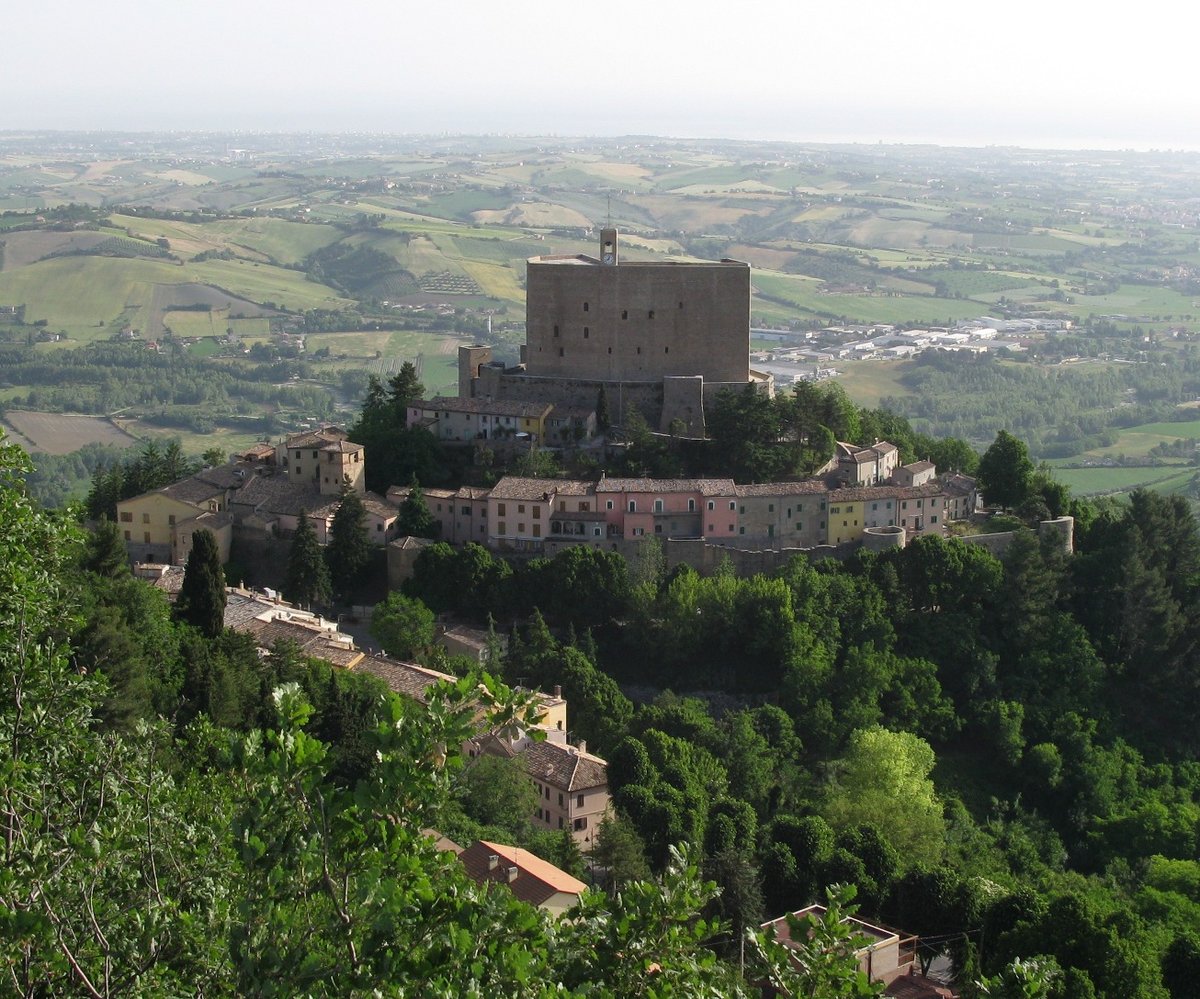
Montefiore Fortress is one of the best-preserved strongholds in the Rimini hinterland, built in the 14th century by the Malatesta family. Perched 385 meters above sea level, it offers breathtaking views stretching from the Adriatic Sea to the Marche hills, reaching as far as the Croatian coast on clear days.

  • Intact medieval architecture with massive walls, crenellated towers, and a keep
  • 14th- and 15th-century frescoes, including those in the Chapel of San Paolo
  • Rooms furnished with period furniture and monumental fireplaces
  • Underground areas with ancient rock-cut prisons
Copertina itinerario Montefiore Fortress: Malatesta stronghold with 14th-century frescoes and views of Croatia
A medieval Malatesta fortress at 385 meters above sea level, perfectly preserved with massive walls, crenellated towers, and 14th-century frescoes. Climb the keep for panoramic views over the Conca Valley to the Adriatic Sea and Croatian coast.

Good to know


Introduction

As soon as you arrive in Montefiore Conca, the Rocca greets you from afar, an imposing silhouette that seems to have stepped out of a fairy tale book. The view is spectacular, especially when the sun illuminates its red walls and the Valconca valley stretches out at its feet like a green carpet. It’s not just a castle, but a privileged observation point that makes you feel part of history. I went there somewhat by chance, driven by curiosity, and fell in love with it immediately. The atmosphere is just right: silence, ancient stones, and a breathtaking panorama. If you’re looking for a place where time has stood still, this is the right spot.

Historical Overview

The Rocca di Montefiore is not only beautiful to behold; it has a long and fascinating history. Built in the 14th century by the Malatesta family, lords of Rimini, it served as a strategic fortress to control the valley. It has hosted popes, military leaders, and even housed a mint for coining money. In the 15th century, it passed to the Montefeltro family, then to the Borgias, with each family leaving its mark. Today, it is perfectly preserved thanks to careful restorations that have maintained its medieval essence. Walking through its halls, you can still sense the atmosphere of those distant times, with details like arrow slits and monumental fireplaces that tell stories of daily life.

  • 14th century: construction commissioned by the Malatesta family
  • 15th century: transition to the Montefeltro and then Borgia families
  • Modern restorations: recovery and opening to the public

The Keep and the Breathtaking View

If there’s one thing you can’t miss, it’s climbing up to the keep. The staircase is steep, but it’s absolutely worth it. Once at the top, a 360-degree panorama of the Valconca valley unfolds before you: you’ll see perched villages, rolling hills, and on clearer days, you can even glimpse the Adriatic Sea in the distance. I spent an hour up there taking photos and trying to memorize every detail. The fresh air and the silence broken only by the wind make everything magical. It’s the perfect spot for photography enthusiasts, but also for those who simply want to enjoy a moment of peace. Bring a jacket, because it’s always a bit windy up high, even in summer.

The Underground and the Prisons

Less known but equally interesting are the underground areas of the fortress. Here you’ll find the ancient prisons, with cells carved into the rock that convey a dark and evocative atmosphere. Going down there is like taking a journey through time: you can feel the humidity on your skin, and the walls tell stories of forgotten prisoners. There are also water cisterns and secret passages, though not all are accessible to visitors. I found them fascinating, perhaps a bit unsettling, but that’s exactly what makes them special. Watch your step on the stairs—they’re slippery and poorly lit, so move slowly. It’s an experience that adds depth to the visit, showing a darker, more authentic side of life in the castle.

Why Visit It

Visiting the Rocca di Montefiore is worthwhile for at least three concrete reasons. First, the preservation is exceptional: it’s not a ruin, but a living castle, with furnished rooms and original details that immerse you in the Middle Ages. Second, the view from the top is one of the most beautiful in the province of Rimini, ideal for unforgettable photo shots or simply admiring the landscape. Third, it’s a tranquil place, away from the crowds of coastal resorts, perfect for a relaxing outing. I’d gladly return, perhaps on a weekday to enjoy it more leisurely. If you love history or photography, you’ll find plenty to satisfy your interests here.

When to go

The best time? I recommend late afternoon, especially in spring or autumn. The warm sun illuminates the stones with golden hues, and the air is cool without being cold. In summer, avoid the midday hours because it can get very hot, and the climb to the keep becomes tiring. In winter, on the other hand, the atmosphere is more intimate and mysterious, with fogs enveloping the valley, but check that it’s open because sometimes it closes due to bad weather. Personally, I preferred a visit in September: there were few visitors, and the light was perfect for photos. If you can, try to coincide with a sunset, but check the closing times.

In the Surroundings

After visiting the fortress, it’s worth exploring the surroundings. Just a few minutes away is Montefiore Conca itself, a well-preserved medieval village with cobblestone alleys and small artisan shops. Strolling through the village feels like completing the castle visit, with similar atmospheres and equally beautiful views. Another idea is to head to the Onferno Nature Reserve, with its karst caves and nature trails, perfect for a light walk or discovering another side of the Valconca valley. Both places are easy to reach and add variety to the day, without requiring long journeys.

💡 Did You Know…?

The fortress is linked to several Malatesta legends. It is said that treasures were hidden in the inner courtyard well during wars between lordships, never to be found. Another story tells of secret passages that would connect the castle to the caves below, used for sudden escapes. During restorations, traces of an ancient hypocaust heating system emerged, extremely rare for fortifications of that era. The chapel preserves a 15th-century fresco depicting Saint George slaying the dragon, with details so vivid they appear three-dimensional by candlelight.