Introduction
Entering the Neonian Baptistery in Ravenna is like diving into the 5th century. Light filters through the windows and illuminates the dome mosaics, which seem made of gems. It’s one of the best-preserved early Christian monuments in the world, declared a UNESCO World Heritage Site in 1996. The silence is broken only by your own awe: it’s not every day you get to see a scene of Christ’s baptism made with gold and enamel tesserae, almost intact after 1500 years. Whether you’re a history enthusiast or simply seeking a unique visual experience, this baptistery will leave you speechless.
Introduction
Entering the Neonian Baptistery in Ravenna is like diving into the 5th century. Light filters through the windows and illuminates the dome mosaics, which seem made of gems. It’s one of the best-preserved early Christian monuments in the world, declared a UNESCO World Heritage Site in 1996. The silence is broken only by your own awe: it’s not every day you get to see a scene of Christ’s baptism made with gold and enamel tesserae, almost intact after 1500 years. Whether you’re a history enthusiast or simply seeking a unique visual experience, this baptistery will leave you speechless.
Historical Background
The construction began under Bishop
Orso (399-426 AD), when Ravenna became the capital of the Western Roman Empire. A few decades later, Bishop
Neone (451-468 AD) commissioned the magnificent mosaics of the dome. The building stood next to the ancient Ursiana Basilica, now disappeared.
In 1996 it became part of the UNESCO site of early Christian monuments in Ravenna. Here are the key moments:
- Early 5th cent.: work started under Orso
- 450-475: decoration under Neone
- 10th cent.: addition of the four apsidioles
- 1996: UNESCO listing
Historical Background
The construction began under Bishop
Orso (399-426 AD), when Ravenna became the capital of the Western Roman Empire. A few decades later, Bishop
Neone (451-468 AD) commissioned the magnificent mosaics of the dome. The building stood next to the ancient Ursiana Basilica, now disappeared.
In 1996 it became part of the UNESCO site of early Christian monuments in Ravenna. Here are the key moments:
- Early 5th cent.: work started under Orso
- 450-475: decoration under Neone
- 10th cent.: addition of the four apsidioles
- 1996: UNESCO listing
The Dome Mosaics
The dome is a triumph of mosaics, arranged in three concentric bands to be read from bottom to top. At the center, a medallion on a gold background depicts the Baptism of Christ: Jesus immersed in the Jordan, John the Baptist pouring water, and the dove of the Holy Spirit. Around it, the twelve apostles walk on a green carpet, holding golden crowns—symbols of victory. In the outer band, empty thrones (the Hetimasia) and altars with Gospels, surrounded by flowers and plants. The mosaic tesserae have vivid colors: deep blue, gold, and purple red. The faces are realistic, almost like portraits. This is not just art—it is a vision of heaven on earth.
The Dome Mosaics
The dome is a triumph of mosaics, arranged in three concentric bands to be read from bottom to top. At the center, a medallion on a gold background depicts the Baptism of Christ: Jesus immersed in the Jordan, John the Baptist pouring water, and the dove of the Holy Spirit. Around it, the twelve apostles walk on a green carpet, holding golden crowns—symbols of victory. In the outer band, empty thrones (the Hetimasia) and altars with Gospels, surrounded by flowers and plants. The mosaic tesserae have vivid colors: deep blue, gold, and purple red. The faces are realistic, almost like portraits. This is not just art—it is a vision of heaven on earth.
Architecture and Symbolism
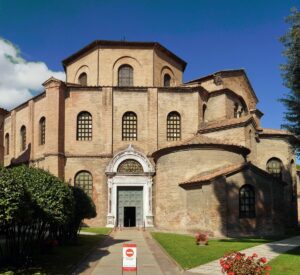
The building has an octagonal plan, a shape that in early Christianity symbolizes resurrection (the eighth day). On the outside, red bricks, pilasters, and blind arches, with four small apses added in the 10th century. Inside, two superimposed orders of arcades divide the space into three decorative levels: precious marbles at the bottom, stuccoes with prophets in the middle, and mosaics at the top. At the center, the octagonal baptismal font in Greek marble and porphyry, rebuilt in the 16th century but with original fragments from the 5th century. The lighting is carefully designed: high windows illuminate the dome, while the lower part remains in shadow, creating a mystical atmosphere. A masterpiece of balance between architecture and iconography.
Architecture and Symbolism
The building has an octagonal plan, a shape that in early Christianity symbolizes resurrection (the eighth day). On the outside, red bricks, pilasters, and blind arches, with four small apses added in the 10th century. Inside, two superimposed orders of arcades divide the space into three decorative levels: precious marbles at the bottom, stuccoes with prophets in the middle, and mosaics at the top. At the center, the octagonal baptismal font in Greek marble and porphyry, rebuilt in the 16th century but with original fragments from the 5th century. The lighting is carefully designed: high windows illuminate the dome, while the lower part remains in shadow, creating a mystical atmosphere. A masterpiece of balance between architecture and iconography.
Why Visit It
Three good reasons: 1. Exceptional preservation: it is the most intact Early Christian baptistery in the world, with original mosaics, stuccoes, and marbles. 2. A unique masterpiece: the baptism scene is the oldest in a monumental building, and the mosaics boast incredible colors. 3. Combo ticket: with a single ticket (€10.50 full price) you also visit San Vitale, Sant’Apollinare Nuovo, Mausoleum of Galla Placidia, and the Archiepiscopal Museum. A great deal for art lovers. Moreover, the Baptistery is wheelchair accessible and offers audioguides. Don’t miss it.
Why Visit It
Three good reasons: 1. Exceptional preservation: it is the most intact Early Christian baptistery in the world, with original mosaics, stuccoes, and marbles. 2. A unique masterpiece: the baptism scene is the oldest in a monumental building, and the mosaics boast incredible colors. 3. Combo ticket: with a single ticket (€10.50 full price) you also visit San Vitale, Sant’Apollinare Nuovo, Mausoleum of Galla Placidia, and the Archiepiscopal Museum. A great deal for art lovers. Moreover, the Baptistery is wheelchair accessible and offers audioguides. Don’t miss it.
When to Go
The best time? Early morning or late afternoon, when the raking light enhances the golden mosaics. Avoid the midday hours in summer, when the sun creates strong contrasts. Spring and autumn are ideal: mild climate and fewer crowds. In winter, the reduced hours (10:00-17:00) give you an intimate atmosphere. Always check the times on the official website as they change depending on the season. And remember: December 25 and January 1 are closed.
When to Go
The best time? Early morning or late afternoon, when the raking light enhances the golden mosaics. Avoid the midday hours in summer, when the sun creates strong contrasts. Spring and autumn are ideal: mild climate and fewer crowds. In winter, the reduced hours (10:00-17:00) give you an intimate atmosphere. Always check the times on the official website as they change depending on the season. And remember: December 25 and January 1 are closed.
Nearby
A few steps away are other UNESCO gems: the Basilica of San Vitale with its Justinian mosaics and the Mausoleum of Galla Placidia, famous for its starry sky in blue tiles. Stroll over to Piazza del Popolo, the heart of Ravenna, or visit the Archbishop’s Museum to see the Chapel of Sant’Andrea. If you have time, don’t miss Sant’Apollinare Nuovo, with its procession of martyrs. All these sites are included in the cumulative ticket. In short, a day in Ravenna is a dive into Byzantine art.
Nearby
A few steps away are other UNESCO gems: the Basilica of San Vitale with its Justinian mosaics and the Mausoleum of Galla Placidia, famous for its starry sky in blue tiles. Stroll over to Piazza del Popolo, the heart of Ravenna, or visit the Archbishop’s Museum to see the Chapel of Sant’Andrea. If you have time, don’t miss Sant’Apollinare Nuovo, with its procession of martyrs. All these sites are included in the cumulative ticket. In short, a day in Ravenna is a dive into Byzantine art.