Introduction
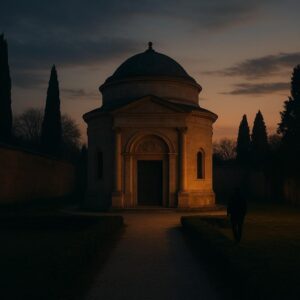
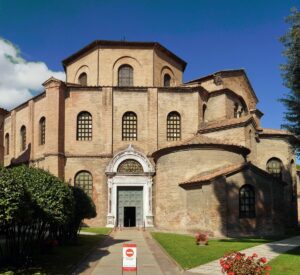
Standing before the Mausoleum of Theodoric in Ravenna, you are left speechless. It is a mass of light stone emerging from the green of the park, almost timeless. The dome is a single block of rock, something that seems impossible even today. You enter and feel the echo of the centuries: here rested the king of the Ostrogoths, in a monument that blends Rome and barbarians. It is moving, raw, powerful. There is nothing like it in Italy.
Introduction
Standing before the Mausoleum of Theodoric in Ravenna, you are left speechless. It is a mass of light stone emerging from the green of the park, almost timeless. The dome is a single block of rock, something that seems impossible even today. You enter and feel the echo of the centuries: here rested the king of the Ostrogoths, in a monument that blends Rome and barbarians. It is moving, raw, powerful. There is nothing like it in Italy.
Historical Overview
Theodoric, king of the Ostrogoths, had it built around 520 AD in an area called Campo Coriandro, reserved for the Arian Goths. He chose Aurisina stone, like Diocletian’s Palace in Split, to legitimize his power. He died in 526, and his remains were placed in a porphyry basin – later stolen by the Byzantines when they turned the mausoleum into an oratory (561 AD). In the Middle Ages it became Santa Maria della Rotonda, but the structure remained intact. Today it is a UNESCO World Heritage site.
- c. 520 AD: construction begins
- 526: death of Theodoric
- 561: conversion to an Orthodox oratory
- 1996: UNESCO inscription
Historical Overview
Theodoric, king of the Ostrogoths, had it built around 520 AD in an area called Campo Coriandro, reserved for the Arian Goths. He chose Aurisina stone, like Diocletian’s Palace in Split, to legitimize his power. He died in 526, and his remains were placed in a porphyry basin – later stolen by the Byzantines when they turned the mausoleum into an oratory (561 AD). In the Middle Ages it became Santa Maria della Rotonda, but the structure remained intact. Today it is a UNESCO World Heritage site.
- c. 520 AD: construction begins
- 526: death of Theodoric
- 561: conversion to an Orthodox oratory
- 1996: UNESCO inscription
The Monolithic Dome: A Feat of Giants
The dome is the highlight. A single block of stone weighing an estimated 290 tons, 10.76 meters wide and 3.09 meters high. How did they lift it? The 12 handles on the edge, inscribed with the names of the apostles, served as anchor points for ropes. The stone arrived by sea from the quarries of Aurisina, near Trieste, to the port of Classe. Then, using winches and ropes, they placed it on top. A crack on the dome – perhaps a construction error – fuels a legend: a lightning bolt supposedly killed Theodoric right inside it. What a story.
The Monolithic Dome: A Feat of Giants
The dome is the highlight. A single block of stone weighing an estimated 290 tons, 10.76 meters wide and 3.09 meters high. How did they lift it? The 12 handles on the edge, inscribed with the names of the apostles, served as anchor points for ropes. The stone arrived by sea from the quarries of Aurisina, near Trieste, to the port of Classe. Then, using winches and ropes, they placed it on top. A crack on the dome – perhaps a construction error – fuels a legend: a lightning bolt supposedly killed Theodoric right inside it. What a story.
Interior and Porphyry Tub
You enter from the lower floor, shaped like a Greek cross, with cross vaults and niches: perhaps funerary rites for the royal family were celebrated here. Climbing up, the upper chamber is circular and bare, with a labrum in red porphyry at its center—a Roman thermal tub from the 1st-3rd century reused as a sarcophagus. It seems made for the space, but it isn’t: it was added later. Signs of fractures and resections tell of moves and restorations. Today it is empty, yet its presence is solemn. The bare stone walls, devoid of decoration, amplify the silence.
Interior and Porphyry Tub
You enter from the lower floor, shaped like a Greek cross, with cross vaults and niches: perhaps funerary rites for the royal family were celebrated here. Climbing up, the upper chamber is circular and bare, with a labrum in red porphyry at its center—a Roman thermal tub from the 1st-3rd century reused as a sarcophagus. It seems made for the space, but it isn’t: it was added later. Signs of fractures and resections tell of moves and restorations. Today it is empty, yet its presence is solemn. The bare stone walls, devoid of decoration, amplify the silence.
Why Visit It
1. Architectural Uniqueness: No other Ostrogothic building in the world is so well-preserved. The fusion of Roman and barbarian styles is fascinating.
2. The Monolithic Dome: Seeing it in person gives a sense of the enormity of the 6th-century engineering feat.
3. Atmosphere Away from the Center: The mausoleum is set in a large, quiet park, far from the crowds of central monuments. Perfect for a reflective break.
Why Visit It
1. Architectural Uniqueness: No other Ostrogothic building in the world is so well-preserved. The fusion of Roman and barbarian styles is fascinating.
2. The Monolithic Dome: Seeing it in person gives a sense of the enormity of the 6th-century engineering feat.
3. Atmosphere Away from the Center: The mausoleum is set in a large, quiet park, far from the crowds of central monuments. Perfect for a reflective break.
When to Go
The early morning or late afternoon light caresses the white stone and makes it shine. Avoid the midday hours in summer, when the sun beats down and the park offers little shade. Entrance is free on the first Sunday of the month, but it’s more crowded. In autumn, between October and November, the days are mild and the park’s colors make the visit even more evocative.
When to Go
The early morning or late afternoon light caresses the white stone and makes it shine. Avoid the midday hours in summer, when the sun beats down and the park offers little shade. Entrance is free on the first Sunday of the month, but it’s more crowded. In autumn, between October and November, the days are mild and the park’s colors make the visit even more evocative.
Nearby
Just a few kilometers away, the Basilica of Sant’Apollinare in Classe is another UNESCO gem, with its Byzantine mosaics and green apse. In the city, don’t miss the Arian Baptistery and the Basilica of San Vitale. If you have time, also visit the National Museum, which together with the mausoleum offers a combined ticket. All are reachable by bike or public transport.
Nearby
Just a few kilometers away, the Basilica of Sant’Apollinare in Classe is another UNESCO gem, with its Byzantine mosaics and green apse. In the city, don’t miss the Arian Baptistery and the Basilica of San Vitale. If you have time, also visit the National Museum, which together with the mausoleum offers a combined ticket. All are reachable by bike or public transport.