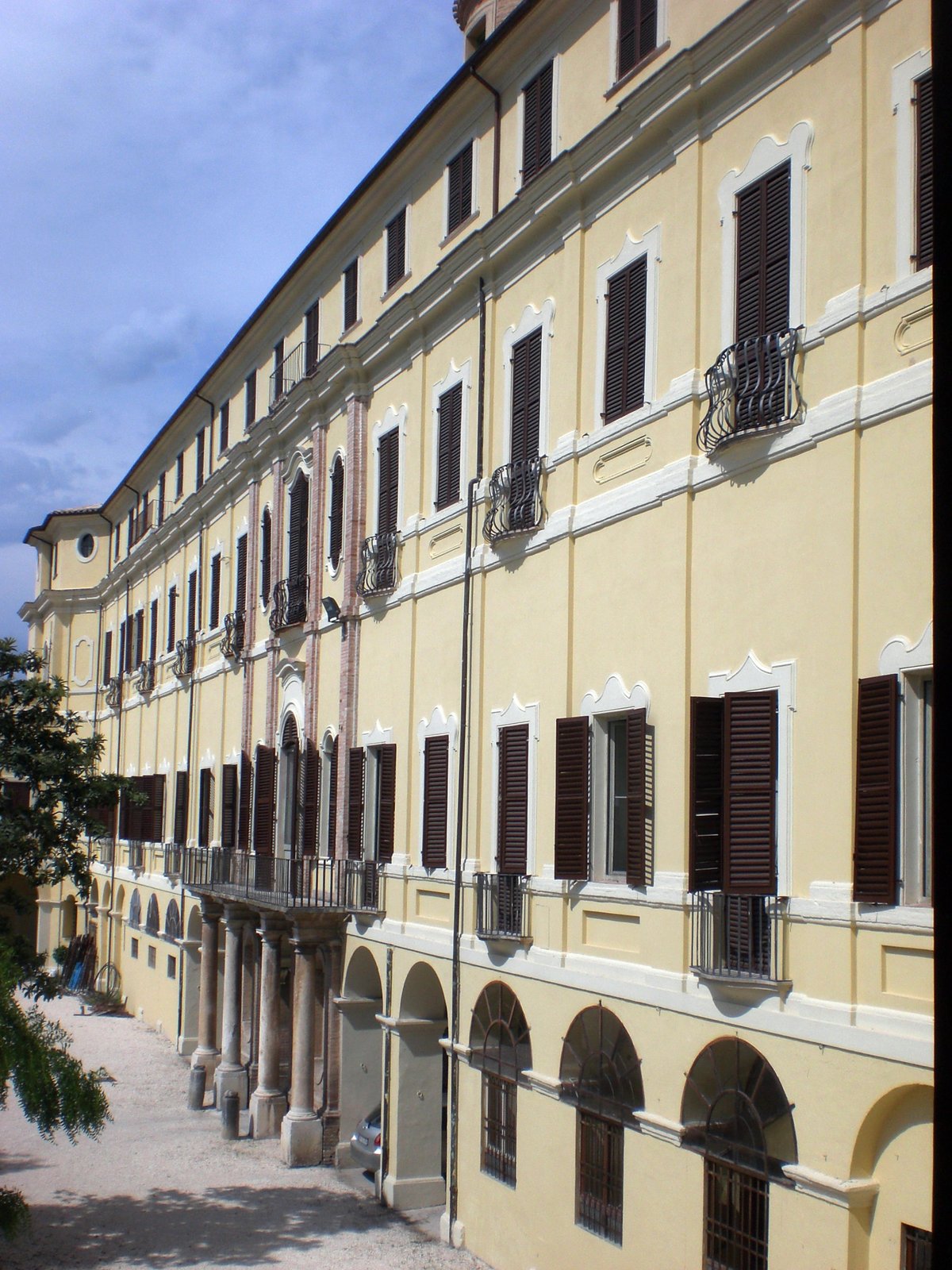
Palazzo Pianetti in Jesi is an 18th-century Baroque civic museum featuring the spectacular Rococo Stucco Gallery, considered among the most beautiful in Italy. It hosts the Civic Art Gallery with works by Lorenzo Lotto and other Marche artists, along with perfectly preserved noble apartments. Located on Via XV Settembre in the historic center, it is easily accessible on foot.
- Rococo Stucco Gallery stretching over 70 meters with white stucco decorations on a blue background
- Art Gallery with the famous Santa Lucia Altarpiece by Lorenzo Lotto and works by Marche artists
- 18th-century noble apartments with perfectly preserved frescoes and period furnishings
- Civic Museum housed in a historic palace from 1748 in the center of Jesi, birthplace of Frederick II of Swabia
Introduction
You expect a Baroque palace and find an explosion of Rococo stuccoes that leaves you speechless. Palazzo Pianetti in Jesi is not just a civic museum; it’s a visual experience that catapults you into 18th-century Marche. As soon as you cross the threshold, the Gallery of Stuccoes envelops you with its play of light and sinuous decorations: putti, flowers, geometric motifs dancing on the walls and ceiling. You can almost hear the murmur of the era’s salons. And to think this gem hides in a city known mainly for Verdicchio wine! For me, it was a total surprise: an unexpected place that, once seen, you never forget. The atmosphere is rarefied, almost intimate, far from the crowds of major museums. I recommend taking your time: every corner tells a story.
Historical Notes
The history of Palazzo Pianetti begins in 1748, when Marquis Cardolo Maria Pianetti decided to build his family residence based on a design by architect Domenico Luigi Valeri. It wasn’t just a stately home, but a true declaration of power and wealth. The Pianetti family, related to local nobility, wanted to impress. And they succeeded, especially with that Stucco Gallery created between 1765 and 1770 by artists such as Giuseppe Tamanti and Francesco Lazzarini. In 1966, the palace became the seat of the Civic Museum, thus saving its art collections. Today it also houses the Art Gallery, with works ranging from the Middle Ages to the 18th century, including an important collection by Lorenzo Lotto. I like to think that, while the Pianettis were throwing parties, someone was already painting those masterpieces we now admire.
- 1748: Construction begins at the behest of Marquis Cardolo Maria Pianetti.
- 1765-1770: Creation of the Stucco Gallery, a Rococo masterpiece.
- 1966: The palace becomes the seat of the Civic Museum of Jesi.
- Today: It houses the Art Gallery and temporary exhibitions, in addition to the gallery.
The Stucco Gallery: A Dive into Rococo
If you think of Baroque as something heavy, you’ll change your mind here. The Stucco Gallery is pure Rococo: light, elegant, almost playful. Walking through it is like being in an eighteenth-century salon that has never stopped shining. The pastel colors – pink, sky blue, gold – come alive with the light filtering through the windows. I noticed amusing details: putti playing among the festoons, shells that seem to have emerged from the sea, flowers blooming in every corner. It’s not just decoration; it’s a story told in stucco. The artists worked with incredible mastery, creating perspective effects that deceive the eye. It reminded me of certain rooms in Venetian palaces, but with a more intimate atmosphere, typical of the Marche region. A tip: also look at the original terracotta floor, which perfectly complements the stuccoes. It’s a detail many overlook, but it completes the environment.
Beyond the Gallery: The Art Gallery and the Secrets of the Palace
The Gallery is the highlight, but Palazzo Pianetti has much more to offer. On the first floor, the Art Gallery welcomes you with works ranging from the 14th to the 18th centuries. Here you’ll find the Polyptych of Saint Lucia by Lorenzo Lotto, a masterpiece that alone is worth the visit. I was struck by the faces of the saints, so intense and human. Then there are rooms dedicated to local artists, such as Francesco Podesti, which tell the artistic history of Jesi. But the palace also hides less-known corners: the inner courtyard, with its stone well, is an oasis of quiet where you can take a break. And if you look up, you’ll notice frescoed ceilings in other rooms, sometimes simpler but always well-crafted. I enjoyed discovering that some rooms host temporary exhibitions, often dedicated to contemporary art: a bold contrast that works. In short, don’t stop at the gallery: explore every floor, because each room has its own personality.
Why Visit It
First, because the Stucco Gallery is unique in Italy: you won’t find another example of Rococo so intact and scenic. Second, for the Art Gallery: having Lorenzo Lotto just steps away from the stuccoes is a visual luxury. Third, for the atmosphere: it’s a human-scale museum, without endless queues, where you can enjoy art at your own pace. Plus, the entrance ticket is affordable and often includes temporary exhibitions. I went on a Thursday afternoon and was almost alone: a rare privilege. If you’re passionate about art history, here you’ll find centuries condensed into a few rooms. But even if you’re not an expert, the beauty of the stuccoes speaks for itself. And then, Jesi is a lively town: after the visit, you can take a stroll through the historic center or enjoy a glass of Verdicchio in one of the nearby wine bars.
When to go
The best time? An autumn afternoon, when the light is warm and low. It streams through the gallery windows, setting the stuccoes aglow with golden reflections and creating a magical atmosphere. In summer, I recommend the midday hours: it’s hot outside, but inside the palace it’s cool and quiet, perfect for a refreshing break. Avoid holiday weekends, when Jesi fills with events and the museum might be more crowded. I visited in October, and the low sun of late afternoon made everything even more evocative. If you can, plan your visit on a weekday: you’ll have more space to contemplate the stuccoes without rush. And don’t worry about the weather: Palazzo Pianetti is always a welcoming refuge, rain or shine.
In the Surroundings
After Palazzo Pianetti, immerse yourself in Roman Jesi with a visit to the Colocci Foundation, which houses local archaeological artifacts in a historic palace. It’s just a few minutes’ walk away and completes the picture of the city’s history. If you prefer an enogastronomic experience, head to one of the Vallesina wineries for a Verdicchio tasting: the white wine that made this area famous. Some wineries offer vineyard tours with views of the Marche hills. For a touch of nature, the Frasassi Caves are less than an hour’s drive away: an underground world of stalactites and stalagmites that leaves you speechless. But if you prefer to stay in the city, the Teatro Pergolesi, with its neoclassical facade, is worth a look: it’s another symbol of Jesi, linked to the local composer G.B. Pergolesi.