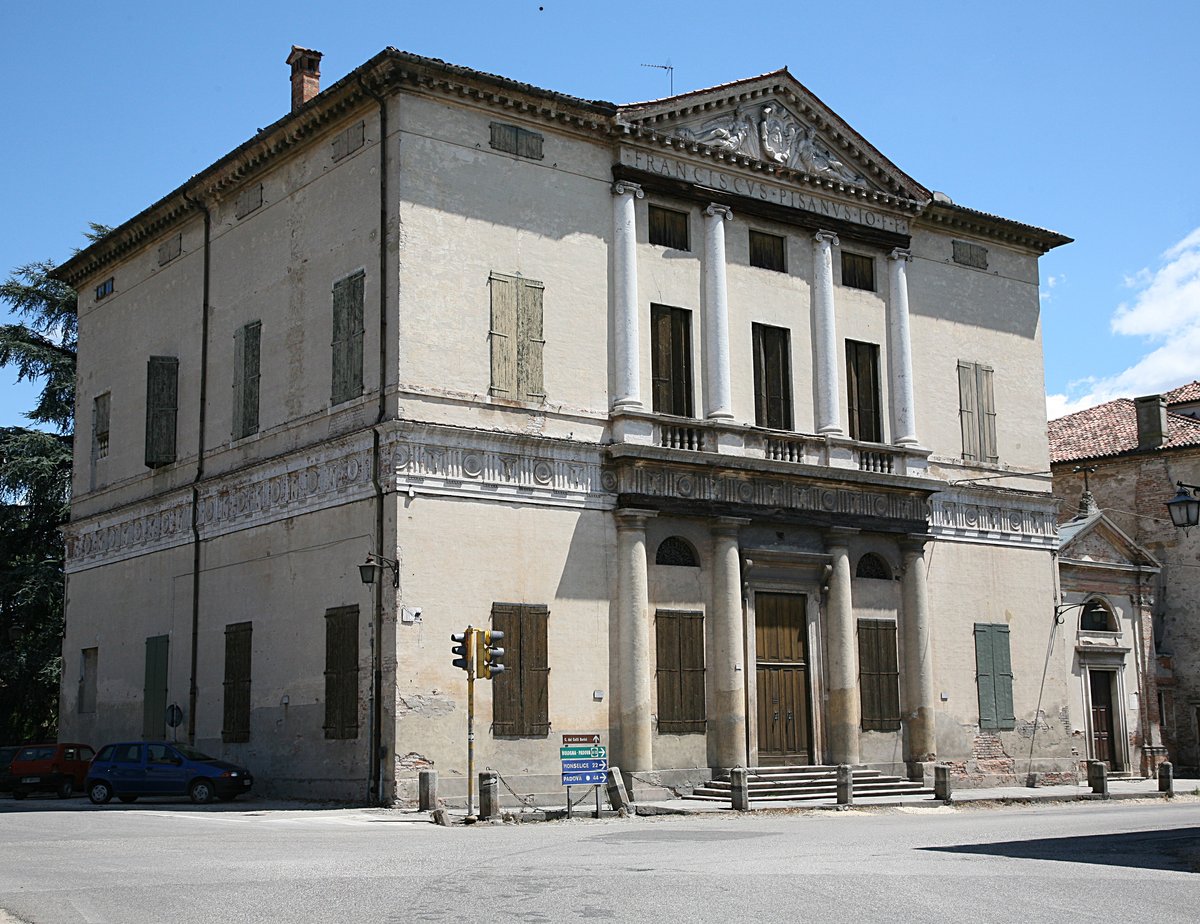
Villa Pisani in Montagnana is a perfectly preserved 16th-century Venetian villa, featuring original 16th-century frescoes that adorn the interior rooms and a large historic park. Its location at the entrance to Montagnana’s historic center allows you to combine the visit with a tour of the medieval walls. It’s ideal for those seeking an authentic cultural experience away from the more crowded tourist circuits.
• Original 16th-century frescoes depicting mythological and allegorical scenes
• Large historic park with centuries-old trees and pathways for peaceful walks
• Strategic location just steps from the medieval walls of Montagnana
• Authentic and uncrowded atmosphere, away from tourist hustle and bustle
Introduction
As soon as you cross the threshold of Villa Pisani in Montagnana, you feel catapulted into another era. This 18th-century Venetian villa, nestled in the Paduan countryside, is a gem of elegance and preservation that leaves you in awe. It’s not just a historical building, but a complete experience: the original frescoes accompany you in every room, telling stories of myths and allegories, while the centuries-old park invites you to stroll among majestic trees. The sensation is that of discovering a hidden treasure, far from tourist crowds, where every detail – from the marble floors to the stucco decorations – speaks of a refined past. Perfect for a day trip, Villa Pisani offers a plunge into art and tranquility, ideal for those seeking an authentic corner of beauty in Veneto.
Historical Overview
Villa Pisani was built in the second half of the 18th century at the behest of the noble Pisani family, who desired a countryside residence for agricultural activities and leisure. Designed by architect Francesco Muttoni, it represents a classic example of Venetian architecture with Palladian influences. Over the years, it has maintained its original function, passing through various ownerships without significant alterations, which explains its exceptional state of preservation. The interior frescoes, created by local artists, depict mythological and allegorical scenes typical of the period, while the park was designed to combine utility and pleasure, featuring tree-lined paths and green spaces.
- Mid-18th century: construction of the villa for the Pisani family
- Designed by Francesco Muttoni, with Palladian influences
- Preservation of the original structure over time
- Interior frescoes with mythological and allegorical themes
The Frescoes That Tell Stories
Upon entering the halls of Villa Pisani, the eyes wander among the vibrant colors of the frescoes covering walls and ceilings. These works, created by artists of the Venetian school of the 18th century, are not mere decorations: each scene tells a story, with mythological figures like Venus and Apollo seeming to come to life. In particular, the central hall impresses with its grandeur, featuring a perfectly preserved pictorial cycle dedicated to allegories of the seasons. The details – from expressive faces to flowing drapery – showcase rare artisanal mastery, and the natural light filtering through the windows enhances every brushstroke. It’s like flipping through a 3D art book, where every corner reveals a new chapter of beauty, making the visit an immersive experience for enthusiasts and the curious alike.
The Historic Park: An Oasis of Peace
Villa Pisani’s park is another gem not to be missed. Designed during the same period as the villa, it spans a well-maintained green area with pathways inviting relaxing strolls. Centuries-old trees, such as oaks and lindens, create natural shade perfect for a summer break, while the geometric flowerbeds recall Italian-style gardens. This is not just a simple green space: here you breathe in history, with minor architectural elements like fountains and stone benches adding character. In spring, the cherry blossoms offer a colorful spectacle, ideal for memorable photographs. It’s the perfect place to escape daily hustle, perhaps with a light picnic, immersing yourself in a timeless atmosphere typical of Venetian villas.
Why Visit It
Visiting Villa Pisani is worthwhile for at least three concrete reasons. First, it’s one of the best-preserved Venetian villas in the province of Padua, with original frescoes that transport you to the 18th century without the need for invasive restorations. Second, it offers a complete experience: internal art and external nature, perfect for those wanting to combine culture and relaxation in a single stop. Third, its location in Montagnana makes it easily combinable with other local attractions, such as the medieval walls of the town, enriching an outing with multiple facets. Additionally, the intimate and uncrowded atmosphere allows you to enjoy every detail calmly, away from the tourist chaos of more famous destinations.
When to Visit
To experience Villa Pisani at its best, I recommend planning your visit in late spring or early autumn. During these periods, the mild climate makes exploring both the interiors and strolling through the park pleasant, without the summer heat that can be tiring. If you prefer summer, opt for the morning hours when the light is softer and the frescoes stand out the most. In winter, the villa retains its charm, but the park may be less lush. Generally, avoid days with heavy rain to fully enjoy the outdoor spaces, and check the seasonal opening hours to avoid finding it closed.
In the Surroundings
After Villa Pisani, it’s worth exploring Montagnana, the village that hosts it. The perfectly preserved medieval walls are one of the main attractions, with a perimeter of about 2 km that you can walk to admire towers and views of the countryside. Additionally, in the historic center, you’ll find the Cathedral of Santa Maria Assunta, with Renaissance artworks that complete the journey back in time. If you’re passionate about food and wine, the area is known for the Veneto Berico-Euganeo DOP ham, so a stop at a local delicatessen for a tasting is a must. These thematic experiences allow you to immerse yourself further in the local culture, making the trip richer and more memorable.