
The Palmavera Nuragic Complex in Alghero is a prehistoric village over 3500 years old, with limestone and basalt stone towers, circular huts, and a sacred well. Just 10 minutes from Alghero’s center, it offers an authentic archaeological experience with informative panels guiding the visit without needing a guide.
- Main tower 8 meters high with visible tholos construction technique
- Village of circular huts with central hearths showing daily life
- Strategic location just kilometers from Alghero’s beaches
- Well-marked and accessible route with explanations in Italian and English
Events nearby
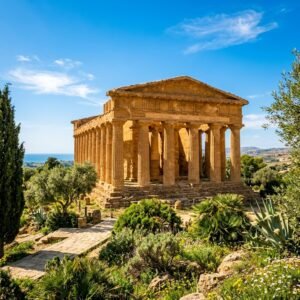

3500-year-old nuragic village near Alghero, featuring two stone towers, circular huts, and a sacred well. Accessible route with informative panels, perfect for combining culture and seaside.
- http://www.sardegnacultura.it/j/v/253?s=27247&v=2&c=2489&c1=2126&visb=&t=1
- Strada Statale 127 bis Settentrionale Sarda, Sassari (SS)
- +39 329 4385947
- Open in Google Maps
- View on Google Images Complesso Nuragico di Palmavera a Sassari
Good to know
Introduction
Historical Background
- 16th-14th cent. BC: Construction of the main tower (keep).
- 9th-8th cent. BC: Expansion of the village with a second tower, outer wall, and new huts (period of maximum flourishing).
- 1963-1964: Beginning of systematic archaeological excavations.
- Today: A museum site open to visitors, one of the best-preserved Nuragic complexes in Northern Sardinia.
The Two Towers and the Courtyard
The Circular Huts: Daily Life
Why Visit
When to Go
In the Surroundings
Itineraries nearby


💡 Did You Know…?
During excavations, everyday objects such as grindstones, loom weights, and ceramics were found, which are now displayed at the Archaeological Museum of Alghero. An interesting fact: the name ‘Palmavera’ might derive from the dwarf palms that grow in the area or, according to some hypotheses, from a term indicating a marshy place. Observing the huts, you’ll notice that some have a central hearth: this is where the community cooked and warmed themselves. The most enigmatic structure is the so-called ‘meeting enclosure,’ where important decisions for the village were probably made. If you visit in spring, you might see wild orchids blooming among the ruins.