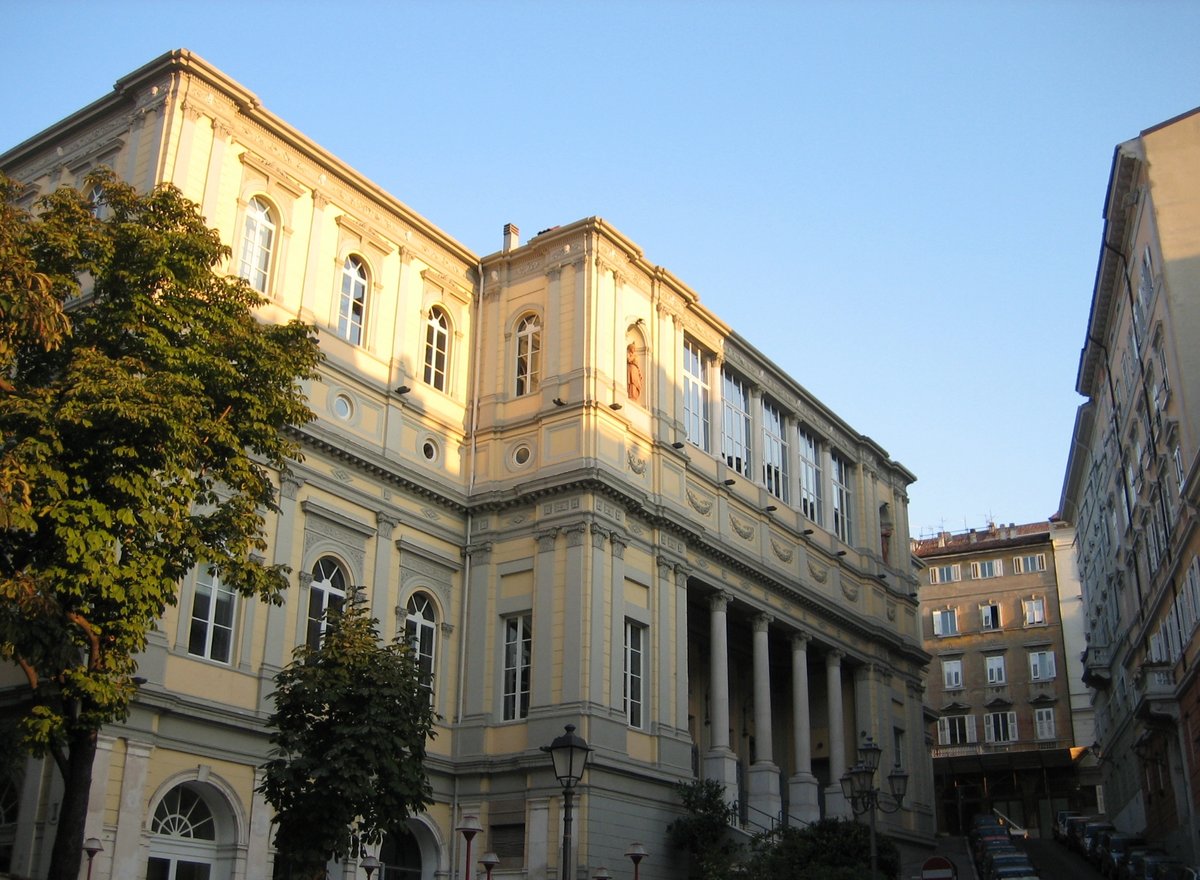
The Politeama Rossetti is Trieste’s most important theater, home to the Teatro Stabile del Friuli Venezia Giulia. Inaugurated in 1878, it is a masterpiece of eclectic neo-Renaissance style with a capacity of over 1,500 seats. Today it offers a rich program of drama, musicals, dance, and cultural events.
– History: inaugurated on April 27, 1878, designed by architect Nicolò Bruno.
– Architecture: monumental facade and originally openable dome.
– Halls: Sala Assicurazioni Generali (1,531 seats) and Sala Bartoli (128 seats) for contemporary drama.
– Events: internationally renowned musicals such as ‘Six’ and ‘The Phantom of the Opera’ in Italian premieres.
Introduction: A Theater That Amazes
The Politeama Rossetti is Trieste’s largest prose theater, with an auditorium that seats 1,531 across the stalls and galleries. It is the home of the Teatro Stabile del Friuli Venezia Giulia, a cornerstone of regional culture. As you ascend the monumental staircase, you realize you are in a special place: the atmosphere is elegant, with red and gold colors and a glowing dome that resembles a starry sky. History permeates the air, yet there’s also a vibrant energy thanks to a program that ranges from international musicals to dance, as well as the finest prose performances.
Introduction: A Theater That Amazes
The Politeama Rossetti is Trieste’s largest prose theater, with an auditorium that seats 1,531 across the stalls and galleries. It is the home of the Teatro Stabile del Friuli Venezia Giulia, a cornerstone of regional culture. As you ascend the monumental staircase, you realize you are in a special place: the atmosphere is elegant, with red and gold colors and a glowing dome that resembles a starry sky. History permeates the air, yet there’s also a vibrant energy thanks to a program that ranges from international musicals to dance, as well as the finest prose performances.
Historical Overview: From 1878 to the Present
The Politeama was inaugurated on
April 27, 1878 with the ballet Pietro Micca, designed by architect Nicolò Bruno in an eclectic Neo-Renaissance style. At the time, it could seat up to 5,000 spectators, a capacity later reduced with renovations. Since 1969, it has been managed by the Teatro Stabile del Friuli Venezia Giulia, which has made it a leading cultural hub. A timeline of key moments:
- 1878: inauguration with a capacity of 5,000 seats
- 1928: first renovation and capacity reduction
- 1969: entrusted to the Teatro Stabile
- 2010: naming of the Sala Assicurazioni Generali
- 2015: recognition by MiBACT as a theater of significant cultural interest
Historical Overview: From 1878 to the Present
The Politeama was inaugurated on
April 27, 1878 with the ballet Pietro Micca, designed by architect Nicolò Bruno in an eclectic Neo-Renaissance style. At the time, it could seat up to 5,000 spectators, a capacity later reduced with renovations. Since 1969, it has been managed by the Teatro Stabile del Friuli Venezia Giulia, which has made it a leading cultural hub. A timeline of key moments:
- 1878: inauguration with a capacity of 5,000 seats
- 1928: first renovation and capacity reduction
- 1969: entrusted to the Teatro Stabile
- 2010: naming of the Sala Assicurazioni Generali
- 2015: recognition by MiBACT as a theater of significant cultural interest
An Architectural Gem
The facade, rising along Viale XX Settembre, is imposing yet welcoming. Inside, the fan-shaped hall with two tiers of galleries and side boxes offers perfect visibility. After the 1999-2001 restoration, the dome was decorated with a starry sky, and the dominant colors are red, gold and blue. The stage is enormous (25×15 meters), but there is no orchestra pit. The Sala Bartoli on the upper floor is an intimate gem with 128 seats, dedicated to contemporary drama. Strolling through the foyer and admiring the bas-reliefs by Marcello Mascherini (1928) is an experience not to be missed.
An Architectural Gem
The facade, rising along Viale XX Settembre, is imposing yet welcoming. Inside, the fan-shaped hall with two tiers of galleries and side boxes offers perfect visibility. After the 1999-2001 restoration, the dome was decorated with a starry sky, and the dominant colors are red, gold and blue. The stage is enormous (25×15 meters), but there is no orchestra pit. The Sala Bartoli on the upper floor is an intimate gem with 128 seats, dedicated to contemporary drama. Strolling through the foyer and admiring the bas-reliefs by Marcello Mascherini (1928) is an experience not to be missed.
International-Class Programming
Politeama is not just about drama: it hosted the Italian debut of Phantom of the Opera (2023) and the national premiere of Six (2024), a successful musical from London. The program also includes classical ballets, such as Giselle by the Moscow Ballet, and big names of Italian theater (Stefano Accorsi, Ale e Franz). The Sala Bartoli, on the other hand, offers more experimental performances, like Lettere a Bernini. In short, there is always something new and the quality is top-notch. Each visit brings a different emotion.
International-Class Programming
Politeama is not just about drama: it hosted the Italian debut of Phantom of the Opera (2023) and the national premiere of Six (2024), a successful musical from London. The program also includes classical ballets, such as Giselle by the Moscow Ballet, and big names of Italian theater (Stefano Accorsi, Ale e Franz). The Sala Bartoli, on the other hand, offers more experimental performances, like Lettere a Bernini. In short, there is always something new and the quality is top-notch. Each visit brings a different emotion.
Why Visit
Three concrete reasons:
1. A unique experience: stepping into a 1,531-seat hall with the acoustics and atmosphere of a historic grand theater is always thrilling.
2. Unmissable shows: Politeama brings international productions in their original language to Italy, with Italian surtitles (e.g., Phantom).
3. A dive into history: since 1878, this theater has hosted generations of audiences and legendary performers (Visconti, Gassman, Melato).
Why Visit
Three concrete reasons:
1. A unique experience: stepping into a 1,531-seat hall with the acoustics and atmosphere of a historic grand theater is always thrilling.
2. Unmissable shows: Politeama brings international productions in their original language to Italy, with Italian surtitles (e.g., Phantom).
3. A dive into history: since 1878, this theater has hosted generations of audiences and legendary performers (Visconti, Gassman, Melato).
When to Go
The best time? During the theater season (fall to spring), when the programming is richest. But if you love musicals, summer is perfect: international productions often arrive (like Phantom in July). I recommend booking well in advance because tickets sell out quickly. For a special atmosphere, choose an evening show: the illuminated facade and monumental staircase create a fairy-tale entrance.
When to Go
The best time? During the theater season (fall to spring), when the programming is richest. But if you love musicals, summer is perfect: international productions often arrive (like Phantom in July). I recommend booking well in advance because tickets sell out quickly. For a special atmosphere, choose an evening show: the illuminated facade and monumental staircase create a fairy-tale entrance.
Nearby
After the show, walk to Piazza Unità d’Italia, just a few minutes away on foot. It’s one of Italy’s largest squares overlooking the sea. If you have time, also visit the nearby Teatro Verdi, Trieste’s other operatic gem. For a quick dinner, the area around Viale XX Settembre has excellent trattorias and pizzerias waiting for theatergoers.
Nearby
After the show, walk to Piazza Unità d’Italia, just a few minutes away on foot. It’s one of Italy’s largest squares overlooking the sea. If you have time, also visit the nearby Teatro Verdi, Trieste’s other operatic gem. For a quick dinner, the area around Viale XX Settembre has excellent trattorias and pizzerias waiting for theatergoers.