Rocca Torrione Cagli: Free Medieval Fortress with Views over the Burano Valley

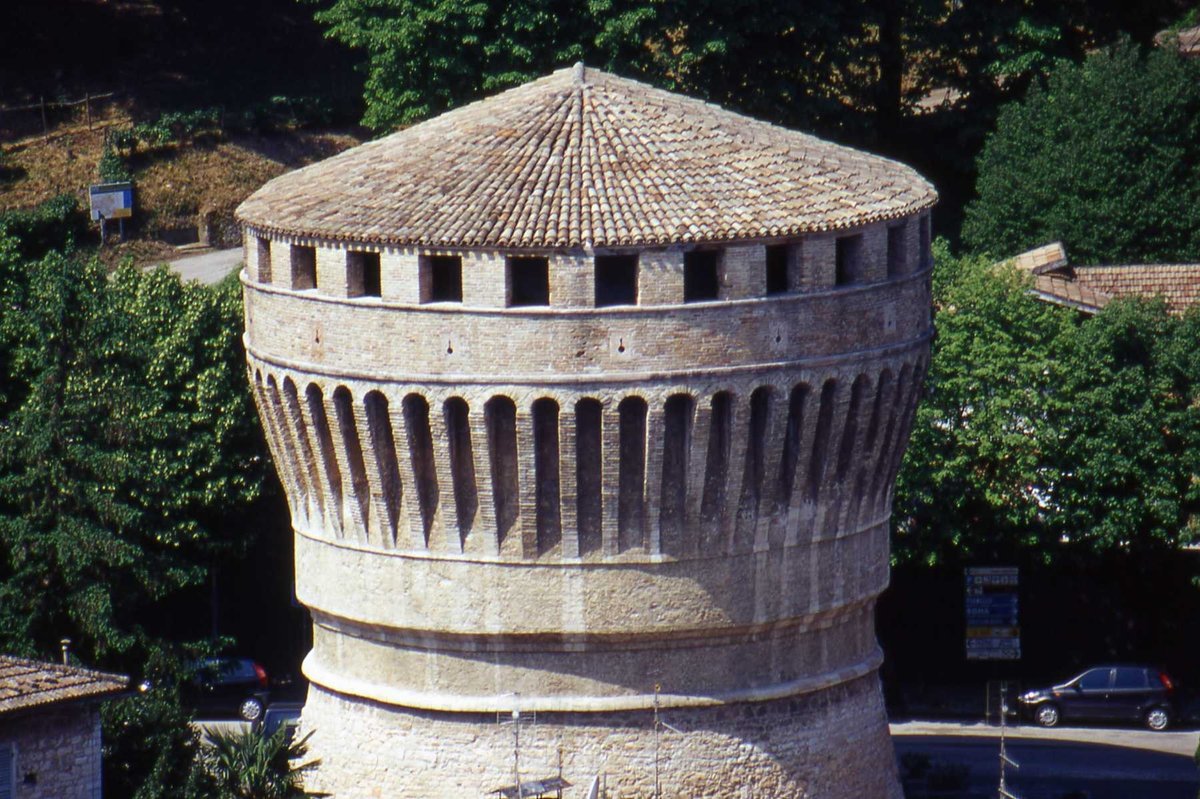
Rocca Torrione is a 15th-century medieval fortress built by the Malatesta family, featuring free entry and a unique vantage point over Cagli and the Burano Valley. The walk-up through the historic village offers picturesque glimpses and an authentic atmosphere away from the crowds.

  • Free entry: open access without a ticket
  • Breathtaking panoramas: views of Cagli, the Burano Valley, and the Apennines
  • Authentic architecture: 14th-century cylindrical sandstone tower
  • Walk-up access: path through the narrow streets of Cagli’s historic center
Copertina itinerario Rocca Torrione Cagli: Free Medieval Fortress with Views over the Burano Valley
Rocca Torrione in Cagli offers free entry, panoramic views of Cagli and the Burano Valley, and 15th-century military architecture by the Malatesta family. A walk-up from the medieval village.

Good to know


Introduction

As soon as you arrive in Cagli, your gaze is captured by an imposing silhouette towering over the medieval village: it’s the Rocca Torrione, a fortress that seems to have stepped out of a history book. It’s not just a monument, but a privileged vantage point. From up there, the view sweeps over the terracotta rooftops of the town and expands across the Burano Valley, a green ribbon cutting through the Marche hills. The emotion, I tell you, is immediate. Climb those ancient stairs and you feel part of a past that is still palpable here, among the stones and the silence. It’s one of those places that makes you understand why the Marche region hides authentic treasures, far from the crowds.

Historical Overview

Rocca Torrione was not built by chance. It was commissioned by the powerful Malatesta family in the 15th century, around 1481, as a defensive stronghold to control the valley. It later came under the rule of the Della Rovere family, lords of Urbino, who reinforced its structure. Over the centuries, it witnessed battles, sieges, and periods of neglect, until a careful restoration returned it to the community. It is not just a tower: it is a symbol of the power and conflicts that have shaped this area. Walking among its walls, you can still sense that frontier atmosphere, between rival states and military strategies.

  • Around 1481: construction commissioned by the Malatesta
  • 16th century: transfer to the Della Rovere of Urbino
  • Centuries of military use and decline
  • Modern restorations for public enjoyment

The Climb and the View

The best part? Climbing to the top. It’s not a challenging hike, but every step offers different glimpses. You pass through narrow passages, emerge onto hidden terraces, and finally reach the summit. From here, the view is breathtaking: you see Cagli spread out at your feet, with its churches and narrow streets, and beyond, the gentle hills of the Marche fading into the horizon. On clear days, you can even make out the profile of the Apennines. I stayed for a long time, almost forgetting about time. It’s one of those places where you feel like sitting down and simply watching, perhaps with a sandwich bought in the village. The atmosphere is quiet, perfect for unwinding.

The Details That Tell the Story

Look closely at the stones. Rocca Torrione isn’t just a solid mass: it has architectural details that speak of its history. You’ll notice narrow arrow slits later widened for cannons, a sign of evolving warfare techniques. In some spots, you can glimpse traces of ancient coats of arms, now worn away by time. Inside, the spaces are essential, without frills, but that’s precisely what makes everything more authentic. I was struck by how the structure integrates perfectly with the village below, almost as if it were a natural extension of the rock. There are no intrusive explanatory panels, just the place speaking for itself. For me, that’s its charm: it doesn’t explain everything, it invites you to imagine.

Why Visit It

Three concrete reasons not to miss it. First: it’s free, yes, there’s no entrance fee, a rarity for sites like this. Second: it offers a unique view of Cagli and the valley, better than any organized viewpoint. Third: it’s an unfiltered dive into the medieval history of the Marche region, away from the more beaten tourist paths. Plus, it’s easily accessible on foot from the center of the village, so you can combine it with a walk through the ancient streets. Perfect if you have little time but want an intense experience.

When to Go

The best time? Late afternoon, when the sun sets behind the hills and the light turns golden, enveloping the fortress stone and the landscape in an almost surreal atmosphere. In summer, avoid the midday hours, as it can get very hot. In autumn, with the changing leaf colors, the spectacle becomes even more captivating. I visited in October, and the cool air, combined with fewer visitors, made everything feel more intimate. In winter, if there’s a bit of fog, the view becomes mysterious, but always check the weather conditions before heading up.

In the Surroundings

After the Fortress, explore the medieval village of Cagli, with its Piazza Matteotti and the Municipal Theatre. Not far away, in the Burano valley, there’s the Ponte Mallio, an ancient Roman bridge perfectly preserved that seems suspended in time. If you enjoy art, a short distance away you’ll find the Hermitage of Fonte Avellana, a place of spirituality immersed in the woods. These are all experiences that complete the visit, showcasing different aspects of this area rich in history and nature.

💡 Did You Know…?

Local legend has it that during the construction of the fortress in 1481, a worker lost his life falling from the scaffolding. It is said that his spirit still protects the tower, and some residents swear they have seen shadows moving among the stones at sunset. Historically, the fortress was commissioned by Federico da Montefeltro to strengthen Cagli’s defenses, but it was partially dismantled in the 16th century to prevent it from falling into enemy hands. Today it remains as a silent witness to the battles that have marked this land.