Scaliger Tombs: Gothic resting places of Verona’s lords with wrought iron enclosure

The Scaliger Tombs are a complex of monumental Gothic-style tombs that house the remains of the Della Scala family, who ruled Verona for over a century. Located behind the church of Santa Maria Antica, they offer an authentic and tranquil atmosphere, easily accessible on foot from the city center and visible even from the outside.

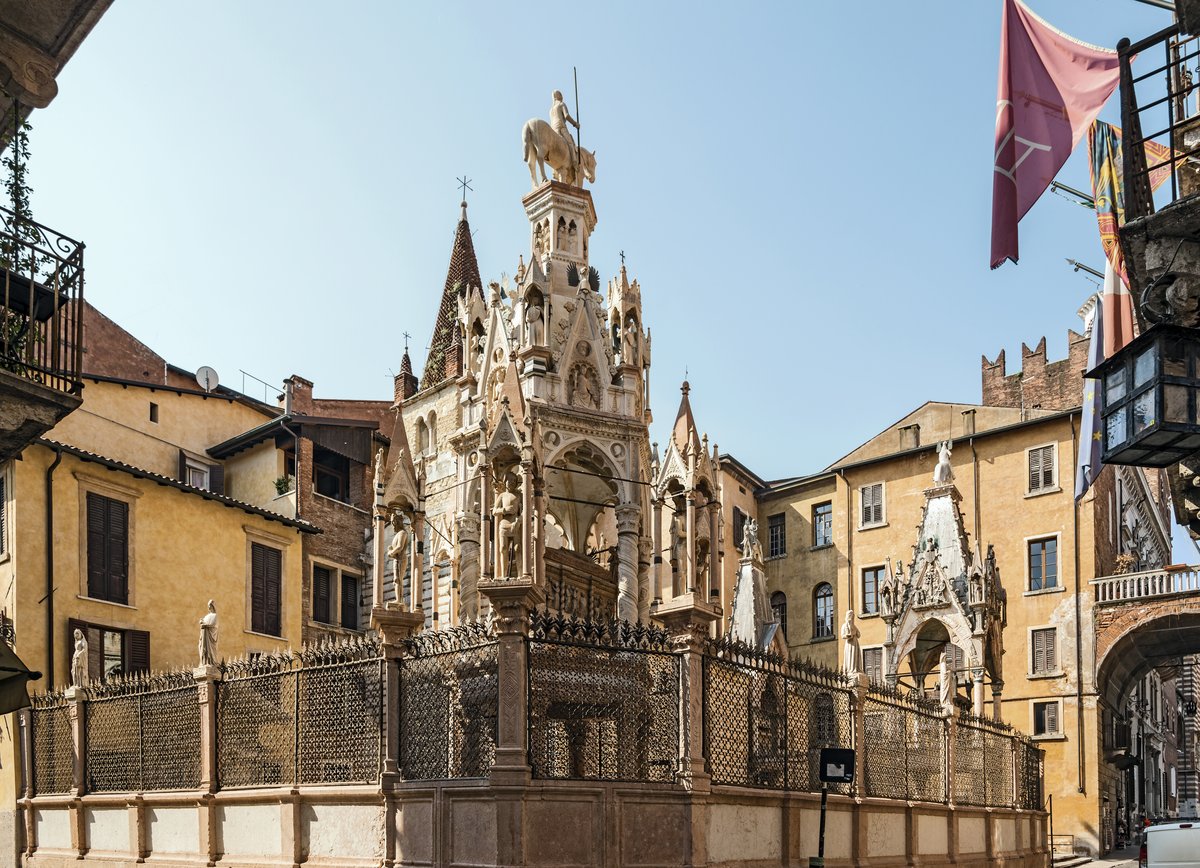
  • Tomb of Cangrande I with equestrian statue and enigmatic smile, the focal point of the complex
  • Wrought iron enclosure with ladder emblem, symbol of the Della Scala family
  • Fourteenth and fifteenth-century Gothic tombs with perfectly preserved spires, statues, and bas-reliefs
  • Central location just steps from Piazza dei Signori, ideal for a quick visit without queues
Copertina itinerario Scaliger Tombs: Gothic resting places of Verona's lords with wrought iron enclosure
Fourteenth and fifteenth-century Gothic funerary monuments in the heart of Verona, steps away from Piazza dei Signori. Admire the tomb of Cangrande I with its equestrian statue, the enclosure with wrought iron ladder, and the medieval atmosphere without the crowds.

Good to know


Introduction

In the heart of Verona, just steps from Piazza dei Signori, the Scaliger Tombs emerge as a perfectly preserved corner of Gothic medieval architecture. This funerary enclosure, surrounded by a wrought iron gate, houses the monumental tombs of the Scaliger lords who ruled the city in the 14th century. It’s not just a cemetery: it’s a masterpiece of sculpture and architecture that transports you back in time, with its sharp spires, equestrian statues, and intricate bas-reliefs. The visual impact is striking, especially as it’s located in a quiet courtyard, away from the crowds of Piazza Erbe, offering a moment of authentic atmosphere without the need for tickets or queues.

Historical Background

The Arches were built between 1277 and 1387 as the mausoleum of the powerful Della Scala (Scaligeri) family, who ruled Verona for over a century. The most imposing is that of Cangrande I, the figure who brought the lordship to its peak of splendor, topped by his equestrian statue with an enigmatic smile. Following are the tombs of Mastino II and Cansignorio, richly decorated with religious motifs and family coats of arms. The structure, in Venetian Gothic style, shows the artistic influence of the era and the desire to immortalize power through art.

  • 1277: Construction of the funerary complex begins.
  • 1329: Death of Cangrande I and creation of his monumental arch.
  • 1387: Fall of the Scaliger lordship, but the Arches remain a symbol of their rule.

Cangrande’s Ark: A Masterpiece to Behold

The Ark of Cangrande I is the centerpiece of the complex. Positioned high above the portal of the Church of Santa Maria Antica, it captivates with its equestrian statue: the lord is depicted on horseback, wearing armor and with a smile that seems to look downward, as if still protecting the city. On the sides, bas-reliefs depict tales of chivalric virtues and religious scenes, while twisted columns and pinnacles create an upward thrust toward the sky. It is not just a tomb, but a political manifesto in stone, designed to impress contemporaries and convey the greatness of the Scaligeri. Observe it up close: the details of the drapery and coats of arms reveal the exceptional skill of Veronese stonemasons from the fourteenth century.

The Enclosure and Its Atmosphere

Beyond the main tombs, the enclosed area creates a unique atmosphere. The wrought iron gate, with its ladder emblem (symbol of the family), marks a secluded space containing other minor burials, including those of family members and descendants. Here, silence is broken only by the footsteps of the few visitors, allowing one to appreciate the contrast between the white marble of the tombs and the red bricks of the surrounding buildings. It is a place for reflection, where one senses the transition from life to power immortalized in stone. Its location, hidden among the palaces, makes it a discovery for those seeking less-traveled corners, perfect for a pause while exploring the historic center.

Why Visit It

Visit the Scaliger Tombs for three practical reasons: first, they are an exceptional example of civil Gothic art, rare in Italy, allowing you to see medieval sculptures up close without barriers. Second, the location is extremely convenient: they are just two minutes from Piazza Erbe, so you can easily include them in a walking itinerary in the city center. Third, they offer a peaceful and crowd-free experience compared to other Veronese monuments, ideal for those who want to delve into history without stress. Additionally, the view of the tombs illuminated at sunset creates a magical atmosphere, especially when combined with a visit to the nearby church of Santa Maria Antica.

When to Go

The best time for a visit is early afternoon, when the sunlight directly hits the arches, highlighting the details of the sculptures and creating shadow plays on the marble. In terms of season, opt for the autumn months or late spring: the mild climate allows you to linger comfortably, and the sky colors blend with the white stone, offering evocative photographs. Avoid the midday hours in summer, when the heat can make the stay less pleasant, and take advantage of the tranquility of weekday mornings if you seek an even more intimate atmosphere.

In the Surroundings

Complete your medieval experience with a visit to the Castelvecchio Museum, just a few minutes’ walk away, where Scaliger artifacts and the original statue of Cangrande are preserved. For a broader historical context, explore Piazza dei Signori, with the Town Hall and the Loggia del Consiglio, the heart of Scaliger power. If you appreciate funerary art, don’t miss Juliet’s tomb (though legendary) at the nearby Casa di Giulietta, offering a contrast between real memory and romantic imagination.

💡 Did You Know…?

Look closely at the tomb of Cangrande I: the equestrian statue on top depicts the lord of Verona with an enigmatic smile, a rare detail for the time. According to some local sources, that smile would symbolize his fame as a magnanimous military leader. Additionally, the sculptures of the patron saints on the smaller tombs still show traces of original color, an echo of the medieval chromatic vibrancy often forgotten.