Castelvecchio is the most important military monument of the Scaliger dominion, today home to one of Italy’s richest museums. Its exhibition path, curated by Carlo Scarpa, reveals works from the Middle Ages to the 18th century, while the fortified bridge offers a walk along the Adige. Here’s what not to miss: • The equestrian statue of Cangrande I • The Madonna of the Quail by Pisanello • The rampart walks with a view of the city • The early Renaissance rooms with Mantegna and Bellini.
Introduction
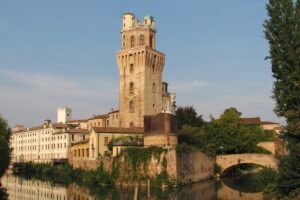
Stepping into Castelvecchio is like traveling back in time 700 years. The Scaliger Bridge, with its imposing arches and Ghibelline battlements, greets you from afar. Once you cross the threshold, you’re inside history: exposed brick, soaring towers, a silence broken only by the echo of footsteps. It’s a fortress, yes, but also a museum that surprises you at every turn. Here, the Middle Ages and modernity coexist, thanks to the genius of Carlo Scarpa. It’s not just a place to see – it’s an experience that captures you.
Historical Notes
Castelvecchio originated as a Scaliger stronghold. Cangrande II had it built in 1354 to protect himself from plots and popular uprisings. The original name? Castello di San Martino in Aquaro, from the small church incorporated within. After the Scaligers, it passed to the Visconti, then to the Venetians, who turned it into an arsenal. Napoleon adapted it into a barracks, cutting off the towers. The Austrians installed a telegraph station. In 1923, a stylistic restoration gave it back its medieval appearance. During the war, in 1945, the Germans blew up the bridge. Faithfully rebuilt between 1948 and 1951. From 1958, Carlo Scarpa revolutionized the museum.
Architecture: Battlements, Keep, and Bridge
The castle is divided into two courtyards: the Scaliger Palace and the Court of Arms. At the center stands the 42-meter-high keep, from which the three-arched Scaliger Bridge begins. The largest arch has a span of 48.69 meters: a record for its time. Ghibelline swallowtail battlements are everywhere. The 12th-century municipal walls act as a divider. Walking along the walkways, opened in 2007, you see Verona from above. Scarpa’s restoration has left the layers exposed: ancient bricks next to concrete and steel. A masterpiece of balance.
The Museum: Masterpieces and Exhibition Design
The Castelvecchio Museum is a journey through art from the Middle Ages to the 18th century. On the ground floor, Romanesque and Gothic sculptures, including tuff statues from the School of Sant’Anastasia. Upstairs, the art gallery: Pisanello’s Madonna of the Quail, Mantegna’s Holy Family, works by Bellini, Crivelli, and Veronese. In the keep, Lombard weapons and armor. The equestrian statue of Cangrande I, with his dog-headed helmet, dominates the courtyard. Scarpa’s exhibition design is brilliant: each work dialogues with the space. Don’t miss Cangrande’s sword and the medieval jewels.
Why Visit It
First, it’s a world-class museum, with works ranging from Pisanello to Veronese, set in a unique environment. Second, the architecture itself is an attraction—the bridge, the towers, the walkways. Third, it’s a perfect example of museum restoration, designed by Carlo Scarpa, who managed to blend ancient and modern without betraying history. And then, the view from the bridge over the Adige gives you a different perspective of Verona. In short, a mix of art, history, and atmosphere that few fortresses can offer.
When to Go
The best time? Late afternoon, when the low sun lights up the red bricks and the Scaliger Bridge reflects in the Adige. The light is warm, the shadows long. In autumn, the city’s colors come alive. But even a winter morning, with a clear sky, has its charm: fewer crowds, more silence. Avoid the weekend if you can, and choose a weekday. If you arrive at opening time, at 10 am, you almost have the castle to yourself.
In the Surroundings
Just a few steps away, Piazza Bra with the Verona Arena: a Roman amphitheater that alone is worth the trip. If you have some time left, take a stroll to Ponte Pietra, the oldest Roman bridge in the city, with the Gavi Arch. Or, for a dive into medieval Verona, the Scaliger Tombs are a five-minute walk away. All these places complete the visit to Castelvecchio, creating a compact itinerary in the historic center.