
The Segesta Archaeological Park, in Calatafimi Segesta, is a journey through history spanning Greek, Roman, and medieval cultures. Its symbol is the unfinished 5th-century BC Doric temple that dominates the valley. The Greek theater offers a spectacular panorama of the surrounding landscape.
– Doric temple: 36 columns, never finished, dedicated to Aphrodite Urania
– Greek theater: 4,000 seats, panoramic view, used for summer performances
– Medieval remains: castle, mosque, and Norman church
– Sanctuary of Contrada Mango and sacred cave
Events nearby

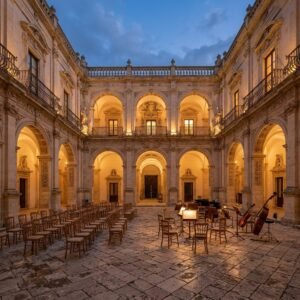

Everything you need to know to visit the Segesta Archaeological Park: the unfinished 5th century BC Doric temple, the Greek theater with stunning views, and medieval remains. Hours, tickets, and tips for your visit.
- https://www.parcodisegesta.com/home.html?gclid=Cj0KCQjw2MWVBhCQARIsAIjbwoO3kSCOhafx4JpA29koucri1kAOGWXx09GzeS9uGh9gEo6-4CueTt8aAhlSEALw_wcB
- parco.archeo.segesta@regione.sicilia.it
- Strada Regionale 22 di accesso al Tempio di Segesta, Trapani (TP)
- +39 0924 954665;+39 0924 952356
- Open in Google Maps
- View on Google Images Sito Archeologico di Segesta a Trapani
Good to know
Evocative Introduction
Historical Background
- 5th century BC – Construction of the Doric temple and early fortifications.
- 409 BC – Carthaginian conquest, temple work halted.
- 260 BC – Passed to the Romans, tax exemption granted.
- 2nd century BC – Theater construction.
- 13th century – Norman castle and mosque.
The Doric Temple: A Stone Enigma
The Greek Theatre: Spectacle and Panorama
Why Visit
When to Go
In the Vicinity
Itineraries nearby


💡 Did You Know…?
In 2020, a stele revealed that the temple was dedicated to Aphrodite Urania, unveiling a connection to the goddess’s cult. Moreover, legend has it that Segesta was founded by Trojan refugees led by Aeneas, a myth that the Romans exploited to justify privileges for the city.