St. Mark’s Campanile: 360° View of Venice and the Lagoon from 98.6 Meters

St. Mark’s Campanile, standing at 98.6 meters tall, is Venice’s highest panoramic viewpoint. A comfortable elevator takes you directly to the terrace for a 360-degree view over the city and lagoon. The structure, faithfully rebuilt in 1912 after its collapse in 1902, is a historical symbol accessible to all.

  • Unique panoramic view encompassing St. Mark’s Basilica, Doge’s Palace, the Basin, and islands like San Giorgio Maggiore.
  • Comfortable elevator making the ascent accessible without stairs, suitable for families too.
  • Fascinating history with five historical bells, including the Marangona, which have marked Venetian life for centuries.
  • Central location in St. Mark’s Square, perfect for including in any sightseeing itinerary.
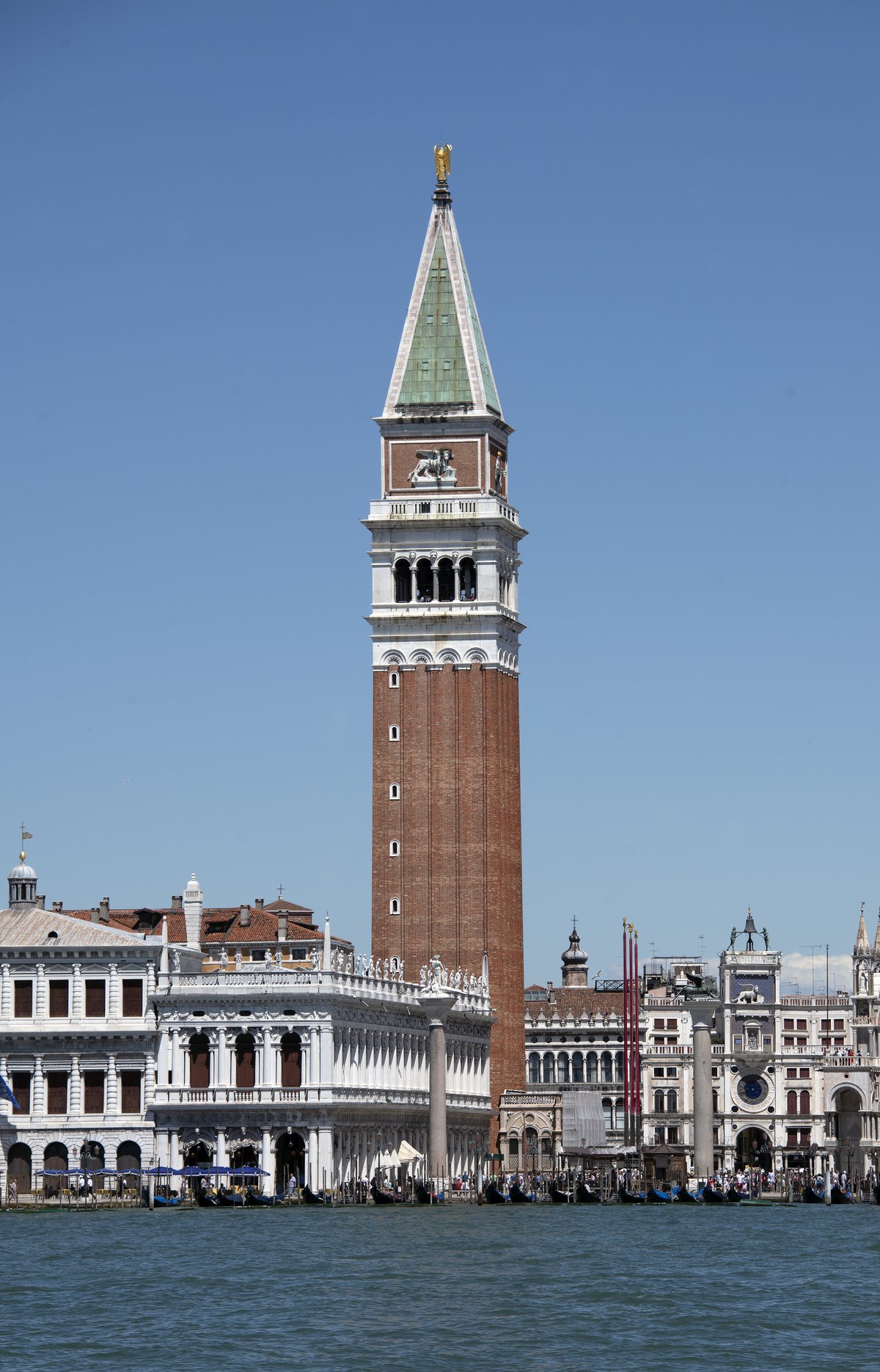
Copertina itinerario St. Mark's Campanile: 360° View of Venice and the Lagoon from 98.6 Meters
Take the elevator to the top of St. Mark’s Campanile to admire the Basilica, Doge’s Palace, the Basin, and the lagoon islands. Breathtaking panorama and Venetian history.

Good to know


Introduction

Climbing the St. Mark’s Campanile is an experience that offers a unique emotion: from here, Venice reveals itself in all its magic. At 98.6 meters high, the gaze spans over a mosaic of rooftops, small squares, and canals, all the way to the lagoon dotted with islands. It’s not just a panoramic viewpoint, but the beating heart of the city, where the toll of the Marangona, the oldest bell, has marked the lives of Venetians for centuries. The view embraces St. Mark’s Basilica, the Doge’s Palace, and the Bacino, offering a perspective that no photo can capture. Perfect for those who want to grasp the essence of Venice from above, the campanile is an unmissable stop, capable of astonishing even those who believe they already know every corner of the city.

Historical Overview

The St. Mark’s Campanile has a turbulent and fascinating history. Originally built in the 9th century as a watchtower and lighthouse, it was rebuilt several times: its current appearance dates back to the 16th century, designed by Bartolomeo Bon. In 1902, it collapsed dramatically, but the Venetians wanted it rebuilt “as it was, where it was,” reopening it in 1912. Today, it houses five bells, each with a historical function: besides the Marangona, the Nona marked the hours, the Trottiera called nobles to meetings, the Mezza Terza announced Senate sessions, and the Renghiera or Maleficio accompanied capital executions. Its brick structure, clad in marble, is a symbol of resilience and Venetian identity.

  • 9th century: First construction as a watchtower.
  • 1514: Renaissance reconstruction by Bartolomeo Bon.
  • July 14, 1902: Sudden collapse with no casualties.
  • April 25, 1912 (St. Mark’s Feast Day): Reopening after faithful reconstruction to the original.

The Elevator and the 360-Degree View

Unlike many historic bell towers, there’s no need for endless stairs here: a comfortable elevator takes you to the top in just a few minutes, making the experience accessible to almost everyone. Once on the terrace, the 360-degree view is breathtaking. To the south, you can admire the Basin of San Marco with the island of San Giorgio Maggiore and the Lido in the background; to the north, the skyline of the Castello district’s rooftops and the historic Arsenal; to the west, the Rialto Bridge and the Grand Canal winding between palaces. On clear days, you can even glimpse the Dolomites on the horizon. The terrace is spacious and safe, with high railings, ideal for taking photos without rush. Note: the wind can be strong, so it’s best to hold onto hats and smartphones securely!

The Bells and Their Chimes

Climbing the bell tower isn’t just about the view: it’s also an immersion into Venice’s sonic tradition. The five bells, now electrified, were once rung manually by bell ringers to signal civic and religious events. Each chime had a specific meaning: the Trottiera, for example, called members of the Great Council to the Doge’s Palace. If you visit during holidays like Carnival or the Feast of the Redeemer, you might hear bell concerts resonating across the city. Inside, a small exhibition tells the story of the bells and their restoration. For the curious, ask the staff: they sometimes share anecdotes about when Venetians regulated their day by listening to these chimes.

Why Visit It

Three practical reasons not to miss it: first, the unique panoramic view that allows you to perfectly orient yourself in the city, identifying key landmarks and planning the rest of your tour; second, its accessibility thanks to the elevator, suitable for families with children or those who don’t want to tackle staircases; third, the living historical context, because it’s not just a viewpoint but a symbol that has witnessed collapses, reconstructions, and celebrations, telling centuries of Venetian life. Additionally, its location in St. Mark’s Square makes it easy to include in any itinerary, perhaps combined with a visit to the Basilica.

When to Go

To avoid crowds and enjoy the view at your leisure, aim for the early morning right after opening, especially during peak season. The atmosphere is more peaceful, and the rising sun casts warm colors over the lagoon. Alternatively, late afternoon near closing time offers spectacular sunsets, with golden reflections on the rooftops and water. Avoid midday in summer, when heat and crowds can make the experience less pleasant. In winter, clear days after a snowfall are rare but unforgettable, with the city wrapped in a quiet, enchanting atmosphere.

In the Surroundings

After descending, explore St. Mark’s Square: visit St. Mark’s Basilica for its Byzantine mosaics and Treasury, or the Doge’s Palace to uncover the secrets of Venetian governance. For a water-themed experience, take a gondola ride through nearby canals, such as the Rio di Palazzo next to the Bridge of Sighs, to see Venice from a perspective opposite that of the bell tower. If you prefer something less touristy, head to the Castello District, with its authentic alleyways and the Scuola di San Giorgio degli Schiavoni, which houses masterpieces by Carpaccio.

💡 Did You Know…?

The original campanile, built in the 9th century, suddenly collapsed on July 14, 1902, without causing any casualties thanks to a caretaker who noticed dangerous cracks and evacuated the area. The reconstruction was unanimously decided by the City Council with the motto ‘where it was and as it was,’ using many recovered original materials. Today, at the top, the statue of the Archangel Gabriel turns with the wind, serving as a weathervane. Venetians affectionately call the campanile ‘el paron de casa’ (the master of the house).