Introduction
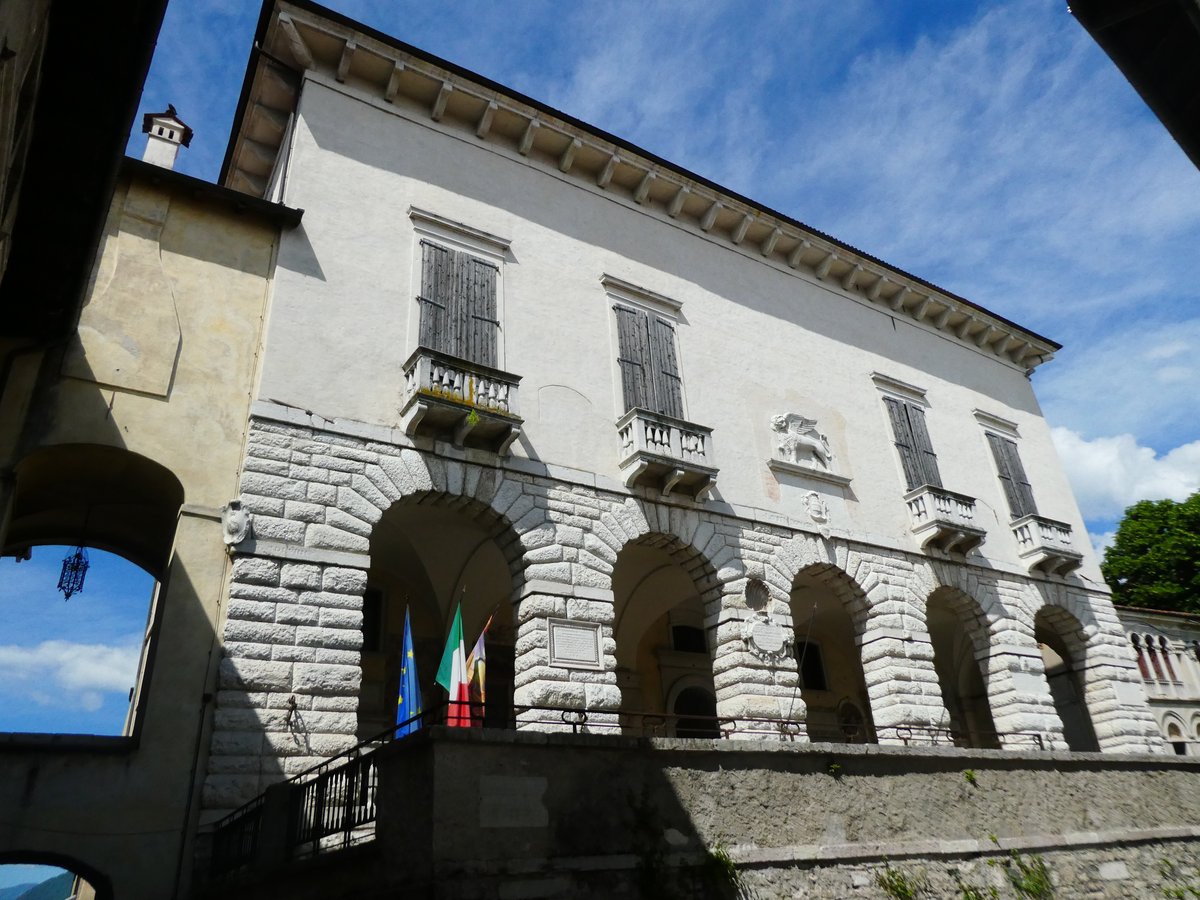
As soon as you enter Piazza Maggiore in Feltre, the Teatro De La Sena captures your attention with its elegant and understated neoclassical facade. It’s not one of those monumental theaters that leave you awestruck by their size, but rather an intimate place that seems to hold stories. You feel it immediately: the atmosphere here is different. Perhaps because it’s nestled in the heart of the historic center, among ancient buildings, and it almost feels like a drawing room from another era. I discovered it almost by chance, wandering through the cobblestone streets, and that entrance door piqued my curiosity. Inside, you’ll find a small 19th-century gem that is still today the beating heart of Feltre’s cultural life, not just a museum. A place where history is palpable, but which continues to live through performances and events.
Historical Background
The history of Teatro De La Sena begins in the first half of the nineteenth century, when a group of affluent citizens of Feltre felt the need for a venue dedicated to culture and entertainment. The project was entrusted to the Feltre-born architect Giuseppe Segusini, the same who left his mark on many of the city’s buildings. The theatre was inaugurated in
1847 and has since remained a landmark. It has undergone transformations, restorations (one significant in the 1990s), and has hosted everything: from nineteenth-century prose to operettas, and up to today’s concerts and cultural events. It is not merely a building, but a piece of the city’s identity that has traversed the ages.
- 1847: Inauguration of the theatre, designed by Giuseppe Segusini.
- Late 1800s – early 1900s: A period of great activity with touring companies and performances for the local bourgeoisie.
- 1990s: A major restoration project that returned the theatre to its former glory, while updating its technologies.
- Today: Home to an active theatre season and cultural events for the community.
The Interior: A Bourgeois Living Room
Crossing the threshold, you enter a not overly large but well-kept foyer. The real surprise is the horseshoe-shaped hall. The acoustics are excellent, they say, and it’s easy to see why: the intimate dimensions (a few hundred seats) create a truly special atmosphere. The wooden boxes, arranged on three tiers, are decorated with golden stucco and red velvet, in that typical 19th-century Venetian style. It’s not as lavish as La Fenice; it has a more understated, almost familiar elegance. Looking at the ceiling, one might sometimes expect a fresco, but here it is simple, linear. The stage is not huge, but sufficient for theater companies and chamber concerts. What strikes you is the feeling of being in a ‘lived-in’ place, where every chair and every curtain tells of evenings of theater, laughter, and applause. A detail I liked? The orchestra seats are comfortable, not uncomfortable like in some historic theaters!
Not Just a Theater: The Life of De La Sena Today
The beauty of De La Sena is that it’s not a relic locked away in a glass case. It’s a theater that breathes and lives all year round. If you happen to be in Feltre, always check the program: beyond the traditional drama season (with companies of good quality), concerts, children’s events, book presentations, and cultural meetings take place here. During the lively Palio di Feltre (in August), the theater often serves as a backdrop for related events. Sometimes they also organize guided tours that let you explore backstage and dressing rooms, an opportunity to discover corners usually hidden from view. I was fortunate enough to attend a chamber music concert, and the intimacy of the hall made everything more magical. This is what makes it special: it’s a community heritage, used and loved by the people of Feltre. Not a monument, but a meeting place.
Why Visit It
For at least three concrete reasons. First: it’s a perfect example of 19th-century provincial theater architecture, authentic and well-preserved, without the crowds of more famous theaters. Second: it offers the rare opportunity to see a historic theater still in operation. You can visit it perhaps in the morning and, if possible, return in the evening for a performance, experiencing it in two completely different ways. Third: its location in the center of Feltre makes it a natural stop while exploring the city. You don’t need to make detours: it’s right there, in the square, and visiting it gives you an additional key to understanding the cultural and social history of this corner of Belluno.
When to Go
The theater visit itself is beautiful at any time, but for a fuller experience, I recommend aiming for a late afternoon on a weekday in spring or autumn. The slanting light coming through the windows illuminates the hall in a suggestive way, and there’s a better chance of finding the theater open and quiet, perhaps during rehearsals for a show. Avoid summer closure periods (often August) if you want to ensure access. If you can, combine the visit with an evening performance: the atmosphere with the hall lights on is completely different and truly exciting.
In the Surroundings
Stepping out of the theatre, you find yourself in the heart of Feltre. To continue exploring culture and history, take a short walk to the Civic Museum of Feltre, housed in Palazzo Villabruna, which tells the city’s story through archaeological finds and artworks. For a different yet complementary experience, head up to the higher part of the city to see the Castle of Alboino and the Cathedral. From there, the view over the valley is splendid, and you’ll understand why Feltre is called the ‘painted city’, thanks to the frescoes on the palace façades. If you’re in the mood for a break, the narrow streets around the theatre offer excellent pastry shops and typical local spots.