
🧭 What to Expect
- Ideal for discovering historical architecture and the authentic atmosphere of a Campanian city.
- Cathedral with Romanesque crypt and Baroque Bellerophon Fountain in the urban heart.
- Panoramic Clock Tower and War Memorial that recount local history.
- Easily walkable route with maps for each stop included in the article.
The City of Avellino reveals itself through historic architecture and authentic atmospheres. Avellino Cathedral, with its neoclassical façade and Romanesque crypt, preserves centuries of religious history. Nearby, the Bellerophon Fountain dominates Piazza della Libertà with its Baroque sculptures recounting the myth of the Greek hero. The Clock Tower, symbol of the historic center, offers charming glimpses over the city's rooftops, while the War Memorial in Piazza Castello commemorates the events of the Avellinese community. A destination that unites art, memory, and tradition in a compact and genuine urban setting.
Avellino Cathedral
- Via Sette Dolori, Avellino (AV)
- Open in Google Maps
- View on Google Images
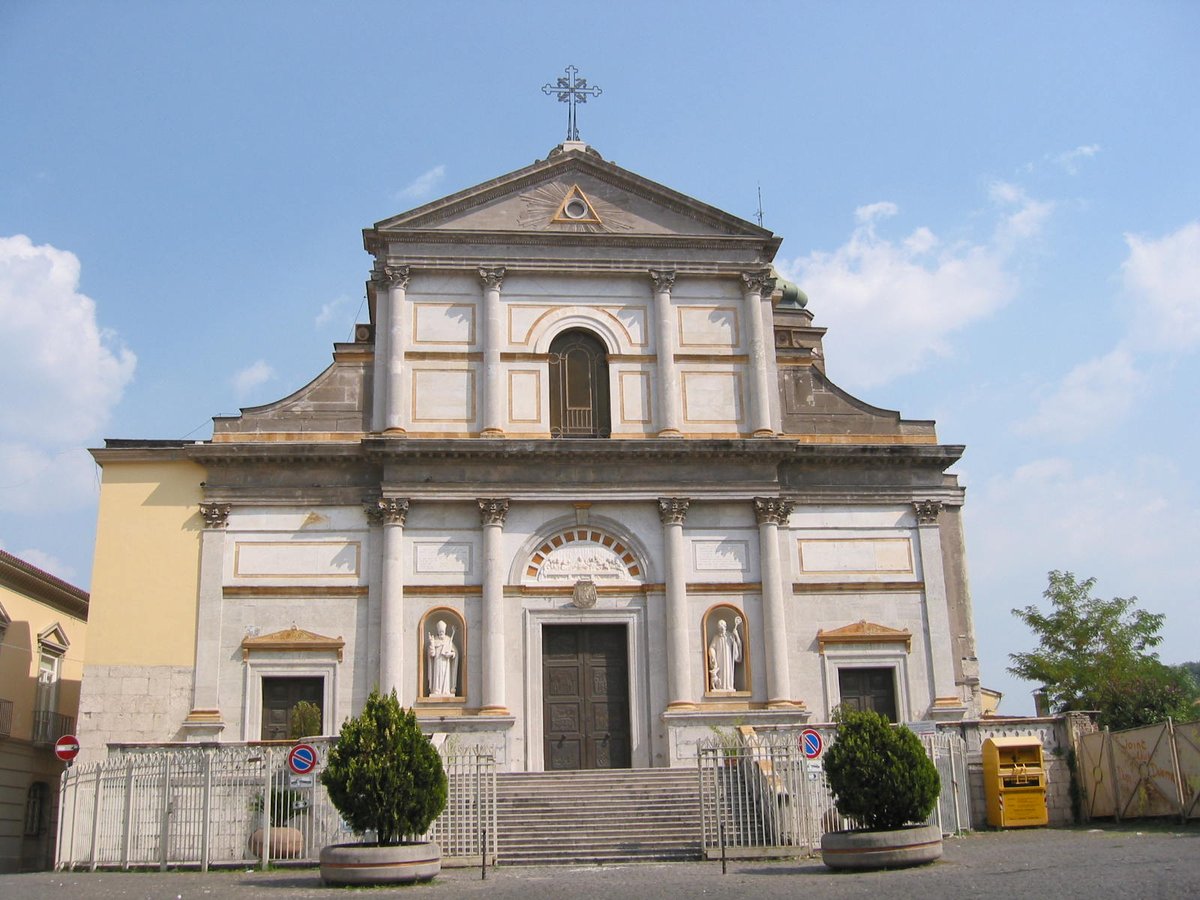 The Avellino Cathedral, dedicated to the Assumption, dominates the historic center with its imposing neoclassical facade. Built on the ruins of an ancient Roman temple, it preserves a thousand-year history that began in the 11th century. Upon entering, the eye is captured by the splendid 17th-century coffered ceiling, richly decorated with golden motifs. The side chapel houses the Treasury of Saint Modestinus, the city's patron saint, with priceless reliquaries and sacred vestments. Don't miss the perfectly preserved 18th-century organ and the Romanesque crypt that preserves medieval frescoes. During holidays, the cathedral comes alive with solemn celebrations involving the entire community. The recently redeveloped square in front offers a magnificent view of the building and is the ideal starting point for exploring the historic center. Its central location makes it easily accessible on foot from any point in the city.
Avellino Cathedral
Bellerophon Fountain
- Gradelle alla fontana, Avellino (AV)
- Open in Google Maps
- View on Google Images
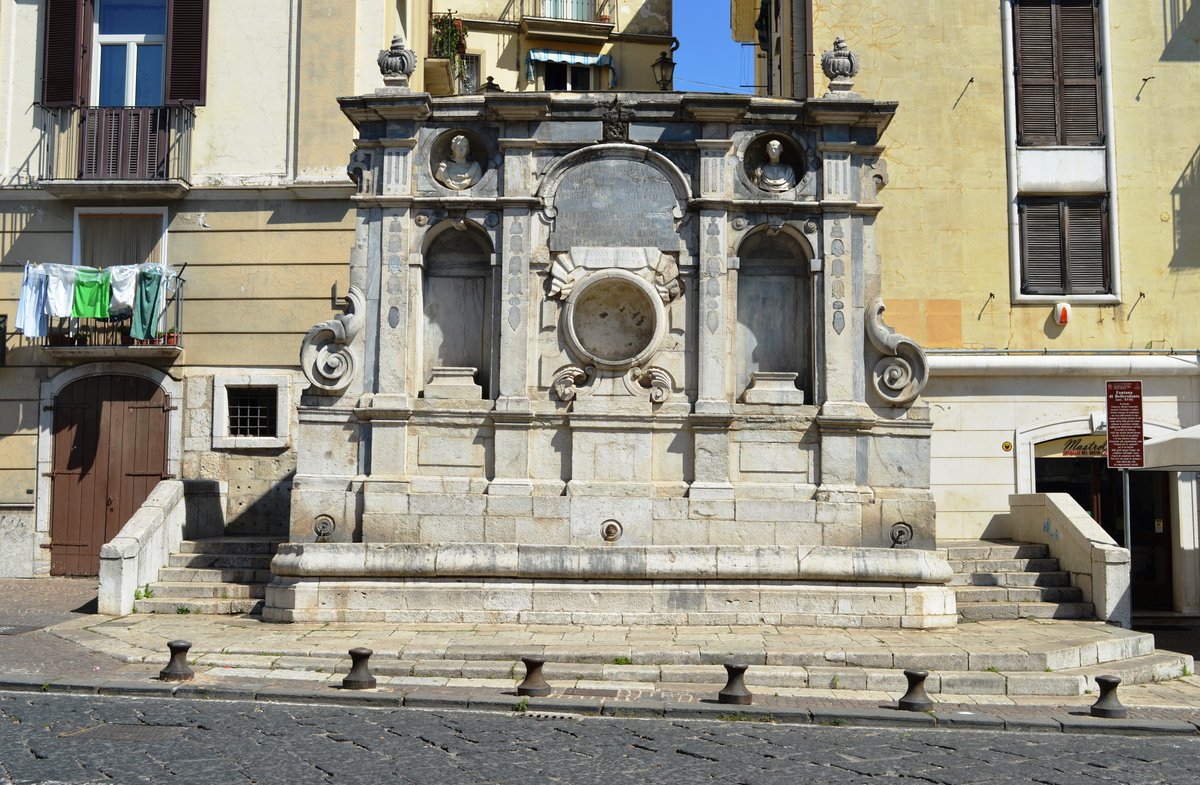 The Bellerophon Fountain stands majestically in Piazza della Libertà, the beating heart of Avellino. Created in the 17th century by Cosimo Fanzago, one of the leading exponents of Neapolitan Baroque, this fountain is not just a work of art but a true city symbol. Look closely at the complex white marble sculpture: at the center triumphs Bellerophon riding Pegasus while confronting the Chimera, a sculptural group full of dynamism and dramatic tension. The four lions on the sides, carved with extraordinary realism, almost seem to roar as they pour water into the basins below. For the people of Avellino, the fountain has always represented more than just decoration: it was the meeting point, the place where women went to fetch water and where the city's social life unfolded. Today, fully restored, it continues to be the focal point of urban life, magically illuminated in the evening when water displays create evocative reflections on the marble. Don't miss the details of the Baroque shells and masks that adorn the base, authentic masterpieces of 17th-century craftsmanship. Its central location allows you to admire it comfortably while enjoying a coffee in one of the nearby cafes or during an evening stroll. It's one of those monuments that tells centuries of history simply by being there, immobile and majestic.
Bellerophon Fountain
Clock Tower
- Salita Cosimo Fanzago, Avellino (AV)
- Open in Google Maps
- View on Google Images
 The Clock Tower of Avellino stands majestically in Piazza della Libertà, dominating the historic center's panorama with its 40-meter height. Built in 1668 based on a design by architect Cosimo Fanzago, this bell tower represents one of the most iconic monuments of the Irpinian city. The structure, made of local stone, features a square base that develops into three superimposed levels, culminating in the characteristic bell chamber topped by a dome covered in majolica. The original mechanical clock, still perfectly functional, has been marking time for the people of Avellino for over three centuries. Climbing the 122 steps of the internal staircase offers a breathtaking panoramic view of the entire city and the surrounding mountains. The tower has withstood numerous earthquakes, including the one in 1980 that caused severe damage throughout Irpinia, demonstrating the solidity of its construction. Today, it's possible to visit the interior during cultural events organized by the Municipality, discovering the mechanisms of the historic clock and admiring up close the bells that still ring for the city's main occasions. Its central location makes it the ideal reference point to begin any itinerary for discovering Avellino.
Clock Tower
War Memorial
- Via Francesco De Sanctis, Avellino (AV)
- Open in Google Maps
- View on Google Images
 The War Memorial of Avellino stands majestically in Piazza Libertà, the beating heart of the city. Created in 1928 by sculptor Giovanni Nicolini, this imposing bronze group depicts a dying soldier supported by a winged Victory, symbolizing sacrifice and rebirth. The statue rests on a tall base made of local stone, engraved with the names of the Irpinian fallen of the First World War. Its central location makes it an unavoidable landmark during any stroll through the city center. Observing the sculptural details up close, you'll notice the expressive intensity of the faces and the care in the drapery, elements that convey a deep sense of respect. The monument is not just a work of art, but a place of reflection: commemorative ceremonies are held here, especially on November 4th, when the square fills with wreaths and flags. Its placement next to the City Hall and the Bellerofonte Fountain creates a historical-architectural triangle of great impact. To best appreciate it, visit in the evening hours, when the night lighting enhances its volumes and shadows, offering a suggestive atmosphere. Remember to spend a few minutes reading the inscriptions: they tell personal stories that give voice to collective memory. A touching experience that unites art, history, and Irpinian identity.
War Memorial