Villa Poppaea in Torre Annunziata: Vibrant Frescoes and a 60-Meter Roman Pool

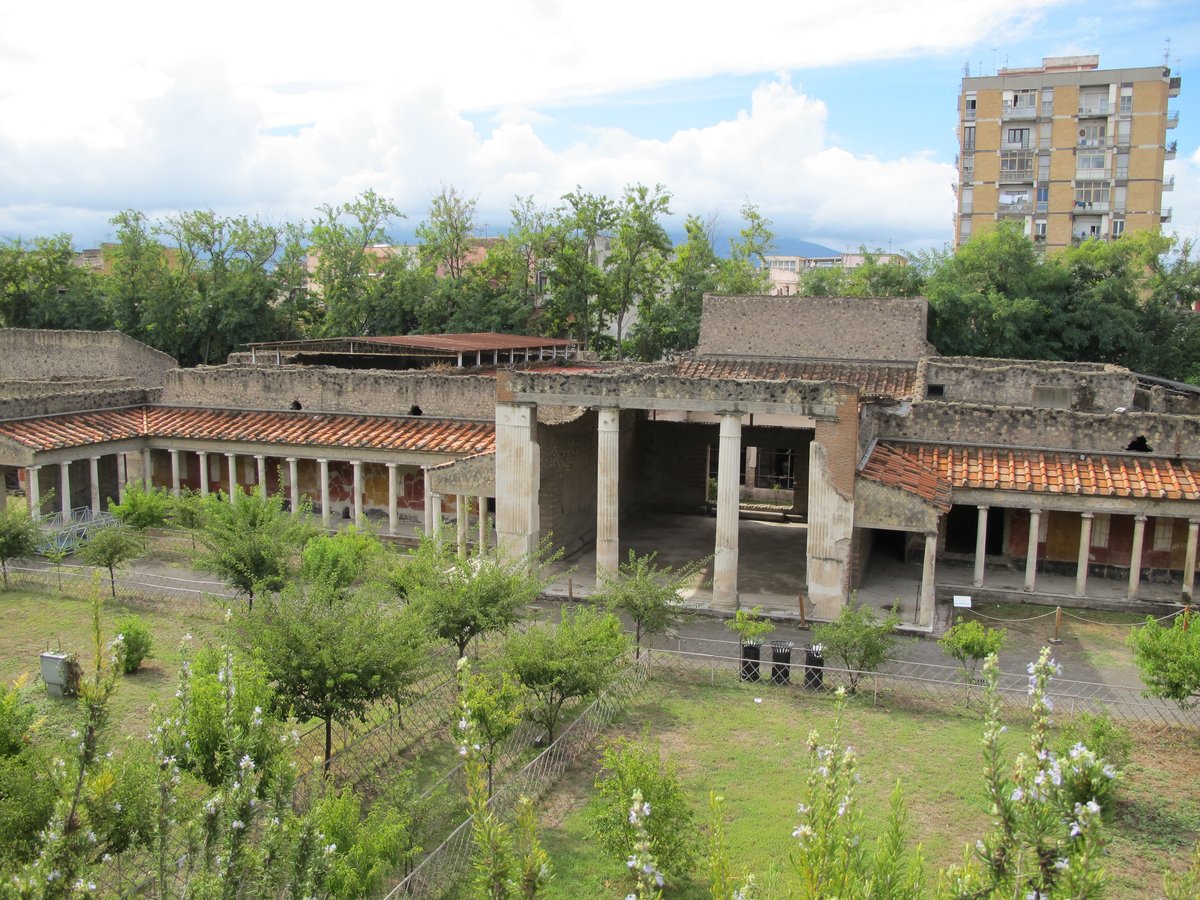
Villa Poppaea in Torre Annunziata, known as Oplontis, is a 1st-century AD Roman villa, likely belonging to Poppaea Sabina, wife of Nero. Buried by the eruption of Mount Vesuvius in 79 AD, it was preserved under a layer of mud and lapilli, leaving frescoes, mosaics, and architectural structures intact. It offers an authentic and intimate experience, away from the bustle of more famous sites.

  • Second Pompeian Style frescoes with vibrant colors and perfectly preserved mythological scenes.
  • Large Roman pool over 60 meters long and a reconstructed garden with ancient plants.
  • Private baths with a hypocaust heating system still visible.
  • UNESCO World Heritage site with an intimate atmosphere, free from the crowds of Pompeii.

Copertina itinerario Villa Poppaea in Torre Annunziata: Vibrant Frescoes and a 60-Meter Roman Pool
Oplontis Roman Villa, a UNESCO World Heritage site, features perfectly preserved Second Pompeian Style frescoes, private baths, and a grand peristyle with a pool. An ideal stop for those seeking history without the crowds.

Good to know


Introduction

Imagine crossing the threshold of a Roman villa so luxurious it feels as if it’s still inhabited. At Villa Poppaea in Torre Annunziata, this is exactly what happens. It’s not just an archaeological site, but a direct plunge into the opulent life of the 1st century AD. Designated as a UNESCO World Heritage Site alongside the excavations of Pompeii and Herculaneum, this villa, attributed to Poppaea Sabina, the second wife of Emperor Nero, welcomes you with frescoes whose colors remain vivid and rooms that tell stories of banquets and relaxation. Its charm lies in its extraordinary preservation, making you feel like an unexpected guest in a patrician home, frozen in time by the eruption of Mount Vesuvius in 79 AD. It’s an experience that strikes with its immediacy and beauty, perfect for those seeking authenticity without the crowds of more famous sites.

Historical Overview

The history of Villa Poppaea is intertwined with power and tragedy. Built in the 1st century BC, it reached its peak splendor when it became the property of Poppaea Sabina, an influential figure at Nero’s court. It was not merely a residence but an otium, a place of leisure and representation for the Roman elite, featuring private baths, gardens, and reception halls. Its existence was abruptly cut short on August 24, 79 AD, buried under a blanket of ash and lapilli during the same eruption that destroyed Pompeii. Rediscovered only in the 18th century, systematic excavations in the 20th century have brought to light a treasure of inestimable value.

  • 1st century BC: Construction of the villa.
  • 1st century AD: Ownership by Poppaea Sabina.
  • 79 AD: Burial by the eruption of Mount Vesuvius.
  • 18th century: Initial accidental discoveries.
  • 20th century: Systematic archaeological excavations.

The Frescoes: A Journey Through Color

As you walk through the rooms, you’ll be left speechless by the Second Pompeian Style frescoes. These are not mere decorations, but illusionistic windows that expand the spaces. In the Room of Achilles on Skyros, the myth comes to life with shades of red and ochre. In the calidarium of the baths, the walls are a riot of marine motifs and mythological figures, perfectly preserved despite the heat and humidity that once characterized the environment. These paintings didn’t just serve to embellish: they told stories, demonstrated wealth, and created an atmosphere of wonder. Their vividness, preserved for centuries under the ash, is the true miracle of Villa Poppaea and offers an unfiltered glimpse into high Roman decorative art.

The Garden and Pool: Outdoor Luxury

Stepping out from the interior spaces, you’ll find yourself at the heart of the villa: the grand peristyle and pool. This area was not merely a courtyard, but the stage for social life. The pool, stretching over 60 meters, was an extraordinary luxury feature, used for swimming and as an ornamental water mirror. Surrounding it, the garden has been reconstructed based on archaeobotanical evidence, with plants like oleanders, roses, and laurels recreating the ancient viridarium. It’s here that you can truly imagine the owners strolling, conversing, or hosting outdoor banquets, with Vesuvius in the background. The combination of architecture, water, and vegetation makes this space unique among Vesuvian villas.

Why Visit It

Visiting Villa Poppaea is worthwhile for three concrete reasons. First, authenticity without crowds: unlike Pompeii, here you breathe a more intimate and secluded atmosphere, allowing you to observe details calmly. Second, the quality of preservation: the frescoes, mosaics, and architectural structures are in excellent condition, offering an immediate and powerful visual experience. Third, it is a perfect example of an otium villa, clearly illustrating how the Roman aristocracy lived, between luxury, art, and contemplation of nature. It is a lesson in history and beauty accessible to all.

When to Go

The most enchanting time to visit is undoubtedly early morning, right after opening. The low-angle sunlight illuminates the frescoes spectacularly, enhancing colors and details, and the air is still cool. Moreover, you’ll find very few visitors, allowing you to enjoy the villa in near solitude. Late spring or early autumn afternoons are also ideal, when temperatures are mild and the light remains good for appreciating the play of light and shadow in the peristyle and garden.

In the Surroundings

To complete the archaeological experience, don’t miss the Virtual Archaeological Museum (MAV) of Herculaneum, just a short drive away. Here, technology reconstructs life before the eruption in 3D, providing an exciting context to what you’ve seen. For a perfect contrast, treat yourself to a stop in the center of Torre Annunziata to taste authentic Neapolitan pizza in one of the historic local pizzerias, a gastronomic institution of the area.

Itineraries nearby


💡 Did You Know…?

One of the most fascinating details is the presence of a large summer triclinium frescoed with garden scenes, creating the illusion of being outdoors. The excavations have also revealed remains of amphorae containing wine and oil, left behind in haste during the eruption, and a hypocaust heating system still visible in the baths. The villa even had a heated pool. Local legend holds that some particularly well-preserved frescoes were protected by a layer of fine ash that fixed their colors for centuries.