
Villa Poppaea in Torre Annunziata, known as Oplontis, is a 1st-century AD Roman villa, likely belonging to Poppaea Sabina, wife of Nero. Buried by the eruption of Mount Vesuvius in 79 AD, it was preserved under a layer of mud and lapilli, leaving frescoes, mosaics, and architectural structures intact. It offers an authentic and intimate experience, away from the bustle of more famous sites.
- Second Pompeian Style frescoes with vibrant colors and perfectly preserved mythological scenes.
- Large Roman pool over 60 meters long and a reconstructed garden with ancient plants.
- Private baths with a hypocaust heating system still visible.
- UNESCO World Heritage site with an intimate atmosphere, free from the crowds of Pompeii.
Events nearby

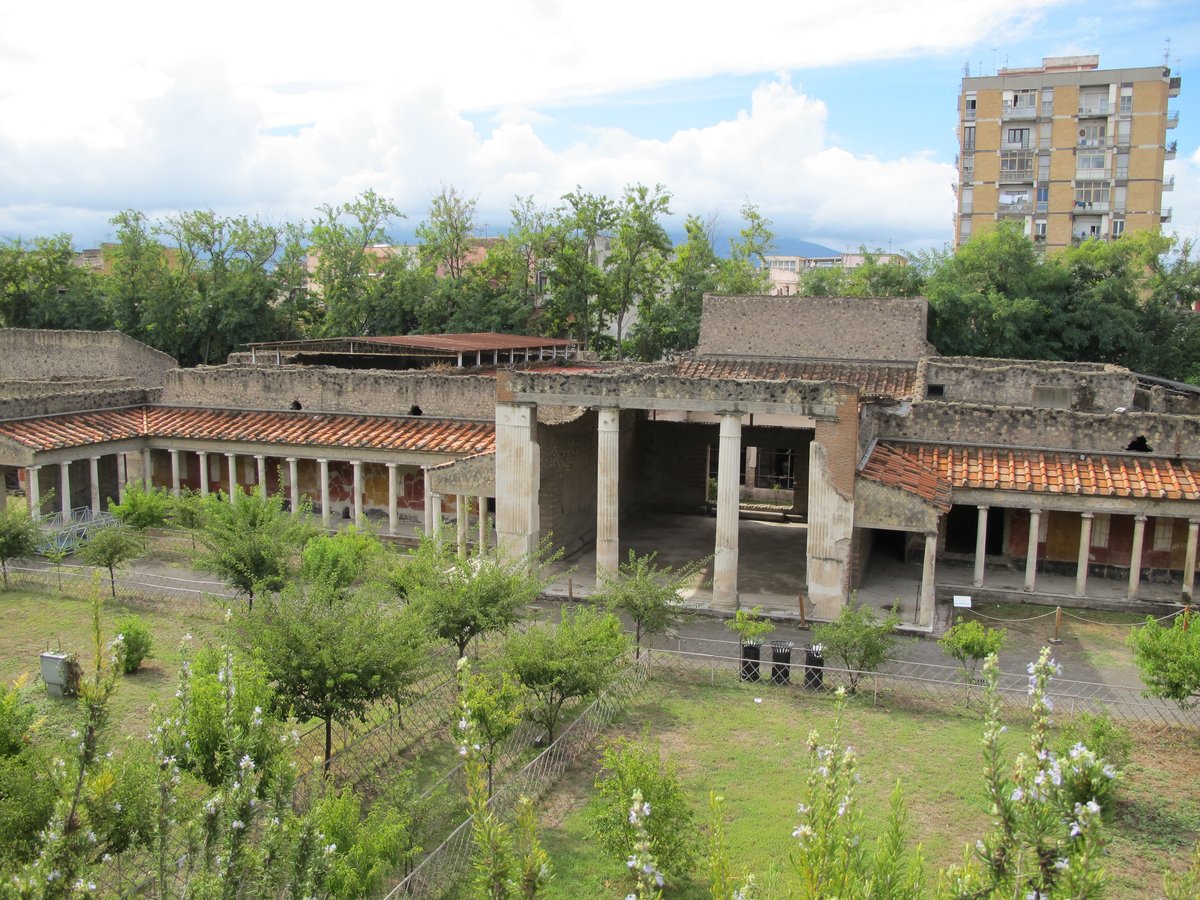
Oplontis Roman Villa, a UNESCO World Heritage site, features perfectly preserved Second Pompeian Style frescoes, private baths, and a grand peristyle with a pool. An ideal stop for those seeking history without the crowds.
- https://pompeiisites.org/oplontis/villa-di-poppea/
- Via Sepolcri, Napoli (NA)
- +39 081 8575 347
- Open in Google Maps
- View on Google Images Villa Poppaea a Napoli
Good to know
Introduction
Historical Overview
- 1st century BC: Construction of the villa.
- 1st century AD: Ownership by Poppaea Sabina.
- 79 AD: Burial by the eruption of Mount Vesuvius.
- 18th century: Initial accidental discoveries.
- 20th century: Systematic archaeological excavations.
The Frescoes: A Journey Through Color
The Garden and Pool: Outdoor Luxury
Why Visit It
When to Go
In the Surroundings
Itineraries nearby


💡 Did You Know…?
One of the most fascinating details is the presence of a large summer triclinium frescoed with garden scenes, creating the illusion of being outdoors. The excavations have also revealed remains of amphorae containing wine and oil, left behind in haste during the eruption, and a hypocaust heating system still visible in the baths. The villa even had a heated pool. Local legend holds that some particularly well-preserved frescoes were protected by a layer of fine ash that fixed their colors for centuries.