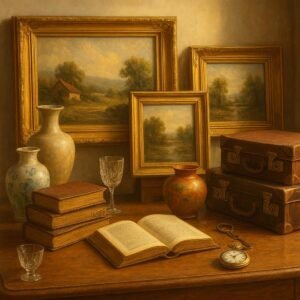
The National Gallery of Umbria, located on the third floor of the Palazzo dei Priori in Piazza IV Novembre, houses one of Italy’s richest art collections. Here you’ll find masterpieces by Umbrian artists such as Perugino, Pinturicchio, and Fra Angelico, along with sculptures, goldsmith works, and textiles that tell the story of the region. The museum is well-organized with clear explanatory panels and can be comfortably visited in a couple of hours.
- Piero della Francesca’s Polyptych of Saint Anthony: a geometrically perfect work that emanates light
- Perugino’s Monteripido Altarpiece: a Renaissance masterpiece in the Perugino Room
- Fra Angelico’s Annunciation: a painting of incredible delicacy with meticulous details
- Pinturicchio’s Gonfalone of Saint Bernardino: a colorful work full of narrative details
Introduction
Entering the National Gallery of Umbria is like leaping into the beating heart of Italian art. It’s not just a museum, but a true treasure chest holding centuries of history and beauty, nestled within Perugia’s Palazzo dei Priori, a medieval building that’s worth a visit in its own right. The feeling you get crossing the threshold is unique: you move from the bustle of Corso Vannucci into the reverent silence of the halls, where the artworks almost seem to whisper ancient stories. I still remember the emotion of standing before Piero della Francesca’s Polyptych of Saint Anthony – one of those images you’ve seen a thousand times in books, but in person leaves you breathless. The light filtering through the Gothic windows illuminates the paintings in an almost magical way, creating an atmosphere that makes you forget time. Here, art isn’t just to be looked at, but to be lived, in a continuous dialogue between past and present. If you love museums that make you feel part of history, this is the right place.
Historical Overview
The Gallery has a fascinating history that began in 1863, when it was established as a civic art gallery. However, the real turning point came in 1878 with the acquisition of works from suppressed religious corporations, an event that greatly enriched the collection. Throughout the 20th century, the gallery underwent several expansions and reorganizations, culminating in the major restoration completed in 2006, which modernized the exhibition spaces while preserving their historical essence.
Today it houses over 3,000 works, making it the main regional museum for Umbrian art. Its location in the Palazzo dei Priori is no coincidence: this palace, built between the 13th and 15th centuries, served as the center of civic power for centuries, and hosting the gallery here continues to infuse these spaces with beauty.
- 1863: the civic art gallery is founded
- 1878: acquisition of works from religious corporations
- 20th century: various reorganizations and expansions
- 2006: completion of restoration and modern reinstallation
The Rooms That Win You Over
Walking through the gallery’s rooms is a journey through eras and styles, but there are some spaces that leave a deeper impression than others. The Perugino Room, dedicated to the Renaissance master Pietro Vannucci, is simply breathtaking: here you can admire up close his famous Pala di Sant’Agostino, with its delicate colors and the expressions of the figures that seem to speak to you. Then there’s the section dedicated to the Middle Ages, where the panels by Duccio di Buoninsegna and Arnolfo di Cambio stand out – works that show a more rigid art, yet full of symbolism and ancient charm. Personally, I love the room with paintings by Benedetto Bonfigli, which tell stories of Perugia with a lively narrative style. Don’t miss the small but precious collection of wooden sculptures, often overlooked by hurried visitors: some of these medieval statues have a surprisingly expressive power. The layout is designed to guide you naturally through the centuries, but I recommend getting a little lost in the side rooms, where you can sometimes find lesser-known but equally interesting works.
Must-See Masterpieces
Visiting the National Gallery of Umbria without seeing certain works would be like going to Perugia without tasting the chocolate – simply unforgivable. First on my list is the already mentioned Polyptych of Saint Anthony by Piero della Francesca: its geometric perfection and the light that seems to emanate from the figures will leave you in awe. Then there’s the Annunciation by Fra Angelico, a painting of incredible delicacy, where every detail – from the flowers in the meadow to the folds of the garments – is crafted with almost obsessive care. Third, but no less important, is the Gonfalone of San Bernardino by Pinturicchio, a vividly colorful work full of details that tells a complex story. I always spend a long time in front of these three pieces, and each time I discover something new. A heartfelt piece of advice: don’t try to see everything in a rush. It’s better to focus on a few works and savor them slowly, perhaps sitting on the benches available in some rooms. Here, beauty requires time to be truly appreciated.
Why Visit It
Three concrete reasons why the National Gallery of Umbria deserves a visit? First: it’s the best way to understand Umbrian art at a single glance, from the Middle Ages to the Renaissance, with works you’d rarely see gathered elsewhere. Second: the location is extraordinary – being housed in the Palazzo dei Priori means visiting two gems in one, admiring both the artworks and the medieval architecture of the palace itself. Third: the atmosphere is truly special; it’s not one of those crowded and chaotic museums, but a place where you can enjoy art in peace, even during peak hours. And there’s a fourth reason, more personal: here you can truly breathe the soul of Perugia, a city that has always had a special relationship with art. Visiting the gallery isn’t just a cultural activity, but an experience that makes you feel part of this centuries-old tradition.
When to Go
The best time to visit the gallery? Early in the morning, right when it opens, when the natural light streaming through the windows is at its most beautiful and the rooms are still half-empty. There’s a special magic in that hour, with the sun’s rays illuminating the artworks differently than in the afternoon. Or, if you prefer a more intimate atmosphere, try going during the last opening hours, when the flow of visitors decreases and you can enjoy the works in almost total solitude. As for the time of year, I personally find autumn to be perfect: Perugia’s mild climate allows you to reach the museum on foot without any issues, and after the visit, you can explore the city at a leisurely pace. In summer, it can get hot, but inside the palace, it’s always cool—a significant advantage. In any case, avoid days of heavy rain if you can, not because of the gallery itself, but because the route to get there through the historic center is more pleasant in good weather.
In the Surroundings
Once you exit the gallery, Perugia offers plenty to see just steps away. Right across, in the Palazzo dei Priori itself, there’s the Collegio del Cambio with Perugino’s frescoes – an almost mandatory stop to complete the Renaissance experience. Not far off, descending through the city center streets, you reach the Etruscan Well, a surprising testament to ancient Perusia that takes you back over two thousand years. If you want to continue with the art theme, a short distance away is the National Archaeological Museum of Umbria, perfect for those who love ancient history. After visiting the gallery, I always treat myself to a stop at one of the historic cafés on Corso Vannucci to sample local pastries – a sweet way to reflect on the beauties just seen. These places aren’t just ‘nearby’, but they perfectly complement the gallery, creating a coherent cultural itinerary in the heart of Perugia.