
Ready to discover Perugia's most ancient face? This one-day itinerary takes you to explore Underground Perugia, a journey through time among the Etruscan remains that shaped the city. Starting from the heart of the historic center with the majestic Etruscan Well, a masterpiece of hydraulic engineering from the 3rd century BC, you'll immerse yourself in a path that combines archaeology and urban charm. The highlight is the Hypogeum of the Volumnus family, a perfectly preserved underground necropolis just a few kilometers from the center, where tombs carved into tuff tell stories of one of the most important families of ancient Perusia. Between escalators crossing historical layers and views over the valley, this one-day itinerary is a concentrated dose of Etruscan archaeology accessible to all, ideal for those who want to see Perugia beyond the surface. All you need is a day and plenty of curiosity!
🗺️ Your trip at a glance
A one-day itinerary that takes you to discover underground Perugia, a journey through time among the Etruscan remains that shaped the city. Starting from the heart of the historic center with the majestic Etruscan Well, you'll immerse yourself in a path that combines archaeology and urban charm.
- Ideal for curious travelers who love archaeology without giving up the charm of a medieval city.
- Key highlights that define it:
A walking and public transport route between the historic center and surroundings;
A comprehensive overview of Etruscan civilization in Perugia;
An intense but concentrated cultural experience in just one day.
Itinerary stops
Stop no. 1
Etruscan Well
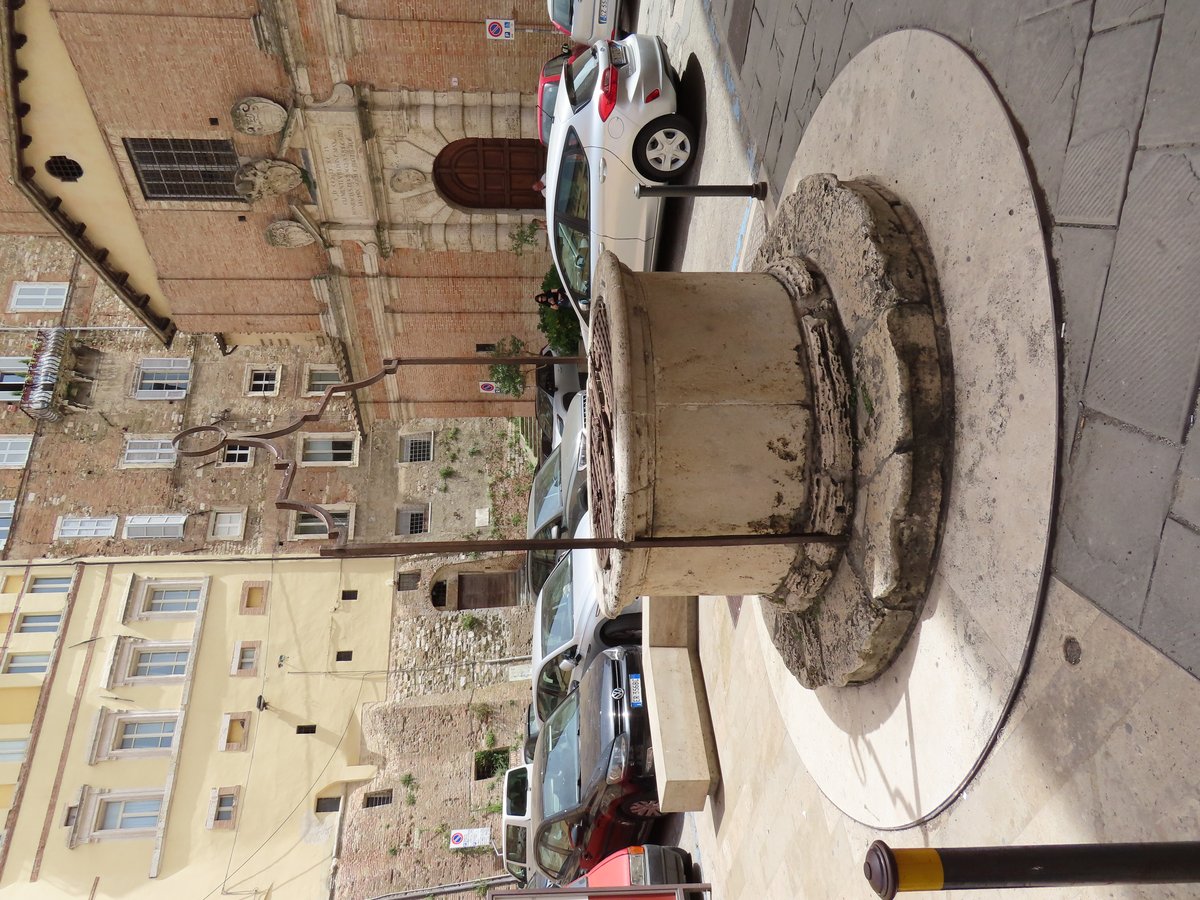 Let's begin our journey into Perugia's underground right at the Etruscan Well, a place that immediately makes you feel the weight of history. You're in Piazza Piccinino, in the historic center, and perhaps you don't imagine that beneath your feet lies an extraordinary hydraulic work. Descending the spiral staircase—mind the steps, they're a bit steep—you reach 37 meters deep, where the air becomes cool and humid. What struck me the most? The precision with which the Etruscans excavated this well in the tuff, without errors, using only rudimentary tools. The water still flows clear, collected from an underground spring, and to think it served the entire acropolis. Observing the walls, you notice the chisel marks, almost as if they were made yesterday. For me, it's like entering a time machine: here you immediately understand that Perugia isn't just medieval, but has much deeper roots. I recommend looking upward when you're at the bottom—the perspective is incredible.
- Piazza Piccinino, Perugia (PG)
- https://www.pozzoetrusco.it/
- Open in Google Maps
- View on Google Images

You should go if...
Stop no. 2
Etruscan Arch
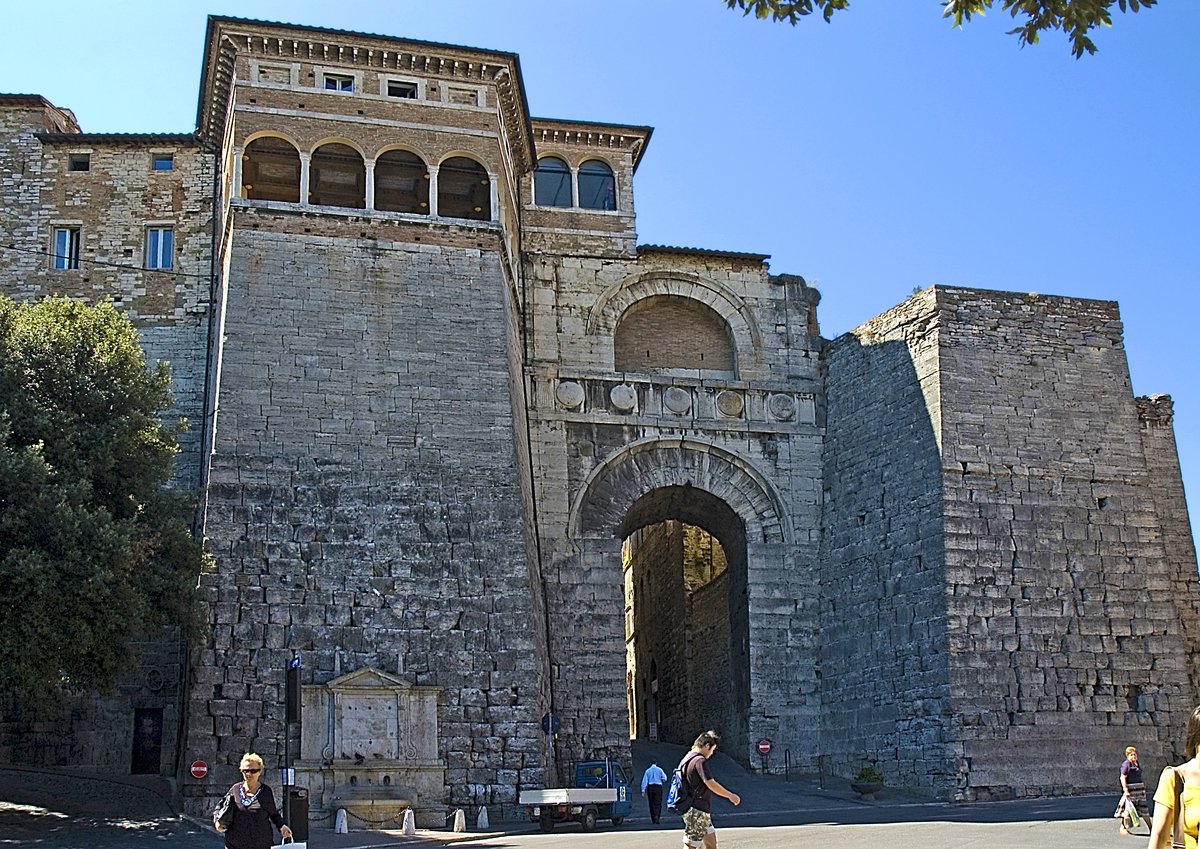 After exploring the Etruscan Well, we move towards Via Bartolo, where we are greeted by the imposing Etruscan Arch, one of the best-preserved gates in the city. It's not just an entrance: it's a true journey through time. Built in the 3rd century BC, this travertine arch still displays its massive squared stones and the Latin inscriptions added during the Roman era. Walking beneath it evokes a unique emotion – it feels like hearing the buzz of ancient Perusia. Observe the details: the blocks are so well assembled that, after over two millennia, the structure still stands perfectly. Personally, I enjoy noticing how the arch integrates with the medieval buildings around it, a mix of eras that tells the story of Perugia's layering. It's an ideal spot for taking photos, with light filtering through the stones creating plays of shadow. If you look up, you'll also see the remains of a medieval loggia, added centuries later. A tip: visit here in the morning, when the light is soft and tourists are still few.
- Via Bartolo, Perugia (PG)
- Open in Google Maps
- View on Google Images
You should go if...
Stop no. 3
National Archaeological Museum of Umbria
 Leaving the Etruscan Arch behind, we head towards Piazza Giordano Bruno, where the National Archaeological Museum of Umbria welcomes us in a former Dominican convent. It's not just a collection of ancient objects: it's a true immersion into the daily life of the Etruscans. Here you can admire the Cippo of Perugia, a stele with Etruscan inscriptions that still seems to whisper secrets. The halls are filled with cinerary urns, bronzes, and ceramics that tell of rituals and beliefs – some have such vivid decorations they look like they just came out of the workshop. Personally, I'm always struck by the section dedicated to funerary goods: seeing personal items, like mirrors and jewelry, gives a strange emotion, as if for a moment you could brush against the lives of those who lived here centuries ago. The museum is well-organized, with clear panels that explain without weighing things down. A tip: dedicate some time to the prehistoric collection, often overlooked but rich in surprising artifacts. It's the right place to understand how Perugia was a crossroads of cultures long before the Romans.
- Piazza Giordano Bruno 10, Perugia (PG)
- http://musei.beniculturali.it/musei?mid=5351&nome=museo-archeologico-nazionale-dellumbria
- Open in Google Maps
- View on Google Images
You should go if...
Stop no. 4
Hypogeum of the Volumni and Palazzone Necropolis
 After the Archaeological Museum, the itinerary continues to a place that truly lets you feel the breath of the ancients: the Hypogeum of the Volumni. It's not just an archaeological site; it's an experience that physically takes you underground, into a perfectly preserved Etruscan family tomb from the 2nd century BC. You reach it by following Via Assisana, and the descending entrance already sets the atmosphere. Inside, you're greeted by a structure reminiscent of a house, with rooms carved into tuff and cinerary urns that still seem to hold stories. What always strikes me is the sense of intimacy: these aren't artifacts in a display case but spaces where the Etruscans honored their deceased. The decorations, though worn by time, reveal glimpses of geometric patterns and figures that speak of distant rituals. Nearby, the Palazzone Necropolis extends the narrative with other chamber tombs scattered across the countryside. Walking among these openings in the rock, with silence broken only by the wind, gives an idea of how important the cult of the dead was for this civilization. It's a place that requires some imagination, but if you let yourself be guided, it becomes a touching moment in the itinerary.
You should go if...

