
The Roman Amphitheatre of Catania, built in the 2nd century AD, is only partially visible today in Piazza Stesicoro, with much still buried. The excavated portion shows the seating area in lava stone and arches in red brick. Here’s what to know for your visit:
– Structure: seating of 14 steps, external diameter 125 m, about 15,000 seats
– Tickets: full €4, reduced €3, free for under 10
– Hours: 9:00-19:00 (summer), 9:00-17:00 (winter), closed 25 December
– Access: from Piazza Stesicoro, not wheelchair accessible
Events nearby

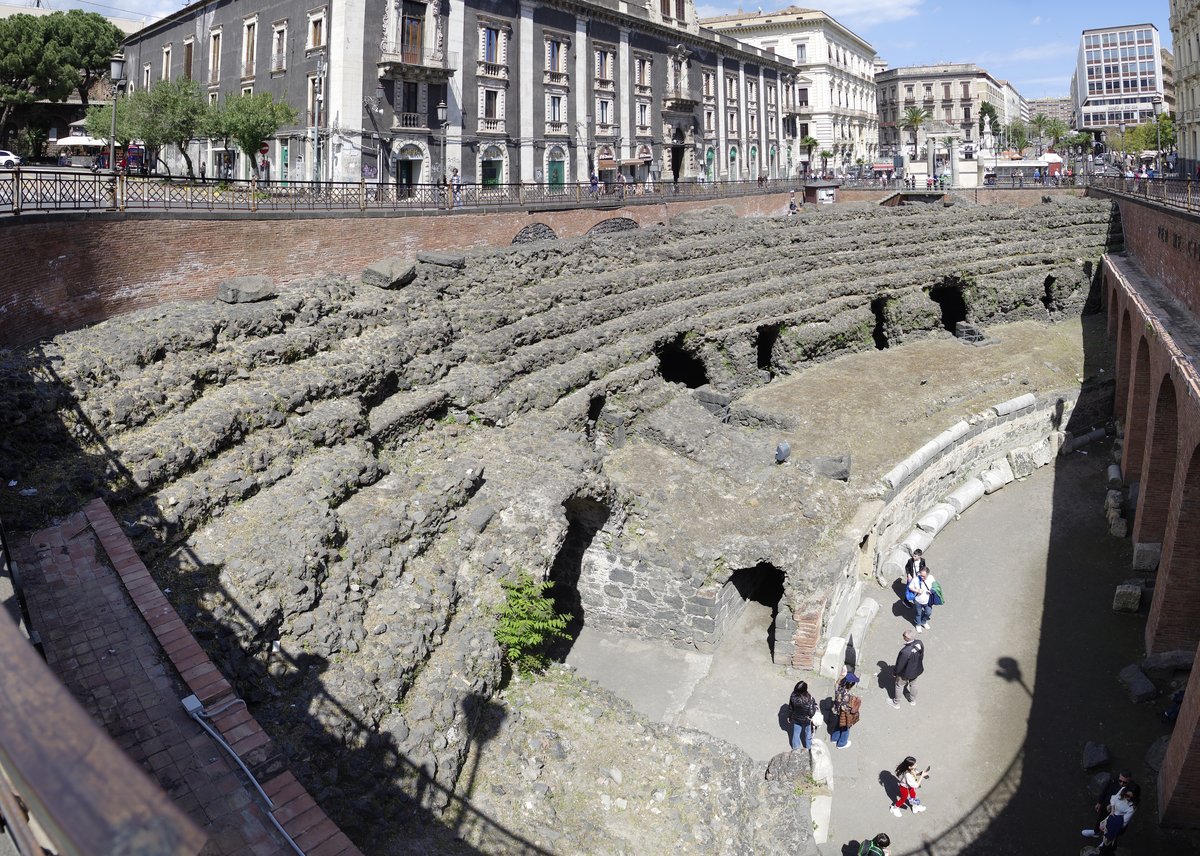
The Roman Amphitheatre of Catania, in Piazza Stesicoro, is the largest in Sicily. Visit the excavated section, discover its history, and tickets at €4. Open all year round.
- Via Alessandro Manzoni, Catania (CT)
- Open in Google Maps
- View on Google Images Anfiteatro Romano a Catania
Good to know
A Giant of Lava and History
Historical Background
- 2nd century AD – Construction
- 5th century – Abandoned and used as a quarry
- 1693 – Earthquake and burial
- 1700s – Biscari excavations
- 1904-1906 – Fichera excavations
- 1940s – Air-raid shelter
- 2024 – New management
Lava, Brick, and Marble: The Construction
How to Visit the Amphitheater Today
Three Good Reasons Not to Miss It
The Best Time to Immerse Yourself
What to See Near the Amphitheater
Itineraries nearby


💡 Did You Know…?
A local legend says that the poet Stesichorus is buried near the amphitheatre. Two inscriptions by Mario Rapisardi commemorate him and Charondas. During the War of the Vespers, the Angevins used the entrances as a secret passage to enter the city, and today walking among the arches you can still imagine the noise of the legionaries.