Nora: Roman Theater Overlooking the Sea and Phoenician Mosaics in Sardinia

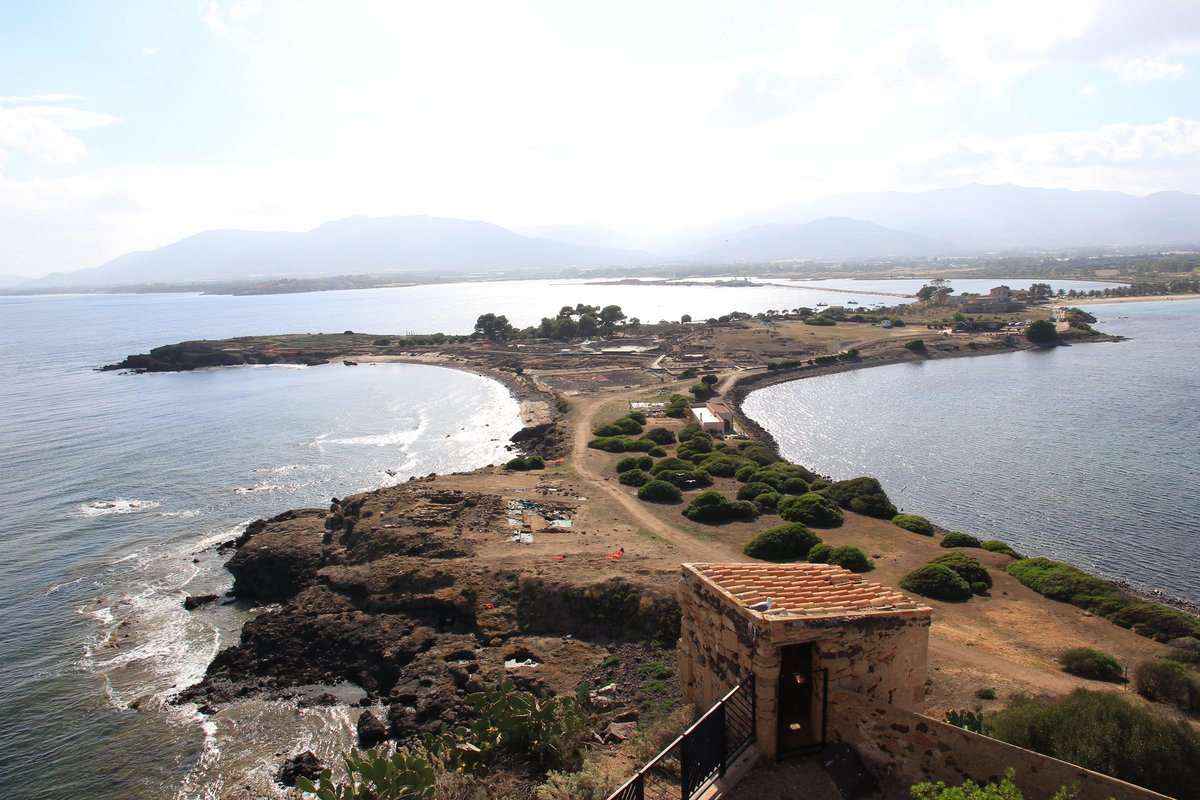
Nora in Pula is a unique archaeological site where Phoenician and Roman history blends with the sea of Sardinia. Walk among well-preserved ruins like the Roman theater with water views, the baths, and paved streets, with polychrome mosaics that tell of ancient life. The location on the peninsula offers breathtaking panoramas, and the nearby Nora beach allows for a refreshing swim after the visit.

  • 2nd-century AD Roman theater with cavea directly overlooking the sea
  • Perfectly preserved polychrome mosaics in ancient Roman domus
  • Visible historical stratification: Phoenician, Punic, and Roman remains in one site
  • Nora beach just steps away for a swim after the cultural visit

Copertina itinerario Nora: Roman Theater Overlooking the Sea and Phoenician Mosaics in Sardinia
Nora Archaeological Site in Pula with Phoenician and Roman remains, theater with sea view, polychrome mosaics, and nearby beach. Ideal for history and relaxation in one place.

Good to know


Introduction

Walking among the ruins of Nora is like flipping through an open-air history book, with the sea providing the soundtrack. This unique archaeological site in the Mediterranean welcomes you with surprising immediacy: colorful mosaics emerge from the earth, Roman columns stand out against the blue sky, and everywhere you feel the wind whispering tales of centuries past. It’s not just an open-air museum, but a living place where Phoenician and Roman history blend with the scent of Mediterranean scrub. The feeling is one of discovering something authentic, far from the crowds of more famous sites. Personally, what strikes me most is how every corner reveals unexpected details—a fragment of an amphora, a step worn by time—that make the visit intimate and personal.

Historical Overview

Nora began as a Phoenician outpost in the 8th century BC, one of the first in Sardinia, likely founded by merchants seeking strategic trading posts. It later became Punic and then Roman, reaching its peak as a municipium during Roman rule. Walking among the baths, theater, and patrician houses, one can truly grasp the importance of this port city. What many may not know is that the Nora Stele was discovered here, one of the oldest written Phoenician records in the Western world, now housed in the Archaeological Museum of Cagliari. I like to imagine the merchants unloading their goods here, while today we admire what remains of that vibrant crossroads of cultures.

  • 8th century BC: Phoenician foundation
  • 6th-4th centuries BC: Punic period
  • 238 BC: Roman conquest
  • 1st-3rd centuries AD: Peak development under Rome
  • 7th century AD: Gradual abandonment

The Roman Theatre and the Sea

The Roman Theatre of Nora is perhaps the most evocative spot in the entire site. Built in the 2nd century AD, it takes advantage of the natural slope of the land and has a rare feature: the cavea faces directly towards the sea. Sitting on the restored steps and imagining the performances of the era, with the blue horizon as a natural backdrop, is an experience that leaves a lasting impression. In summer, when the mistral wind blows strong, you can almost hear the sound of the waves mingling with the voices of ancient actors. Nearby, the remains of the Sea Baths show how much the Romans loved the combination of wellness and scenery. They are less monumental than other structures, but their position overlooking the water makes them special, almost like an invitation to a historical swim.

Mosaics and Daily Life

What makes Nora so fascinating are the polychrome mosaics decorating some domus, perfectly preserved despite the centuries. The most famous is in the so-called House of the Tetrastyle Atrium, with geometric and figurative motifs that speak to the refined taste of its inhabitants. Walking through the rooms, you notice details of everyday life: the heating systems of the baths, the cisterns for water, the shops along the decumanus. I like to linger on these details because they transform the ruins into something tangible—I imagine the families who lived here, the children running through the alleys. It’s a site that speaks of people, not just architecture. And then there’s always that powerful contrast between the red of the pottery shards and the green of the spontaneous vegetation reclaiming the spaces.

Why Visit

Visiting Nora is worthwhile for at least three concrete reasons. First, it is a rare example of visible historical layering: Phoenicians, Carthaginians, and Romans have left clearly distinguishable traces, and following the urban evolution is like taking a journey through time compressed into a few hours. Second, the clifftop location overlooking the sea offers breathtaking views, especially at sunset when the golden light envelops the columns—perfect for unforgettable photo opportunities. Third, it is suitable for everyone: history enthusiasts will find plenty to explore, families can wander without much difficulty (the paths are well-marked), and those seeking a bit of relaxation will have the sound of the waves as a soundtrack. Personally, I find it more authentic than many overcrowded archaeological sites.

When to Go

The best time? Late spring or early autumn, when temperatures are mild, the Mediterranean scrub is in bloom or takes on warm hues, and the site is quieter. I’d avoid the midday hours in summer because the lack of trees leaves the area very exposed to the sun—better to visit in the early morning or late afternoon, when the slanting light enhances the textures of the stones and the sea glistens with golden reflections. In winter, on clear days, you can enjoy crystalline light and an almost mystical atmosphere, but beware of the wind, which can be biting. I visited in October and remember the scent of helichrysum in the air, a detail that made the experience even more sensory.

In the Surroundings

After the visit, it’s worth making a quick stop at Nora Beach, right next to the archaeological site—a small cove with fine sand and clear water, perfect for a refreshing dip. To continue with the historical theme, just a few minutes’ drive away is the Archaeological Museum of Pula, which houses artifacts from the excavations, including ceramics and coins that complete the picture. If you’re looking for a food and wine experience, the surrounding countryside has several wineries producing local wines like Carignano del Sulcis, often paired with tastings of Sardinian products. I stopped at one of these, and sipping a Cannonau in front of the vineyards was the perfect ending to a day blending history and local culture.

💡 Did You Know…?

Nora doesn’t lack fascinating details: the site stands where, according to legend, Norax founded the city after following a wild boar to the coast. In 1889, a storm uncovered the Nora Stele, the oldest Phoenician inscription in Sardinia, now at the Archaeological Museum of Cagliari. During excavations, Roman mosaics emerged so well-preserved they seem freshly laid, like that of the House of the Tetrastyle Atrium. In summer, the Roman theater hosts concerts and performances: imagine attending an opera with stars above and the sound of waves as the soundtrack. A curious anecdote: the Roman baths had a sophisticated hypocaust heating system, proof of the advanced engineering of the time.