National Gallery of Puglia in Bitonto: Devanna Collection with Tintoretto and Veronese

The National Gallery of Puglia in Bitonto houses the private Devanna collection in a 16th-century Renaissance palace. It offers an intimate experience away from the crowds, with works spanning from the 15th to the 18th centuries.

  • Paintings by artists such as Tintoretto, Paolo Veronese, and Mattia Preti
  • Devanna collection donated to the State in 1998
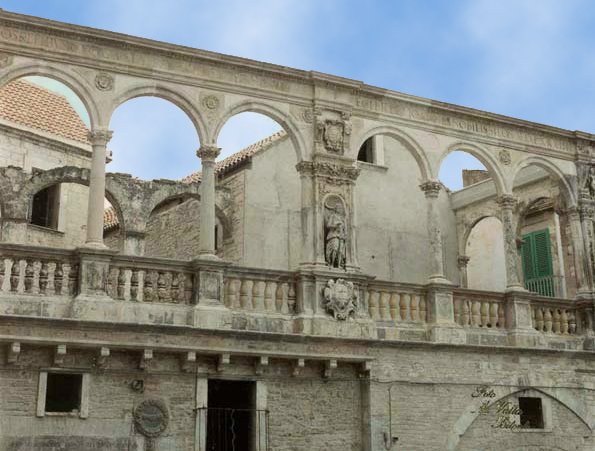
  • Palazzo Sylos-Calò with a porticoed courtyard and monumental staircase
  • Works from the Neapolitan and Venetian schools, including a ‘Lamentation over the Dead Christ’ attributed to Giovanni Bellini


Events nearby

Copertina itinerario National Gallery of Puglia in Bitonto: Devanna Collection with Tintoretto and Veronese
National Gallery of Puglia in Bitonto: Renaissance and Baroque works from the Devanna collection in Palazzo Sylos-Calò. Paintings by Tintoretto, Paolo Veronese, and Mattia Preti, along with sculptures and period furniture.

Good to know


A Palace That Tells a Story

Entering the National Gallery of Apulia in Bitonto is like discovering a hidden treasure. You don’t expect such a rich museum in a city perhaps less frequented by mass tourist circuits. The Sylos-Calò Palace, which houses it, is already a spectacle in itself: a Renaissance building with an internal courtyard that makes you feel catapulted into another era. The Devanna Collection is the beating heart of the museum, with paintings ranging from the fifteenth to the eighteenth century, mainly focused on Neapolitan and Venetian schools. It’s not an overwhelming gallery, and this is a virtue: the visit doesn’t tire you but leaves a mark. You breathe an intimate, almost private atmosphere, far from the crowds of large museums. For me, the most beautiful sight was climbing the monumental staircase and finding myself in front of those walls covered in art.

The Story of a Collecting Passion

The gallery originated from a private donation by the Devanna siblings, Girolamo and Rosaria, in 1998. Two lawyers from Bitonto with an immense passion for art, who assembled an extraordinary collection over their lifetimes. The Italian State then acquired the Sylos-Calò Palace, a 16th-century gem, to give it a worthy display. The museum officially opened to the public in 2009. This is not your typical state-run art gallery created by decree; it has a familial soul, deeply connected to its local roots. The timeline helps trace its journey:

  • 1998: Donation of the Devanna collection to the State.
  • 2004-2008: Restoration and adaptation of the Sylos-Calò Palace.
  • 2009: Inauguration of the National Gallery of Puglia.

The Masterpieces That Stop You in Your Tracks

As you walk through the rooms, certain paintings stop you in your tracks. They aren’t globally super-famous names, and perhaps that’s for the best. They allow you to look without the weight of fame. I was struck by ‘The Lamentation over the Dead Christ’ by Giovanni Bellini (or his workshop), a work of melancholic sweetness that stands out in the half-light of the room. Then there’s the section dedicated to 17th-century Neapolitan painting, with artists like Luca Giordano and Francesco Solimena, who depict an exuberant and dramatic Baroque style. Pay attention to the portraits too: there are some, especially from the 18th century, that seem alive, with gazes that follow you. The gallery has the merit of being well-lit (none of those dim lights that strain your eyes) and the labels are clear without being pedantic.

The Building is a Work of Art

Don’t visit this museum thinking only about the paintings. The palace itself deserves all your attention. It’s a splendid example of Renaissance architecture in Puglia. The porticoed courtyard, with its central well, is a peaceful corner for a break. The coffered ceilings in some rooms are finely crafted. I found myself looking upward more than at the walls at times! The internal staircase, with its broad ramp, is majestic and prepares you for entering the exhibition halls. There’s a continuous dialogue between the historic container and the works contained within, which aren’t simply hung but seem to belong to those rooms. A tip? Take the time to look out from the first-floor windows: the view over the rooftops of Bitonto and, in the distance, the countryside is an added painting to the collection.

Why It’s Worth Visiting

Three concrete reasons why you shouldn’t skip it. First: it’s a full immersion in Southern Italian art between the Renaissance and Baroque periods, without having to travel halfway across the region. The concentration of quality is high. Second: the atmosphere. There are no crowds, you can observe the artworks calmly, almost in solitude on weekdays. Third: the context. Bitonto is an art city in its own right (the Romanesque cathedral is just steps away), and visiting the gallery gives you the perfect excuse to explore an authentic historic center, less touristy than others. It’s a comprehensive cultural experience, not just a museum stop.

The Right Moment

My advice? Go in the early afternoon, especially on a sunny day. The natural light filtering through the palace windows creates beautiful plays of light in the halls and courtyard, enhancing the colors of the paintings and the building’s stones. In winter, the cozy atmosphere of the heated palace has its own charm, while in summer it’s a cool oasis compared to the Apulian heat. Perhaps avoid the evening closing hours, as the artificial lighting, though good, doesn’t do justice like daylight. Weekdays are ideal for tranquility.

What to Combine in the Surrounding Area

Exiting the gallery, you’re already in the heart of Bitonto. The Cathedral of San Valentino is just a few minutes’ walk away: a masterpiece of Apulian Romanesque architecture with a spectacular rose window and a portal richly adorned with sculptures. It’s absolutely worth an in-depth visit. If you want to continue with the art/private collections theme, about half an hour’s drive away is Conversano, with its Castle and Art Gallery, which houses works by important Apulian artists. Two complementary experiences that offer two different perspectives on the artistic history of the Terra di Bari region.

Itineraries nearby


💡 Did You Know…?

A detail that makes the visit special: the gallery is housed in Palazzo Sylos Calò, a 16th-century building with an internal courtyard and Renaissance loggias. The Devanna Collection, donated in the 1980s, includes rare pieces such as a Madonna and Child attributed to Tintoretto and a Saint Jerome by Mattia Preti, works that show the artistic evolution in Apulia between the 16th and 17th centuries. Fun fact: the Devanna couple, Bitonto collectors, wanted their works to remain in the city, creating a unique bond between art and territory.