The Arian Baptistery is a unique monument in Ravenna, built at the end of the 5th century by King Theodoric for the Arian cult. Now a UNESCO site, its mosaic dome is a masterpiece. Here’s what to expect:
– The central mosaic of the Baptism of Christ with Christ nude and the personification of the River Jordan
– The procession of the twelve apostles with Peter and Paul, separated by palms, toward a jeweled throne
– Octagonal brick architecture, partially buried about 2.3 meters
– Full ticket only €2, free every first Sunday of the month and for EU under 18
Introduction
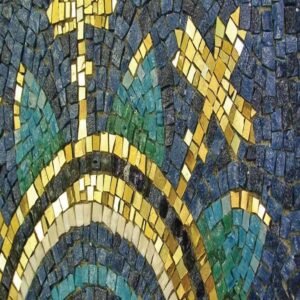
If you think you’ve seen everything in Ravenna, the Arian Baptistery will surprise you. It is the only late antique Arian baptistery in the world, a UNESCO World Heritage site since 1996. You step into a small, silent square, descend a few steps (the building has sunk over 2 meters), and look up: the dome is a gold carpet, with a naked and young Christ immersing himself in the Jordan. The mosaics envelop you, but there is something different compared to Ravenna’s other monuments. Here, the Arian doctrine is read in the details: the cross with a purple cloth, the apostles gazing at the empty throne. It is not just art; it is theology in glass tesserae.
Historical Background
The baptistery was commissioned by the Ostrogothic king Theodoric at the end of the 5th century (around 493 AD) for the Arian community, next to the Arian cathedral (today the Church of Santo Spirito). After the Byzantine reconquest (mid-6th century), Emperor Justinian reconsecrated it for Orthodox worship and dedicated it to the Virgin Mary. Over the centuries it experienced alternating fortunes: it passed to the Benedictines, then to the Confraternity of the Cross, and in the 19th century it risked becoming a warehouse. In 1914 the state purchased it and restored it. Today it is one of the eight UNESCO monuments of Ravenna, the only surviving Arian baptistery in the world.
- Late 5th century – Theodoric builds the baptistery for the Arians.
- Mid 6th century – Reconsecrated to Orthodox worship by Justinian.
- 17th century – Incorporated into the Oratory of the Confraternity of the Cross.
- 1914 – Acquired by the State and restored.
- 1996 – Declared a UNESCO World Heritage Site.
The Baptism Mosaic: Details That Make a Difference
At the center of the dome, a medallion depicts the baptism of Christ. Jesus is naked, young, beardless: a deliberate choice to emphasize his human nature, according to Arian doctrine. From above, a dove (Holy Spirit) pours a stream of water onto his head. John the Baptist, barefoot and clad in animal skin, places his hand on Jesus’ head. To the right, the personification of the River Jordan: an old man with a long white beard, red crab claws on his head, and an overturned jar from which water flows. The detail of the claws is rare and nearly unique—a symbol of fertility or a pagan cult? The image was reflected in the lost baptismal font, creating a striking effect.
The Procession of the Apostles and the Throne of the Cross
Around the central roundel, the twelve apostles proceed in two rows toward a jeweled throne. Peter holds the keys, Paul the scrolls of the Law; the others hold crowns with covered hands as a sign of respect. Date palms separate them, a symbol of the righteous who flourish after death. On the throne, a purple cushion and a jeweled cross with a hanging purple cloth: it is the Sudarium, recalling Christ’s physical suffering. This is the difference from the Neonian Baptistery (orthodox): there the apostles gaze at Christ, here at the cross. A reminder that for the Arians, Christ was human, not divine. The scene is simpler, almost repetitive, with a dominant gold background – typical of the abstract style of the era.
Why Visit It
– It is the only intact Arian baptistery in the world: a unique testimony of a lost faith. The mosaics, with their gold background and symbolic details, tell a story different from that of Ravenna’s other monuments. – Free entry on the first Sunday of the month: an opportunity to visit without spending, taking advantage of a break from wandering the city center. – It can be visited in 20-30 minutes: ideal for those with limited time but who want to add a piece to their knowledge of Ravenna’s mosaics. The small square is often uncrowded, offering a moment of peace away from the crowds of San Vitale.
When to Go
The best time? Early morning, just after it opens at 9. The light streams in through the dome windows, warming the gold mosaics as if they were alive. Avoid the midday hours in summer when the sun is high and colors flatten. If you’re in town for a weekend, the first Sunday of the month is a blessing: free entry and fewer people than usual. In winter, with low light, the atmosphere is more intimate and the mosaic details seem to emerge from the shadows. Bring a coin for parking in the nearby blue spaces, so you don’t have to worry about the time.
Nearby
The baptistery is a stone’s throw from other UNESCO gems. The Basilica of San Vitale with its Justinian mosaics is a 5-minute walk away. Right next to it, the Mausoleum of Galla Placidia (mystical atmosphere, starry sky mosaic). Then the Neonian Baptistery, the one of the orthodox: comparing the two is an experience that lets you understand the doctrinal differences. If you want a break, the Church of Santo Spirito (the former Arian cathedral) is right across the street, though less decorated. For a quick coffee, the bars in Piazza del Popolo are a 10-minute walk. No need for a car: the center is all pedestrian and bicycle-friendly.