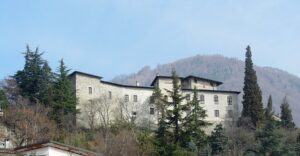
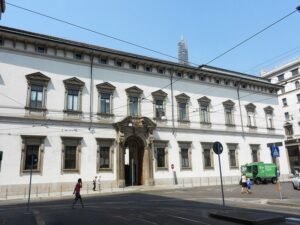
The Tosio Martinengo Art Gallery, reopened in 2018, is a museum in the center of Brescia featuring Renaissance masterpieces collected by two Brescian nobles. The works range from Raphael’s ‘Christ Blessing’ to paintings by Moretto and Lotto, displayed in restored rooms with clear captions.
- Raphael’s ‘Christ Blessing,’ a Renaissance masterpiece acquired in 1829.
- Works by Alessandro Bonvicino (Moretto) depicting 16th-century Brescia.
- Paintings by Lorenzo Lotto and Romanino with vibrant colors and intense narratives.
- Collection originating from donations by Counts Paolo Tosio and Leopardo Martinengo in the 19th century.
A Renaissance Jewel in the Heart of Brescia
Entering the Pinacoteca Tosio Martinengo is like taking a leap into the Brescian Renaissance, an experience that leaves you breathless. It’s not just a museum, but a true treasure trove of art that tells the artistic history of the city through works that still seem alive. The first thing that strikes you is the atmosphere: silent, intimate, almost cozy. The rooms are lit to highlight every brushstroke, every detail of the paintings. I found myself staring for minutes at the face of a Madonna, captivated by the intensity of a gaze that seemed to follow me. The collection is focused but of the highest quality, without the distractions that sometimes clutter large museums. Here, every piece has its own reason for being, its own story to tell. The feeling is of being in a special place where time has stopped to allow you to savor art in the most authentic way. For me, having seen many museums, this gallery has that something extra: a discreet elegance that slowly wins you over.
The Story of a Passion for Art
The art gallery was born from the generosity of two noble Brescians: Count Paolo Tosio, who in 1844 donated his extraordinary collection to the city, and Count Francesco Leopardo Martinengo, who did the same a few decades later. They were not mere collectors, but true patrons with an infallible eye for masterpieces. Their passion saved works that would otherwise have been lost, creating an artistic nucleus of inestimable value. The fusion of the two collections gave rise to what we admire today: a journey spanning from the Renaissance to the 18th century, with particular attention to the Brescian school. I like to think that these nobles carefully selected each painting, almost as if they were composing a great collective work of art. Their legacy is still alive in every room, in every painting that tells not only the history of art but also the story of Brescia and its most enlightened citizens.
- 1844: Paolo Tosio donates his collection to the city
- 1851: The first art gallery opens to the public
- 1884: Merger with the Martinengo collection
- 2018: Reopening after extensive restoration
The Raphael That Captivates Everyone
Among all the works, there is one painting that captures the attention of every visitor: Raphael’s “Angel”. It is not large; in fact, it is rather small, but it has a magnetic presence. It is part of a dismembered triptych, and seeing this angel alone, in its illuminated case, is an almost mystical experience. The delicacy of the face, the perfection of the wings, the harmony of the colors: everything seems created by a divine hand. I passed by it three times, and each time I noticed something new: a different nuance, a detail that had previously escaped me. The surprising thing is that despite being a work from the 16th century, it seems as fresh as if it were painted yesterday. Perhaps this is the secret of the great masters: creating something that transcends time. Around the Angel, the other works seem almost to form a chorus, but none manage to steal the scene. It is the focal point of the visit, the one that remains impressed in memory even after time has passed.
Moretto and 16th-Century Brescia
If Raphael represents universal genius, Alessandro Bonvicino, known as Moretto, is the Brescian heart of the art gallery. His works are not just paintings, but true historical documents that tell the story of 16th-century Brescia. Looking at his portraits, you feel as if you’re meeting the figures of the era: merchants, nobles, clergy, all depicted with surprising psychological truth. I was particularly struck by how he paints fabrics: the silks, velvets, and brocades seem so real that you almost want to touch them to feel their texture. Moretto was not just a painter, but a narrator of his city. In his religious works, like the “Pala di San Girolamo,” you find all the devotion of an era, but also that realism typical of the Brescian school that prefers concreteness over rhetoric. Visiting the art gallery without pausing at Moretto’s works would be like going to Brescia without seeing Piazza della Loggia: you would miss the essence of the place.
Why It’s Worth Visiting
Three concrete reasons not to miss this museum. First: the concentration of masterpieces in compact spaces allows you to appreciate each work without the fatigue of large museums. Second: the modern, well-designed display highlights the paintings in the best way, with lighting that doesn’t strain the eyes and clear pathways. Third: the opportunity to see works by Raphael, Lotto, and Moretto up close in the same place is rare, almost a privilege. Unlike other crowded museums, here you can truly stop and observe without being jostled by the crowd. I noticed many visitors taking notes or making sketches, a sign that the environment invites contemplation. And then there’s that sense of discovery: each room holds a surprise, an unexpected painting, a detail that captures your attention. For art lovers, it’s like finding a hidden treasure in a city already rich with beauty.
The Right Moment
Late afternoon, when natural light fades and the rooms fill with that warm artificial light that enhances the colors of the paintings. In winter, leaving the museum after dark has already fallen and seeing Brescia’s lights turn on creates a magical contrast between ancient art and the modern city. In spring and autumn, when mass tourism is less pressing, you can enjoy the art gallery almost in solitude. I would avoid the midday hours on sunny summer days, when everyone seeks museums to escape the heat: you risk finding more crowds than necessary. Personally, I visited on a Thursday afternoon and it was perfect: few people, silence, the possibility to linger as long as I wanted in front of each work. Some local visitors coming for the tenth time, some scholars with notebooks, me trying to absorb all that beauty. An experience that has the flavor of time regained.
Complete the Experience
Stepping out of the art gallery, a short walk takes you to Piazza del Foro, where the Roman remains of Brixia remind you that Brescia has a millennia-old history. The Santa Giulia complex, with its city museum, is ideal for continuing your journey through time: from the Roman era to the Renaissance, the same period covered by the art gallery. If you prefer to stay on an artistic theme, a brief stroll leads you to the Church of San Francesco, where you can admire more works from the Brescian school in their original setting. I did it this way: art gallery in the afternoon, then a stop in the square for a coffee while gazing at the Roman columns, and finally Santa Giulia the next day. It’s like reading a book chapter by chapter, where each place completes the story of the others. Brescia is special in this regard: it doesn’t just offer scattered monuments, but a genuine journey through history and art that winds through the city center.