Breno Castle: Medieval Fortress with Imposing Walls and Views of the Orobie Alps

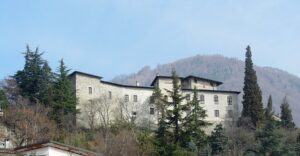
Breno Castle is a medieval fortress built between the 11th and 15th centuries on a rocky spur in Mezzarro, in the heart of Camonica Valley. It offers a journey through time with its imposing walls, watchtowers, and remains of ancient structures, along with spectacular views of the Orobie Alps and surrounding villages. The visit is suitable for everyone, featuring a well-marked light trekking path starting from the center of Breno.

  • Medieval fortress from the 11th-15th centuries with imposing walls and watchtowers
  • Spectacular panoramic views of the Orobie Alps and Camonica Valley
  • Free access with no mandatory reservations
  • Well-marked light trekking route of about 20 minutes from Mezzarro


Events nearby


Copertina itinerario Breno Castle: Medieval Fortress with Imposing Walls and Views of the Orobie Alps
Medieval fortress from the 11th-15th centuries on a rocky spur in Mezzarro, Camonica Valley. Imposing walls, watchtowers, remains of ancient structures, and panoramic views of the Orobie Alps. Free access, well-marked light trekking route.

Good to know


Introduction

Arriving in Mezzarro and seeing Breno Castle standing out against the sky is a breathtaking sight. It’s not just a fortress, but a silent guardian of the Camonica Valley, with walls that seem to have come straight out of a fairy tale. The location is strategic: it dominates everything from above, and even from the road, you can understand why battles have been fought here over the centuries. I visited on a somewhat cloudy day, and the atmosphere was even more evocative—you could almost feel the weight of history. Perfect for those seeking something authentic, away from the crowds, but with a view that rewards every step.

Historical Background

The castle’s history is a tapestry of power and defense. The earliest traces date back to the 11th century, when the bishops of Brescia established it as a military outpost. It then passed to the Visconti of Milan in the 14th century, who strengthened it—traces of their modifications are still visible. In the 15th century, it came under the control of the Republic of Venice, which used it as a forward post against incursions. Interestingly, despite battles, it was never definitively conquered, speaking volumes about its solidity. Today, it is a state-owned property, freely visitable, though some parts are under restoration. The timeline helps understand key transitions:

  • 11th century: first fortifications commissioned by the bishops
  • 14th century: Visconti rule with expansions
  • 15th century: Venetian control and strategic role
  • Today: historical site open to the public

The Light Trek to the Walls

Reaching the castle is already part of the experience. You don’t need to be a mountaineer: from Mezzarro, a well-marked trail begins—a paved mule track that climbs with a moderate slope. It takes about twenty minutes at a leisurely pace, and along the way, you’ll find signs with historical notes—useful for not arriving unprepared. I especially appreciated the intermediate panoramic viewpoints, where you can stop to watch the valley gradually unfold. Once at the top, the medieval walls are impressive up close: thick, irregular, with arrow slits that offer glimpses of breathtaking views. I recommend comfortable shoes, as some sections are uneven, and a water bottle—in summer, the sun beats down. It’s not a wild excursion, but it has that taste of discovery that appeals to those who enjoy walking without excess.

The Details That Tell Stories

Visiting the castle isn’t just about admiring the structure, but about noticing the details. For example, the rock carvings on nearby rocks, an ancient testament to the Camonica Valley (a UNESCO World Heritage site), which here blend with medieval history. Then there are the remains of the internal chapel, where traces of frescoes can still be distinguished—faded, yet evocative. I also noticed the marks of chimneys and ancient kitchens, which help imagine daily life within these walls. Another curious detail: from the main tower, if the sky is clear, you can glimpse Lake Iseo in the distance, an unexpected visual connection. It’s these things that make the place feel alive, not just a postcard. Note, however: some areas are closed for safety, but what you can see is enough to get a clear picture.

Why Visit It

Three concrete reasons to put it on your itinerary. First: free access with no mandatory reservations (at least when I was there), which is rare for sites like this. Second: it’s a perfect mix of history and nature—in an hour, you can dive into the Middle Ages and enjoy an Alpine panorama without having to choose between the two. Third: the tranquility; even on weekends, it’s not as crowded as other famous castles, so you can breathe in an authentic atmosphere without queues or crowds. Personally, I found it ideal for a low-impact outing where you don’t need to plan too much: you arrive, park easily at Mezzarro, and set off on an adventure.

When to Go

Timing makes all the difference. I’d avoid the peak summer hours in the middle of the day: it gets hot, and the direct sun can make the climb less enjoyable. Early morning or late afternoon are ideal, with the low-angle light highlighting the stones and creating dramatic shadows. In autumn, the spectacle is guaranteed: the surrounding woods turn red and yellow, and the crisp air adds character. In winter, if there’s no ice, it can be magical with a bit of snow, but you need to be cautious on the trail. Generally, avoid days of heavy rain—not just for the discomfort, but because the stones become slippery.

In the Surroundings

To enrich your day, here are two thematic suggestions. In Breno, the main town just a few minutes’ drive away, you’ll find the Camuno Museum, where you can delve into the history of rock carvings—a perfect complement to the castle. Then, if you enjoy trekking, the Gnome Trail starts in the same area, a family-friendly path featuring wooden sculptures and nature, suitable for everyone. Both places are real and well-marked, allowing you to vary the experience without straying too far. I combined them in one day, and it worked well: culture in the morning, the castle in the afternoon, and a relaxing walk to finish.

Itineraries nearby


💡 Did You Know…?

The castle was the scene of clashes between Guelphs and Ghibellines in the Middle Ages, and its walls hide stories of sieges and resistance. According to local legends, echoes of ancient battles can still be heard on full moon nights. A fascinating detail: from the highest tower, on clear days, Lake Iseo can be seen in the distance, a sight few expect. Conservative restorations have preserved the essence of the place without altering it, making the visit an authentic dive into the past.