The Domus del Chirurgo in Rimini is a unique archaeological site with 150 original surgical instruments from the 3rd century AD, perfectly preserved since their discovery in 1989. The polychrome mosaics and structures of the house-workshop offer a window into daily Roman life in Rimini’s historic center, just steps from Piazza Cavour.
- 150 original bronze and iron surgical instruments, the richest collection from the Roman world
- Perfectly preserved polychrome floor mosaics with geometric and figurative patterns
- Well-preserved structures of the 3rd-century AD house-workshop, including original floors
- Central location in the heart of Rimini, easily incorporated into a walking tourist itinerary
Introduction
Walking through Rimini’s city center, among shops and venues, you don’t expect to stumble upon such a vivid piece of history. The Domus del chirurgo is one of those discoveries that leave you speechless: it’s not just an archaeological site, but a wide-open window onto daily life from almost 1,800 years ago. What immediately strikes you are the polychrome mosaics, still incredibly intact, decorating the floors with geometric and figurative patterns. And then, of course, the bronze and iron surgical instruments, displayed as if the doctor had just stepped out. You can almost hear the echoes of conversations in what was a luxurious house-workshop, overlooking the sea. A place that uniquely blends art, science, and private life, making history tangible, almost familiar. This isn’t the usual dusty ruin; here, you can still breathe the atmosphere of those who lived here.
Historical Background
The domus dates back to the
3rd century AD, when Rimini (then Ariminum) was a thriving Roman port. The name of the surgeon who lived there is unknown, but excavations have revealed that he was a wealthy professional, possibly connected to the military fleet. The house was destroyed by fire around the mid-3rd century, an event that, paradoxically, helped preserve many artifacts under the ashes. Rediscovered only in 1989 during renovation work in Piazza Ferrari, it is now an integral part of the City Museum. Its importance lies precisely in its completeness: not only walls, but personal items, coins, and, above all, that
collection of 150 surgical instruments, which is one of the richest in the world for the era. A timeline helps frame the key moments:
- 3rd century AD: construction and use of the domus as a residence and medical practice.
- Mid-3rd century: fire that buried the structure.
- 1989: discovery during urban excavations.
- 2007: opening to the public after a lengthy restoration.
The Mosaics That Tell Stories
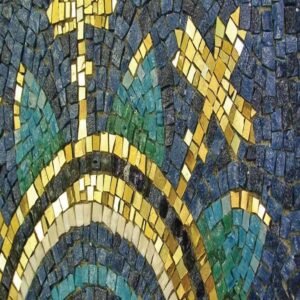
Beyond the medical instruments, what makes this site special are the floor mosaics, perfectly preserved in several rooms. These are not just any decorations: they reveal the tastes and status of the owner. In the triclinium (the dining room), a mosaic featuring fish and marine animals stands out, a clear reference to the proximity to the sea and perhaps to the surgeon’s profession, who may have treated sailors. In another room, geometric patterns of diamonds and circles create an almost hypnotic optical effect. Walking over them, protected by suspended walkways, gives the strange sensation of being guests in a house that still feels alive. The colors – terracotta, white, black – are surprisingly vivid, thanks to the microclimate created by the burial. For me, these mosaics are the true emotional heart of the visit: they show how beauty and functionality coexisted in everyday life.
The Instrument Room
The most famous section is undoubtedly the one displaying the original surgical instruments, found in a charred wooden chest. Seeing them up close is an almost intimidating experience: they are not reproductions, but objects actually used for operations, dental extractions, or sutures. There are scalpels of various shapes, probes for exploring wounds, hemostatic forceps, and even a hook for extracting arrows, a detail that brings to mind wartime trauma. The care with which they were forged – some with handles made of bone or ivory – reveals a medical art already sophisticated. I was struck to discover that some instruments bear manufacturer’s marks, a sign of almost industrial production for the time. It’s like looking through a microscope into the past: you realize that Roman medicine was not just empirical, but technologically advanced. This collection, unique of its kind, turns the visit into a lesson in the history of science, without the need for many explanations.
Why Visit It
Three concrete reasons not to miss the Surgeon’s Domus. First: the authenticity of the artifacts. There are no hypothetical reconstructions, but real objects that touch the life of an individual, making history personal and engaging. Second: the central location. It’s located in Piazza Ferrari, just steps from the Arch of Augustus and the Malatesta Temple, so you can easily include it in a walking tour without detours. Third: the completeness of the context. It’s not an isolated site: it’s part of the City Museum, where you can delve into Rimini’s history from Roman times to the Renaissance, with artifacts like the medieval section. In short, it’s a two-in-one that saves you time and money. Perfect if you only have half a day and want something substantial, away from the beach crowds.
When to go
The site is covered and air-conditioned, making it visitable year-round, but in my opinion the best time is a winter afternoon or a cloudy autumn day. Why? Because the intimate and quiet atmosphere of the domus pairs well with the soft light filtering through the coverings, creating an almost mystical aura. In summer, it can be a pleasant break from the heat and crowds of the riviera, but you might find more visitors. I went on a Tuesday in November, around 3 PM, and it was deserted: I could linger over the tools without rush, imagining the stories they tell. If you want to avoid organized groups, steer clear of summer weekends or late mornings. In any case, the visit lasts about an hour, so it fits into any schedule.
In the Surroundings
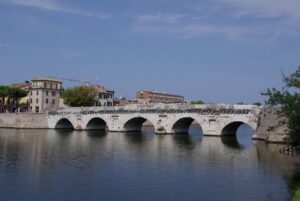
After the Domus, continue your immersion in Roman Rimini with two nearby stops. The first is the Tiberius Bridge, just a few minutes’ walk away: completed in 21 AD, it is still perfectly passable and a masterpiece of engineering, with its five arches in Istrian stone. Crossing it gives you the sensation of walking on the same road as the legionaries. The second is the Roman Amphitheatre, a short distance away on Via Roma: less well-preserved than the domus, but evocative for its elliptical structure and the fact that it has been reused over the centuries. Both sites are free and outdoors, ideal for a historical stroll without spending more. If you then feel like a contrast, take a quick trip to the nearby Malatesta Temple, a Renaissance masterpiece: the transition from ancient to modern is immediate and fascinating.