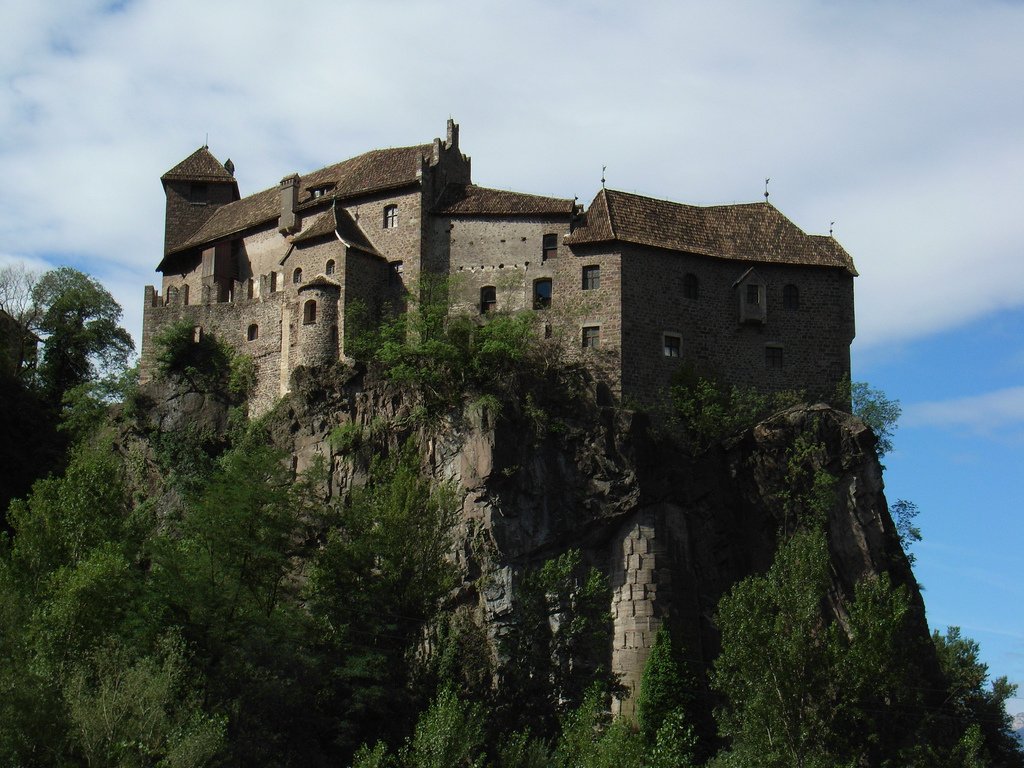
Castel Roncolo, also known as Schloss Runkelstein, dominates the Isarco valley from a porphyry spur. This medieval castle, nicknamed the ‘illustrated manor,’ preserves an exceptional cycle of 14th-century secular frescoes, among the most important in Europe. Here you’ll find an experience that combines art, history, and breathtaking views, ideal for a day trip from Bolzano.
Unique frescoes depicting scenes of knights, ladies, and stories like Tristan and Isolde
Panoramic location on a porphyry rock
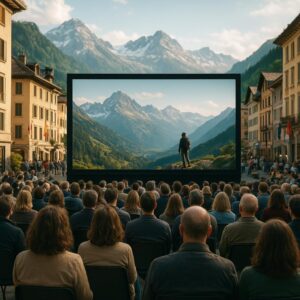
Summer concerts of the KLANG Festival in the inner courtyard
Easy access with a short uphill walk (not wheelchair accessible)
Introduction: The Illustrated Manor
Perched atop a porphyry rock above the rooftops of Bolzano, Castel Roncolo – also known as Schloss Runkelstein – welcomes you with its medieval fairy-tale aura. It’s nicknamed “Bilderburg”, the picture castle, because of its extraordinary cycle of secular frescoes. As soon as you step into the courtyard, you feel like you’ve traveled back in time: knights, ladies, tournament scenes, and stories of courtly love gaze at you from the walls. A place that never fails to amaze, even if the interior is bare and the visit short. But those frescoes… they alone are worth the trip.
Introduction: The Illustrated Manor
Perched atop a porphyry rock above the rooftops of Bolzano, Castel Roncolo – also known as Schloss Runkelstein – welcomes you with its medieval fairy-tale aura. It’s nicknamed “Bilderburg”, the picture castle, because of its extraordinary cycle of secular frescoes. As soon as you step into the courtyard, you feel like you’ve traveled back in time: knights, ladies, tournament scenes, and stories of courtly love gaze at you from the walls. A place that never fails to amaze, even if the interior is bare and the visit short. But those frescoes… they alone are worth the trip.
Historical Background
The story of Roncolo Castle begins in
1237, when the brothers Friedrich and Beral von Wangen started its construction. After a siege in 1274, it passed to Meinhard II, Count of Tyrol. In
1385, the Vintler family purchased it and initiated a renovation: in
1388, they had the splendid frescoes created. Turbulent centuries followed: an explosion of the powder magazine in 1520 and a fire in 1672. In
1880, Archduke Johann Salvator of Austria bought it and donated it to Emperor Franz Joseph; restorations from 1884 to 1888 restored its splendor. Since
1893, it has been owned by the municipality of Bolzano. The last restoration was completed in January 2000.
- 1237 – Construction begins
- 1388 – Frescoes created
- 1880 – Purchased by the archduke
- 1893 – Passes to the municipality of Bolzano
- 2000 – Last restoration
Historical Background
The story of Roncolo Castle begins in
1237, when the brothers Friedrich and Beral von Wangen started its construction. After a siege in 1274, it passed to Meinhard II, Count of Tyrol. In
1385, the Vintler family purchased it and initiated a renovation: in
1388, they had the splendid frescoes created. Turbulent centuries followed: an explosion of the powder magazine in 1520 and a fire in 1672. In
1880, Archduke Johann Salvator of Austria bought it and donated it to Emperor Franz Joseph; restorations from 1884 to 1888 restored its splendor. Since
1893, it has been owned by the municipality of Bolzano. The last restoration was completed in January 2000.
- 1237 – Construction begins
- 1388 – Frescoes created
- 1880 – Purchased by the archduke
- 1893 – Passes to the municipality of Bolzano
- 2000 – Last restoration
The Frescoes: The Largest Secular Cycle in Europe
What makes Castel Roncolo unique is its impressive cycle of secular frescoes, considered among the largest and most important of the Middle Ages. The walls tell stories of knights, ladies, tournaments, hunts, and dances, as well as Arthurian legends with King Arthur and his knights, the adventures of Tristan and Isolde, and the deeds of Dietrich von Bern. In the chapel, there are frescoes dated to 1390. It is a true open-air illustrated book, giving you insight into how the nobles of the time lived and dreamed. The preservation is excellent, despite the centuries and various vicissitudes.
The Frescoes: The Largest Secular Cycle in Europe
What makes Castel Roncolo unique is its impressive cycle of secular frescoes, considered among the largest and most important of the Middle Ages. The walls tell stories of knights, ladies, tournaments, hunts, and dances, as well as Arthurian legends with King Arthur and his knights, the adventures of Tristan and Isolde, and the deeds of Dietrich von Bern. In the chapel, there are frescoes dated to 1390. It is a true open-air illustrated book, giving you insight into how the nobles of the time lived and dreamed. The preservation is excellent, despite the centuries and various vicissitudes.
Architecture and Scenery
Perched on a porphyry spur overlooking the Talvera stream, the castle dominates the valley. Its strategic position offers a breathtaking view of Bolzano and the surrounding mountains. The architecture is typically medieval, with massive walls, towers, and an inner courtyard where concerts are held in summer. To reach the entrance, you must tackle a very steep ramp (unfortunately not wheelchair accessible). The interior is bare, but the charm lies in the structure and frescoes. I recommend walking around the castle to enjoy the panorama from different angles.
Architecture and Scenery
Perched on a porphyry spur overlooking the Talvera stream, the castle dominates the valley. Its strategic position offers a breathtaking view of Bolzano and the surrounding mountains. The architecture is typically medieval, with massive walls, towers, and an inner courtyard where concerts are held in summer. To reach the entrance, you must tackle a very steep ramp (unfortunately not wheelchair accessible). The interior is bare, but the charm lies in the structure and frescoes. I recommend walking around the castle to enjoy the panorama from different angles.
Why Visit It
Two good reasons not to miss it. First: the frescoes. You won’t find such a vast and well-preserved secular cycle anywhere in Europe. It’s a dive into 14th-century courtly culture, with details that leave you speechless. Second: the atmosphere. If you go in summer, you can attend the KLANG Festival concerts held in the inner courtyard. Music under the stars surrounded by history… a unique experience. The ticket is not too expensive (€10 adults, €7 reduced, €20 family) and the visit is suitable even for those who are not castle experts.
Why Visit It
Two good reasons not to miss it. First: the frescoes. You won’t find such a vast and well-preserved secular cycle anywhere in Europe. It’s a dive into 14th-century courtly culture, with details that leave you speechless. Second: the atmosphere. If you go in summer, you can attend the KLANG Festival concerts held in the inner courtyard. Music under the stars surrounded by history… a unique experience. The ticket is not too expensive (€10 adults, €7 reduced, €20 family) and the visit is suitable even for those who are not castle experts.
When to Go
The castle is open year-round, but the best time to visit is late spring or summer, when you can enjoy the courtyard and concerts. I recommend going in the early morning: the raking light illuminates the frescoes magically and there are fewer people. Sunset is also spectacular, as the sun tints the porphyry rock red. In winter, the castle is quieter, but check the opening hours as they may be reduced. Avoid rainy days: the climb is slippery and the view is obscured.
When to Go
The castle is open year-round, but the best time to visit is late spring or summer, when you can enjoy the courtyard and concerts. I recommend going in the early morning: the raking light illuminates the frescoes magically and there are fewer people. Sunset is also spectacular, as the sun tints the porphyry rock red. In winter, the castle is quieter, but check the opening hours as they may be reduced. Avoid rainy days: the climb is slippery and the view is obscured.
In the Surroundings
Take advantage of the proximity to Bolzano to combine a visit to the castle with a trip to the city. A few minutes away are the South Tyrol Museum of Archaeology (with Ötzi) and the historic center with its arcades and cathedral. If you love nature, take the Ritten Cable Car up to the plateau for a breathtaking view of the Dolomites. Or, for the more active, a hike along the path that follows the Talvera stream. Everything is easily reachable by bus or on foot from the castle.
In the Surroundings
Take advantage of the proximity to Bolzano to combine a visit to the castle with a trip to the city. A few minutes away are the South Tyrol Museum of Archaeology (with Ötzi) and the historic center with its arcades and cathedral. If you love nature, take the Ritten Cable Car up to the plateau for a breathtaking view of the Dolomites. Or, for the more active, a hike along the path that follows the Talvera stream. Everything is easily reachable by bus or on foot from the castle.