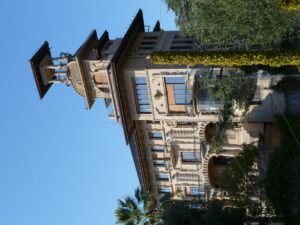
The Roman Naval Museum of Albenga takes you aboard the largest Roman merchant ship ever found in the Mediterranean. Housed in the historic Palazzo Peloso Cepolla, the museum tells the story of the wreck discovered in 1950 off Gallinara Island, thanks to the pioneering work of Nino Lamboglia. Amid amphorae, naval equipment, and everyday life artifacts, you will experience an immersive journey through archaeology and history.
What you’ll find at the museum:
– Over 10,000 amphorae recovered from the wreck, arranged as in the original hold
– 3D reconstructions and virtual tour of the underwater site
– Collection of blue-and-white ceramic pharmacy jars (16th-19th century)
– Permanent exhibition on the prehistory of Val Pennavaira
Practical info: The museum is open Tuesday to Sunday, hours vary by season. Full ticket €6, reduced €4. Address: Piazza San Michele, 12, Albenga.
A journey into the hold of a Roman giant
Entering the Roman Naval Museum of Albenga is like diving into a page of history. Housed in the historic Palazzo Peloso Cepolla, the museum welcomes you with a faithful reconstruction of the hold of a 1st-century BC Roman merchant ship, the largest ever found in the Mediterranean. Over 10,000 amphorae are arranged on wooden racks, exactly as they lay on the seabed. The setup is immersive: videos, 3D reconstructions, and a serigraphed floor reproducing the ship’s bottom make you feel part of the cargo. An experience that combines archaeology and wonder, perfect for lovers of ancient history.
A journey into the hold of a Roman giant
Entering the Roman Naval Museum of Albenga is like diving into a page of history. Housed in the historic Palazzo Peloso Cepolla, the museum welcomes you with a faithful reconstruction of the hold of a 1st-century BC Roman merchant ship, the largest ever found in the Mediterranean. Over 10,000 amphorae are arranged on wooden racks, exactly as they lay on the seabed. The setup is immersive: videos, 3D reconstructions, and a serigraphed floor reproducing the ship’s bottom make you feel part of the cargo. An experience that combines archaeology and wonder, perfect for lovers of ancient history.
A Tale of a Shipwreck and the Birth of Underwater Archaeology
The ship sank between
100 and 90 BC off the coast of
Gallinara Island, carrying a cargo of Campanian wine bound for France and Spain. In 1925, a fisherman discovered it, but it was
Nino Lamboglia, a pioneer of underwater archaeology, who directed the excavations starting in 1950. Over thirteen campaigns, more than 10,000 artifacts were recovered. Here are the key moments:
- 100–90 BC – The merchant ship sinks.
- 1925 – The wreck is discovered.
- 1950 – Lamboglia begins systematic excavations.
- 2023 – The museum reopens after renovation.
A Tale of a Shipwreck and the Birth of Underwater Archaeology
The ship sank between
100 and 90 BC off the coast of
Gallinara Island, carrying a cargo of Campanian wine bound for France and Spain. In 1925, a fisherman discovered it, but it was
Nino Lamboglia, a pioneer of underwater archaeology, who directed the excavations starting in 1950. Over thirteen campaigns, more than 10,000 artifacts were recovered. Here are the key moments:
- 100–90 BC – The merchant ship sinks.
- 1925 – The wreck is discovered.
- 1950 – Lamboglia begins systematic excavations.
- 2023 – The museum reopens after renovation.
The Cargo: Amphorae and Campanian Wine
The ship’s cargo consisted of over 10,000 amphorae, mainly of the Dressel 1B type, containing wine from Campania. The amphorae were stowed using a ‘checkerboard’ system, sealed with cork stoppers and mortar, sometimes with a pine cone to add flavor. Besides wine, the ship carried black-glaze pottery, eight bronze helmets (perhaps against pirates), a lead wheel for making ropes, an apotropaic horn, and everyday items such as game pieces and fishing tools. In the museum, an entire wall is dedicated to these amphorae, arranged just as in the original hold.
The Cargo: Amphorae and Campanian Wine
The ship’s cargo consisted of over 10,000 amphorae, mainly of the Dressel 1B type, containing wine from Campania. The amphorae were stowed using a ‘checkerboard’ system, sealed with cork stoppers and mortar, sometimes with a pine cone to add flavor. Besides wine, the ship carried black-glaze pottery, eight bronze helmets (perhaps against pirates), a lead wheel for making ropes, an apotropaic horn, and everyday items such as game pieces and fishing tools. In the museum, an entire wall is dedicated to these amphorae, arranged just as in the original hold.
The Exhibit: Between Artifacts and Multimedia
The museum is organized into three rooms. The first introduces the territory and the Marine Park, with viewers for underwater videos. The second displays artifacts from the shipwrecks around Gallinara Island. But the heart is the third room, dedicated to the ‘A’ wreck of Albenga: here a 3D reconstruction and a virtual tour take you to a depth of 50 meters. The silkscreen floor reproduces the ship’s bottom, and digital showcases display anchors, amphorae, and even bottles of wine made from the amphorae. The experience is enriched by a collection of pharmacy jars from the 17th-19th centuries and the exhibition ‘Prehistory in Val Pennavaira’.
The Exhibit: Between Artifacts and Multimedia
The museum is organized into three rooms. The first introduces the territory and the Marine Park, with viewers for underwater videos. The second displays artifacts from the shipwrecks around Gallinara Island. But the heart is the third room, dedicated to the ‘A’ wreck of Albenga: here a 3D reconstruction and a virtual tour take you to a depth of 50 meters. The silkscreen floor reproduces the ship’s bottom, and digital showcases display anchors, amphorae, and even bottles of wine made from the amphorae. The experience is enriched by a collection of pharmacy jars from the 17th-19th centuries and the exhibition ‘Prehistory in Val Pennavaira’.
Three Good Reasons Not to Miss It
1. The largest known Roman merchant ship: seeing over 10,000 amphorae stacked as in the hold is a unique thrill. 2. Accessible underwater archaeology: without getting wet, you explore a wreck using immersive technology. 3. A historic palace: Palazzo Peloso Cepolla is a 17th-century gem, with frescoes and slate portals. Plus, the reduced ticket at €4 for under 14s and over 65s makes it a budget-friendly outing. Don’t miss the other collections: the pharmacy jars and the prehistory of Val Pennavaira.
Three Good Reasons Not to Miss It
1. The largest known Roman merchant ship: seeing over 10,000 amphorae stacked as in the hold is a unique thrill. 2. Accessible underwater archaeology: without getting wet, you explore a wreck using immersive technology. 3. A historic palace: Palazzo Peloso Cepolla is a 17th-century gem, with frescoes and slate portals. Plus, the reduced ticket at €4 for under 14s and over 65s makes it a budget-friendly outing. Don’t miss the other collections: the pharmacy jars and the prehistory of Val Pennavaira.
The Best Time to Visit
The museum is open all year, closed on Mondays. Spring and autumn are ideal: the days are mild and the city less crowded. If you come in summer, take advantage of the extended hours until evening (7:30 PM) and visit during the cooler hours. For a more intimate experience, choose the morning, when school groups haven’t arrived yet. In winter, hours are reduced, but the cozy atmosphere of the palace is perfect for immersing yourself in Roman history.
The Best Time to Visit
The museum is open all year, closed on Mondays. Spring and autumn are ideal: the days are mild and the city less crowded. If you come in summer, take advantage of the extended hours until evening (7:30 PM) and visit during the cooler hours. For a more intimate experience, choose the morning, when school groups haven’t arrived yet. In winter, hours are reduced, but the cozy atmosphere of the palace is perfect for immersing yourself in Roman history.
What to See Nearby
After the museum, get lost in Albenga’s historic center: the Cathedral of San Michele (12th century) and the early Christian Baptistery are just steps away. If you love the sea, take a boat trip to Gallinara Island, a protected marine area where the wreck lies. On the island, you can see the remains of an ancient abbey. For a dive into nature, the Maritime Park offers coastal trails with breathtaking views. Albenga is also famous for its medieval towers: don’t miss the Torre Cazzulini.
What to See Nearby
After the museum, get lost in Albenga’s historic center: the Cathedral of San Michele (12th century) and the early Christian Baptistery are just steps away. If you love the sea, take a boat trip to Gallinara Island, a protected marine area where the wreck lies. On the island, you can see the remains of an ancient abbey. For a dive into nature, the Maritime Park offers coastal trails with breathtaking views. Albenga is also famous for its medieval towers: don’t miss the Torre Cazzulini.