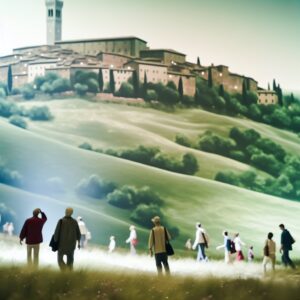
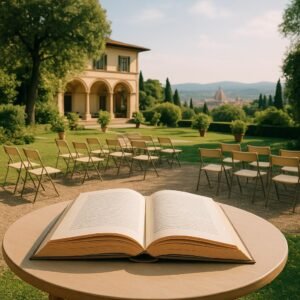
Nestled among olive groves and Mediterranean scrub, Villa di Agnano is a Renaissance jewel that tells centuries of history. Commissioned by Lorenzo de’ Medici as a hunting retreat, the villa has hosted scholars and noble families. Today it is open to visitors to immerse themselves in the atmosphere of the Medici court.
– UNESCO Medici Villa: one of the twelve Medici villas recognized as a World Heritage site.
– Historic Gardens: from Italian-style gardens to a romantic park with cedar of Lebanon trees.
– 19th-century Aviary: originally from the Boboli Gardens in Florence.
– Cultural Events: concerts and performances set in the villa’s surroundings.
Introduction
Villa di Agnano is a hidden gem off the beaten path. Nestled among the olive groves of Monte Pisano, this Medici villa welcomes you with understated elegance. To think that Lorenzo the Magnificent used to hunt here and discuss with poets like Poliziano… Today, strolling through Italian gardens and an English park, you can still feel that suspended atmosphere. And then there’s the 19th-century aviary, a wrought-iron jewel. In short, a place worth a day trip, away from the crowds. Perfect for a cultural and relaxing break.
Introduction
Villa di Agnano is a hidden gem off the beaten path. Nestled among the olive groves of Monte Pisano, this Medici villa welcomes you with understated elegance. To think that Lorenzo the Magnificent used to hunt here and discuss with poets like Poliziano… Today, strolling through Italian gardens and an English park, you can still feel that suspended atmosphere. And then there’s the 19th-century aviary, a wrought-iron jewel. In short, a place worth a day trip, away from the crowds. Perfect for a cultural and relaxing break.
Historical Notes
Lorenzo de’ Medici had Villa di Agnano built between
1486 and 1498 as a hunting lodge. After his death, it passed to the
Cybo Malaspina family, then to the
Lorraine family, and finally to
Oscar Tobler (yes, the chocolatier!). Today it belongs to the Tadini counts. Over time it hosted literary figures such as Poliziano and Pulci. The villa is one of the
twelve Medici villas on the UNESCO World Heritage list. Here are the key moments:
- 1486: Lorenzo purchases the land from the Knights of Altopascio.
- 1486-1498: Construction of the villa.
- 16th century: U-shaped renovation with garden and fish pond.
- 19th century: English-style park and aviary from Boboli.
- 1889: Sale to Oscar Tobler.
- Today: Tadini property, UNESCO monument.
Historical Notes
Lorenzo de’ Medici had Villa di Agnano built between
1486 and 1498 as a hunting lodge. After his death, it passed to the
Cybo Malaspina family, then to the
Lorraine family, and finally to
Oscar Tobler (yes, the chocolatier!). Today it belongs to the Tadini counts. Over time it hosted literary figures such as Poliziano and Pulci. The villa is one of the
twelve Medici villas on the UNESCO World Heritage list. Here are the key moments:
- 1486: Lorenzo purchases the land from the Knights of Altopascio.
- 1486-1498: Construction of the villa.
- 16th century: U-shaped renovation with garden and fish pond.
- 19th century: English-style park and aviary from Boboli.
- 1889: Sale to Oscar Tobler.
- Today: Tadini property, UNESCO monument.
Gardens and Aviary: A Dive into the 1800s
Beyond the Italian-style gardens with geometric flowerbeds, the romantic English park is a marvel. Lindens, Lebanon cedars, magnolias, and camellia groves create shady corners. The cherry on top? The 19th-century aviary, originally from the Boboli Gardens: a wrought-iron structure that looks like something out of a fairy tale. Needless to say, it’s a paradise for photos and dreamers. Strolling here is like taking a step back in time, amidst meticulously curated scents and colors.
Gardens and Aviary: A Dive into the 1800s
Beyond the Italian-style gardens with geometric flowerbeds, the romantic English park is a marvel. Lindens, Lebanon cedars, magnolias, and camellia groves create shady corners. The cherry on top? The 19th-century aviary, originally from the Boboli Gardens: a wrought-iron structure that looks like something out of a fairy tale. Needless to say, it’s a paradise for photos and dreamers. Strolling here is like taking a step back in time, amidst meticulously curated scents and colors.
Renaissance Architecture: An Authentic Medici
The villa has a U-shaped plan with symmetrical Renaissance-style facades attributed to Giovan Battista da Sangallo. Traditional Tuscan materials: stone, brick. The harmony with the landscape is perfect. Originally simpler, it was expanded over time. The interiors? Not always open, but during events you can catch a glimpse of the ancient splendor. The rectangular fish pond and regular gardens complete an ensemble that reflects the power and refinement of the Medici.
Renaissance Architecture: An Authentic Medici
The villa has a U-shaped plan with symmetrical Renaissance-style facades attributed to Giovan Battista da Sangallo. Traditional Tuscan materials: stone, brick. The harmony with the landscape is perfect. Originally simpler, it was expanded over time. The interiors? Not always open, but during events you can catch a glimpse of the ancient splendor. The rectangular fish pond and regular gardens complete an ensemble that reflects the power and refinement of the Medici.
Why Visit It
1. Exclusivity: it’s one of the least known Medici villas, so no crowds. 2. Unique aviary: a piece of art history in wrought iron that you won’t find elsewhere. 3. Rejuvenating nature: the setting of Monte Pisano offers a walk among olive groves and Mediterranean scrub. Perfect for a day trip away from the city chaos.
Why Visit It
1. Exclusivity: it’s one of the least known Medici villas, so no crowds. 2. Unique aviary: a piece of art history in wrought iron that you won’t find elsewhere. 3. Rejuvenating nature: the setting of Monte Pisano offers a walk among olive groves and Mediterranean scrub. Perfect for a day trip away from the city chaos.
When to Go
The most magical period is spring, when gardens explode with colors and scents, or autumn with golden leaves. Early morning or late afternoon offer wonderful light for photos. Avoid the weekend if you can: fewer people, more peace. In summer, take advantage of long days to combine with nearby thermal baths.
When to Go
The most magical period is spring, when gardens explode with colors and scents, or autumn with golden leaves. Early morning or late afternoon offer wonderful light for photos. Avoid the weekend if you can: fewer people, more peace. In summer, take advantage of long days to combine with nearby thermal baths.
Nearby
San Giuliano Terme with its historic thermal baths is just a stone’s throw away. Perfect for combining culture and thermal relaxation. Or, the village of Asciano (not the one in Siena!) with its Romanesque parish church. If you love walking, the trails of Monte Pisano start right here. An ideal itinerary: morning at the villa, afternoon at the baths or a walk on the hills.
Nearby
San Giuliano Terme with its historic thermal baths is just a stone’s throw away. Perfect for combining culture and thermal relaxation. Or, the village of Asciano (not the one in Siena!) with its Romanesque parish church. If you love walking, the trails of Monte Pisano start right here. An ideal itinerary: morning at the villa, afternoon at the baths or a walk on the hills.