Hermitage of Saint Rosalia at Quisquina: A Place of Peace
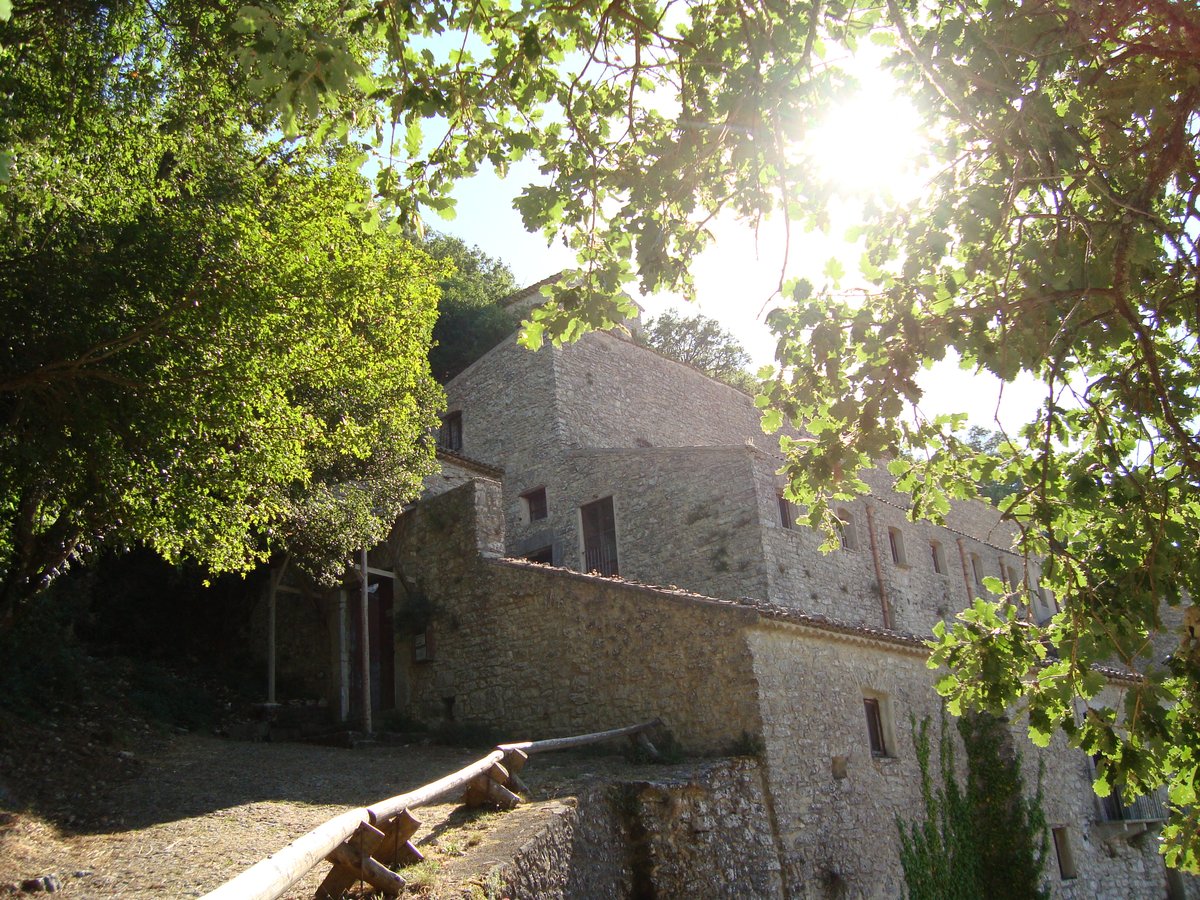
At an altitude of 1000 meters, immersed in a forest of holm oaks and downy oaks, the Hermitage of Saint Rosalia at Quisquina is a place that immediately captures you. It isn’t one of Sicily’s most famous Baroque sanctuaries, but it has a different soul. Here everything speaks of silence, rock, and a saint who chose solitude. The cave is still there, accessible only by crawling for a short stretch, and inside you find an eighteenth-century statue and an engraved epigraph. The scent of candles and forest blends together, and you don’t need to be a believer to feel part of something. The fragrance of the Mediterranean scrub accompanies you, and the silence is broken only by birdsong. It’s an experience that stays with you.
Hermitage of Saint Rosalia at Quisquina: A Place of Peace
At an altitude of 1000 meters, immersed in a forest of holm oaks and downy oaks, the Hermitage of Saint Rosalia at Quisquina is a place that immediately captures you. It isn’t one of Sicily’s most famous Baroque sanctuaries, but it has a different soul. Here everything speaks of silence, rock, and a saint who chose solitude. The cave is still there, accessible only by crawling for a short stretch, and inside you find an eighteenth-century statue and an engraved epigraph. The scent of candles and forest blends together, and you don’t need to be a believer to feel part of something. The fragrance of the Mediterranean scrub accompanies you, and the silence is broken only by birdsong. It’s an experience that stays with you.
Historical Notes
The story begins in 1150, when Saint Rosalia retreated to this cave for 12 years. Then, on August 25, 1624, two masons discovered the cave with the inscription. The following year, a chapel was built. In 1693, Genoese merchant Francesco Scassi funded the hermitage, which became an important spiritual center. The Ventimiglia princes expanded it in the 18th century, and a congregation settled there. In 1928, the community was dissolved. The last friar, Fra Vicè, died in 1986 at the age of 98. Today it is managed by the Pro Loco. Here are the key moments:
- 1150-1162: Hermitage of Saint Rosalia
- August 25, 1624: Discovery of the cave
- 1625: Construction of the chapel
- 1693: Construction of the hermitage by Francesco Scassi
- 18th century: Expansion by the Ventimiglia
- 1928: Dissolution of the congregation
- 1986: Death of the last hermit
Historical Notes
The story begins in 1150, when Saint Rosalia retreated to this cave for 12 years. Then, on August 25, 1624, two masons discovered the cave with the inscription. The following year, a chapel was built. In 1693, Genoese merchant Francesco Scassi funded the hermitage, which became an important spiritual center. The Ventimiglia princes expanded it in the 18th century, and a congregation settled there. In 1928, the community was dissolved. The last friar, Fra Vicè, died in 1986 at the age of 98. Today it is managed by the Pro Loco. Here are the key moments:
- 1150-1162: Hermitage of Saint Rosalia
- August 25, 1624: Discovery of the cave
- 1625: Construction of the chapel
- 1693: Construction of the hermitage by Francesco Scassi
- 18th century: Expansion by the Ventimiglia
- 1928: Dissolution of the congregation
- 1986: Death of the last hermit
The Cave of Saint Rosalia
The cave is the heart of the hermitage. It is accessed via a narrow corridor where you have to crawl for a few meters. Inside, a statue of the sleeping saint, always lit by candles. On the wall is the engraved epigraph: ‘Ego Rosalia…’. The atmosphere is intimate, almost mystical. The original cave was larger, with ten rooms, but today only four are visitable for safety. According to tradition, here Rosalia lived in prayer and penance. It is a place that forces you to slow down, to enter a different rhythm.
The Cave of Saint Rosalia
The cave is the heart of the hermitage. It is accessed via a narrow corridor where you have to crawl for a few meters. Inside, a statue of the sleeping saint, always lit by candles. On the wall is the engraved epigraph: ‘Ego Rosalia…’. The atmosphere is intimate, almost mystical. The original cave was larger, with ten rooms, but today only four are visitable for safety. According to tradition, here Rosalia lived in prayer and penance. It is a place that forces you to slow down, to enter a different rhythm.
The Convent and the Mummy Crypt
Beyond the church, the convent preserves perfectly restored rooms: the monks’ cells, the kitchen with its blue and white majolica, the pantry with barrels and containers. But the most striking feature is the crypt. You can enter through a trapdoor or an external door. Here, the monks’ bodies were mummified using the same process as the Capuchins of Palermo, then placed in niches. Even today, the remains of some hermits can be seen, including Fra Vicè. An unforgettable experience, blending history and spirituality.
The Convent and the Mummy Crypt
Beyond the church, the convent preserves perfectly restored rooms: the monks’ cells, the kitchen with its blue and white majolica, the pantry with barrels and containers. But the most striking feature is the crypt. You can enter through a trapdoor or an external door. Here, the monks’ bodies were mummified using the same process as the Capuchins of Palermo, then placed in niches. Even today, the remains of some hermits can be seen, including Fra Vicè. An unforgettable experience, blending history and spirituality.
Why visit it
Three good reasons: first, admission is free (the guided tour of the convent costs only €3). Second, this is where the Itinerarium Rosaliae begins, a 180 km path that reaches Monte Pellegrino in Palermo. Third, it is one of the quietest and most authentic places in the Monti Sicani, far from mass tourism. Perfect for those seeking peace and a genuine connection with nature and faith.
Why visit it
Three good reasons: first, admission is free (the guided tour of the convent costs only €3). Second, this is where the Itinerarium Rosaliae begins, a 180 km path that reaches Monte Pellegrino in Palermo. Third, it is one of the quietest and most authentic places in the Monti Sicani, far from mass tourism. Perfect for those seeking peace and a genuine connection with nature and faith.
When to Go
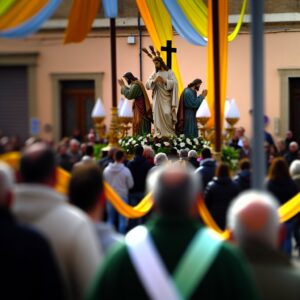
The best time? Late spring or early summer, when the woods are green and the temperature is mild. If you want to experience the most intense atmosphere, go on the first Tuesday of June for the Feast of Santa Rosalia, when the silver bust with relics is carried in procession from the hermitage to the town. Otherwise, choose an early Saturday morning, when the hermitage is still deserted and the sun filters through the trees.
When to Go
The best time? Late spring or early summer, when the woods are green and the temperature is mild. If you want to experience the most intense atmosphere, go on the first Tuesday of June for the Feast of Santa Rosalia, when the silver bust with relics is carried in procession from the hermitage to the town. Otherwise, choose an early Saturday morning, when the hermitage is still deserted and the sun filters through the trees.
Nearby
Just a few kilometers away is Santo Stefano Quisquina, a village worth a stroll. Here you can see the Mother Church with the silver bust of the saint. If you love walking, Parco dei Monti Sicani offers trails immersed in the Mediterranean scrub, perfect for a hike. And if you have a sweet tooth, don’t miss the local specialties: cheeses, oil, and the famous durum wheat bread.
Nearby
Just a few kilometers away is Santo Stefano Quisquina, a village worth a stroll. Here you can see the Mother Church with the silver bust of the saint. If you love walking, Parco dei Monti Sicani offers trails immersed in the Mediterranean scrub, perfect for a hike. And if you have a sweet tooth, don’t miss the local specialties: cheeses, oil, and the famous durum wheat bread.