Saint Agatha Cathedral is the beating heart of Catania, a blend of faith, art, and history. Built in the 11th century and rebuilt after the 1693 earthquake, today it is a jewel of Sicilian Baroque. Inside, you can admire the Chapel of Saint Agatha with its relics, the tomb of Vincenzo Bellini, the Aragonese royal sarcophagi, and the monumental organ. Don’t miss the festival on February 3-5, one of the most important in Italy. Here’s what not to miss:
Vaccarini’s Baroque facade in marble and lava stone
Chapel of Saint Agatha and relics of the patron saint
Tomb of composer Vincenzo Bellini
Practical tips: free entry, hours, and parking
Introduction to Catania’s Duomo
The moment you step into Piazza del Duomo, your gaze is immediately captured by the facade of Sant’Agata Cathedral: white, grand, with columns that feel like they’ve emerged from another era. It’s not just Catania’s main church; it’s the beating heart of the city, a mix of styles that tells centuries of history. Carrara marble alternates with volcanic stone, and the carved wooden door invites you inside. Inside, amid the Baroque naves, you feel the weight of faith and art. It’s a living place, not a museum: people pray here, stroll around, stop to think. And then there’s the scent of wax and incense, accompanying you as you discover its hidden corners. A must-see, in short, to truly understand Catania.
Introduction to Catania’s Duomo
The moment you step into Piazza del Duomo, your gaze is immediately captured by the facade of Sant’Agata Cathedral: white, grand, with columns that feel like they’ve emerged from another era. It’s not just Catania’s main church; it’s the beating heart of the city, a mix of styles that tells centuries of history. Carrara marble alternates with volcanic stone, and the carved wooden door invites you inside. Inside, amid the Baroque naves, you feel the weight of faith and art. It’s a living place, not a museum: people pray here, stroll around, stop to think. And then there’s the scent of wax and incense, accompanying you as you discover its hidden corners. A must-see, in short, to truly understand Catania.
Historical Notes
The Cathedral was born in the 11th century, commissioned by Count Roger of Altavilla on the ruins of the Roman Achillean Baths. Consecrated in 1094, it was a Norman church-fortress. Then disasters struck: the 1169 earthquake killed faithful and bishop, a fire in 1194, and the 1693 earthquake razed it to the ground. Only the apses and transept remain from the original structure. The 18th-century reconstruction was entrusted to Girolamo Palazzotto for the interior and Giovanni Battista Vaccarini for the façade, completed in 1761. The dome was added in 1802, and the bell tower in 1857. Since 1926 it has been a minor basilica.
- 1086-1094: Norman construction
- 1169: destructive earthquake
- 1693: Val di Noto earthquake
- 1734-1761: Vaccarini’s façade
- 2002: UNESCO World Heritage
Historical Notes
The Cathedral was born in the 11th century, commissioned by Count Roger of Altavilla on the ruins of the Roman Achillean Baths. Consecrated in 1094, it was a Norman church-fortress. Then disasters struck: the 1169 earthquake killed faithful and bishop, a fire in 1194, and the 1693 earthquake razed it to the ground. Only the apses and transept remain from the original structure. The 18th-century reconstruction was entrusted to Girolamo Palazzotto for the interior and Giovanni Battista Vaccarini for the façade, completed in 1761. The dome was added in 1802, and the bell tower in 1857. Since 1926 it has been a minor basilica.
- 1086-1094: Norman construction
- 1169: destructive earthquake
- 1693: Val di Noto earthquake
- 1734-1761: Vaccarini’s façade
- 2002: UNESCO World Heritage
The Baroque Façade and Its Secrets
Vaccarini’s façade is a triumph of marble and symbols. Three Corinthian orders, with six granite columns from the Roman theater – a repurposing steeped in history. At the center, the statue of Saint Agatha, flanked by Saints Peter and Paul. The wooden door has 32 panels: they tell the story of the foundation, the reconstructions, and the symbols of the patron saint. Above, a large window illuminates the interior. The balustrade of the churchyard is decorated with five statues of saints, while a wrought-iron gate with bronze saints separates the square. Every detail is designed to amaze: the white Carrara marble against the gray lava, the columns that seem to dance. It is not just beautiful; it is a tale of faith and rebirth.
The Baroque Façade and Its Secrets
Vaccarini’s façade is a triumph of marble and symbols. Three Corinthian orders, with six granite columns from the Roman theater – a repurposing steeped in history. At the center, the statue of Saint Agatha, flanked by Saints Peter and Paul. The wooden door has 32 panels: they tell the story of the foundation, the reconstructions, and the symbols of the patron saint. Above, a large window illuminates the interior. The balustrade of the churchyard is decorated with five statues of saints, while a wrought-iron gate with bronze saints separates the square. Every detail is designed to amaze: the white Carrara marble against the gray lava, the columns that seem to dance. It is not just beautiful; it is a tale of faith and rebirth.
Hidden Treasures: Relics and Illustrious Tombs
Entering, the right nave leads you to the Chapel of Saint Agatha, protected by an iron gate. Here you’ll find the silver reliquary bust of Giovanni di Bartolo (1376) and a Gothic casket containing the saint’s bones. The people of Catania are deeply devoted: during the February festival, the chapel becomes a pilgrimage destination. On the other nave, the tomb of Vincenzo Bellini: a sculpture by Tassara from 1876, with verses from La Sonnambula inscribed. In the transept, the royal Aragonese tombs: Frederick III, Constance, John. And don’t forget the ‘cammaredda,’ the underground chamber with the treasure. Every corner holds a piece of history: to be admired in silence, letting beauty speak.
Hidden Treasures: Relics and Illustrious Tombs
Entering, the right nave leads you to the Chapel of Saint Agatha, protected by an iron gate. Here you’ll find the silver reliquary bust of Giovanni di Bartolo (1376) and a Gothic casket containing the saint’s bones. The people of Catania are deeply devoted: during the February festival, the chapel becomes a pilgrimage destination. On the other nave, the tomb of Vincenzo Bellini: a sculpture by Tassara from 1876, with verses from La Sonnambula inscribed. In the transept, the royal Aragonese tombs: Frederick III, Constance, John. And don’t forget the ‘cammaredda,’ the underground chamber with the treasure. Every corner holds a piece of history: to be admired in silence, letting beauty speak.
Why Visit It
First: admission is free! You can enter without spending a euro and breathe in history. Second: the atmosphere is authentic. It’s not a cold monument: there’s life, masses, prayers, and locals. Third: the combination of styles – Norman, Baroque, Neoclassical – is unique. And if you like, spend 3-5 euros to visit the underground Achilliane Baths, directly beneath the square. An incredible journey through time. Also, the cathedral is the focal point of the Feast of Sant’Agata, one of Italy’s most moving processions. If you happen to be there in February, you’ll find yourself among candelore, songs, and cheering crowds. Not to be missed.
Why Visit It
First: admission is free! You can enter without spending a euro and breathe in history. Second: the atmosphere is authentic. It’s not a cold monument: there’s life, masses, prayers, and locals. Third: the combination of styles – Norman, Baroque, Neoclassical – is unique. And if you like, spend 3-5 euros to visit the underground Achilliane Baths, directly beneath the square. An incredible journey through time. Also, the cathedral is the focal point of the Feast of Sant’Agata, one of Italy’s most moving processions. If you happen to be there in February, you’ll find yourself among candelore, songs, and cheering crowds. Not to be missed.
When to Go
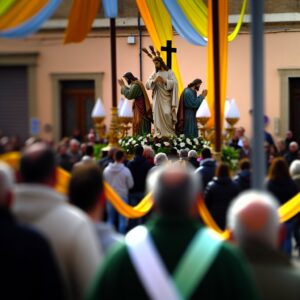
If you can choose, go during the Feast of Saint Agatha, from February 3 to 5. The city transforms, streets fill with devotees, and the silver reliquary is paraded in procession. But if you prefer calm, aim for a weekday morning shortly after opening (7:15 AM). Light filters through the windows, the organ is silent, and you’re almost alone. Avoid the central hours of the afternoon when the tourist crowd is greatest. August also has its charm, with the minor celebration on the 17th. In any case, the cathedral is open all year, but February is the magical month.
When to Go
If you can choose, go during the Feast of Saint Agatha, from February 3 to 5. The city transforms, streets fill with devotees, and the silver reliquary is paraded in procession. But if you prefer calm, aim for a weekday morning shortly after opening (7:15 AM). Light filters through the windows, the organ is silent, and you’re almost alone. Avoid the central hours of the afternoon when the tourist crowd is greatest. August also has its charm, with the minor celebration on the 17th. In any case, the cathedral is open all year, but February is the magical month.
Nearby
Just outside, Piazza del Duomo offers the Elephant Fountain, the city’s symbol with its Egyptian obelisk. A stone’s throw away, the fish market “A Piscaria” (50 meters away) is an explosion of colors and smells. Then there’s Castello Ursino, 500 meters away, with its civic museum. If you have time, the Roman Theater is 450 meters away on Via Vittorio Emanuele. Everything on foot, without rushing. Old Catania is made of alleys and discoveries: let instinct guide you.
Nearby
Just outside, Piazza del Duomo offers the Elephant Fountain, the city’s symbol with its Egyptian obelisk. A stone’s throw away, the fish market “A Piscaria” (50 meters away) is an explosion of colors and smells. Then there’s Castello Ursino, 500 meters away, with its civic museum. If you have time, the Roman Theater is 450 meters away on Via Vittorio Emanuele. Everything on foot, without rushing. Old Catania is made of alleys and discoveries: let instinct guide you.