
🧭 What to Expect
Ideal for: a cultural weekend among museums, castle, and historic center Highlights: Naval Technical Museum, Castello San Giorgio, art collections at the Museo Lia Target audience: lovers of history, art, and urban walks Best time to visit: spring and autumn for pleasant temperatures Don't miss: the Arches of Daniel Buren and the Fountain of Dialogue
La Spezia, overlooking the Gulf of Poets, is often mentioned as the gateway to the Cinque Terre, but the city deserves a visit in its own right. Its historic center, with elegant buildings and lively squares, houses museums of the highest level. The Naval Technical Museum, one of the most important in Italy, tells the maritime story with ship models, uniforms, and memorabilia. The Amedeo Lia Civic Museum displays a precious art collection from the Middle Ages to the 18th century, with paintings, sculptures, and ceramics. Not to be missed is Castello San Giorgio, a medieval fortress overlooking the city that offers a breathtaking view of the gulf. Stroll through the streets of the center, stop at Piazza Verdi, and admire contemporary art installations like the Arches of Daniel Buren. The Seal Museum and the Center for Contemporary Art complete the cultural offering. La Spezia is an ideal destination for a weekend of culture and relaxation, away from the crowds but rich in history and beauty. With its quality museums, the castle, and the lively center, it is a must-see stop for anyone traveling in Liguria.
Overview
- Castello San Giorgio: Fortress, Museum, and Breathtaking Views
- Naval Technical Museum: A Journey into Maritime History
- Amedeo Lia Civic Museum: A Dive into Art Among Gold Grounds and Masterpieces
- Center for Contemporary and Modern Art (CAMeC)
- Civic Theatre: history and performances in the heart of La Spezia
- Seal Museum: A Dive into the History of Seals
- The Equestrian Monument to Garibaldi
- Palazzo De Nobili: a Baroque masterpiece in the historic center
- Piazza Giuseppe Verdi: The Contested Heart of La Spezia
- The Dialogue Fountain
- Daniel Buren's Arches: An Explosion of Colors in Piazza Verdi
Itineraries nearby

Castello San Giorgio: Fortress, Museum, and Breathtaking Views
- Via Ventisette Marzo, La Spezia (SP)
- Open in Google Maps
- View on Google Images
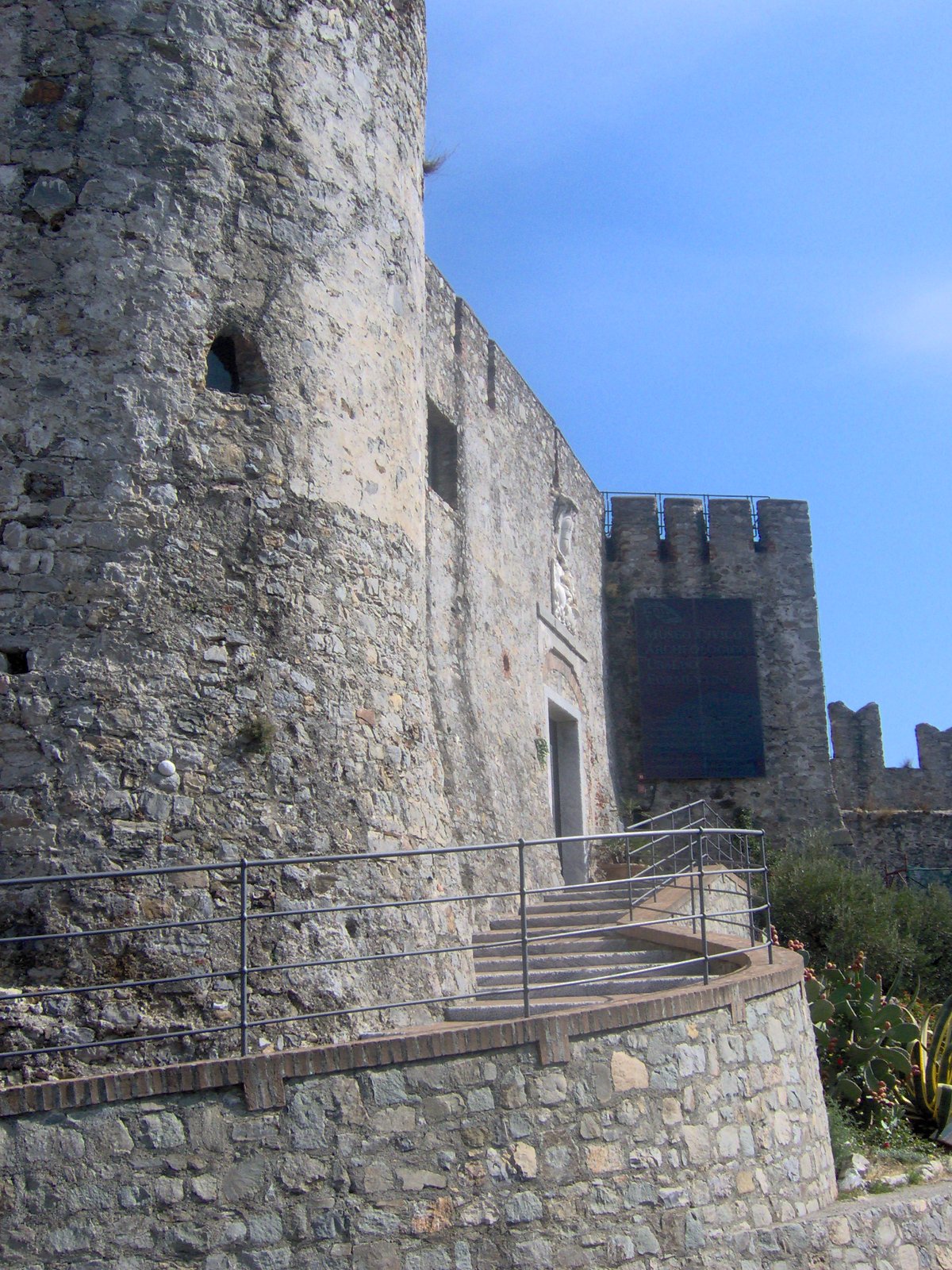 Perched on Poggio hill, Castello San Giorgio is a must for anyone visiting La Spezia. Its history begins in 1262, when Nicolò Fieschi expanded a pre-existing fortification, but it was destroyed by the Genoese under Oberto Doria as early as 1273. Rebuilt in 1343, the castle underwent continuous modifications over the centuries: today it features two quadrangular bodies, a 5.50-meter tower likely from the early Middle Ages, and a 14th-century stone curtain wall with arrow slits for archers. In the mid-15th century, the arrival of artillery led to sloping walls and gunports; in the 17th century, the Genoese added vaulted rooms and earth fillings to absorb impacts. Beneath the portal, the remains of the medieval drawbridge are visible, while a Guelph-style crenellated tower protects the entrance. Inside, the Ubaldo Formentini Archaeological Museum houses artifacts from Prehistory to the Middle Ages: unmissable are the statue stelae of Lunigiana, dating back 5000 years, and the Roman finds from Luni. The exhibition is well-organized, and the staff is friendly. Climbing to the terraces, the view of the Gulf of La Spezia is spectacular. Practical information: via XXVII Marzo; winter hours Wed-Sun 9:30 AM–12:30 PM and 2–5 PM; full ticket €6 (terraces only €4).
Naval Technical Museum: A Journey into Maritime History
- Go to the page: La Spezia Naval Technical Museum: Toti Submarine and Ship Models in the Arsenal
- Viale Giovanni Amendola, La Spezia (SP)
- https://www.marina.difesa.it/EN/history/museums/Pagine/museotecniconavale.aspx#
- Open in Google Maps
- View on Google Images
 If you're in La Spezia, don't miss the Naval Technical Museum of the Italian Navy, the most important naval museum in Italy. Located right next to the Arsenal at Viale Amendola 1, this museum immerses you in centuries of maritime history. Inside, you'll find an incredible collection of ship models, from 15th-century sailing vessels to modern battleships. But the real gem is the Figurehead Hall: over thirty wooden sculptures that once adorned ship bows, including the mysterious Atalanta, recovered in the Atlantic in 1866, and said to bewitch anyone who stares too long.
Military history enthusiasts will be awestruck in the Assault Craft Hall, featuring the prototype of the famous 'Maiale' (slow-speed torpedo used in WWII) and explosive boats from the Assault Vehicle Group. You'll also find documentation on the feats of Rossetti and Paolucci, who sank the Austrian battleship Viribus Unitis in 1918.
Don't miss the Marconi Hall, opened in 2017, displaying the original equipment used by Guglielmo Marconi for the first ship-to-shore radiotelegraph transmission, which took place in La Spezia in 1897. In the internal garden, the propeller of the battleship Vittorio Veneto and a monument to Costanzo Ciano stand out.
The museum is open daily from 8:30 AM to 7:30 PM (last entry at 7:00 PM), with tickets at €5 (reduced €3). An unmissable experience for sea and history lovers.
Amedeo Lia Civic Museum: A Dive into Art Among Gold Grounds and Masterpieces
- Via del Prione 232, La Spezia (SP)
- Open in Google Maps
- View on Google Images
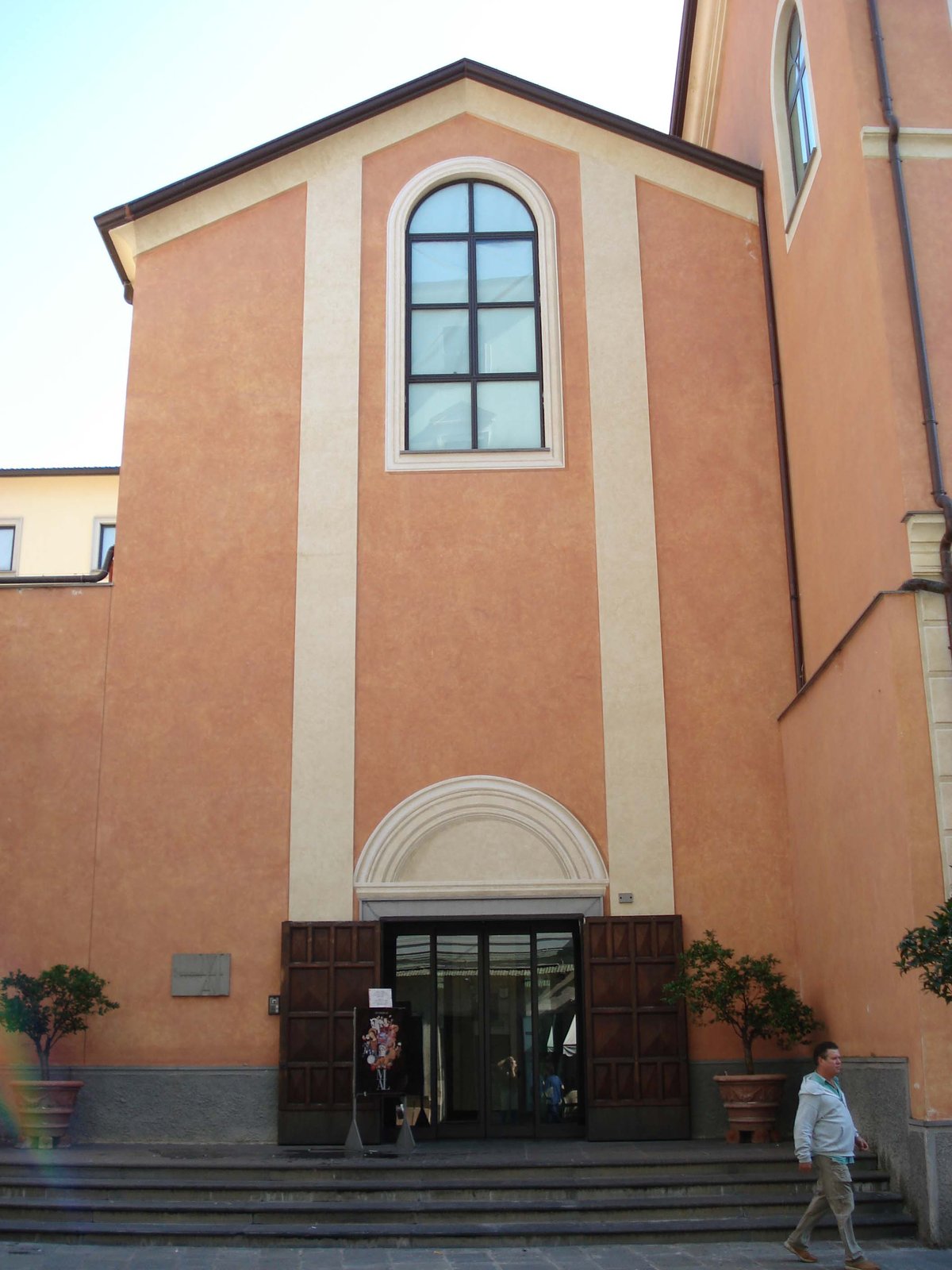 If you think La Spezia is just a starting point for the Cinque Terre, you're wrong. In its historic center, at via del Prione 234, there's a gem worth a stop: the Amedeo Lia Civic Museum. Inaugurated in 1996, it's housed in a former 17th-century convent of San Francesco di Paola, and holds a collection of over a thousand works donated by collector Amedeo Lia. Entering, you are immediately welcomed into the former church (Room I) with liturgical objects and a Madonna and Child attributed to Sassetta. But the real eye-catcher comes on the first floor: one of the most important collections of gold grounds in Europe, with masterpieces by Pietro Lorenzetti, Bernardo Daddi, and Lippo Memmi. Further on, you come face to face with a presumed Self-Portrait by Pontormo, a Portrait of a Gentleman by Titian, and works by Canaletto and Guardi. On the second floor, bronzes by Riccio and archaeological glass (there is a rare imperial gold-band bottle). Don't miss the still lifes by Fede Galizia and Baschenis. The museum is open Tuesday to Sunday (10-18), closed on Monday. Full ticket €9, but if you are a resident of La Spezia, the first Sunday of even months you get in free. Federico Zeri called it 'the little Louvre of Liguria' – and there's a reason. Moreover, the museum is inclusive: it offers a tactile path for the blind and a video guide in LIS. A heartfelt tip: set aside at least a couple of hours, because every room deserves attention.
Center for Contemporary and Modern Art (CAMeC)
- Via Antonio Gramsci, La Spezia (SP)
- https://camec.museilaspezia.it/
- Open in Google Maps
- View on Google Images
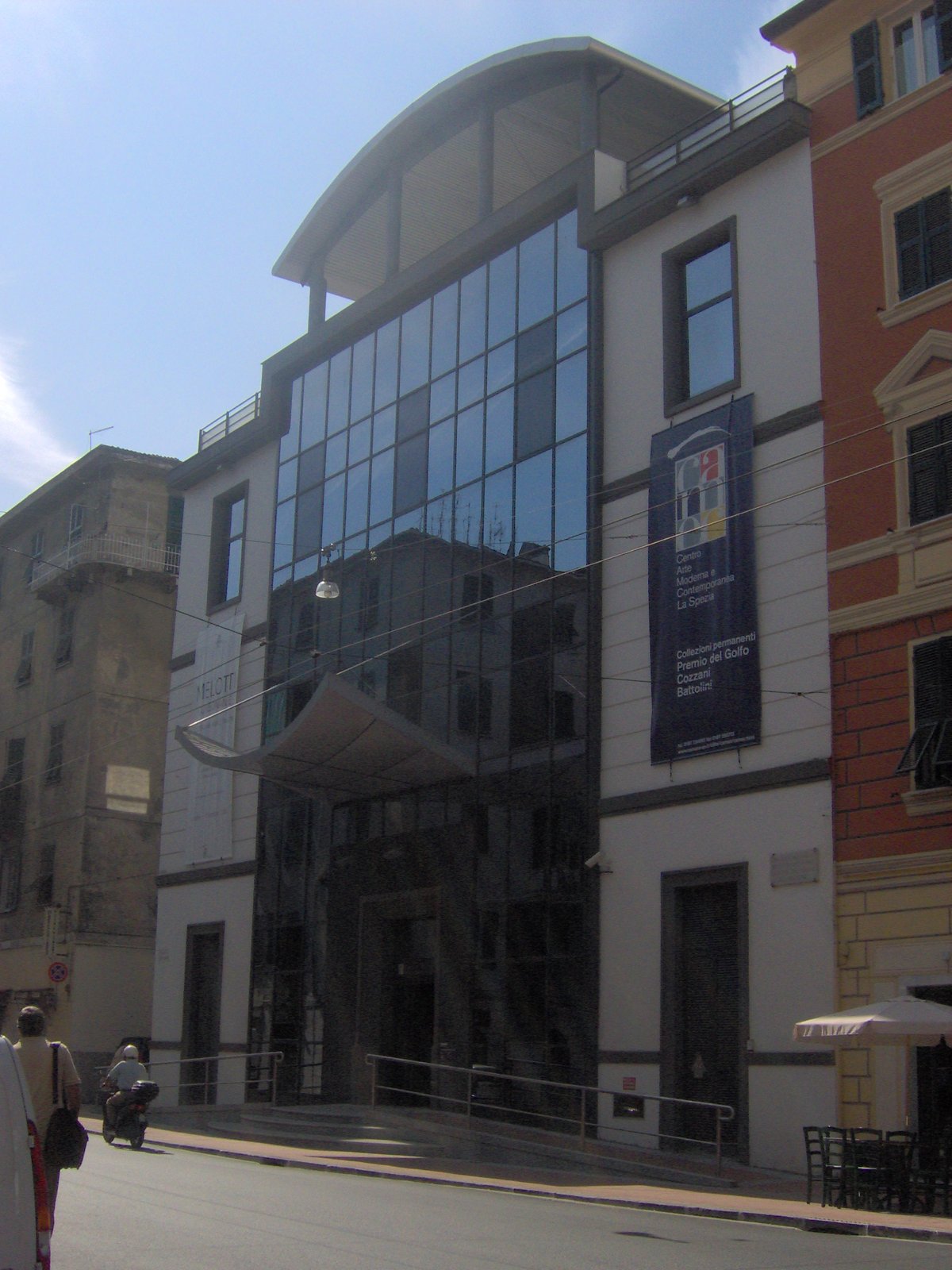 If you find yourself in La Spezia and want to immerse yourself in 20th-century art up to the present day, the Center for Contemporary and Modern Art (CAMeC) is a must-see. It is located in Piazza Cesare Battisti, a stone's throw from the historic center, in a building with a fascinating history: built as an elementary school in 1879, then a courthouse from 1923, heavily damaged by bombing in 1943 and rebuilt in 1950. Since 2004 – after years of renovation – it houses the civic collections of contemporary art. CAMeC preserves three main collections: the Cozzani Collection (over 1,200 works, from Expressionism to Transavanguardia), the Battolini Collection (linked to the Gulf Prize), and works from the Gulf Prize itself, a competition conceived in 1933 by Marinetti and Fillia. The new layout, inaugurated in October 2024 after a restyling, features over 200 works by giants such as Lucio Fontana, Andy Warhol, Marina Abramović, and Roy Lichtenstein. The visit is enriched by a multisensory Accessibility Room, perfect for all audiences. Temporary exhibitions are also scheduled: until September 2025, for example, there is the eagerly awaited “Morandi and Fontana. Invisible and Infinite”. Hours: open Tuesday to Sunday 10-7, first Friday of the month until 10 pm, closed Monday. Tickets: full collection €10, free for under 18 and residents of the province. In short, a place that never fails to amaze and tells the story of contemporary art with an international outlook.
Civic Theatre: history and performances in the heart of La Spezia
- Via Bartolomeo Fazio, La Spezia (SP)
- Open in Google Maps
- View on Google Images
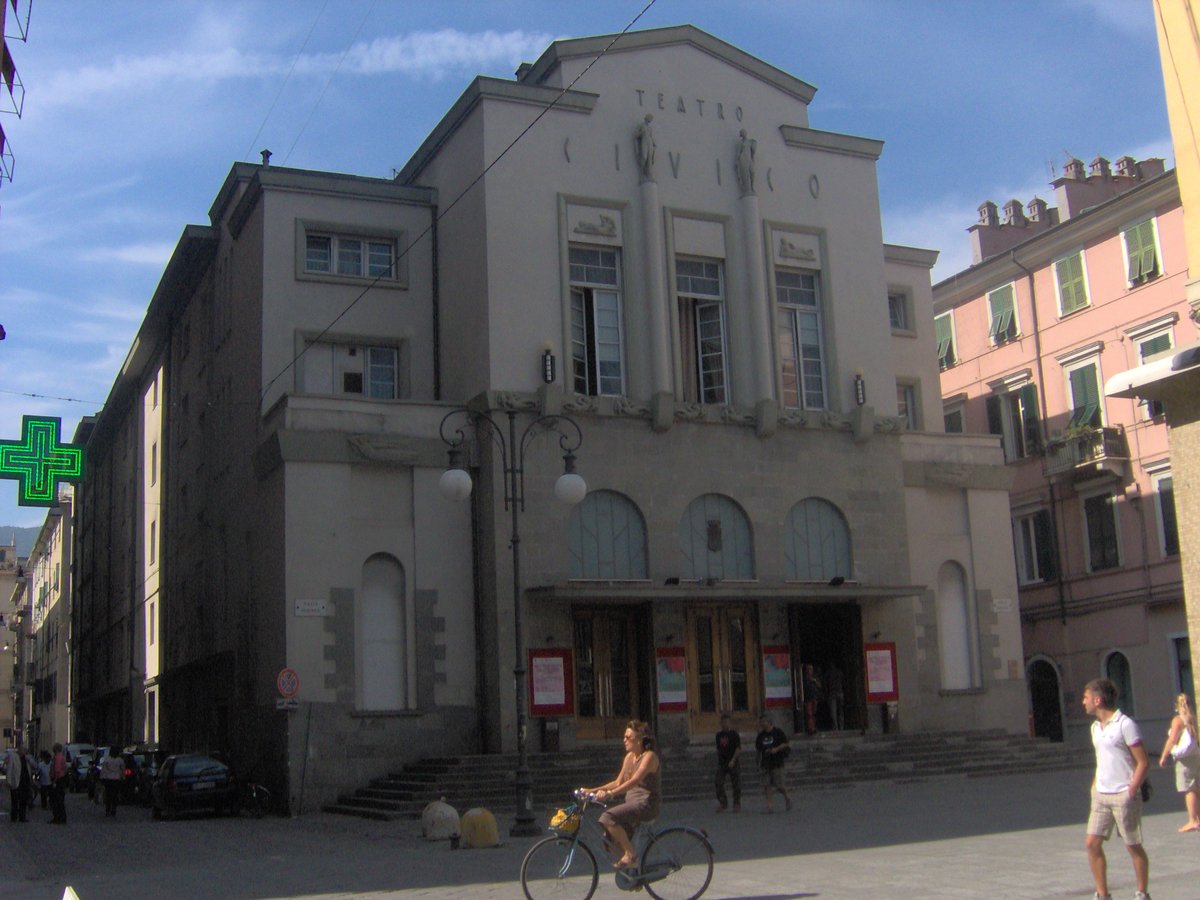 In the historic center of La Spezia, in Piazza Mentana, stands the Civic Theatre, the city's main theatre and the third largest in Liguria with its 940 seats. Its history began in 1840, when the first stone was laid based on a neoclassical design by Genoese architect Ippolito Cremona. Inaugurated in 1846 with works by Verdi, Donizetti, and Luigi Ricci, it quickly became a cultural and social landmark. In the 1930s, Franco Oliva, together with sculptor Augusto Magli, completely renovated it, giving it its current Art Deco appearance: the dome with zodiac signs, the statues of Bacchus, Tobacco, and Venus, and the elegant interior decorations. After a period as a cinema and a long restoration from 1989 to 1995, the theatre definitively reopened. The latest intervention, completed in October 2024 thanks to PNRR and Liguria Region funds, renewed the furnishings with anatomical oak and purple red armchairs, improved energy efficiency, and restored stuccoes and finishes. Today, the Civic Theatre offers a high-quality drama season (with shows like Magnifica Presenza and Brokeback Mountain), a youth program, concerts, dance, and the important International Jazz Festival. The box office is at Corso Cavour 20, open Monday to Saturday mornings and Wednesday afternoons. A place that combines tradition and modernity, perfect for a theatre evening in the heart of the city.
Seal Museum: A Dive into the History of Seals
- Via del Prione 234, La Spezia (SP)
- http://sigillo.museilaspezia.it/
- Open in Google Maps
- View on Google Images
- museo.sigillo@comune.sp.it
- +39 0187 727220
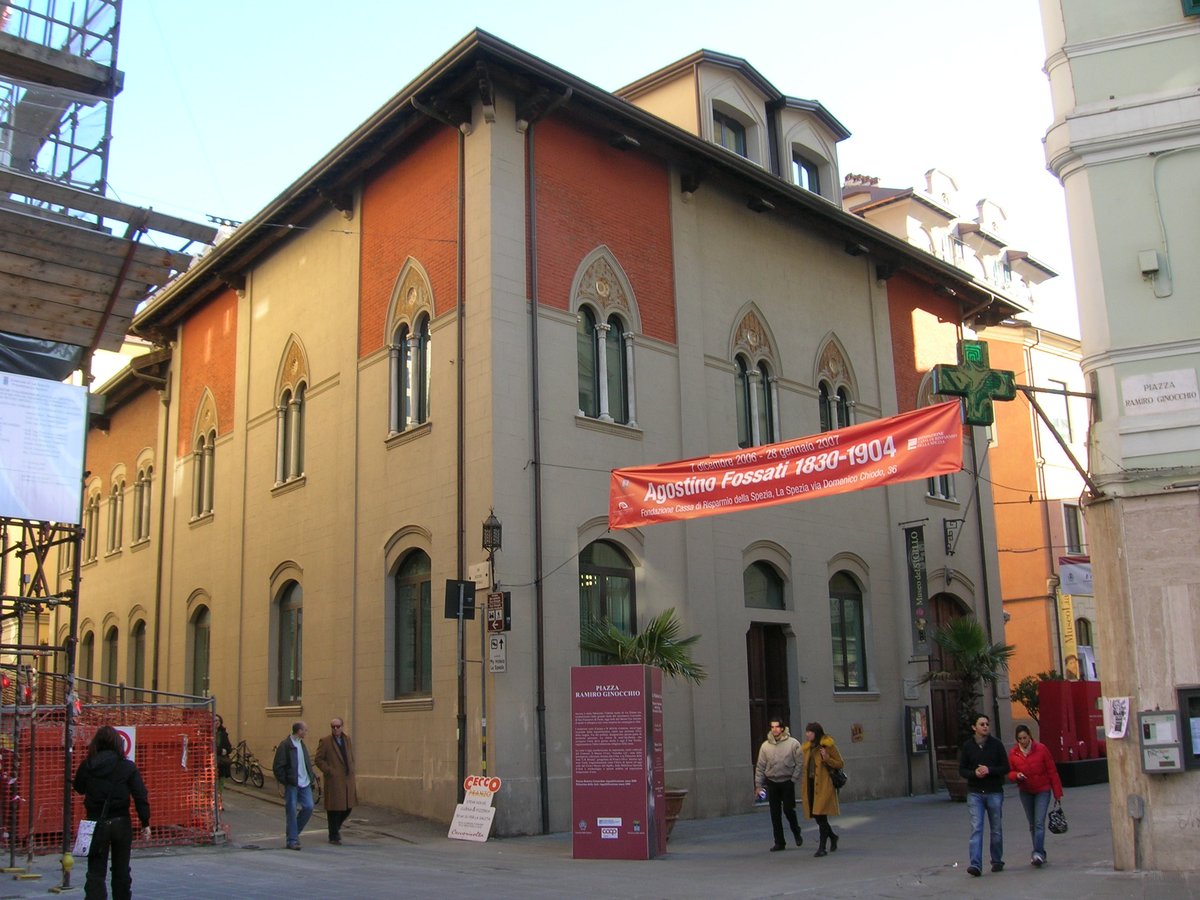 In the heart of La Spezia, inside the Palazzina delle Arti (a curious neo-Gothic building from the 1920s), there's a museum that's a true gem: the Seal Museum. Open since 2000, it houses the world's most complete collection of sphragistics, donated by the Capellini couple. More than 1,500 pieces, from the 4th millennium BC to the present day. The kind of thing that leaves you speechless.
The exhibition follows a chronological and geographical order. It starts with steatite and limestone seals from Mesopotamia, moves on to Egyptian scarabs, Roman rings, medieval and Renaissance seals. Then the real highlights begin: an entire room dedicated to Art Nouveau seals by René Lalique, in crystal and glass, and a section with precious Fabergé seals, including a gold mushroom for the Russian grand duke. There's also a seal that belonged to Queen Victoria.
But the museum is not just about Europe: the third room is a journey through the East, with Chinese, Japanese, and Islamic seals. The masterpiece? An imperial jade seal from the Qing dynasty, from the Forbidden City, featuring a mythological creature that wards off evil forces. The emperor used it for celestial rituals. A marvel.
The museum is small but incredibly rich, and in 2018 they also inaugurated a tactile path for the blind. Hours: Tuesday to Sunday, 10am–6pm. Closed on Mondays. Combined ticket with the Lia Museum and the Castle. Tip: don't miss the third Sunday of the month, free guided tour at 10:30am. A place that seems timeless, but takes you on a journey through centuries.
The Equestrian Monument to Garibaldi
- Via Aulo Flacco Persio, La Spezia (SP)
- Open in Google Maps
- View on Google Images
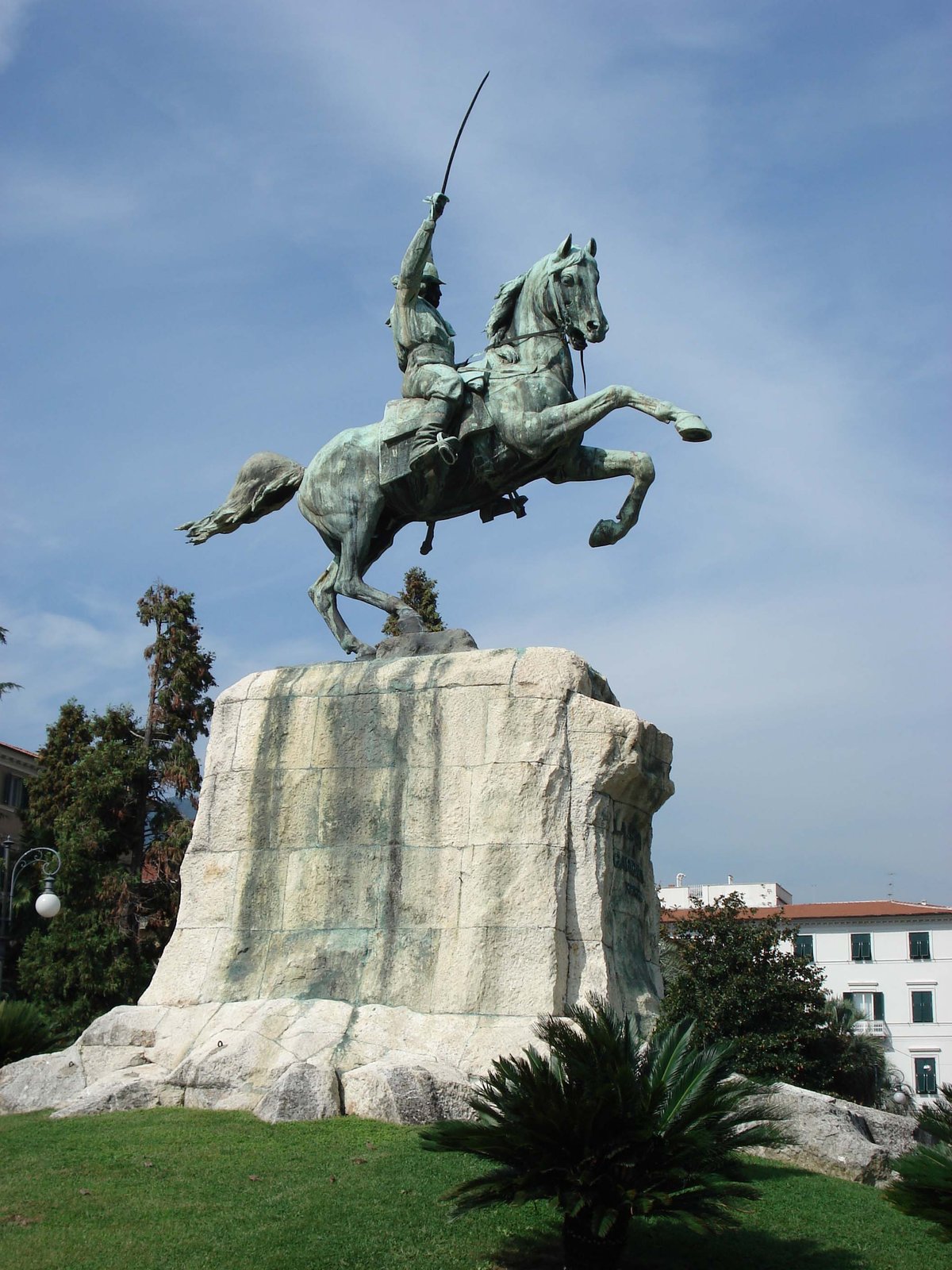 If you stroll through the Public Gardens in the historic center of La Spezia, you cannot miss the imposing equestrian monument to Giuseppe Garibaldi. Cast in bronze by sculptor Antonio Garella, the statue was inaugurated on June 1, 1913 following a competition announced as early as 1882. What strikes the viewer is the rare pose of the rearing horse, balanced only on its hind legs – a remarkable static feat, so much so that in 2008 a metal support was added under the belly as a precaution. The sculpture weighs 6 tons and depicts the Hero of Two Worlds with his saber drawn, facing east. But Garibaldi’s presence in La Spezia goes beyond this monument: the city preserves other traces of his passage. Just outside, in the Grazie inlet, stands the Lazzaretto of Varignano, where the General was imprisoned after the clashes at Aspromonte (1862) and Mentana (1867). Here, a plaque from 1907 commemorates his arrival on September 2, 1862. Also in 1867, after his arrest, Garibaldi stayed overnight at the ancient Albergo della Croce di Malta on Via Chiodo. Finally, in 1869, his schooner was handed over to the Kingdom right in the Gulf of La Spezia, testament to the bond between the hero and this city. Visiting the monument is a dive into the history of the Risorgimento, but for a complete picture it is worth exploring the other Garibaldian sites in La Spezia as well.
Palazzo De Nobili: a Baroque masterpiece in the historic center
- Via Sant'Agostino 59, La Spezia (SP)
- Open in Google Maps
- View on Google Images
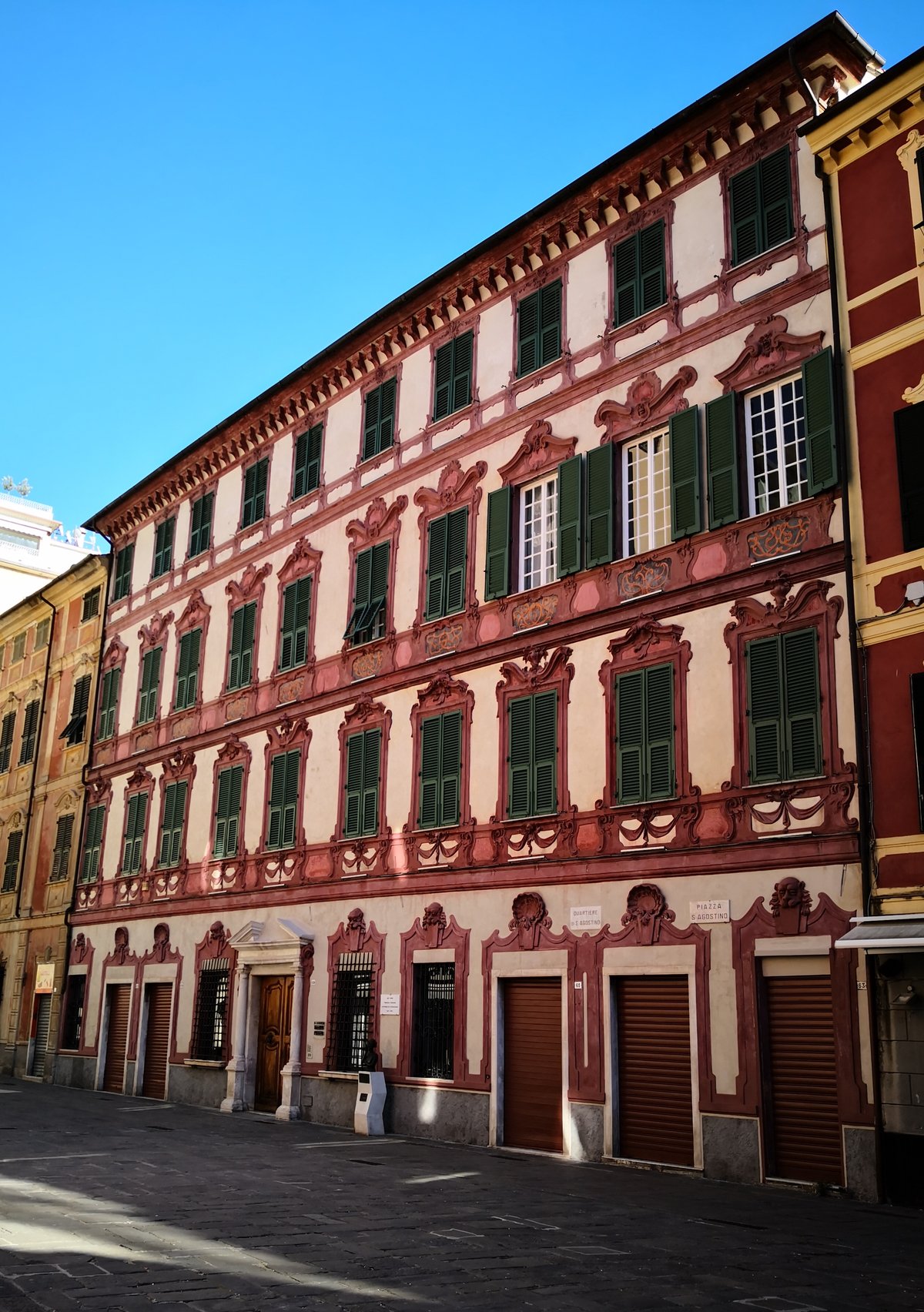 If you stroll through the historic center of La Spezia, you can't help but notice Palazzo De Nobili in Piazza Sant'Agostino. This noble palace, dating back to the 17th and 18th centuries, is a perfect example of Baroque architecture, crafted by local artisans. The façade immediately strikes you with its chromatic contrast between the light gray wall and the bright red of the frames and cornice. But the details are even more surprising: shell motifs, lion heads, and floral patterns frame doors and windows. The Baroque marble portal, with columns and a broken pediment, is enriched by bizarre herms of caricature figures – an ironic touch that doesn't go unnoticed.
A curious note: the famous Countess of Castiglione lived here, Virginia Oldoini, one of the most fascinating figures of the Risorgimento. Yes, you read that right – the very woman who made a name for herself in European courts. Today, the palace is still the private residence of the De Nobili marquesses, so unfortunately it cannot be visited inside. But don't worry: admiring it from the outside is already an experience. After the restoration completed in 2020, the façade was cleaned and enhanced with scenic lighting that highlights it even in the evening. If you pass by at sunset, you'll see the illuminated details and the play of colors become even more evocative.
Palazzo De Nobili was part of the so-called Rolli spezzini, a list of stately homes intended to host dignitaries visiting the city. It is one of many treasures that make the center of La Spezia a place to be explored slowly, with your head up, so as not to miss these details. So when you're in the area, stop for a moment in Piazza Sant'Agostino, look up, and let yourself be enchanted by this Baroque gem.
Piazza Giuseppe Verdi: The Contested Heart of La Spezia
- La Spezia (SP)
- Open in Google Maps
- View on Google Images
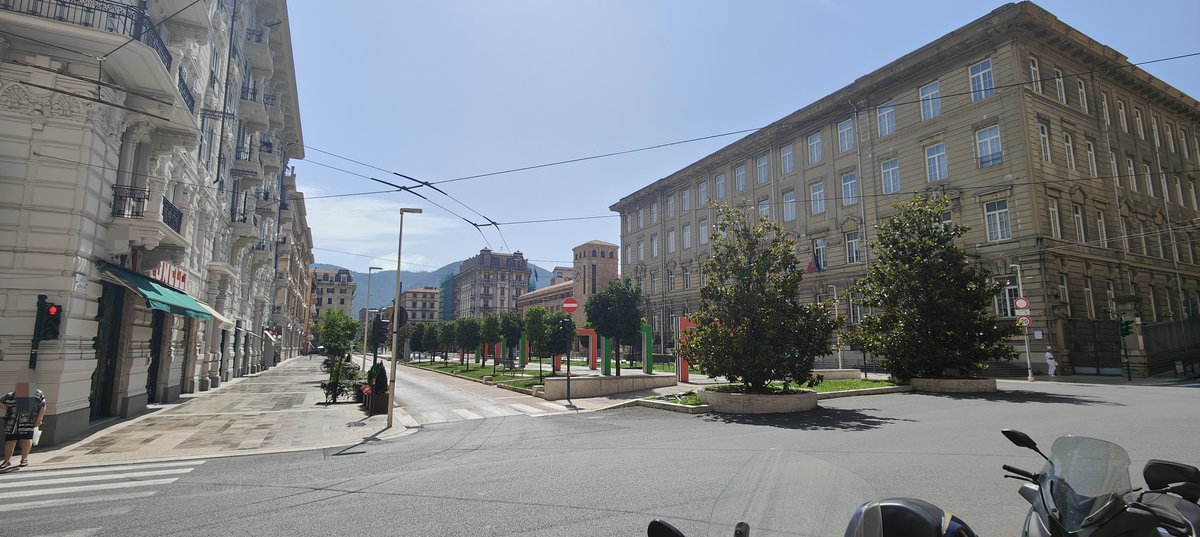 If you think a square is just a space to cross, Piazza Giuseppe Verdi will make you think again. Built between 1934 and 1938, it has always been the city's nerve center, a link between the 19th-century and 20th-century parts. But what makes it unique is its recent redesign by architect Giannantonio Vannetti and French artist Daniel Buren, completed in 2014. A project that sparked debate: gone are the maritime pines, in come stairways, water basins, and colorful installations. The noble stone paving and the so-called "celestial membrane" – a covered structure that acts as an Urban Hall – transform the square into an open-air stage, with the titles of Verdi's works engraved on the floor. Among the surrounding buildings, the Palazzo delle Poste (1933) by Angiolo Mazzoni stands out, with its clock tower and an interior housing a futurist mosaic by Fillia and Prampolini on the theme of communication. Nearby, the Palazzo Boletto in Liberty style and the Palazzo del Governo complete the picture. The debate on the redevelopment was heated – Vittorio Sgarbi against, a "Front of Yes" in favor – but today the square is a successful mix of history and modernity, a place to stop and observe the play of light reflected by the colored glass. From the square you can walk to the port, Castello di San Giorgio, and the Museo d'Arte Moderna. A tip? Walk slowly, because every corner tells a story.
The Dialogue Fountain
- Piazza Giuseppe Garibaldi, La Spezia (SP)
- Open in Google Maps
- View on Google Images
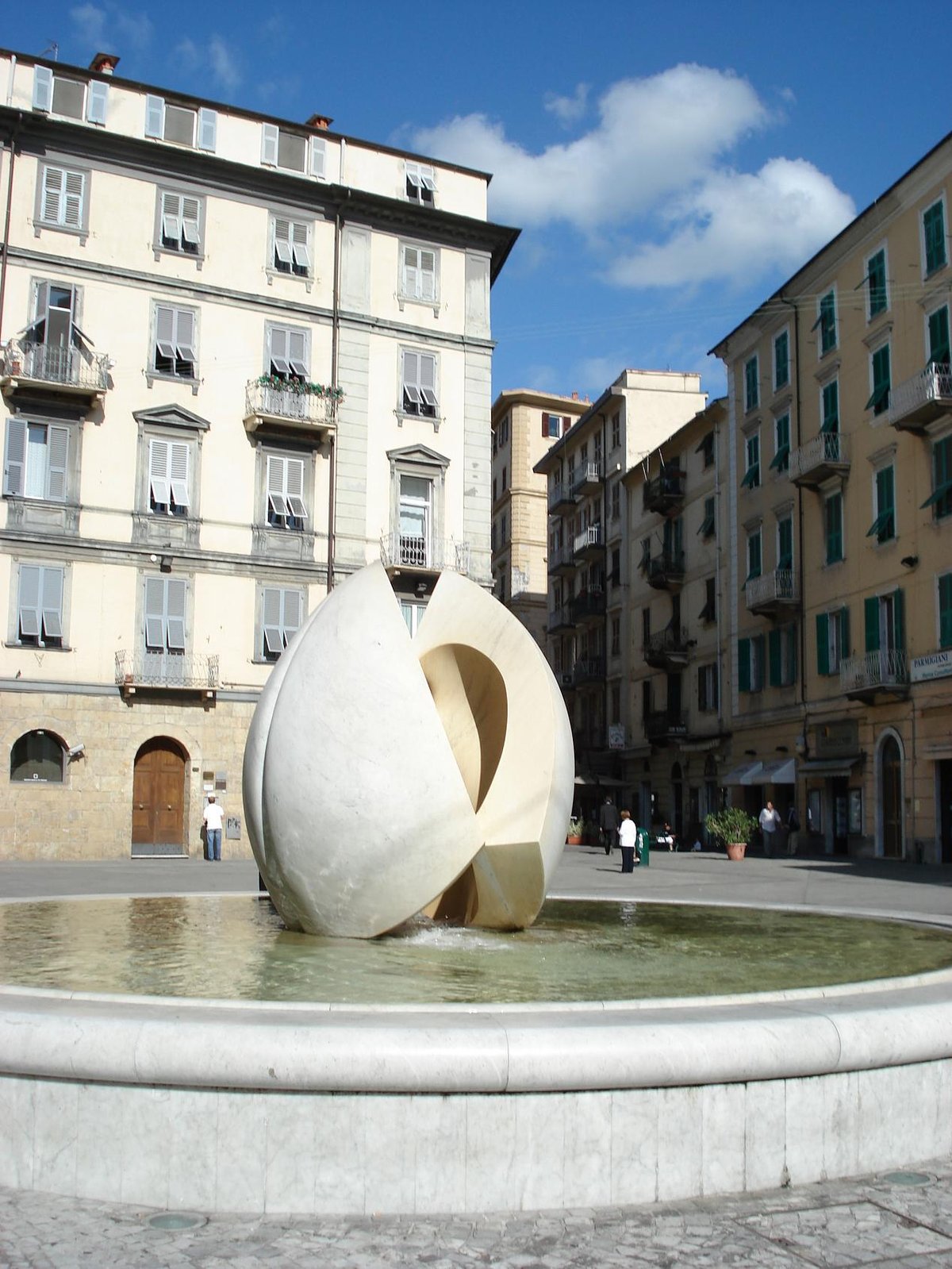 In the heart of La Spezia, in Piazza Garibaldi, you'll find the Dialogue Fountain, inaugurated in 2002. The work is by sculptor Viliano Tarabella and is set on a water platform where two large abstract sails in Carrara marble interpenetrate, rising from the basin upward. Water jets from the center, evoking the sea as a generative force. The architectural design by Antonio Leone and Cesarina Zanetti conceived the fountain as a place to pause: the smooth balustrade invites sitting, while the rough marble cubes of the circular path slow down the pace, encouraging dialogue. The nighttime lighting creates warm and cool light effects, interrupted only by the jet. The fountain is the centerpiece of an ideal route connecting Piazza Europa to Piazza Brin, overcoming the visual barrier that separates the city from the sea. A symbol of connection and regeneration, perfect for a reflective break in the historic center.
Daniel Buren's Arches: An Explosion of Colors in Piazza Verdi
- Piazza Giuseppe Verdi, La Spezia (SP)
- Open in Google Maps
- View on Google Images
 If you pass through La Spezia, you can't miss Daniel Buren's Arches in Piazza Verdi. It's one of those cases where public art surprises you and makes you see the city with new eyes. The installation, created by the famous French artist (Golden Lion at the Venice Biennale in 1986) together with architect Giannantonio Vannetti, was inaugurated at the end of 2016. A sequence of colored arches – primary and complementary – lines up perfectly along a pedestrian walkway, creating a perspective that frames the background. The colors recall those of the mosaic of the nearby Post Office building, while the black-and-white pillars mark the space. And they are not just arches: the inserted mirrors amplify the effect, reflecting the surrounding architecture and giving infinite visual references. The square itself was completely rethought: from a parking lot (200x40 meters) to a meeting place divided into three zones, with a central amphitheater, a restored fountain with green walls, and new bitter orange trees. Too bad that at the moment it is still open to limited vehicular traffic, but hopefully it will soon become pedestrian-only. The work also sparked debate: in 2021, the administration installed light bulbs that partially cover the arches, drawing criticism from the artist and the former mayor. In 2022, three teenagers climbed the arches at night, ending up fined. In short, a work that does not leave anyone indifferent. I recommend visiting it both during the day, to appreciate the colors, and at sunset, when the lighting (controversies aside) creates a suggestive atmosphere. Not to be missed if you love contemporary art and reinvented urban spaces.