
🧭 What to Expect
- Ideal for a cultural weekend between history and art
- Highlight: compact and well-preserved historic center
- Unmissable: view from the Civic Tower on the Dolomites
- Recommended: stroll among palaces and medieval gates
- Not to be missed: Palazzo dei Rettori and Palazzo Fulcis
Events nearby


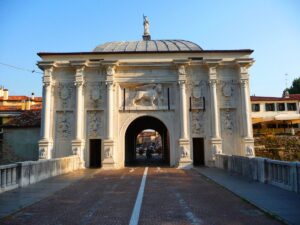
Belluno, nestled between the Dolomites, is a city of historical charm worth visiting. Its historic center is a jewel of Venetian and medieval architecture. Palazzo dei Rettori dominates Piazza dei Martiri with its Renaissance facade, while Palazzo Fulcis houses the civic museum with works of art. The ancient city gates, such as Porta Dojona and Porta Dante, tell the story of the city's defense. Don't miss the Civic Tower for a breathtaking view of the mountains. Stroll along Via Mezzaterra among shops and cafes, and discover the Teatro Comunale, a 19th-century gem. Other points of interest include Palazzo Crepadona, a cultural center, and the Torrione, a remnant of the ancient walls. A walking itinerary will lead you to discover charming corners, among historic palaces and glimpses of the Dolomites. Belluno is ideal for a day trip focused on culture and history.
Itineraries nearby


Palace of the Rectors
- Go to the page: Palazzo dei Rettori in Belluno: Renaissance Frescoes and Panoramic Terrace Overlooking the Dolomites
- Via XXX Aprile, Belluno (BL)
- Open in Google Maps
- View on Google Images
 As you stroll through the center of Belluno, it's impossible to miss the Palace of the Rectors, overlooking Piazza Duomo. For nearly four hundred years, this building was the heart of Venetian power in the city. Its history begins in 1409, when a first fortification was built, later destroyed by a fire in 1802. But what we see today is the result of subsequent expansions: in 1491, the rector Maffeo Tiepolo added a two-story Lombardesque loggia on the west side, and in 1496, the Venetian architect Giovanni Candi – the same one behind the famous "bovolo" staircase of Palazzo Contarini in Venice – designed an expansion, completed only in 1536 under Girolamo Rimondi. Between 1536 and 1547, the clock tower was raised, designed by Valerio da San Vittore. Inside, despite restorations after earthquakes, many rooms have preserved their original appearance, especially the central hall on the second floor and the small room with a Sansovino-style ceiling. On the facade, coats of arms and busts of Venetian rectors are preserved. Today the palace houses the Prefecture, but it can be admired from the outside: don't miss the clock tower, a small architectural gem.
Palazzo Fulcis: The 18th-Century Jewel Housing the Civic Museum
- Piazza Vittorio Emanuele II, Belluno (BL)
- Open in Google Maps
- View on Google Images
 If you think Belluno is only about mountains and nature, Palazzo Fulcis will change your mind. This elegant 18th-century building at Via Roma 28 now houses the Civic Museums, a true treasure trove of art that blends the palace's architecture with historical collections. Built by architect Valentino Alpago-Novello in 1776 by merging three pre-existing buildings, the palace still retains its original stuccoes and Venetian terrazzo floors. Inside, across five floors and 24 rooms, a journey unfolds from the 15th to the 19th century, featuring works by artists such as Sebastiano Ricci (notably his Fall of Phaeton), Bartolomeo Montagna, Domenico Tintoretto, and Ippolito Caffi. Wooden sculptures by Andrea Brustolon, porcelain, Belluno jewelry, and an archaeological section complete the collection. The museum is open Tuesday to Sunday (hours vary, closed on Monday). Full ticket costs €8. A visit here will let you appreciate Belluno's artistic side, far from the usual spots. I recommend not missing the large hall frescoed by Costantino Cedini and the Camerino d'Ercole, although the latter isn't always accessible. For history enthusiasts, the palace hosted figures like Viceroy Eugène de Beauharnais. In short, a dive into 18th-century beauty that deserves at least a couple of hours.