Tired of whirlwind tours between the Rialto Bridge and St. Mark’s Square? This cultural walking itinerary takes you to discover a more authentic Venice, made of artistic masterpieces and quiet atmospheres. In just one day, you’ll visit the Accademia Galleries and Ca’ Rezzonico, two museums that tell the story of Venetian art, and some lesser-known but treasure-filled churches like Santa Maria Gloriosa dei Frari and San Sebastiano. A route designed for art and history lovers, far from the crowds, allowing you to immerse yourself in local culture without stress. Ideal for a 1-day itinerary in Venice that combines museums and churches beyond San Marco in a fascinating walk.
🗺️ Your trip at a glance
This itinerary leads you to discover Venice’s artistic gems away from the beaten paths, giving you an authentic and unhurried cultural experience. Perfect for those who want to delve into Venetian history and art in just one day, with targeted stops and practical tips.
- Ideal for art and history lovers seeking an experience away from mass tourism.
- Highlights Accademia Galleries, Ca’ Rezzonico, Renaissance churches like Frari and San Sebastiano, a peaceful and well-planned route.
- For whom those who want a complete yet relaxed cultural itinerary, with tips to avoid queues.
Itinerary stops
Stop no. 1
Gallerie dell’Accademia: The Heart of Venetian Art
 Alright, let’s start strong. The first stop on this off-the-beaten-path itinerary is the Gallerie dell’Accademia, a true treasure chest of Venetian painting from the 14th to the 18th century. Located in Dorsoduro, at the foot of the Accademia Bridge, the museum occupies the former complex of Santa Maria della Carità: church, convent, and Scuola Grande. Here you won’t find endless queues, but quiet rooms where you can admire absolute masterpieces like Giorgione’s The Tempest, Veronese’s The Feast in the House of Levi, and Carpaccio’s Stories of Saint Ursula. And then there’s Titian’s Pietà, intense and moving. Note that Leonardo’s Vitruvian Man is only shown in special exhibitions, but the Cabinet of Drawings is still worth a visit. The layout bears the signature of Carlo Scarpa, who in the 1960s skillfully enhanced the spaces with modern touches. Set aside at least a couple of hours: every room tells a piece of Venetian history. Open Tuesday to Sunday, 9am–7pm (closed Mondays). Full ticket €15, but for young people under 25 there’s a reduced price of €2. A perfect start to immerse yourself in art without the stress.
- Go to the page: Gallerie dell’Accademia: The Treasure of Venetian Art in Venice
- Campo de la Carità 1050, Venezia (VE)
- https://www.gallerieaccademia.it/en
- Open in Google Maps
- View on Google Images

You should go if…
Stop no. 1
Gallerie dell’Accademia: The Heart of Venetian Art
Alright, let’s start strong. The first stop on this off-the-beaten-path itinerary is the Gallerie dell’Accademia, a true treasure chest of Venetian painting from the 14th to the 18th century. Located in Dorsoduro, at the foot of the Accademia Bridge, the museum occupies the former complex of Santa Maria della Carità: church, convent, and Scuola Grande. Here you won’t find endless queues, but quiet rooms where you can admire absolute masterpieces like Giorgione’s The Tempest, Veronese’s The Feast in the House of Levi, and Carpaccio’s Stories of Saint Ursula. And then there’s Titian’s Pietà, intense and moving. Note that Leonardo’s Vitruvian Man is only shown in special exhibitions, but the Cabinet of Drawings is still worth a visit. The layout bears the signature of Carlo Scarpa, who in the 1960s skillfully enhanced the spaces with modern touches. Set aside at least a couple of hours: every room tells a piece of Venetian history. Open Tuesday to Sunday, 9am–7pm (closed Mondays). Full ticket €15, but for young people under 25 there’s a reduced price of €2. A perfect start to immerse yourself in art without the stress.- Go to the page: Gallerie dell’Accademia: Masterpieces by Giorgione and Titian in Three Historic Buildings
- Campo de la Carità 1050, Venezia (VE)
- https://www.gallerieaccademia.it/en
- Open in Google Maps
- View on Google Images
You should go if…
Stop no. 2
Santa Maria della Salute: A City’s Vow
 Leaving the chaos of San Marco behind, you find yourself facing an icon of Venice: the Basilica della Salute. Built as an ex voto after the plague of 1630, this church is a Baroque masterpiece by Baldassarre Longhena. Its octagonal plan and enormous dome have become the symbol of the St. Mark’s Basin. Over 100,000 piles support the building, which seems to float on the Grand Canal. Inside, light filters through the windows of the drum, illuminating works by Titian and Tintoretto. In the sacristy (€4) you’ll find three ceiling paintings by Titian and the famous ‘Wedding at Cana’. On the high altar, the icon of the Madonna Mesopanditissa from Crete and the sculptural group by Giusto Le Court depicting Venice supplicant and the plague fleeing. Fun fact: every November 21st, Venetians cross a pontoon bridge for the Festa della Salute. Free entry, open daily. From the staircase, you can enjoy a breathtaking view of the lagoon.
- Go to the page: Santa Maria della Salute: The Venetians’ Vow to End the Plague
- Campo de la Salute, Venezia (VE)
- Open in Google Maps
- View on Google Images
You should go if…
Stop no. 2
Santa Maria della Salute: A City’s Vow
Leaving the chaos of San Marco behind, you find yourself facing an icon of Venice: the Basilica della Salute. Built as an ex voto after the plague of 1630, this church is a Baroque masterpiece by Baldassarre Longhena. Its octagonal plan and enormous dome have become the symbol of the St. Mark’s Basin. Over 100,000 piles support the building, which seems to float on the Grand Canal. Inside, light filters through the windows of the drum, illuminating works by Titian and Tintoretto. In the sacristy (€4) you’ll find three ceiling paintings by Titian and the famous ‘Wedding at Cana’. On the high altar, the icon of the Madonna Mesopanditissa from Crete and the sculptural group by Giusto Le Court depicting Venice supplicant and the plague fleeing. Fun fact: every November 21st, Venetians cross a pontoon bridge for the Festa della Salute. Free entry, open daily. From the staircase, you can enjoy a breathtaking view of the lagoon.- Go to the page: Santa Maria della Salute: Baroque Basilica with Works by Titian and Views of the Grand Canal
- Campo de la Salute, Venezia (VE)
- Open in Google Maps
- View on Google Images
You should go if…
Stop no. 3
Ca’ Rezzonico: A Dive into 18th-Century Venice
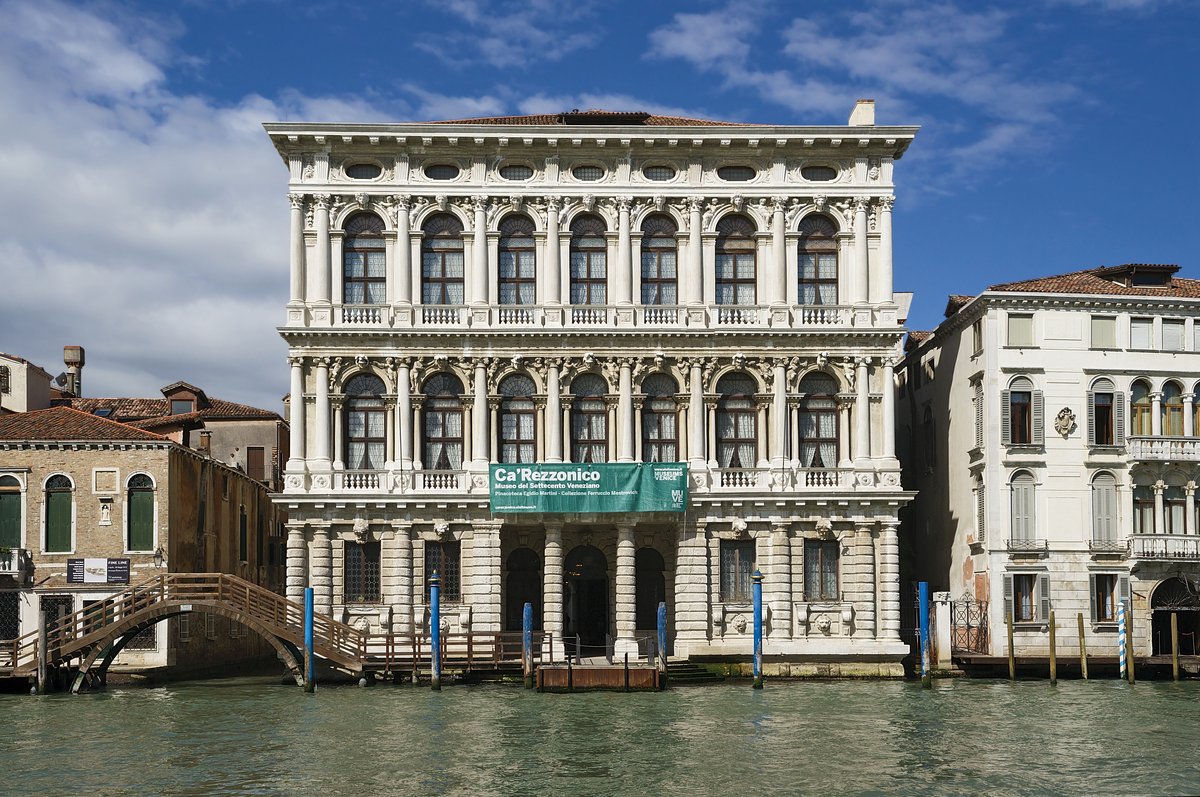 From the Salute, walk along the fondamenta to Ca’ Rezzonico, a palace that is a time machine. Here, 18th-century Venice comes alive in every room. Giorgio Massari’s monumental staircase leads you to the piano nobile, where the ballroom with frescoes by Giambattista Crosato leaves you speechless. But it’s the Sala dell’Allegoria nuziale by Tiepolo that steals the show: Apollo’s chariot and the newlywed couple seem suspended in time. Then there are Rosalba Carriera’s pastel portraits, Pietro Longhi’s scenes of everyday life, and an entire room dedicated to Canaletto and Guardi. On the second floor, Giandomenico Tiepolo’s frescoes from the Villa di Zianigo are a riot of imagination, with his Pulcinella masks. Don’t miss the Farmacia ai Do San Marchi on the third floor, with its maiolica jars and Murano glass stills. Open daily except Tuesday (hours 10-6 in summer, 10-5 in winter), admission €10. A stop that lets you understand what life was like for Venetian nobles.
- Go to the page: Ca’ Rezzonico Museum: Tiepolo Frescoes and Venetian Noble Life
- Fondamenta Rezzonico 3136, Venezia (VE)
- https://carezzonico.visitmuve.it
- Open in Google Maps
- View on Google Images
You should go if…
Stop no. 4
Church of San Trovaso
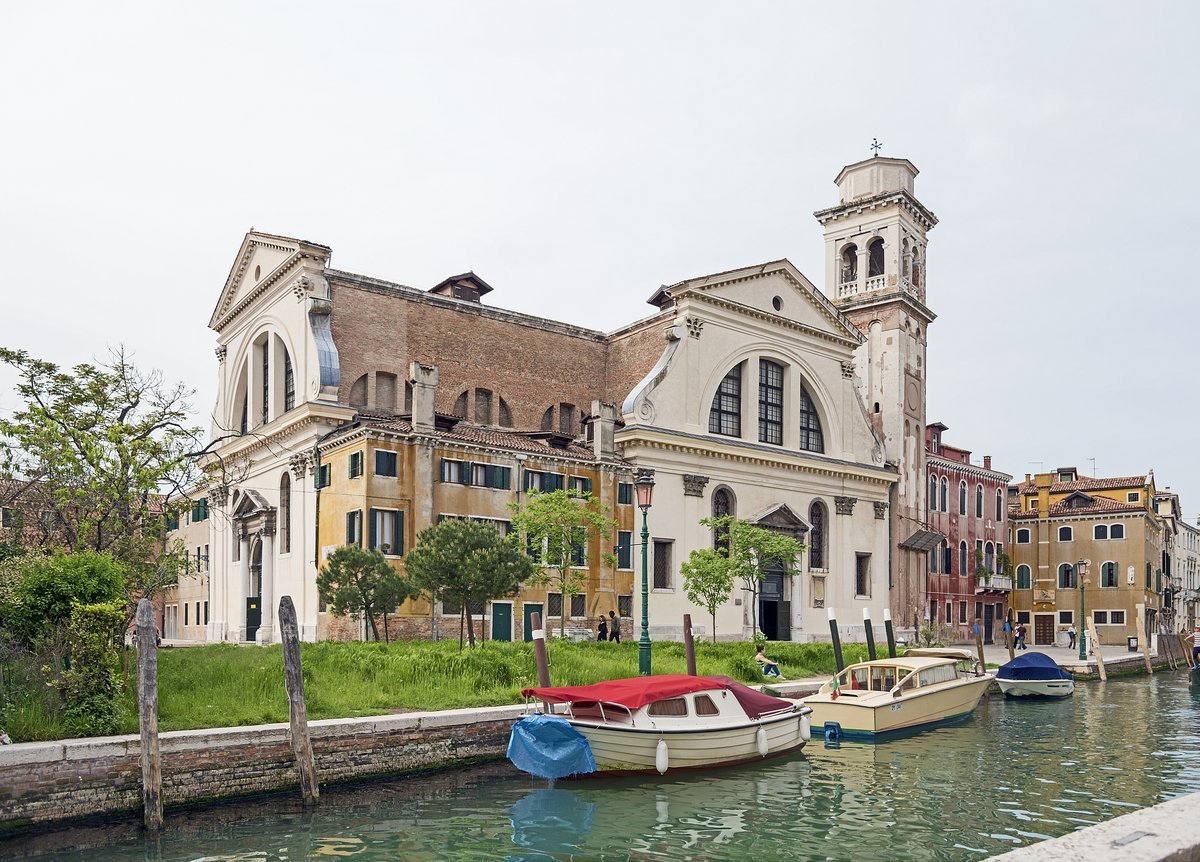 After Ca’ Rezzonico, head in the opposite direction towards Campo San Trovaso. Here stands a church that seems to have two faces: it has two almost identical Palladian facades, one on the square and one on the canal. Legend has it that they served to keep the rival factions of Castellani and Nicolotti separate when they met in church. The Latin cross interior houses a Last Supper by Tintoretto (1556) and the Temptations of Saint Anthony by the same artist, along with canvases by Palma il Giovane and Domenico Tintoretto. Entrance is free (Monday to Saturday, 2:30-5:30 PM). Outside, next to it, is the San Trovaso squero, one of the last gondola shipyards: if you’re lucky, you’ll see the master shipwrights at work. The square with its paving and characteristic raised area for rainwater offers you a corner of true Venice, away from the crowds.
- Campo San Trovaso, Venezia (VE)
- Open in Google Maps
- View on Google Images
You should go if…
Stop no. 5
Squero de San Trovaso
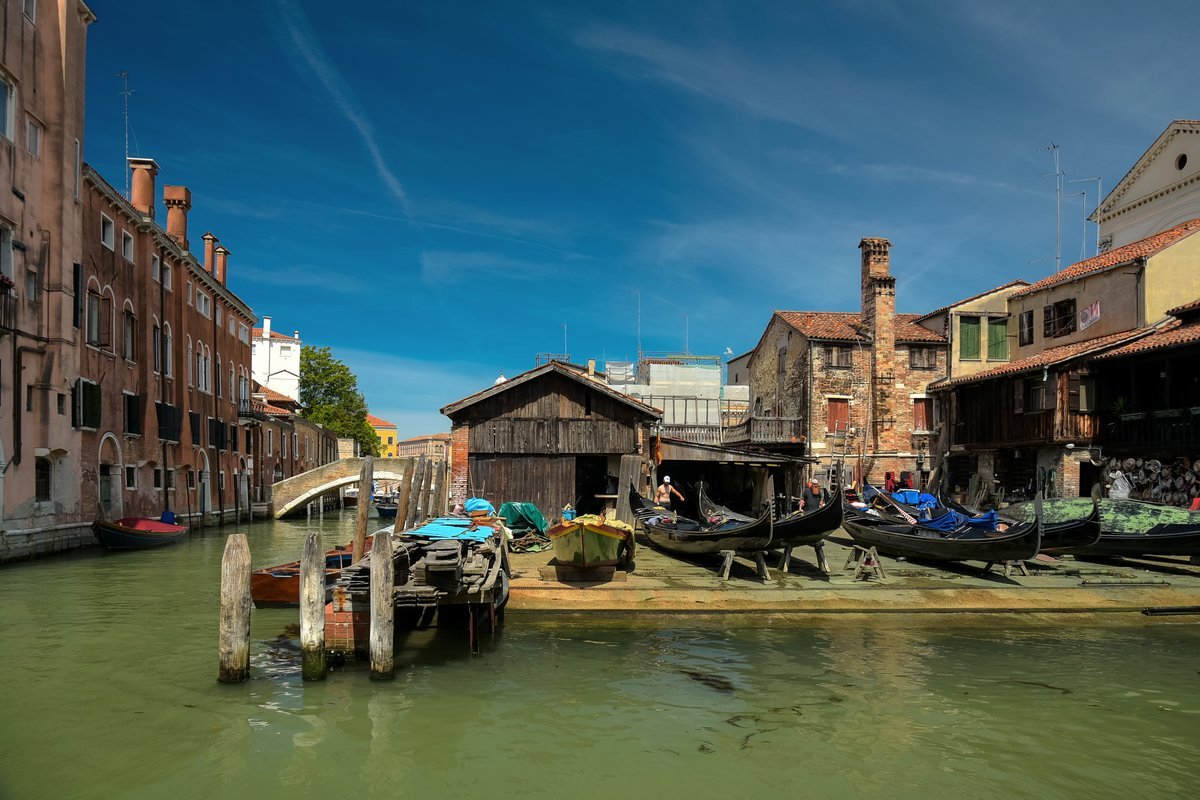 A few steps from the church, overlooking the canal, you’ll find the Squero de San Trovaso, one of the last active shipyards in Venice. Here, master carpenters build and repair gondolas entirely by hand, following a tradition dating back to the 17th century. The structure is unique: it looks like a mountain chalet with a sloping roof, because the first artisans came from Cadore and brought that style with them. Watching the squeraroli at work is a unique experience: each gondola requires over 500 hours of work and 8 different types of wood, with no written plans — only memory and skill. The bow iron, with its six bars, recalls Venice’s six districts. Free entry is not allowed, but by booking via email you can join a guided tour of about 30 minutes. If you don’t have time, even a peek from the canal bank offers a glimpse into the most authentic craftsmanship.
You should go if…
Stop no. 6
Santa Maria del Rosario: An 18th-Century Masterpiece
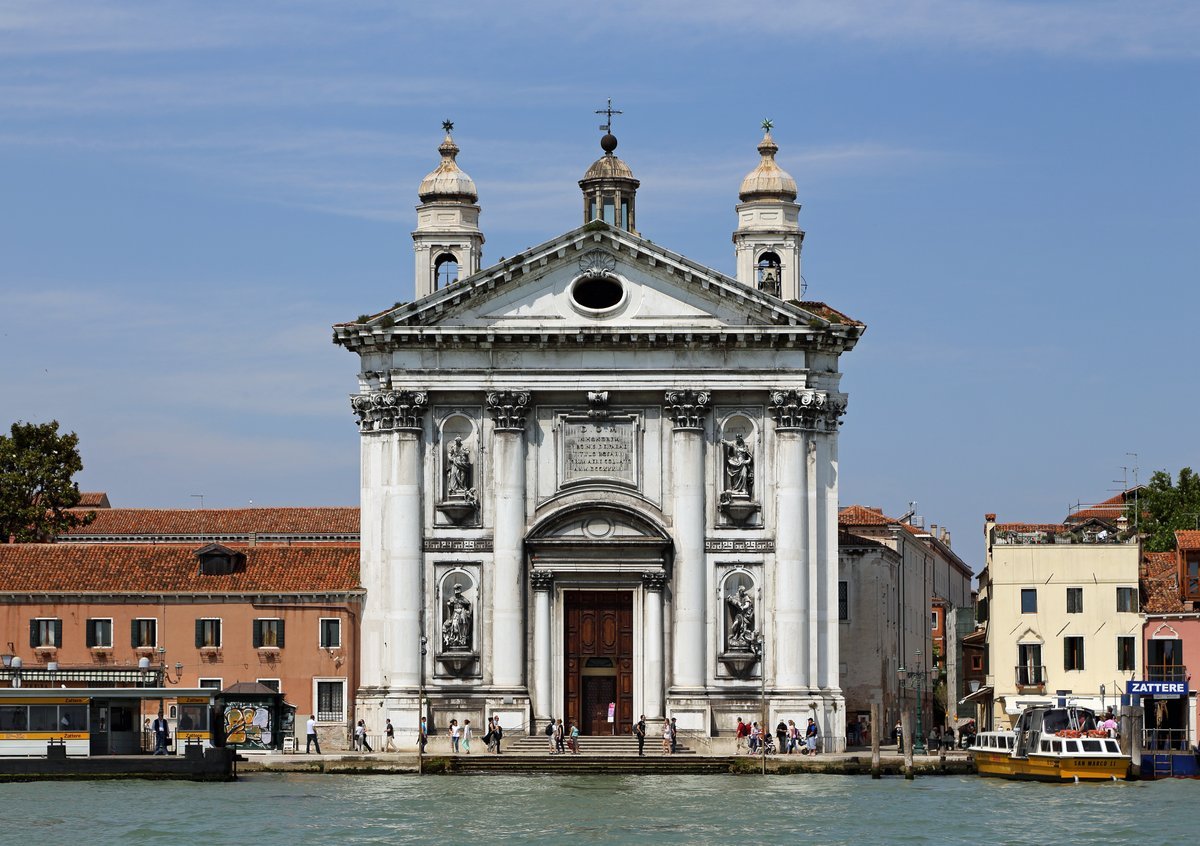 Continuing along the Zattere, you come across the pristine white facade of Santa Maria del Rosario, better known as ‘dei Gesuati’. Here, between 1724 and 1736, Giorgio Massari created one of the most harmonious interiors of 18th-century Venice. As you enter, your gaze is drawn to the ceiling: three enormous canvases by Giambattista Tiepolo recount stories of Saint Dominic with vibrant colors and a sense of motion that leaves you breathless. Every altar is a gem: alongside Tiepolo, you find Piazzetta’s ‘Vision of the Saints’, an intense and dramatic work, and even a Tintoretto and a Ricci. The stylistic unity is perfect, from the carved wood to Morleiter’s sculptures. This is a church that speaks of art without overwhelming, designed for those who want to immerse themselves in Venetian painting in silence. Open Monday to Saturday 10am-5pm, admission €3 or with the Chorus Pass.
- Campo Sant’Agnese, Venezia (VE)
- https://www.chorusvenezia.org/chiesa-di-santa-maria-del-rosario-gesuati
- Open in Google Maps
- View on Google Images
You should go if…