
🧭 What to Expect
Ideal for those who love art, history, and good food. Highlights: intact historic center, romantic canals, Pescheria market. Don't miss: Loggia dei Cavalieri, Santa Caterina frescoes, aperitif on the Sile. Getting around: on foot; the entire center is pedestrianized. Best time: spring and fall for mild weather.
Events nearby



Treviso is a city that surprises at every turn, with its historic center enclosed by ancient walls and crossed by canals that reflect colorful palaces. Strolling under the porticoes, you'll come across the Loggia dei Cavalieri, a symbol of medieval power, and soon after the Isola della Pescheria, the lively covered market where fishermen still sell the day's catch. The Palazzo dei Trecento dominates Piazza dei Signori, while the Santa Caterina Museum houses masterpieces of Venetian art. Don't miss the monumental gates such as Porta Santi Quaranta and Porta San Tomaso, which welcome you like an embrace. The Civic Tower offers a breathtaking view of the city. For a dive into history, visit Ca' da Noal and Ca' da Robegan, two noble residences that tell the story of aristocratic life. End in style with an aperitif of prosecco and Treviso radicchio, two local excellences. The City of Treviso is a gem of the Veneto, perfect for a weekend of art and gastronomy.
Overview
- Loggia dei Cavalieri: The Drawing Room of Treviso's Nobility
- Pescheria Island: Treviso’s Floating Fish Market
- Palazzo dei Trecento: the Medieval Heart of Treviso
- Palazzo dei Trecento: the Medieval Heart of Treviso
- Santa Caterina Museum
- Treviso Civic Tower: The Guardian of Piazza dei Signori
- Porta Santi Quaranta: A Dive into History
- Porta San Tomaso: Treviso's Most Imposing Gate
- Porta Altinia: the ancient gateway to Venice
- The Fountain of the Breasts: History, Wine, and Fortune
- Luigi Bailo Civic Museum, Treviso
- National Museum Collezione Salce: A Dive into Advertising Graphics
- Casa dei Carraresi: History, Exhibitions, and a Past as an Inn
- San Nicolò Convent: A 14th-Century Masterpiece
- Ca' da Noal: History and Art in a Gothic Palace
- Ca' da Robegan: A Renaissance Gem Between Frescoes and Contemporary Art
Itineraries nearby


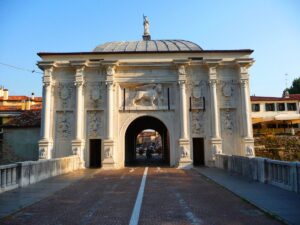
Loggia dei Cavalieri: The Drawing Room of Treviso's Nobility
- Via Martiri della Libertà, Treviso (TV)
- Open in Google Maps
- View on Google Images
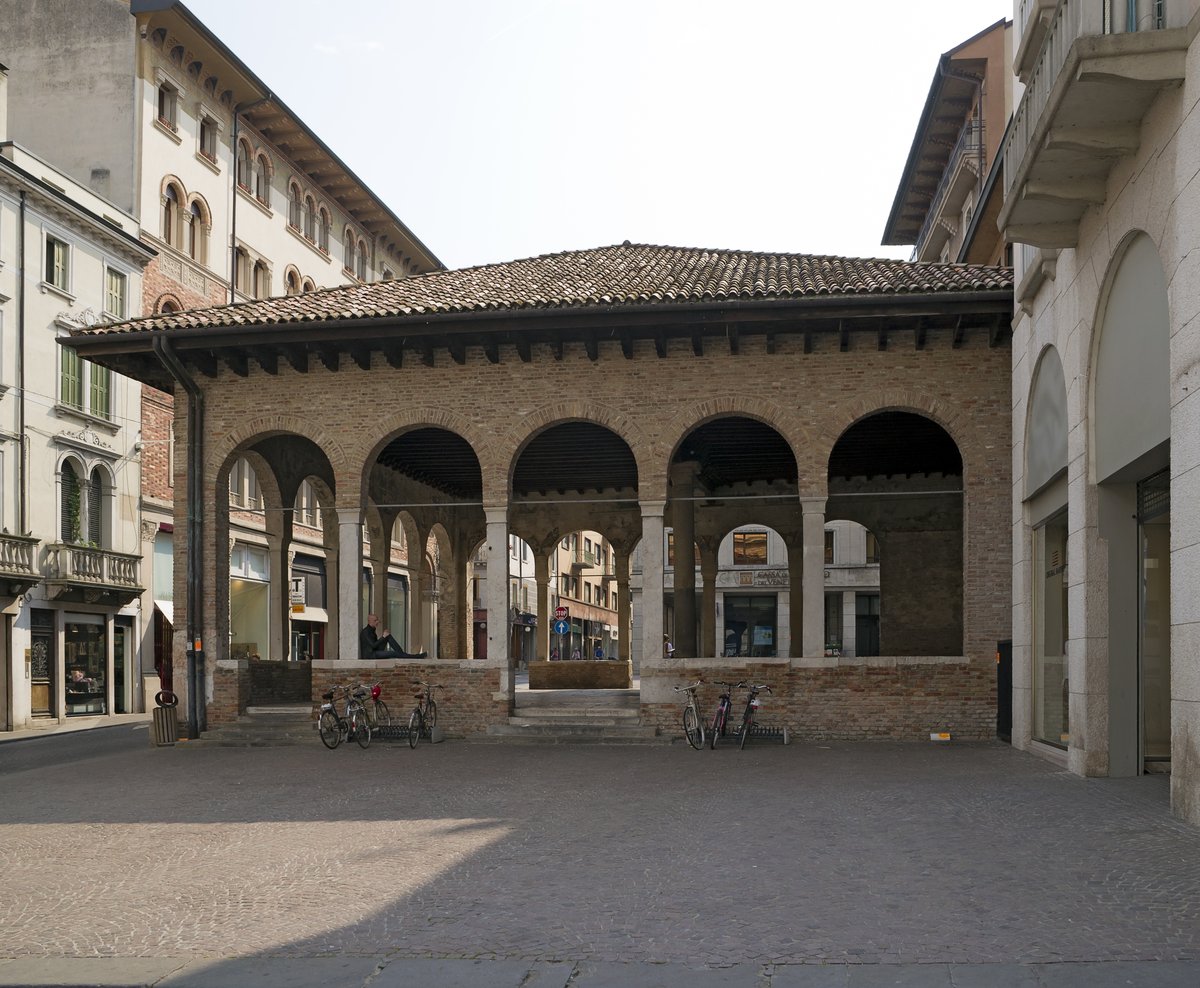 As you stroll through the center of Treviso, at the intersection of via Martiri della Libertà and via Indipendenza, you'll come across one of the city's most captivating buildings: the Loggia dei Cavalieri. Built between 1276 and 1277 at the behest of podestà Andrea da Perugia, it was the exclusive gathering place for Treviso's nobles, who met here to converse and play chess. A true aristocratic salon, it symbolized the power of the Free Commune.
The building is a unique gem in Europe: trapezoidal in plan, with three open sides featuring five pointed arches on Istrian stone pillars, and a four-sloped roof covered in terracotta tiles. Inside, a massive central column – half in violet granite, half in Istrian stone – supports much of the roof's weight. The style blends Trevisan Romanesque with Byzantine influences, lending it a light elegance.
But the real surprise lies in the frescoes. The building was once entirely decorated, but only fragments of two overlapping cycles remain. The first, from 1276-1277, features geometric and vegetal motifs; the second, from 1313-1314, after the expulsion of the da Camino family, depicts scenes from the Trojan War from the *Roman de Troie*. The warriors wear medieval armor – a deliberate anachronism to bring the myth to life. Look closely: the few remnants, such as the names 'Polibetes' and 'Neotolomus,' are still visible thanks to restoration.
After the Venetian conquest in 1388, the Loggia lost its function and became a warehouse, a lumber storage, and even a coffin seller. It faced demolition several times but was saved by Abbot Luigi Bailo and purchased by the city in 1889. The bombings of 1944 damaged it, but it was rebuilt with original materials. Today, it's a lively cultural space: concerts, second-hand book fairs, and exhibitions. If you visit in the morning, with the right light, the frescoes come to life. Truly a corner of history that still breathes.
Pescheria Island: Treviso’s Floating Fish Market
- Treviso (TV)
- Open in Google Maps
- View on Google Images
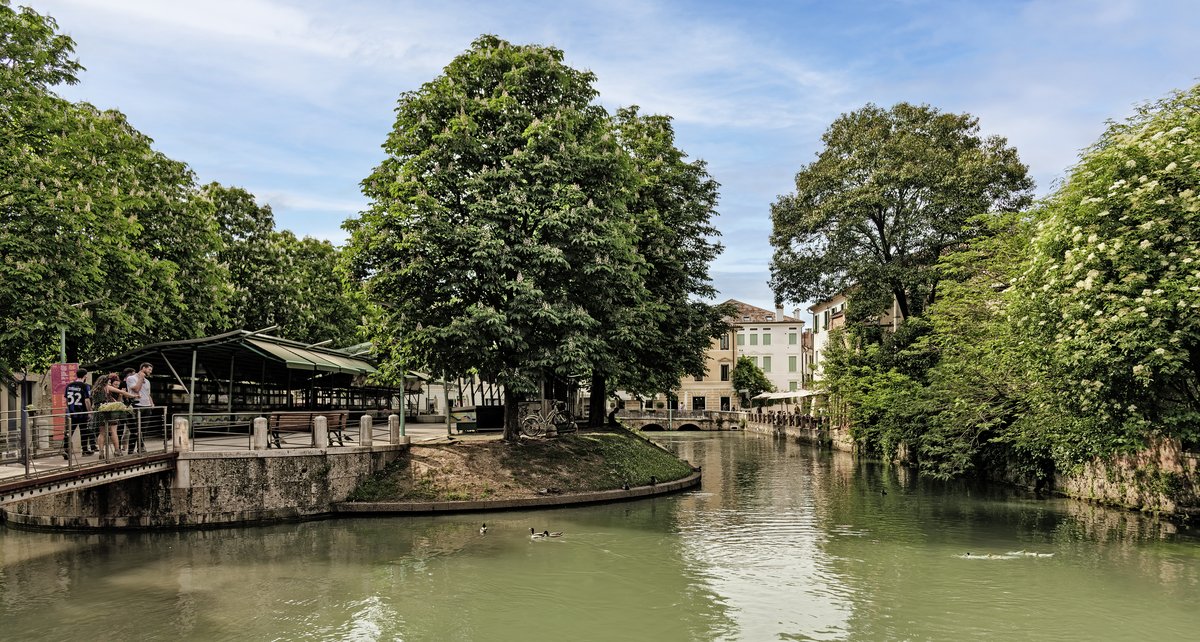 In the heart of Treviso, right where the Cagnan Grando Canal flows quietly, lies an island that seems to float on the water: Pescheria Island. But this is no ordinary island—it’s a piece of history born in the mid-19th century, when engineer Francesco Bomben joined three natural islets to create a new home for the fish market, which had previously been held in Piazza Monte di Pietà, and let’s be honest, it didn’t exactly smell like roses. The project dates back to 1854, and the island officially opened in 1856, connected to the mainland by an iron bridge. Today, that bridge is one of the site’s icons, with its fish statues that seem to watch passersby.
Walking here is a feast for the senses. The market is still active every day, with stalls piled high with just-caught fresh fish. The scent of the sea mingles with the aroma of frying from Osteria Acquasalsa, a Treviso-style bacaro perfect for an aperitivo under the ancient portico. Writer Giovanni Comisso called it “the most typical fish market in the world,” and he wasn’t wrong: the water flowing around, the buzz of people, the vibrant colors of the fish.
Around the island, historic buildings frame the scene: on one side, Ca' dei Carraresi, on the other, the former convent of the Camaldolese Nuns. And if you look up, you’ll see the Loggia dei Cavalieri nearby. In summer, the Festa dei Buranelli takes over, with concerts and the famous Waiter Race—a chance to experience the island even more authentically.
A tip: arrive unhurriedly, perhaps on foot from the station (about 15 minutes), and let yourself be surprised by the mill wheel still turning in the water. Pescheria Island is one of those places you don’t expect, but that stays with you.
Palazzo dei Trecento: the Medieval Heart of Treviso
- Go to the page: Palazzo dei Trecento: Council Hall with 14th-century frescoes and medieval porticoes
- Piazza Giannino Ancilotto, Treviso (TV)
- Open in Google Maps
- View on Google Images
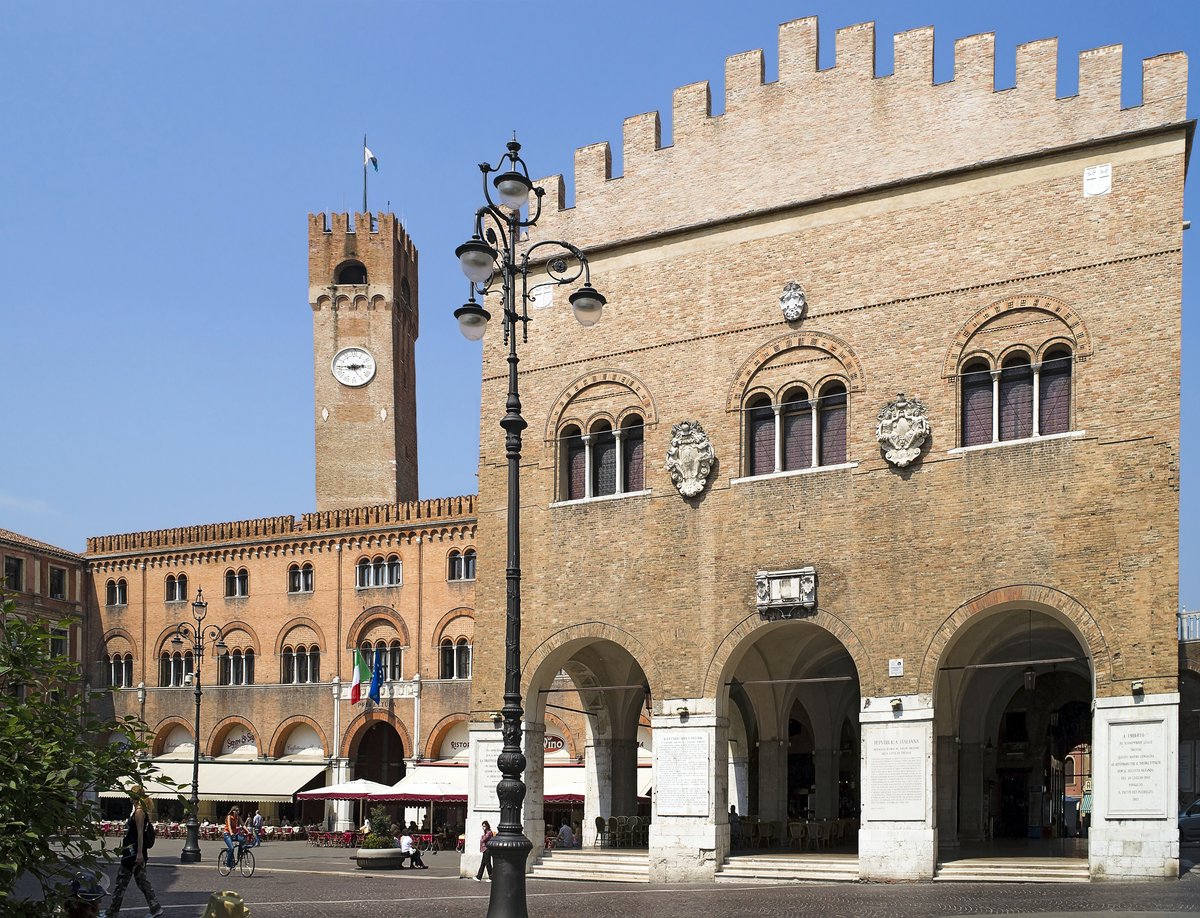 Stepping into Palazzo dei Trecento is like stepping back in time, straight into Treviso's Middle Ages. Built starting in 1185 to host city assemblies, this imposing brick building has witnessed centuries of history. Its name comes from the Major Council, composed of three hundred members, which met here to govern the city. Today, strolling under its loggia (opened in 1552), you can still breathe the air of yesteryear, among historic cafés and the hustle and bustle of Piazza dei Signori.
The real wonder, though, is on the first floor. The hall is enormous: 46 meters long, 20 wide, and 12 high, with a wooden truss ceiling that amplifies the sense of grandeur. On three sides, a frieze of frescoes displays the coats of arms and names of the podestàs from the 14th and 15th centuries – a sort of Instagram of the era, but far more lasting. The back wall is the most spectacular: at the center stands the Madonna and Child with Saints Liberale and Peter, flanked by the four cardinal virtues. Unfortunately, the bombings of 1944 caused severe damage – Superintendent Forlati avoided demolition, and today a setback brick line separates the original part from the reconstructed one.
Practical info: The palace is open Saturday and Sunday from 2:30 PM to 6:00 PM. Full ticket €5, reduced €3, free for under 18 and residents. During the week, you can only admire the exterior and the loggia – but it's still worth it.
Palazzo dei Trecento: the Medieval Heart of Treviso
- Go to the page: Palazzo dei Trecento: History, Architecture, and Frescoes in the Heart of Treviso
- Piazza Giannino Ancilotto, Treviso (TV)
- Open in Google Maps
- View on Google Images
Stepping into Palazzo dei Trecento is like stepping back in time, straight into Treviso's Middle Ages. Built starting in 1185 to host city assemblies, this imposing brick building has witnessed centuries of history. Its name comes from the Major Council, composed of three hundred members, which met here to govern the city. Today, strolling under its loggia (opened in 1552), you can still breathe the air of yesteryear, among historic cafés and the hustle and bustle of Piazza dei Signori.The real wonder, though, is on the first floor. The hall is enormous: 46 meters long, 20 wide, and 12 high, with a wooden truss ceiling that amplifies the sense of grandeur. On three sides, a frieze of frescoes displays the coats of arms and names of the podestàs from the 14th and 15th centuries – a sort of Instagram of the era, but far more lasting. The back wall is the most spectacular: at the center stands the Madonna and Child with Saints Liberale and Peter, flanked by the four cardinal virtues. Unfortunately, the bombings of 1944 caused severe damage – Superintendent Forlati avoided demolition, and today a setback brick line separates the original part from the reconstructed one.
Practical info: The palace is open Saturday and Sunday from 2:30 PM to 6:00 PM. Full ticket €5, reduced €3, free for under 18 and residents. During the week, you can only admire the exterior and the loggia – but it's still worth it.
Santa Caterina Museum
- Piazzetta Mario Botter, Treviso (TV)
- Open in Google Maps
- View on Google Images
 If you love art and history, the Santa Caterina Museum is a must-see in Treviso. Housed in the former Servite convent, it is the heart of the Civic Museums. Upon entering, you'll immediately feel a suspended atmosphere: the deconsecrated 14th-century church preserves the Cycle of Saint Ursula, frescoes by Tomaso da Modena (circa 1355) that tell the legend of the martyr princess. A masterpiece that alone is worth the visit. Then you move on to the picture gallery, completely rearranged in 2018: about 150 works from the 13th to the 18th century, with names like Giovanni Bellini, Lorenzo Lotto, Titian, Jacopo da Bassano, and many others. A journey spanning from Gothic to Rococo, in dialogue with contemporary sculptures. On the ground floor, the archaeological section (opened in 2007) tells over 100,000 years of the area's history, from prehistory to Roman times. And it doesn't end here: the museum hosts temporary exhibitions of international caliber – recently featuring works from Rodin, Van Gogh, and the Kunsthistorisches Museum in Vienna. The spaces are also used for concerts and educational activities. In short, a place that is never the same. Hours: Tuesday to Sunday, 10:00 AM – 6:00 PM; closed on Mondays. Address: Piazzetta Botter 1. Info and tickets on the Treviso Civic Museums website.
Treviso Civic Tower: The Guardian of Piazza dei Signori
- Piazza dei Signori, Treviso (TV)
- Open in Google Maps
- View on Google Images
 If you pass through Piazza dei Signori, it's impossible not to notice it: the Civic Tower stands proudly next to the Palazzo dei Trecento, soaring 48 meters above the center of Treviso. Built in 1218, during the communal era, it has seen centuries of history and numerous renovations. The most important one dates back to 1877, when engineer Monterumici raised it by a few meters and added the Ghibelline battlements in Neo-Gothic style, which still characterize it today. The ancient lantern and the original bell cell were demolished, and the clock was replaced with a two-handed mechanism and a smaller stone dial. Today, inside, the civic swinging bell resonates, cast by De Poli of Vittorio Veneto: it weighs about 2700 kg and is the third largest in Veneto, after the Campana Granda of Padua and the Rengo of Verona. It is struck by hammer every hour, a chime that marks the life of the square. During World War II, an air raid siren was installed on top of the tower: on April 7, 1944, at 12:30 PM, it signaled the tragic American bombing of the city. The banner of Treviso flies from the flagpole, recently restored after some controversy. The municipality plans to make the tower accessible to visitors, to offer a breathtaking view of the city – who knows, soon we might be able to climb up there! In the meantime, admire it from Piazza dei Signori, perhaps with a coffee in hand.
Porta Santi Quaranta: A Dive into History
- Go to the page: Porta Santi Quaranta: Medieval Gate on the Sile River with Views of Renaissance Walls
- Viale Bartolomeo d'Alviano, Treviso (TV)
- Open in Google Maps
- View on Google Images
 Arriving from the west along Borgo Cavour, the first thing you encounter is Porta Santi Quaranta, one of the three Renaissance gates of Treviso. Built between 1516 and 1517 at the behest of the Serenissima, it replaced the older medieval gate further back and has since been the obligatory passage for those arriving from Padua, Vicenza, or Castelfranco. The name derives from the nearby church dedicated to the Forty Martyrs of Sebaste, but it was originally called Porta Vendramina, after the podestà Nicolò Vendramin who commissioned it. Too bad his self-glorification displeased the Venetian Senate, which had the inscription chiseled off – the marks are still visible on the southern arch. On the outer façade in Istrian stone, the Lion of St. Mark stands out, a 1909 copy by Annibale De Lotto (the original was destroyed by the French in 1797). If you look up, you'll notice the inscriptions: in Latin for those leaving (“Porta Sanctorum Quadraginta”) and in Venetian dialect for those entering (“Porta de Sancti Quaranta”). A popular touch that tells the dual soul of the city. Inside, on the southern side, a fifteenth-century bas-relief of St. Liberale, patron saint of Treviso, is walled in. The real gem is the Sala d'Arme, which opens to the public every fourth Sunday of the month from 9:30 am to 12:30 pm. Here you'll find the exhibition “Le porte e le mura nella storia” (Gates and Walls in History) and you can better understand the city's defensive system. Entry is by free donation, no reservation needed: just show up a few minutes before the guided tours (at 9:30, 10:30, 11:30). In front of the gate, since 2006, a copy of a sixteenth-century cannon stands, somewhat controversial but now a symbol of the neighborhood. In short, Porta Santi Quaranta is not just a gateway: it's a piece of Treviso's history that still lives today among markets and exhibitions.
Porta San Tomaso: Treviso's Most Imposing Gate
- Go to the page: Porta San Tomaso Treviso: Renaissance arch from 1518 with Venetian coats of arms
- Porta San Tomaso, Treviso (TV)
- Open in Google Maps
- View on Google Images
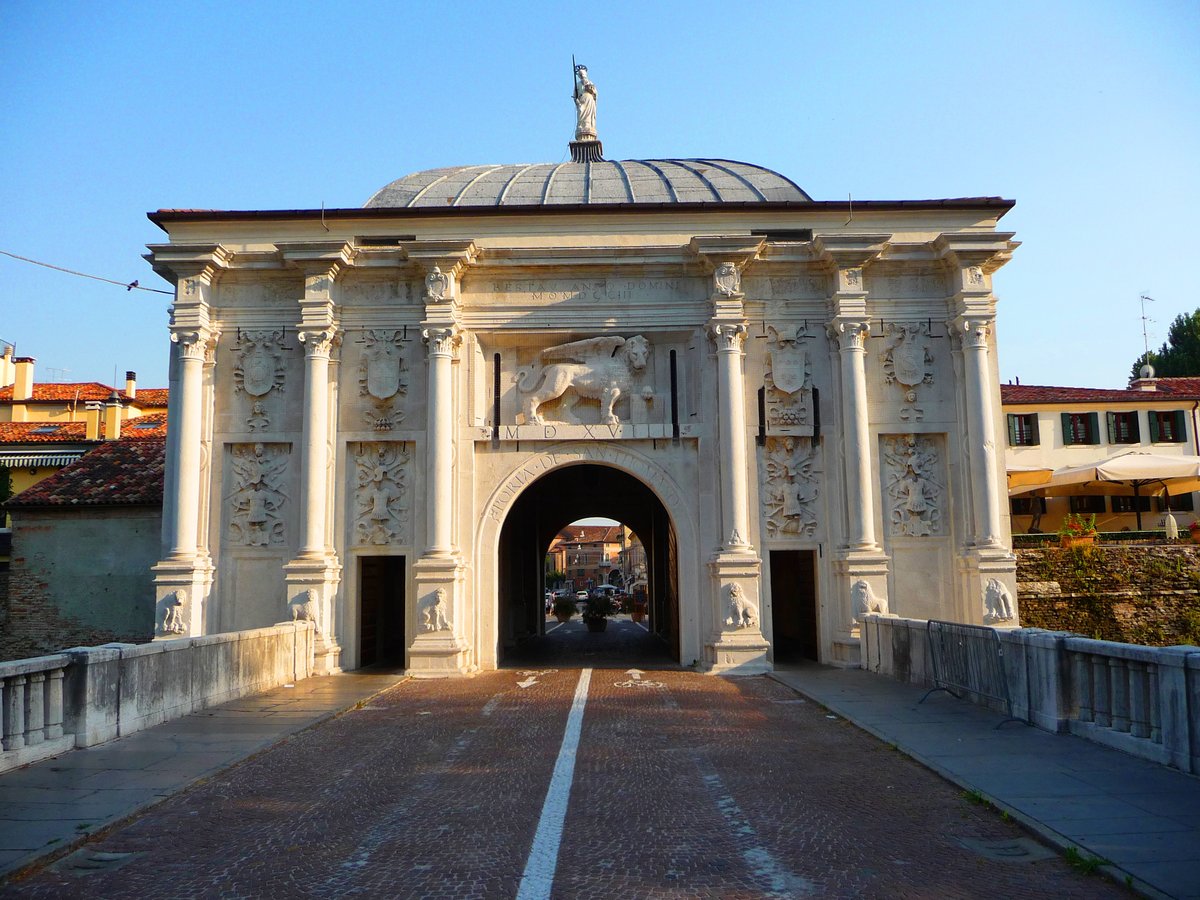 If while strolling along the walls of Treviso you happen to come across a majestic Istrian stone arch, you are facing Porta San Tomaso, the most imposing of the city's three gates. Built in 1518 with a design attributed to Guglielmo D'Alzano (the Bergamasco) or perhaps to Fra' Giovanni Giocondo, it was commissioned by podestà Paolo Nani to defend the northeastern sector of the city. Immediately you'll notice the inscription in Venetian dialect on the outer arch: “Porta de San Thomaso,” while on the side facing Treviso, the Latin “Porta Sancti Thomae – Dominus custodiat introitum et exitum tuum” appears. A linguistic contrast that tells the story of the relationship between countryside and city.
But here's a detail few know: the statue on top does not depict Saint Thomas, but Saint Paul. It seems that podestà Nani, devoted to his namesake saint, did as he pleased, ignoring the original dedication to Thomas Becket imposed by the Venetian Senate. Today, after a conservative restoration completed in 2012 (700,000 euros funded by Veneto Banca), the area under the arch is pedestrian-only: perfect for a photo without engine noise.
If you love details, look for the stonemasons' carvings on the stones and the high relief inside featuring the Madonna, saints, and the Nani patrons in miniature. Every wooden beam and stone block tells a story. And if you get hungry, right next to it is the restaurant of the same name, specializing in high-quality meat, but that's another stop.
Porta Altinia: the ancient gateway to Venice
- Porta Altinia, Treviso (TV)
- Open in Google Maps
- View on Google Images
 Continuing along the city walls, you come across Porta Altinia, the oldest of Treviso's three Renaissance gates. Built between 1514 and 1515 under podestà Sebastiano Moro, it is the only surviving passage from the medieval walls, later incorporated and reinforced in the 16th century. The name comes from Altino (modern-day Quarto d'Altino), the ancient Roman settlement it faced, and all goods arriving from Venice by land passed through here.
The gate has a martial and sober appearance: exposed brick, few decorations, and gunports on the sides, making it look like a bastion. On the outer façade, a covering of Istrian stone stands out, with a low-arched portal flanked by pilasters supporting an entablature. In the center, a bas-relief of the Lion of Saint Mark, now mutilated: in 1797, after the French occupation, the lion was removed, and a visible trace of that removal remains on the stone.
Inside, there were once frescoes by Pomponio Amalteo depicting Attila's attack on Treviso, thwarted by Bishop Elviano. From this episode came the legend of Attila's throne (a red marble seat under the porticoes of Via Roma) and the corruption of the name to Porta Attilia.
Today the gate houses a hospitality facility, but unfortunately the surrounding area – including the wooden bridge and gardens – has been in a state of decay and closed for months. Despite this, it's worth approaching to admire this piece of history overlooking the Sile, just a few steps from Piazza dei Signori and the Teatro Comunale.
The Fountain of the Breasts: History, Wine, and Fortune
- Galleria della Strada Romana, Treviso (TV)
- Open in Google Maps
- View on Google Images
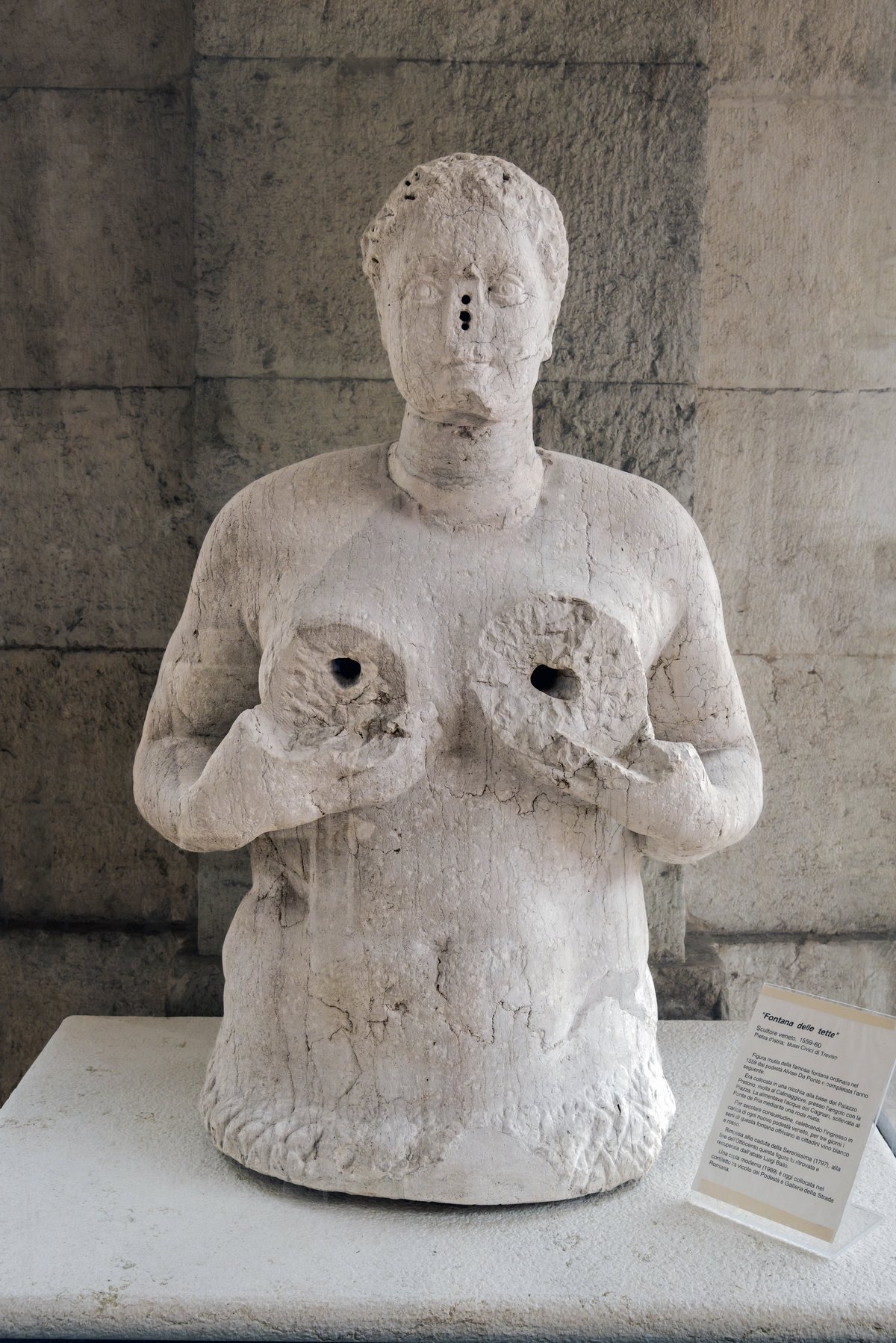 Among the most curious symbols of Treviso is the Fountain of the Breasts, a female bust in Istrian stone that will make you smile and reflect. Built in 1559 by order of the podestà Alvise Da Ponte, the fountain was created after a long drought as a sign of abundance. But its real peculiarity? Until the fall of the Serenissima, during the installation of each new podestà, white wine flowed from one breast and red wine from the other for three days, offered free to the citizens. A popular festival that united everyone.
Today, water remains from that tradition, but both versions of the fountain are equally fascinating. The original, damaged by Napoleonic troops and later rediscovered by Abbot Luigi Bailo, is housed in a display case under the portico of Palazzo dei Trecento in Piazza dei Signori. The copy, made in 1989 by Peruvian sculptor Miguel Miranda Quinones, is in the courtyard of Palazzo Zignoli, accessible through the gallery connecting Calmaggiore to piazzetta della Torre. According to tradition, touching both breasts brings good luck: I did it and who knows...
Luigi Bailo Civic Museum, Treviso
- Borgo Cavour 24, Treviso (TV)
- Open in Google Maps
- View on Google Images
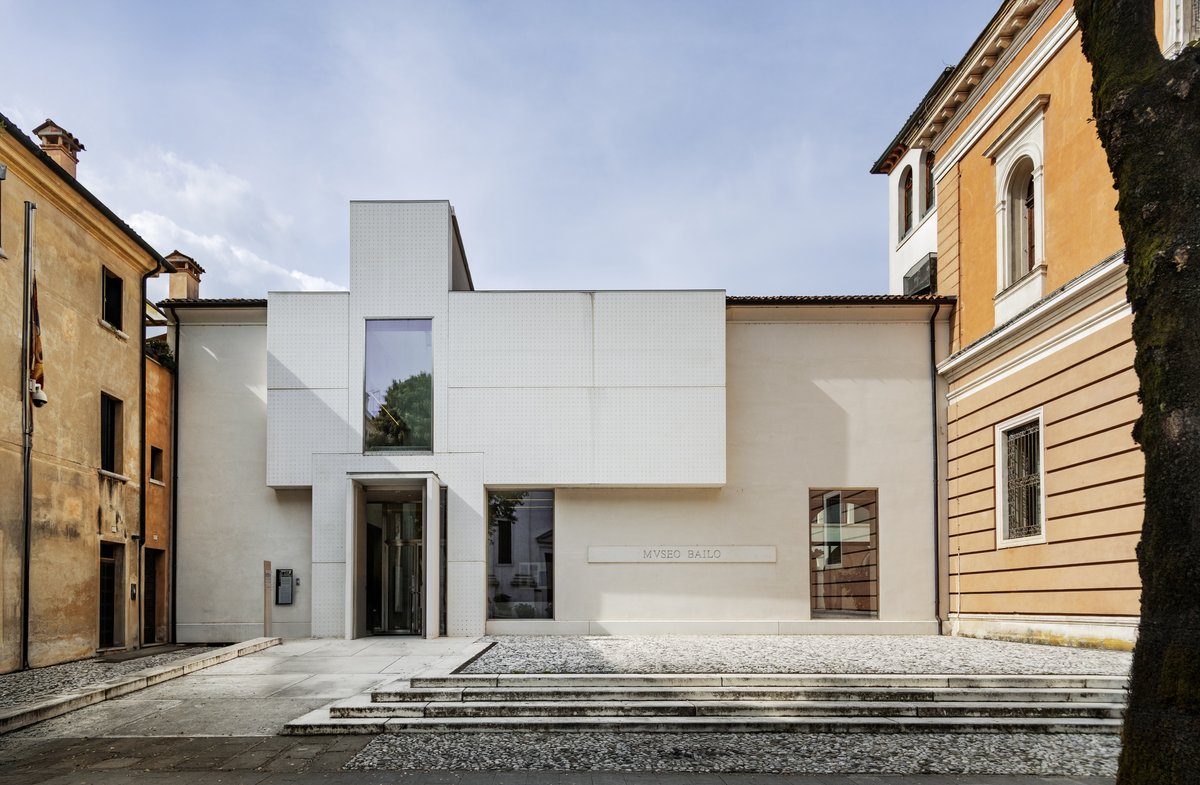 In the heart of Treviso, a stone's throw from the center, the Luigi Bailo Civic Museum is a must-see for lovers of 20th-century art. Housed in a former Renaissance convent with two cloisters, the museum was completely renovated in 2015 (and expanded in 2024) with a minimalist design by architect Heinz Tesar. The white artificial stone facade features large windows that offer glimpses of the inner cloisters, where sculptures like Arturo Martini's Adam and Eve stand out. Inside, the Terrazzoverlay floor creates a contemporary effect that dialogues with the medieval structures. The collection comprises about 340 works from the late 19th to the mid-20th century, with a focus on Arturo Martini's sculpture: here you'll find the world's largest collection of his work, with nearly 140 pieces including bronzes, terracottas, and plasters. Alongside him, works by Gino Rossi, Alberto Martini, Juti Ravenna, and other Venetian artists. The exhibition layout is chronological and well-organized, without forcing you to backtrack. Don't miss the section dedicated to the Ca' Pesaro years and the monumental sculptures in the cloisters. The museum is open Tuesday to Sunday, 10 AM to 6 PM, with a full ticket of €6 (reduced €4). A tip: the first Sunday of the month is free for state museums, but check if this museum participates. In short, a gem of modern art in a unique historical setting.
National Museum Collezione Salce: A Dive into Advertising Graphics
- Via Carlo Alberto, Treviso (TV)
- Open in Google Maps
- View on Google Images
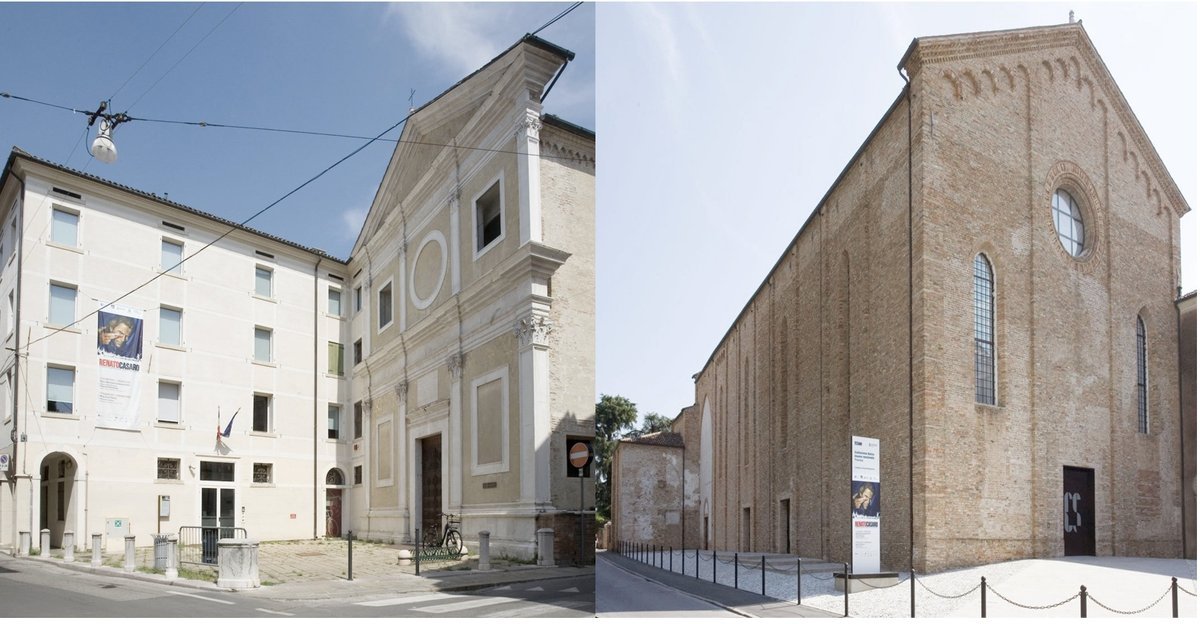 If you think Treviso is just canals and frescoed palaces, get ready to discover an unexpected side: the National Museum Collezione Salce is a must for design and history lovers. It houses Italy's largest collection of advertising graphics, with about 25,000 pieces collected by Ferdinando Salce between 1895 and 1962. Yes, you read that right: posters, billboards, and placards that trace the evolution of Italian taste and society. The museum has no permanent exhibition but rotates temporary shows (lasting a maximum of four months) to protect the fragile paper materials from light. The two venues are in the city center: the Complesso di San Gaetano (via Carlo Alberto 31) and the Church of Santa Margherita (via Reggimento Italia Libera). Both have curated displays, but at Santa Margherita a spectacular immersive multimedia installation makes you feel like you're inside a vintage poster. During my visit, I was struck by the attention to detail: from original sketches to movie posters, each exhibition is a journey through time. If you're there on the weekend, don't miss the chance to go in: it's open Friday, Saturday, and Sunday from 10 am to 6 pm. But note: the combined ticket for both venues costs only €9, and it's free on the first Sunday of the month. A tip: check the website for current exhibitions before you go, as they change often and some are truly unmissable, like the one on eyewear or Renato Casaro.
Casa dei Carraresi: History, Exhibitions, and a Past as an Inn
- Via Palestro 33/35, Treviso (TV)
- https://www.casadeicarraresi.it/
- Open in Google Maps
- View on Google Images
- casadeicarraresi@fondazionecassamarca.it
- +39 0422 513150
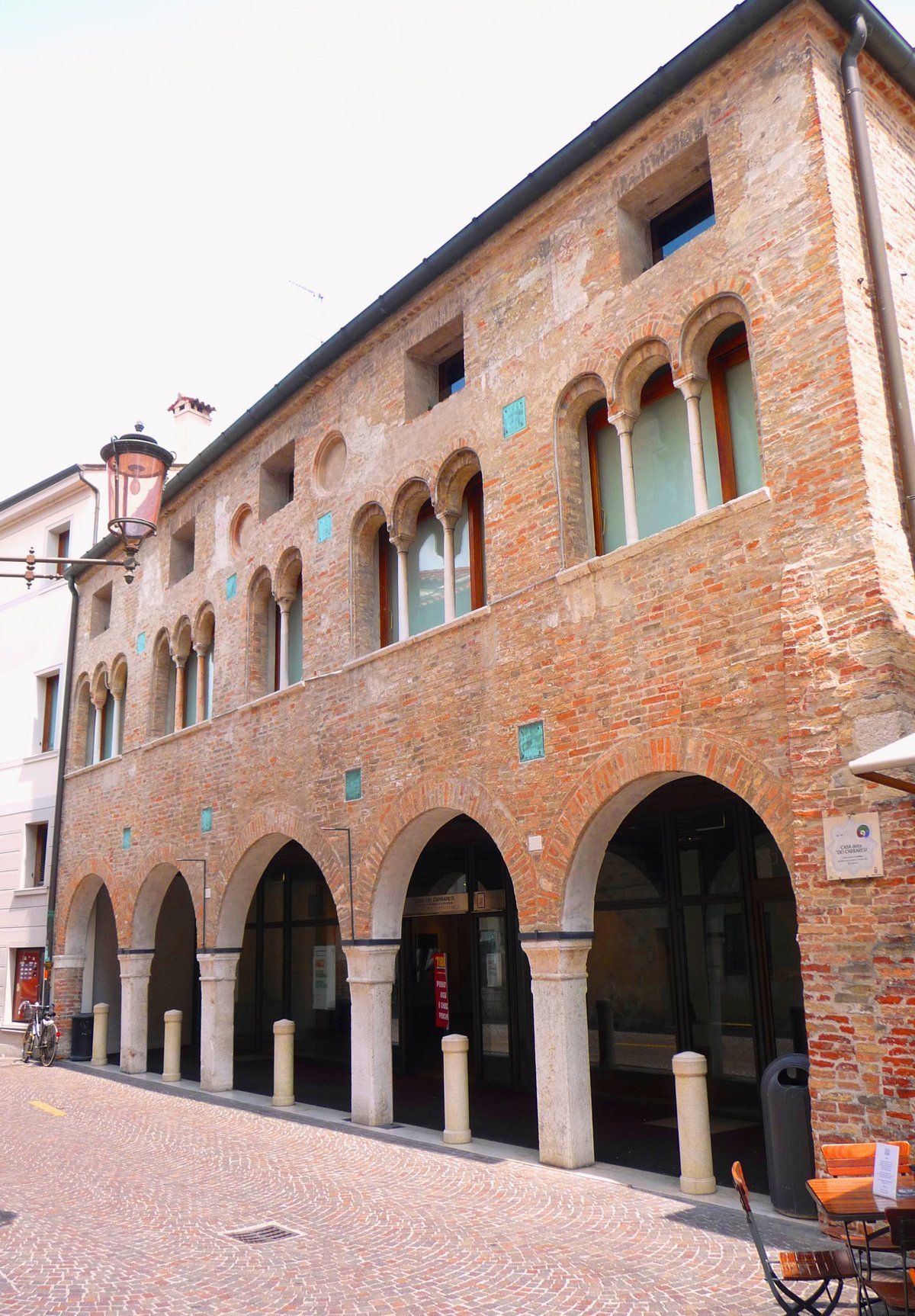 Casa dei Carraresi is much more than a medieval palace: it’s a piece of Treviso’s history that never ceases to surprise. Today we know it as the venue for spectacular exhibitions (over 575 exhibitions and more than 5 million visitors!), but its past is quite different. It was the 13th century, and here stood the Osteria alla Croce (Inn at the Cross), a resting place for travelers and merchants coming from Germany, Austria, and Hungary. The inn was so famous that the entire area was called 'contrada della croce' (district of the cross). Then, between 1384 and 1388, the Carraresi from Padua arrived, requisitioning the building to house their officials and soldiers. After they were driven out, the people of Treviso erased the coats of arms from the facade – only to reappear in the 20th century. Today the building is a conference and exhibition center managed by the Fondazione Cassamarca. The facade on Via Palestro is a gem: five round arches, mullioned and triple windows, all in exposed brick. On the side of the Cagnan River, a Pietrasanta marble terrace overlooks the water, creating an almost Venetian atmosphere. Inside, in Casa Brittoni – purchased in 1396 by the Marseille native Giovanni Berton – you can still admire medieval frescoes, including a Madonna and Child from the early 1400s. Practical information: Via Palestro 33/38, 31100 Treviso. Tel. 0422 513100. Hours: Mon-Fri 8:30-17:00, Sat-Sun closed (but for exhibitions hours may vary, best to check the website). Paid parking. In short, a place that combines art, history, and contemporary culture – not to be missed.
San Nicolò Convent: A 14th-Century Masterpiece
- Piazzetta Benedetto undicesimo, Treviso (TV)
- Open in Google Maps
- View on Google Images
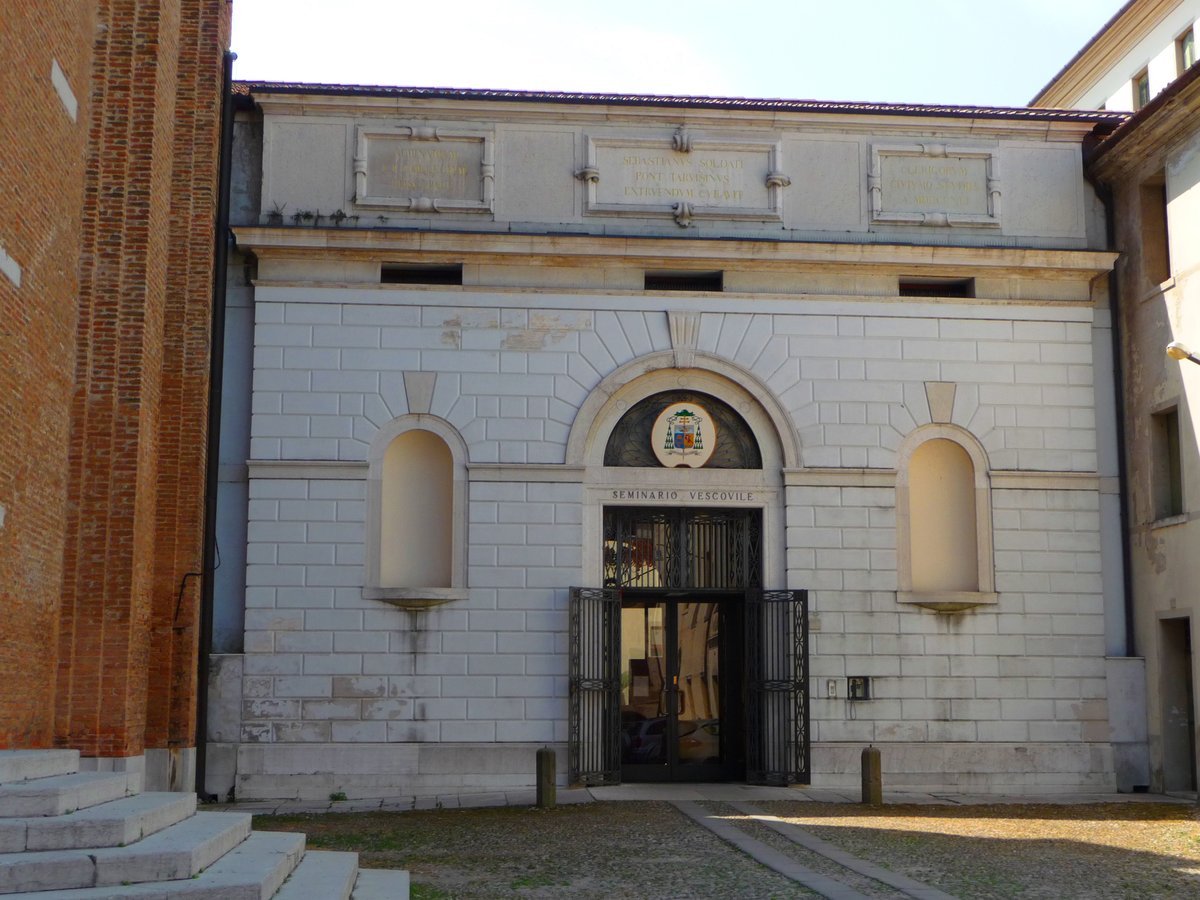 Stepping into the Convent of San Nicolò is like traveling back to the 14th century. Today home to the Bishop's Seminary, this former Dominican convent preserves an extraordinary treasure: the Chapter Hall, frescoed in 1352 by Tomaso da Modena. The cycle depicts forty illustrious Dominicans, each engrossed in reading or writing in their own study. The realism is striking: bearded men, the sick, the elderly. Two figures stand out: Cardinal Ugo of Saint-Cher wearing a pair of glasses, and Nicholas of Rouen holding a magnifying lens. These are considered the first pictorial representations of such instruments in the world! The convent's history begins in 1221 when the Dominicans arrived in Treviso with the support of the city council. The adjacent Gothic-style church is the largest in the city, with a Latin cross plan and three naves. The complex suffered damage during the bombings of 1944, but restoration has recovered most of the frescoes, thanks in part to Mario and Memi Botter. In addition to the famous hall, the convent houses a rich library with over 250,000 volumes and three fascinating museums: zoological, ethnographic, and archaeological. Don't miss the late 13th-century Crucifixion in the hall. Visiting the Convent of San Nicolò means immersing yourself in a unique medieval atmosphere where art and spirituality merge.
Ca' da Noal: History and Art in a Gothic Palace
- Via Antonio Canova, Treviso (TV)
- Open in Google Maps
- View on Google Images
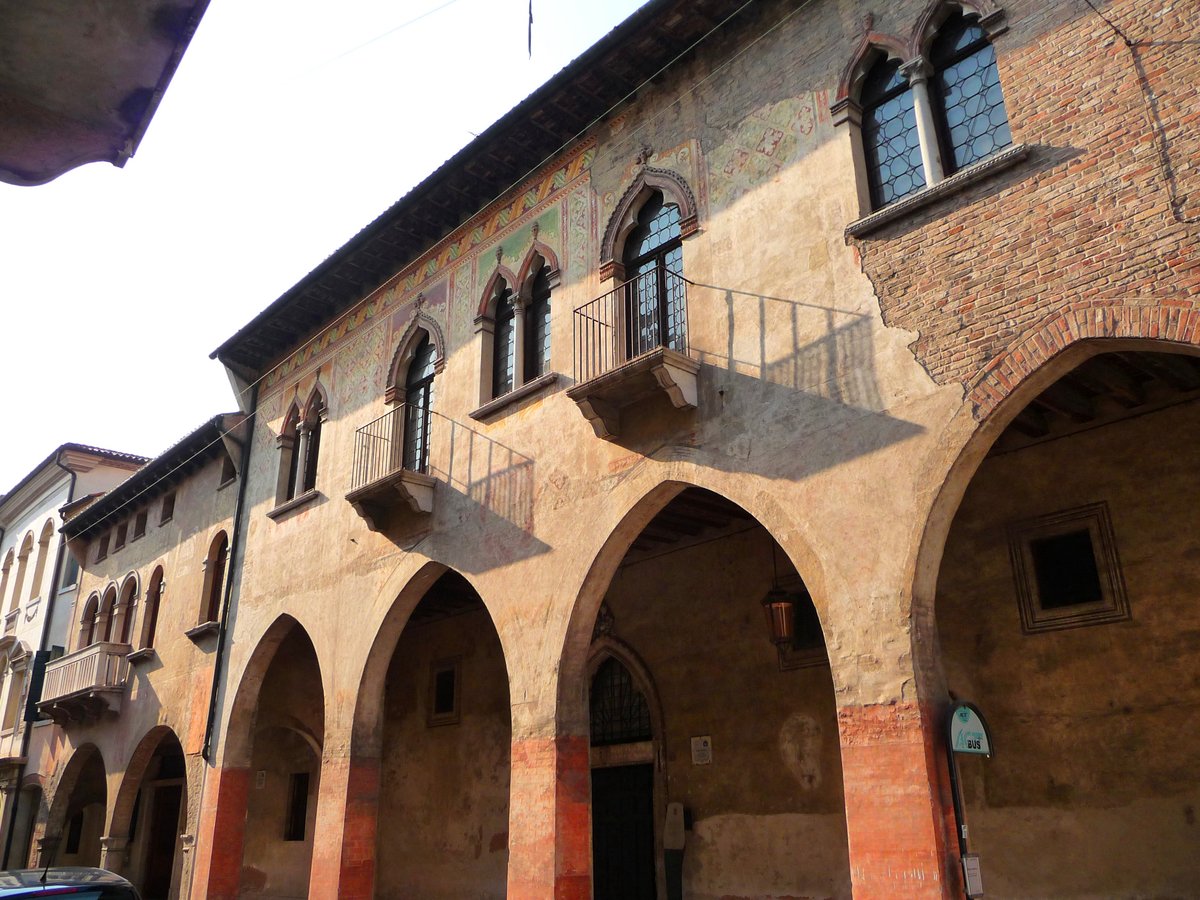 If you're in Treviso, make a stop at via Canova 38: here you'll find Ca' da Noal, a late medieval palazzo that is a true gem of Venetian Gothic. Built in the first half of the 15th century by the Campagnari family from Noale, the building has a frescoed facade with a loggia, pillars, and Gothic windows – a sight that takes you back in time.
Inside, in addition to the historical furnishings (which recreate the ancient Casa Trevigiana), there is a one-of-a-kind Jewish lapidary: 25 fragments of 15th-century tombstones, discovered in 1880 during urban works. They are the only traces of the ancient Jewish cemetery of Treviso, and they tell stories of a community that lived in the city since the 14th century.
Ca' da Noal is part of the museum complex with Casa Robegan (Renaissance frescoed facade) and Casa Karwath (neoclassical). After the damage of World War II, the restoration by Mario Botter (1938 and then postwar) restored its original splendor. Today the spaces are used for temporary contemporary art exhibitions and cultural events, with a lovely internal garden that comes alive with initiatives in summer.
Practical info: open during exhibitions, hours vary. Phone 0422 544895, website www.museicivicitreviso.it. Paid parking in the area. A stop that combines art, history, and a touch of multiculturalism – just the way I like it.
Ca' da Robegan: A Renaissance Gem Between Frescoes and Contemporary Art
- Via Antonio Canova, Treviso (TV)
- Open in Google Maps
- View on Google Images
 If you're strolling along via Canova, you can't miss Ca' da Robegan. Its façade is a triumph of Renaissance frescoes: putti playing among golden foliage, noble figures peering from a loggia, and an inscription that reads “TEMPORE PENURIAE. BELLI CRUDELISSIMI. PESTILENTIAE ACERBISSIMAE” with the date 1528. It's a jaw-dropping sight, even if the weather has faded some details over time.
 Built in the 16th century for the notary Costantino Robegan, the palace was purchased by the city in 1935 and restored by Mario Botter. After war damage in 1944, it was rebuilt, and in the 1970s Carlo Scarpa redesigned the interiors for art exhibitions. Today, it's one of the venues of the Civic Museums of Treviso, but with an extra edge: it's dedicated to contemporary art.
Step inside to explore the exhibition spaces (a multimedia room on the first floor, a coworking area on the second) and the stunning 600 sq m garden, which comes alive with events and aperitifs in summer. On the ground floor, you'll find a concept store and a café bistrot, perfect for a break.
Opening hours: Wednesday to Friday 3–6 PM, Saturday and Sunday 10 AM–6 PM (closed Monday and Tuesday). Admission is included in the Civic Museums ticket or with temporary exhibition tickets.
A tip? Don't stop at the façade: go up to the first floor to see the details of the detached frescoes preserved inside. And if you love contemporary art, check the program: exhibitions like those by Claudio Massini or Endless have turned this place into a creative lab.