
🧭 What to Expect
Ideal for travelers interested in art, history, and nature Highlights: charming historic center, Monte San Bartolo beaches, and great food Must-see: Villa Imperiale and Rossini Theatre Tip: visit in spring or autumn for mild weather and fewer crowds
Pesaro is much more than a simple seaside city: it's a concentration of history, art, and nature that deserves to be discovered at a leisurely pace. The historic center, dominated by Piazza del Popolo with its imposing fountain, is the beating heart of the city, where the Ducal Palace and the Rossini Theatre, dedicated to the famous composer, stand out. Strolling through the streets, you encounter gems like Rossini's House and the Civic Museums, keepers of artworks and archaeological finds. But Pesaro is not only culture: Monte San Bartolo offers a natural park with panoramic trails and hidden coves, culminating in the ancient lighthouse. Don't miss Villa Imperiale, a Renaissance residence overlooking the sea, and Rocca Costanza, a medieval fortress that tells centuries of history. A perfect itinerary for those who love art, good food, and relaxation on the Adriatic coast.
Overview
- Ducal Palace: The Renaissance Heart of Pesaro
- Teatro Rossini: A Journey into Opera History
- Teatro Rossini: A Journey into Opera History
- Civic Museums of Palazzo Mosca
- Casa Rossini: The Beating Heart of the Composer's Memory
- Casa Rossini: The Beating Heart of the Composer's Memory
- Villa Imperiale: A Dive into the Renaissance Among Frescoes and Gardens
- Rocca Costanza: A Renaissance Fortress to Discover
- Oliveriano Archaeological Museum: A Journey Through Pesaro's Millennia
- Villino Ruggeri in Pesaro: The Art Nouveau Masterpiece
- Monte San Bartolo Lighthouse: Breathtaking Panorama of the Adriatic Coast
- Villa Caprile in Pesaro: History, Water Games, and Nature
- Artistic-Monumental Fountain of Piazza del Popolo
- Orti Giulii: A Green and Historic Corner in the Heart of Pesaro
- Palazzo Lazzarini: An 18th-Century Gem to Rediscover
Itineraries nearby
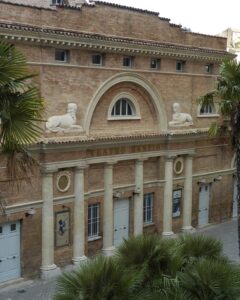
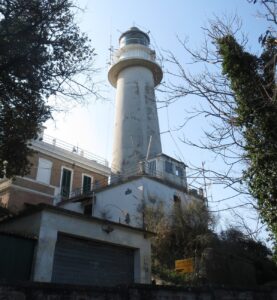

Ducal Palace: The Renaissance Heart of Pesaro
- Go to the page: Ducal Palace Pesaro: Renaissance Architecture and Free Porticoed Courtyard
- Corso Undici settembre, Pesaro (PU)
- Open in Google Maps
- View on Google Images
 If you're passing through Pesaro, stop by Piazza del Popolo. The entire north side is occupied by the Ducal Palace, the city's most important Renaissance building. Its history begins in the mid-1400s with Alessandro Sforza, who commissioned the façade featuring the six-arched portico and massive rusticated pillars, later expanded and decorated by the Della Rovere family, dukes of Urbino and Pesaro. The building witnessed centuries of power, passing from the Malatesta to the Sforza to the Della Rovere, who transformed it into a true Mannerist jewel. Inside, the Metaurense Hall impresses: 600 square meters from the Sforza era with a wooden coffered ceiling featuring 84 octagonal panels painted with Della Rovere emblems. Nearby, the Antechamber of the Apartments houses a monumental fireplace by Bartolomeo Genga with stuccoes by Federico Brandani. Don't miss the Bath of Lucrezia, a small room frescoed with grotesques and mythological figures, and the Loggia over the Secret Garden, frescoed with woodland scenes by Camillo Mantovano and Raffaellino del Colle. Today, the palace houses the Prefecture but is part of the Pesaro Musei circuit. Visits are only available with organized guides: every Saturday at 10 am (1h30) or Tuesday and Thursday at 4 pm (45 minutes). The combined ticket is free if you already have a Pesaro Musei pass, and it also grants access to other museums. Booking is mandatory. A tip: don't miss the Courtyard of Honor and the Secret Garden, peaceful oases in the city center.
Teatro Rossini: A Journey into Opera History
- Go to the page: Rossini Theater in Pesaro: Between History and Opera
- Via Giambattista Passeri, Pesaro (PU)
- http://www.pesarocultura.it/
- Open in Google Maps
- View on Google Images
- +39 0721 387362
 If you're passing through Pesaro, a visit to the Teatro Rossini is a must. It's not just a theater—it's a piece of history that has breathed music for nearly four centuries. Its name? A tribute to the great Gioachino Rossini, born right here, who in 1818 inaugurated the Teatro Nuovo (as it was then called) conducting his La gazza ladra. He was only 26 years old at the time. Indeed, the original structure—the Teatro del Sole from 1637—was built into the former ducal stables of the Della Rovere family, whose rusticated portal by Filippo Terzi can still be seen at the main entrance.
Step inside and let the atmosphere envelop you. The auditorium is a classic Italian-style theater: horseshoe-shaped, with four tiers of boxes and a gallery seating 860 people. The curtain painted by Angelo Monticelli is a small masterpiece. After the 1930 earthquake, the theater was closed for restoration and reopened in 1934. Then, from 1966 to 1980, another long closure. But its revival coincided with the birth of the Rossini Opera Festival, which every August transforms Pesaro into a global stage. Not just opera: the theater also hosts drama and dance seasons, concerts, and the National Festival of Dramatic Art (since 1948!).
Recently, in 2026, roof repairs were carried out thanks to donations (Art Bonus), to fix water infiltration. In short, the theater is alive and constantly evolving. If you want to visit, the guided tour “Exploration of the Hidden Theater” takes you behind the scenes, among dressing rooms and foyers. For the program, check the AMAT website or stop by the box office in Piazza Lazzarini. My advice: try to catch a performance, even just a concert. The acoustics are perfect.
Teatro Rossini: A Journey into Opera History
- Go to the page: Rossini Theatre Pesaro: Horseshoe-shaped Hall and Royal Duke's Stage
- Via Giambattista Passeri, Pesaro (PU)
- http://www.pesarocultura.it/
- Open in Google Maps
- View on Google Images
- +39 0721 387362
If you're passing through Pesaro, a visit to the Teatro Rossini is a must. It's not just a theater—it's a piece of history that has breathed music for nearly four centuries. Its name? A tribute to the great Gioachino Rossini, born right here, who in 1818 inaugurated the Teatro Nuovo (as it was then called) conducting his La gazza ladra. He was only 26 years old at the time. Indeed, the original structure—the Teatro del Sole from 1637—was built into the former ducal stables of the Della Rovere family, whose rusticated portal by Filippo Terzi can still be seen at the main entrance.Step inside and let the atmosphere envelop you. The auditorium is a classic Italian-style theater: horseshoe-shaped, with four tiers of boxes and a gallery seating 860 people. The curtain painted by Angelo Monticelli is a small masterpiece. After the 1930 earthquake, the theater was closed for restoration and reopened in 1934. Then, from 1966 to 1980, another long closure. But its revival coincided with the birth of the Rossini Opera Festival, which every August transforms Pesaro into a global stage. Not just opera: the theater also hosts drama and dance seasons, concerts, and the National Festival of Dramatic Art (since 1948!).
Recently, in 2026, roof repairs were carried out thanks to donations (Art Bonus), to fix water infiltration. In short, the theater is alive and constantly evolving. If you want to visit, the guided tour “Exploration of the Hidden Theater” takes you behind the scenes, among dressing rooms and foyers. For the program, check the AMAT website or stop by the box office in Piazza Lazzarini. My advice: try to catch a performance, even just a concert. The acoustics are perfect.
Civic Museums of Palazzo Mosca
- Go to the page: Pesaro Civic Museums: Bellini's Altarpiece and Renaissance Ceramics in Palazzo Mosca
- Via Vincenzo Toschi Mosca, Pesaro (PU)
- Open in Google Maps
- View on Google Images
 In the heart of Pesaro, just steps from Piazza del Popolo, the Civic Museums have been housed since 1936 in Palazzo Mosca, a historic noble residence renovated in the 18th century by Luigi Baldelli. As soon as you step through the entrance, the atmosphere sets the stage for discovery: three spacious inner courtyards and a sober façade with a rusticated portal lead into a route completely revamped in 2013, unfolding across five rooms on the first floor.
The true gem is the Coronation of the Virgin Altarpiece by Giovanni Bellini (circa 1475), originally from the church of San Francesco. A masterpiece that captivates you with its pierced marble throne opening onto a landscape, almost a "picture within a picture." Around it, paintings from city churches and convents, and then a Wunderkammer of ceramics and decorative arts: istoriato maiolica from the centers of the Duchy of Urbino, lustreware from Deruta, and the famous 18th-century Pesaro "alla rosa" production. The legacy of the Marchioness Vittoria Mosca in 1885 enriched the collection with unique pieces, while the Hercolani Rossini Collection – inherited by Gioachino Rossini – brings works by Vitale da Bologna, Tintoretto, and Guido Reni (the dramatic Fall of the Giants).
There are also vanitas still lifes with wilted flowers and skulls, and masterpieces by Pesaro painter Simone Cantarini. The museum is also at the forefront of accessibility: it offers video guides in LIS, audio guides for the blind, and tactile reproductions of Bellini's altarpiece. A place that surprises you at every turn, blending art, history, and an extraordinary ceramic tradition.
Casa Rossini: The Beating Heart of the Composer's Memory
- Go to the page: Casa Rossini: The Museum in Gioachino Rossini's Birthplace
- Via Gioacchino Rossini 34, Pesaro (PU)
- https://www.pesaromusei.it/casa-rossini/
- Open in Google Maps
- View on Google Images
 Entering Casa Rossini is like opening a treasure chest that tells the story of Gioachino Rossini, the Swan of Pesaro. The building, whose lower floors date back to the 15th century, is located at Via Rossini 34, right where the ancient Via del Duomo once ran. Here, on February 29, 1792, the composer was born, as a plaque on the first floor recalls: "The divine art of music smiled upon this room at the birth of Gioachino Rossini." Strolling through the rooms, you breathe an intimate atmosphere: the arched windows, the smoke-blackened fireplaces, and the remains of the original kitchen tell the story of a family of musicians. After being purchased by the city in 1892, the house became a museum and was declared a national monument in 1904. Since 2015, a complete restoration has blended tradition and innovation: on the ground floor you'll find a shop and multimedia stations, while upstairs the collection—largely from Paris thanks to collector Alphonse Hubert Martel—displays portraits, engravings, and Gustave Doré's famous drawing of Rossini on his deathbed. Don't miss the music room, with a Venetian fortepiano from 1809 and autograph scores. The visit is interactive, with touch screens for browsing digitized letters and sheet music, and the museum is accessible with braille texts and video guides in Italian Sign Language. On the second floor, the Rossini Gourmet space celebrates the maestro's passion for good food. A place that moves you, where music can still be felt within the walls.
Casa Rossini: The Beating Heart of the Composer's Memory
- Go to the page: Rossini House Pesaro: Original Piano and Death Mask of the Composer
- Via Gioacchino Rossini 34, Pesaro (PU)
- https://www.pesaromusei.it/casa-rossini/
- Open in Google Maps
- View on Google Images
Entering Casa Rossini is like opening a treasure chest that tells the story of Gioachino Rossini, the Swan of Pesaro. The building, whose lower floors date back to the 15th century, is located at Via Rossini 34, right where the ancient Via del Duomo once ran. Here, on February 29, 1792, the composer was born, as a plaque on the first floor recalls: "The divine art of music smiled upon this room at the birth of Gioachino Rossini." Strolling through the rooms, you breathe an intimate atmosphere: the arched windows, the smoke-blackened fireplaces, and the remains of the original kitchen tell the story of a family of musicians. After being purchased by the city in 1892, the house became a museum and was declared a national monument in 1904. Since 2015, a complete restoration has blended tradition and innovation: on the ground floor you'll find a shop and multimedia stations, while upstairs the collection—largely from Paris thanks to collector Alphonse Hubert Martel—displays portraits, engravings, and Gustave Doré's famous drawing of Rossini on his deathbed. Don't miss the music room, with a Venetian fortepiano from 1809 and autograph scores. The visit is interactive, with touch screens for browsing digitized letters and sheet music, and the museum is accessible with braille texts and video guides in Italian Sign Language. On the second floor, the Rossini Gourmet space celebrates the maestro's passion for good food. A place that moves you, where music can still be felt within the walls.Villa Imperiale: A Dive into the Renaissance Among Frescoes and Gardens
- Go to the page: Imperial Villa Pesaro: Bronzino's Frescoes and Geometric Gardens on the Hill
- Strada Bocca del lupo, Pesaro (PU)
- Open in Google Maps
- View on Google Images
 If you think Pesaro is just about sea and music, you couldn't be more wrong. Just minutes from the center, on San Bartolo Hill, stands Villa Imperiale, a Renaissance gem that is an absolute must-see. Its history begins in 1468, when Emperor Frederick III of Habsburg laid the first stone during a journey to Rome. Today, what was once a noble residence presents itself as a unique complex, the result of two construction phases: the 15th-century core of the Sforza family and the 16th-century expansion commissioned by the Della Rovere. The second wing was added by the Urbino architect Gerolamo Genga, who between 1523 and 1538 created a masterpiece of Mannerist architecture with loggias, courtyards, and terraced gardens.
Upon entering, you are struck by the frescoes in the eight rooms on the piano nobile: Dosso Dossi, Raffaellino del Colle, and Agnolo Bronzino are just some of the artists who adorned these rooms. They range from the Sala del Giuramento, with its faux tapestry, to the Sala delle Fatiche d'Ercole, with grotesques and mythological scenes. An itinerary that tells the story of Francesco Maria I della Rovere's deeds and the cultured atmosphere of the court.
Outside, the gardens are an oasis of peace: geometric boxwood beds, potted citrus trees, and a panorama that stretches from the Foglia Valley to the Apennines. The villa is open only in summer, on Wednesday afternoons and Saturday mornings, and visits are strictly guided – book well in advance, as places are limited. An experience that will make you fall in love with the hidden Marche.
Rocca Costanza: A Renaissance Fortress to Discover
- Viale Piave, Pesaro (PU)
- Open in Google Maps
- View on Google Images
 If you're in Pesaro, don't miss Rocca Costanza, one of the most important Renaissance fortifications in the region. Built between 1474 and 1483 by order of Costanzo Sforza, the fortress is a perfect example of military architecture: a quadrilateral plan, four imposing cylindrical towers at the corners, and a moat that once connected to the sea. Initially designed by Giorgio Marchesi da Settignano and later by Luciano Laurana, the fortress has lived through centuries of history: from the siege of Cesare Borgia (1500) – which according to tradition even involved Leonardo da Vinci – to its use as a prison from 1864 to 1989. Today, after a long restoration, it partially reopened to the public in the summer of 2024. You can visit it with the Tour Capitale, which starts from Piazza del Popolo and also includes the Rossini Theatre and the Domus. The tour will take you to the inner courtyard (the parade ground), the restored chapel, and the eastern tower, offering a stunning view of the Adriatic Sea. Visits are available from Tuesday to Sunday, at 11:00 AM and 5:30 PM, until September (reservation recommended, max 25 people). Note: renovation work is still ongoing – funded by the PNRR with 650,000 euros – to improve accessibility and create new spaces. Soon it will house the State Archives and the Museo della Fondazione Dario Fo e Franca Rame. Walking among the walls, you can breathe a unique atmosphere: the marks of ammunition on the curtains tell of past battles, while today the fortress has become a vibrant cultural center with concerts and festivals. A tip: always check the updated hours on the municipal website or contact the IAT tourist office (0721 69341), as it is not open every day continuously. And if you love legends, it is said that there are secret underground tunnels connecting the fortress to the sea – who knows if they will ever be discovered!
Oliveriano Archaeological Museum: A Journey Through Pesaro's Millennia
- Via Domenico Mazza 97, Pesaro (PU)
- Open in Google Maps
- View on Google Images
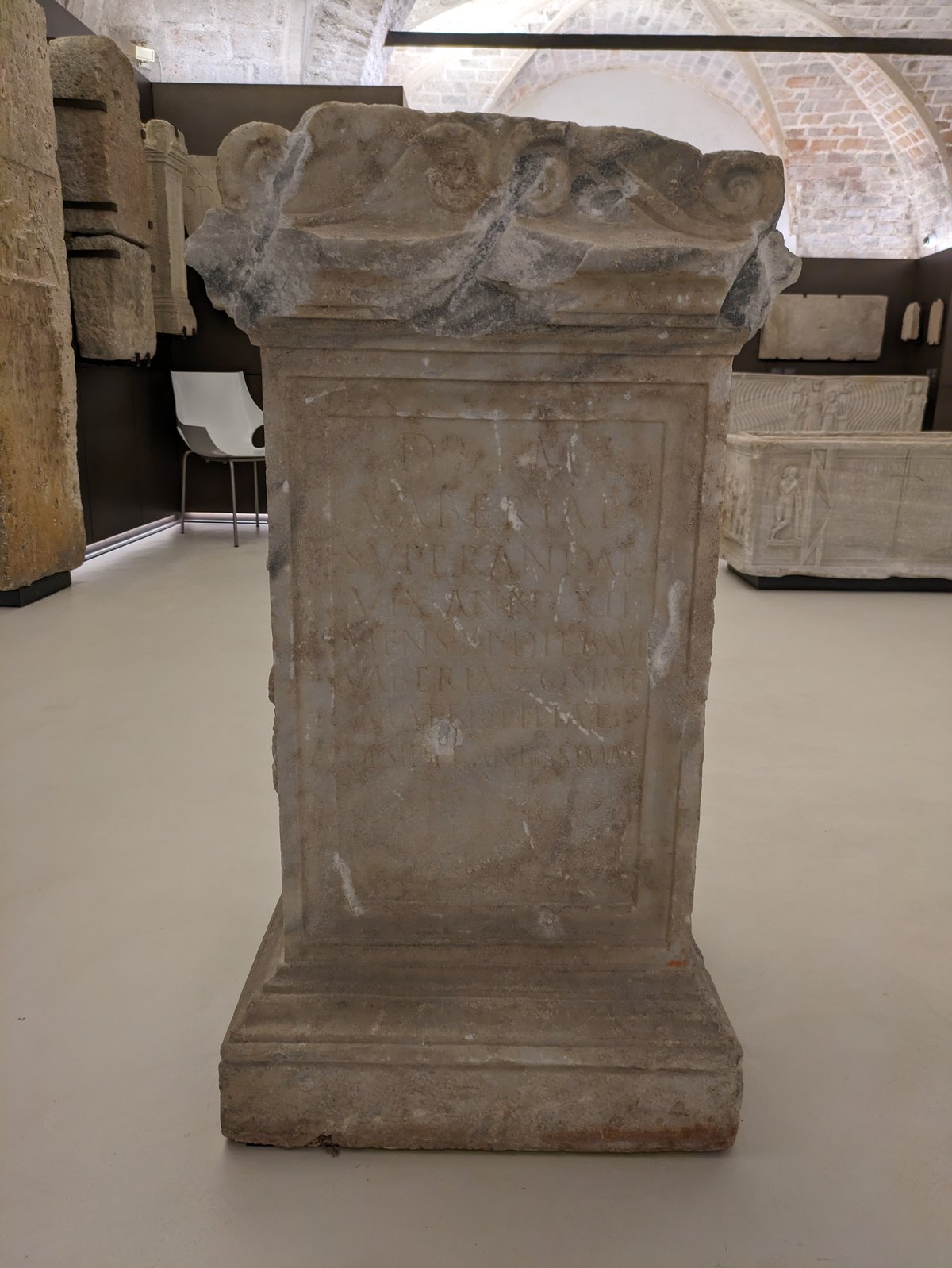 In the heart of Pesaro, inside the 17th-century Palazzo Almerici, lies a hidden gem: the Oliveriano Archaeological Museum. Born from the passion of Annibale degli Abbati Oliveri, an 18th-century scholar who donated his vast collection to the city, it now narrates a thousand years of history of the region, from the Piceni period to the late Roman Empire. The route unfolds in four sections: the Iron Age necropolis of Novilara (with over 450 tombs and the famous stele depicting a naval battle), the Lucus Pisaurensis (a Roman sacred grove discovered by Oliveri himself), the municipality of Pisaurum, and a room dedicated to 18th-century collecting that evokes a wunderkammer. Among the standout pieces: a 2nd-century AD anemoscope, Roman heads of Augustus and Livia, and Etruscan bronzes. The installation, designed by studio STARTT and curated by archaeologist Chiara Delpino, is inspired by the poetic language of Jannis Kounellis: stone fragments are grouped into geometric shapes, making the visit a nearly artistic experience. Note: currently the museum is open by appointment only (info 0721 33344) until March 30, 2025; then it will close for PNRR-related work. If you're in Pesaro, don't miss this time capsule: it's truly worth it.
Villino Ruggeri in Pesaro: The Art Nouveau Masterpiece
- Go to the page: Villino Ruggeri in Pesaro: A Liberty Jewel with Original 1902 Interiors
- Piazzale della Libertà 1, Pesaro (PU)
- Open in Google Maps
- View on Google Images
 Just a few steps from the sea, in Piazzale della Libertà, stands one of the most extraordinary examples of Art Nouveau architecture in Italy: Villino Ruggeri. Commissioned between 1902 and 1907 by pharmaceutical industrialist Oreste Ruggeri – who made his fortune with his products – and designed by architect Giuseppe Brega from Urbino, this building is a riot of marine and plant decorations. The facades are covered with hydraulic cement reliefs: shells, lobsters, flowers, and leaves intertwine in a tale that seems straight out of a fairy tale. Originally, the entire villa – from the windows to the handles, from the furniture to the dishes – was strictly Art Nouveau, and today the dining room and a glass door are still preserved inside. The garden once boasted flower beds, a greenhouse, and a gazebo, but now only a circular fountain decorated with large lobsters remains. It's a pity it's privately owned and not open to visitors inside, but it's worth admiring from the outside, perhaps at sunset when the light enhances the details. The 2007 restoration restored splendor to the northeast facade, but the deterioration due to the proximity of the sea is a constant threat. If you pass through Pesaro, don't miss this gem: it's a dive into Italian Art Nouveau, all to be discovered in the open air.
Monte San Bartolo Lighthouse: Breathtaking Panorama of the Adriatic Coast
- Strada dei Cipressi, Pesaro (PU)
- Open in Google Maps
- View on Google Images
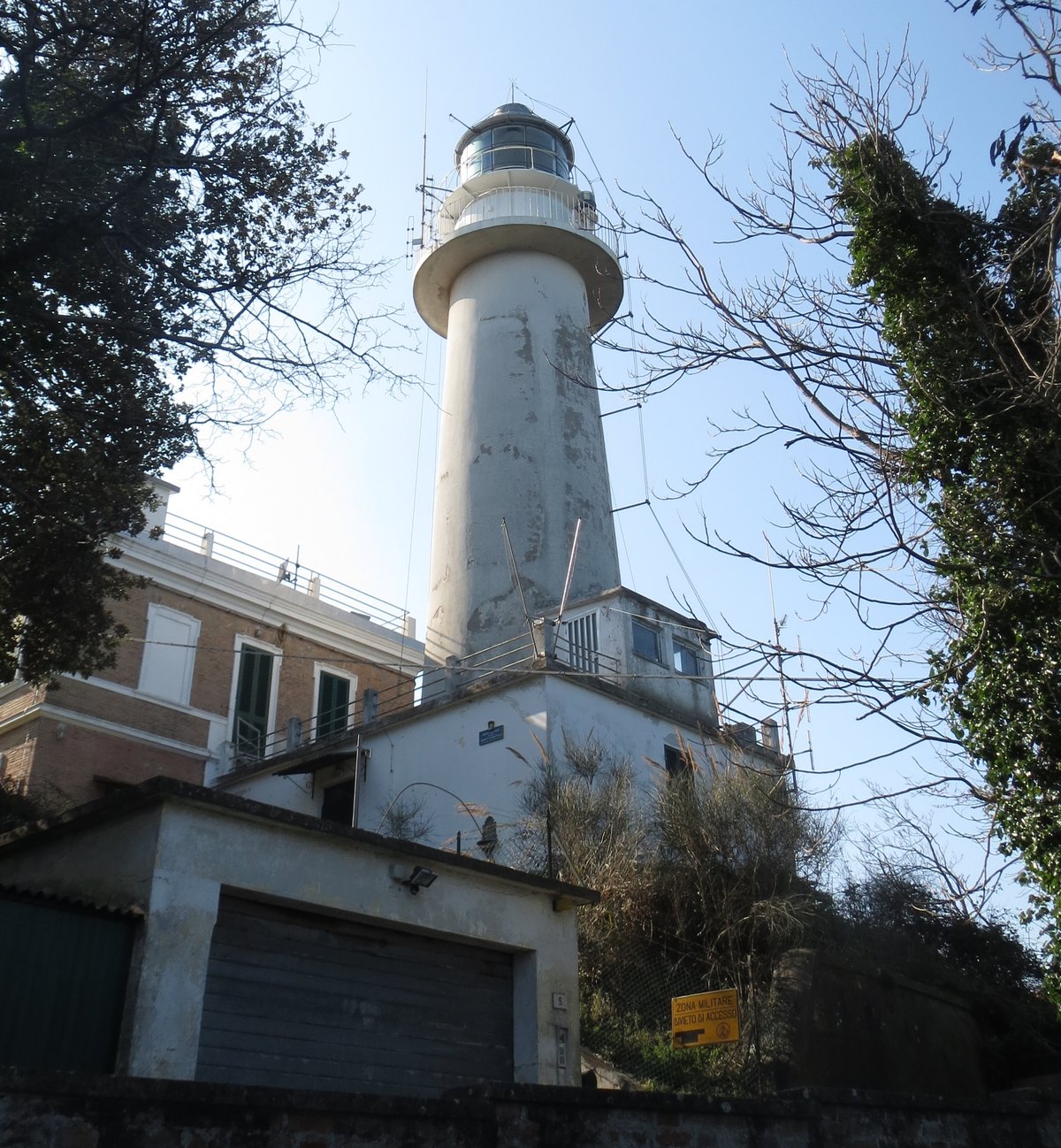 The Monte San Bartolo Lighthouse is one of those places that leave you speechless. Perched 175 meters above sea level, along the scenic Strada dei Cipressi, this white cylindrical lighthouse, about 30 meters tall, dominates the Pesaro coastline. Its history is tied to World War II: the old 'Fralon' lighthouse of Casteldimezzo was destroyed by a German destroyer in 1944, and the current structure was completed in 1945 (though some sources indicate it resumed operation in 1952).
The lighthouse is still active: it emits two white flashes every 15 seconds, visible up to 25-30 nautical miles. Unfortunately, the interior is not open to the public (it's a military zone managed by the Italian Navy), but the surrounding square is accessible and offers spectacular views. On clear days, you can see the mountains of Croatia, the Rimini skyscraper, Monte Carpegna, Sasso Simone, and, to the south, Monte Conero. A perfect mix of sea and Apennines.
To get there, you can choose between a walk along trail 152a in San Bartolo Park (about 1 km, easy) or a bike ride up the paved road: 2.1 km with an average gradient of 9.1%, a good challenge for cyclists. My advice? Go at sunset. The sun setting over the sea, lighting up the white tower in orange, is a spectacle worth every pedal or step.
Villa Caprile in Pesaro: History, Water Games, and Nature
- Strada di Caprile 1, Pesaro (PU)
- Open in Google Maps
- View on Google Images
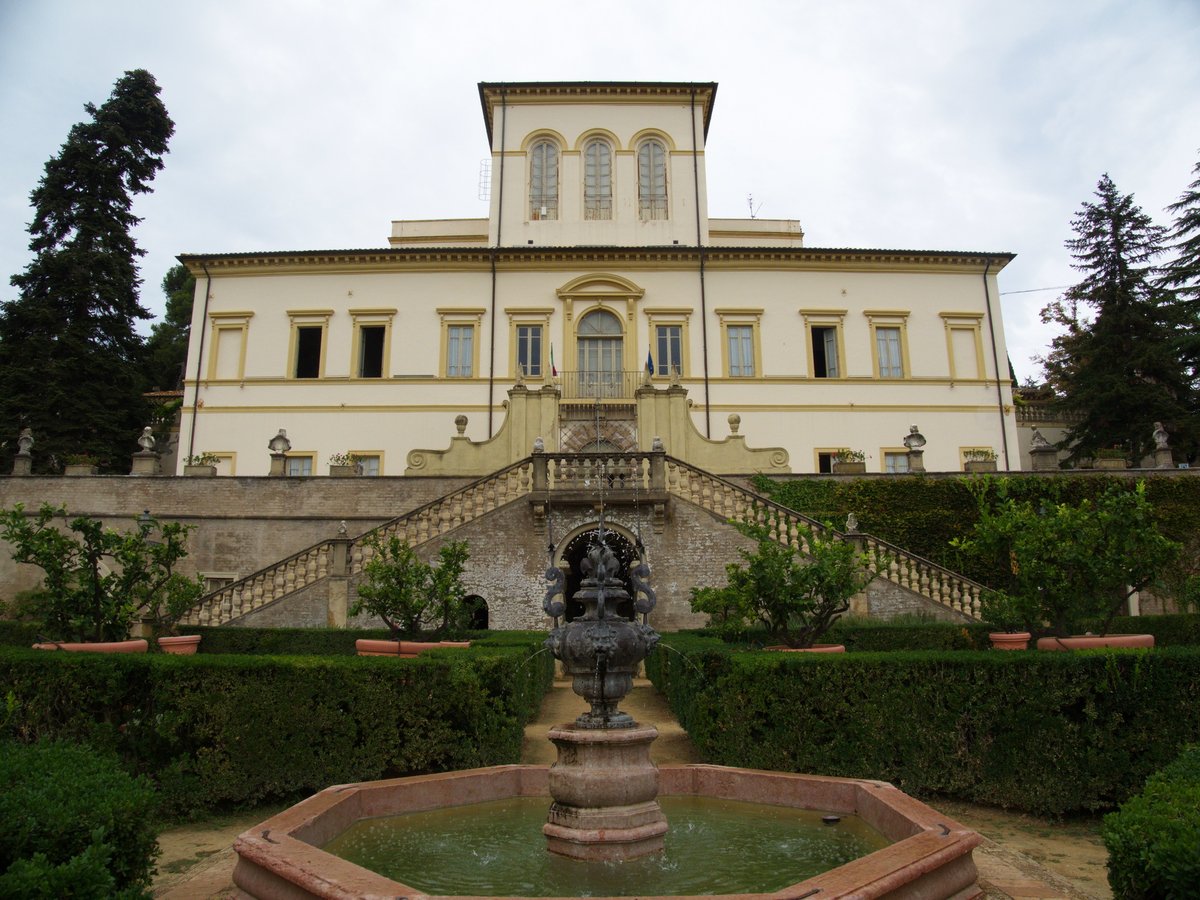 If there's one place that embodies the charm of the Pesaro countryside, it's Villa Caprile. Perched on the hills of Monte San Bartolo, this 1640 residence was commissioned by Marquis Giovanni Mosca as a summer retreat. Now home to the “Antonio Cecchi” Agricultural Technical Institute, the villa still preserves the atmosphere of ancient pleasure villas. Strolling among the three terraces of the Italian garden, you'll encounter a profusion of hedges, statues, and – watch out! – water features that suddenly spray. These are the same pranks that used to entertain illustrious guests like Giacomo Casanova, Stendhal, Gioachino Rossini, and even Napoleon Bonaparte. A curious anecdote? Stendhal drew inspiration from Count Francesco Maria Mosca for his character Count Mosca in “The Charterhouse of Parma.” But there's more than history: the 25-hectare park also features a green theater, a rose garden of antique roses, and a trail linked to the Gothic Line. During summer (from June 8 to August 30, daily 3:00-7:00 PM), you can visit the villa and gardens with guided tours. Tickets? €10 for one hour (gardens or villa only), €15 for two hours (combined). Group bookings required. And if you want a special souvenir, the institute's farm sells organic, zero-kilometer products like wine and oil, made by students. In short, a place that blends culture, nature, and a good dose of … wet surprise!
Artistic-Monumental Fountain of Piazza del Popolo
- Piazza del Popolo, Pesaro (PU)
- Open in Google Maps
- View on Google Images
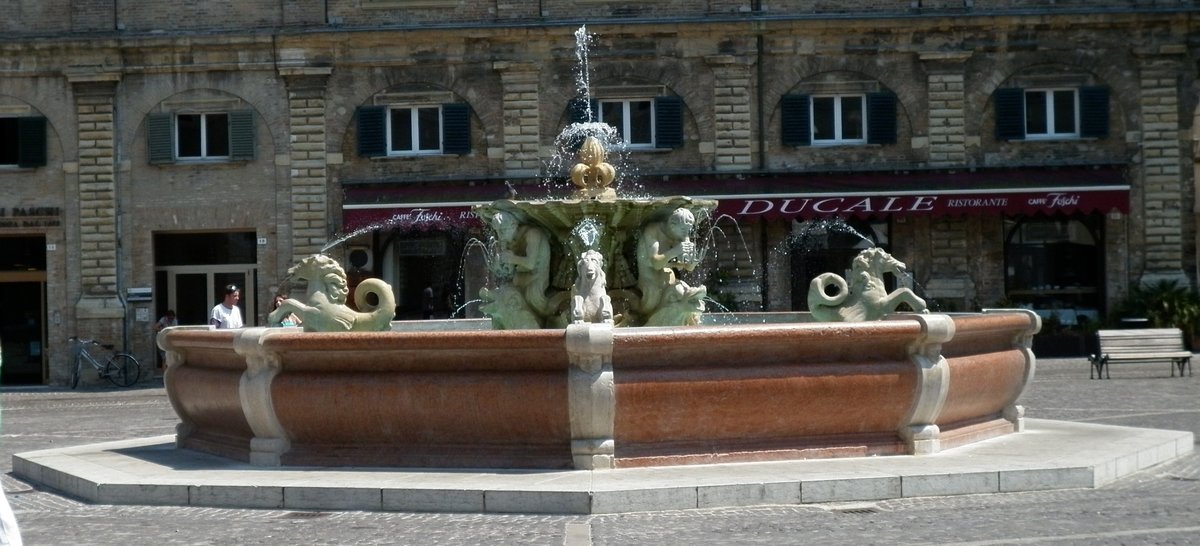 At the center of Piazza del Popolo, the beating heart of Pesaro, stands the Artistic-Monumental Fountain, a masterpiece that has traversed the centuries between splendor and destruction. Commissioned by Duke Francesco Maria II della Rovere between 1588 and 1593, it replaced a 14th-century Malatestian fountain. Inaugurated on July 13, 1593, the fountain was a meeting point for the people of Pesaro, who drew water to water animals and wash carts—a use later banned in 1684 for decorum's sake. Over the years, details were added: in 1605, for the birth of Prince Federico Ubaldo, eight masks were added, and in 1621, for the marriage to Claudia de' Medici, bronze dolphins and other ornaments arrived. The current appearance is due to the Roman sculptor Lorenzo Ottoni, who renovated it between 1684 and 1685. Unfortunately, in August 1944, German sappers mined and destroyed it. But the city did not give up: in 1960, the fountain was faithfully rebuilt following Ottoni's model, recovering original fragments. Today you see it in all its splendor, with the central basin in white Istrian stone surmounted by a lily, four tritons riding dolphins, and four sea horses swimming in the large octagonal basin of red Verona marble. Read the Latin inscriptions on the edge: they tell its troubled history. With twenty-six jets and nighttime illumination, the fountain has once again become, as it once was, 'the pupil of Pesaro.' A tip? Stop to watch it at sunset, when light caresses the marble and water dances.
Orti Giulii: A Green and Historic Corner in the Heart of Pesaro
- Via Canale, Pesaro (PU)
- Open in Google Maps
- View on Google Images
 If you're strolling through the center of Pesaro, don't miss the Orti Giulii, a green gem created between 1827 and 1830. It was commissioned by Count Francesco Cassi to honor his cousin Giulio Perticari, a renowned literary figure. The project was entrusted to engineer Pompeo Mancini from Ferrara (the same designer of the Pescheria) and the result was a tree-lined park with a botanical garden, one of the first examples of a public garden in Italy. The atmosphere is romantic: reclaimed columns, a small temple, sarcophagi, and paths winding among exotic plants acclimatized by the Accademia Agraria. At the top, in the center of a small square, you'll find the bust of Perticari: from there you can enjoy a breathtaking view of the port, the river, and Mount San Bartolo. Today the garden is open daily from 7:30 am to 7:30 pm (free entry) and, after a period of neglect, the municipality has allocated 1 million euros to restore it: new lighting, paving, recovery of historical species, and a literary café that will finally bring this space to life. A peaceful corner where history and nature blend, perfect for a break away from traffic.
Palazzo Lazzarini: An 18th-Century Gem to Rediscover
- Via Gioacchino Rossini, Pesaro (PU)
- Open in Google Maps
- View on Google Images
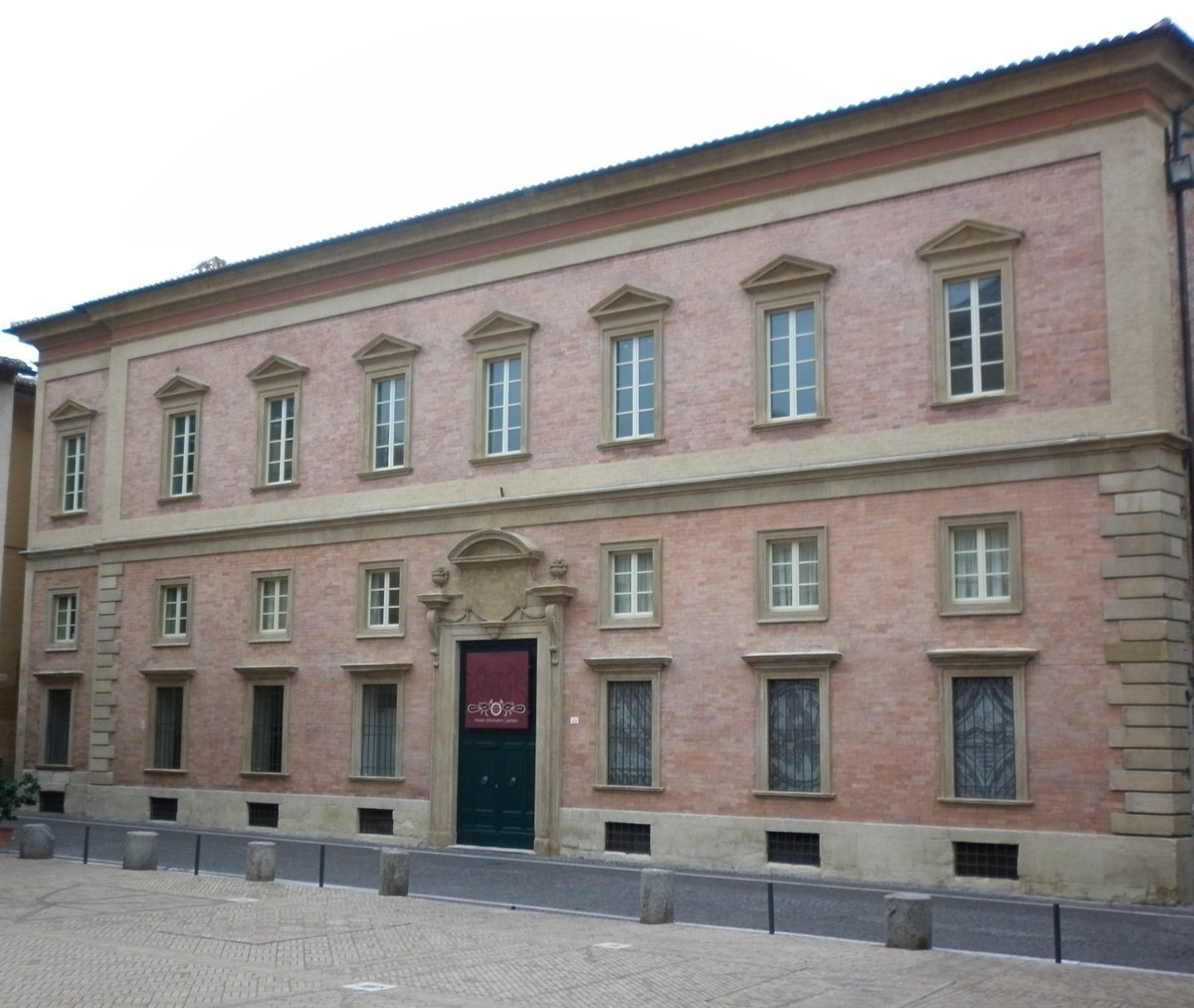 Palazzo Lazzarini, overlooking the cathedral square, is one of those buildings that seems to hold a secret. Built between 1788 and 1790 to a design by architect Gianandrea Lazzarini – with revisions by Giovanni Antinori – it originally served as a diocesan seminary, established after the Council of Trent. The neoclassical facade, simple yet elegant, blends reddish brick, tufa, sandstone, and limestone: a stone ashlar marks the ground floor, while the central sandstone portal is crowned by a curved tympanum with sacred lamps. Inside, the barrel-vaulted atrium and the monumental two-flight staircase converge in a cross-vaulted corridor, a scenic spectacle. Over the centuries, the palace has lived many lives: during World War I it was a military hospital, then between the 1950s and 1960s it housed the Technical Commercial Institute. Today, after more than twenty years of closure, it is being fully restored: a major intervention worth €3.5 million (with funds from the Pnrr and the Curia) is transforming it into a student dormitory with 70 beds, 21 of which at reduced rent (€200-270 per month) for students of the Rossini Conservatory and the University. But that's not all: on the ground floor, three rooms for cultural events will be created, along with a courtyard/piazza on via Rossini (170 sqm) for concerts, and for a few years now the basement has housed the Diocesan Museum, with artifacts from the 4th century, such as the sarcophagus of Saint Decentius and fragments of Paleo-Christian mosaics. The opening of the student dormitory is scheduled for September 2026, but the construction site is already a site of rebirth. If you're passing through Pesaro, peek at number 53 via Rossini: the palace deserves a glance, if only to imagine the bustle of students that will soon enliven it.