
🧭 What to Expect
- Ideal for nature, sea, and history lovers
- Highlights: Oasis of Ninfa, Circeo, authentic villages like Sermoneta
- Activities: hiking, snorkeling, cultural visits
- Best time: spring and summer
- Tip: don't miss the sunset from the Capo Circeo Lighthouse
Events nearby

The Province of Latina is a concentration of wonders: from the lush Oasis of Ninfa to the Circeo National Park, from the beaches of Sperlonga to the medieval villages of Sermoneta and Cori. Here you'll find crystal-clear waters, protected areas perfect for hiking, and archaeological sites like Minturnae and the Villa of Tiberius. Not to mention the islands of Ponza and Ventotene, ideal for romantic getaways. In this article, I'll take you to discover the unmissable places in the province, among wild nature, ancient history, and postcard-perfect landscapes. Get ready for an itinerary that mixes relaxation and adventure, perfect for every type of traveler.
Overview
- Oasis of Ninfa: The Most Beautiful Garden in the World
- Archaeological Park of Ancient Norba: a journey through time among ruins and landscapes
- Caetani Castle of Sermoneta: A Fortress Overlooking the Pontine Plain
- Valvisciolo Abbey: Between Templars and Silence
- Capo Circeo Lighthouse: History and Breathtaking Views
- Mausoleum of Lucius Munatius Plancus: A Roman Giant on Monte Orlando
- Tiberius' Villa: Imperial Legacy in the Sperlonga Cave
- Minturnae: A Dive into Ancient Rome Between Theater and Aqueduct
- Baronial Castle of Fondi: A Dive into History Amid Medieval Walls and Breathtaking Views
- Baronial Castle of Fondi: A Dive into History Amid Medieval Walls and Breathtaking Views
- Cori: A Balcony Over the Lepini Among Temples and Polygonal Walls
- Cicero's Tomb: The Mausoleum on the Appian Way
- Frangipane Castle: The Rocca Traversa of Terracina
- Santo Stefano Prison: The 'Tomb of the Living'
- Punta della Guardia Lighthouse: The Lighthouse Watching Over Ponza
- Monte Orlando Urban Park: A Dive into Nature and History
Itineraries nearby

Oasis of Ninfa: The Most Beautiful Garden in the World
- Go to the page: Ninfa Oasis: Botanical Garden with Medieval Ruins and 1300 Plant Species
- Strada Provinciale Ninfina I 68, Cisterna di Latina (LT)
- https://www.giardinodininfa.eu
- Open in Google Maps
- View on Google Images
- info@frcaetani.it
 Traveling through the province of Latina, there's a place that seems straight out of a dream: the Oasis of Ninfa. Declared a Natural Monument in 2000, this garden spanning over 8 hectares is considered by the New York Times to be the most beautiful in the world. And yes, as soon as you set foot inside, you understand why. The scent of climbing roses mingles with the songs of birds (over 100 species nest here), and the ruins of the medieval city of Ninfa – destroyed in 1382 – emerge among cherry trees, magnolias, and Japanese maples. It's not just a garden, it's an experience. It hosts over 1,300 varieties of plants, many of which are exotic, such as American walnut and Chinese bamboo. The history is that of the Caetani family, who have owned this area since 1298: it was Gelasio Caetani, in the 1920s, who reclaimed and transformed the ruins into a romantic English garden. Today it is managed by the Roffredo Caetani Foundation, which takes care of everything. Among the things to see, don't miss the pond with the 32-meter-high crenellated tower, the remains of five churches (with detached frescoes preserved in the castle of Sermoneta), and the famous Ponte del Macello. The garden is open only on set dates – check the official website for hours and reservations – and entry costs about 15 euros. A tip? Arrive early: guided tours last an hour and time flies. If you're in a hurry, from Rome it takes about an hour and a half via the Pontina highway. A peaceful oasis truly worth it.
Archaeological Park of Ancient Norba: a journey through time among ruins and landscapes
- Go to the page: Ancient Norba Archaeological Park: Cyclopean Walls and Roman Temples at 400 Meters
- Via Norbana, Norma (LT)
- Open in Google Maps
- View on Google Images
 If you think Pompeii is the only Roman city 'frozen in time,' get ready to think again. The Archaeological Park of Ancient Norba, just a stone's throw from Norma, is a hidden gem that will leave you breathless. Founded by the Latins in the 5th century BC and later a Roman colony, Norba was destroyed in 81 BC during the war between Marius and Sulla: rather than surrender, the inhabitants set fire to the city and threw themselves off the cliff. Since then, no one has built there, giving us an incredibly authentic archaeological site.
What immediately strikes you are the polygonal walls, up to 12 meters high and perfectly preserved for over 2.5 km. Enter through Porta Maggiore, defended by a semicircular bastion, and walk along the paved streets made of limestone basoli. Notice the sidewalks, still-functioning sewers, and the remains of domus with impluvia for collecting rainwater. In the city center are the monumental baths with an oval basin and a vaulted frigidarium. Climb the Minor Acropolis, where the foundations of two temples stand, and enjoy the breathtaking view of the Pontine Plain all the way to the sea.
The Sanctuary of Juno Lucina, on the southwestern edge, is one of the most fascinating places: dedicated to fertility and birth, it preserves the temple with pronaos and cella from the 4th-3rd century BC. From here, on clear days, you can see Circeo. And if you're an adrenaline junkie, know that the plateau is one of Europe's best paragliding launch points.
Admission is free, with no fixed guides. For guided tours (groups of at least 10 people, reservation 48 hours in advance), contact the Museo Civico Archeologico di Norma at 0773.1710161 or write to cultura@comune.norma.lt.it. The park is always open, but spring and fall offer the best temperatures.
Caetani Castle of Sermoneta: A Fortress Overlooking the Pontine Plain
- Via Rione Vecchio, Sermoneta (LT)
- Open in Google Maps
- View on Google Images
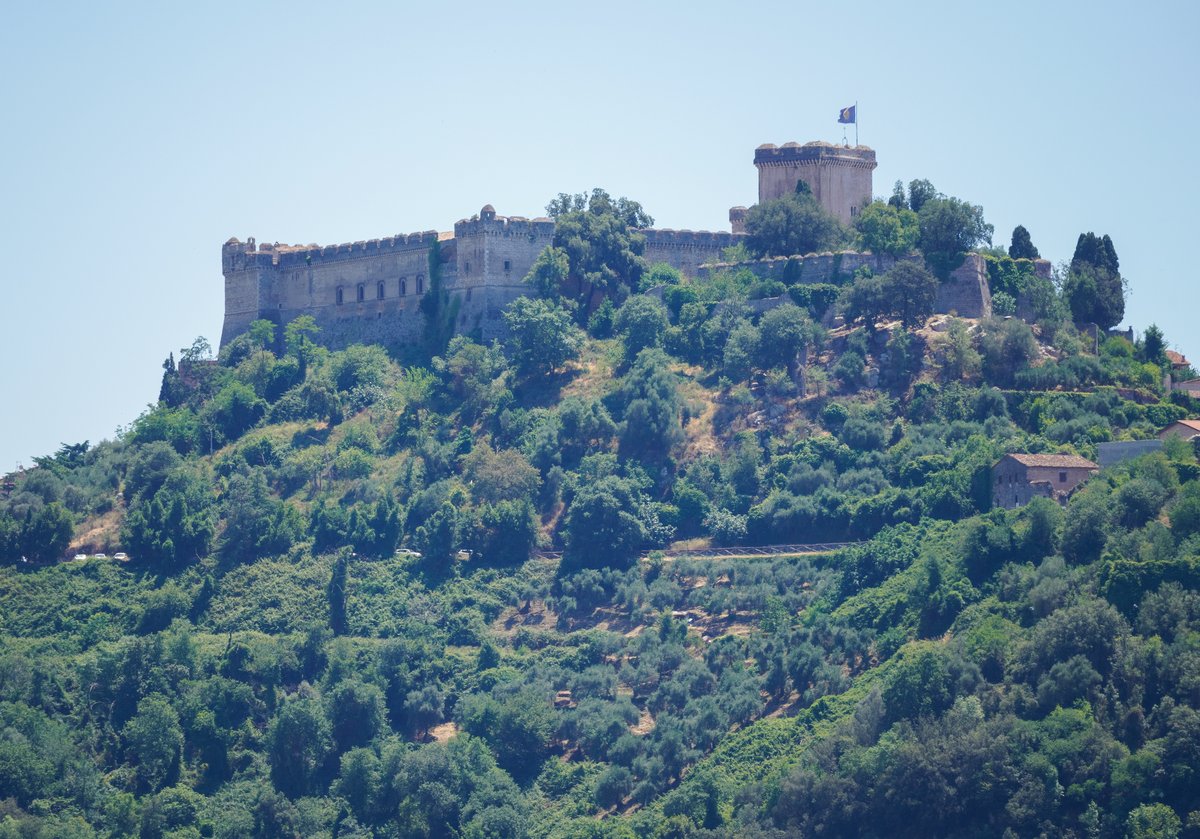 Perched atop the medieval village of Sermoneta, the Caetani Castle is one of the best-preserved fortresses in Lazio. Its origins date back to the 13th century, when the Annibaldi family built the imposing Maschio, a 42-meter tower, and the counter-tower called Maschietto. In 1297, it passed to the Caetani family, who expanded it into a noble residence. Today, the castle is managed by the Roffredo Caetani Foundation and can be visited by appointment.
Strolling through its halls, you breathe in a unique atmosphere: the Camere Pinte frescoed with mythological scenes, the Sala dei Baroni with its pointed arches, and the Cardinal's House, where according to tradition Lucrezia Borgia stayed. In the Maschio tower, the lord's original canopy bed is still preserved, while on one wall stands a pentagram engraved by composer Roffredo Caetani. There is also a touch of mystery: they say the castle is haunted by the spirit of a child, whose portrait hangs in the Cardinal's hall.
The castle has also been a film set: scenes from the movie “Non ci resta che piangere” with Benigni and Troisi were shot here, as well as from Matteo Garrone's “Il racconto dei racconti.” From the terrace, the view sweeps across the Pontine Plain to the sea, offering a breathtaking panorama.
For the visit, it's better to book: the full ticket costs about €8 and openings are concentrated on weekends. Wear comfortable shoes, because the village is best explored on foot.
Valvisciolo Abbey: Between Templars and Silence
- SP23, Sermoneta (LT)
- Open in Google Maps
- View on Google Images
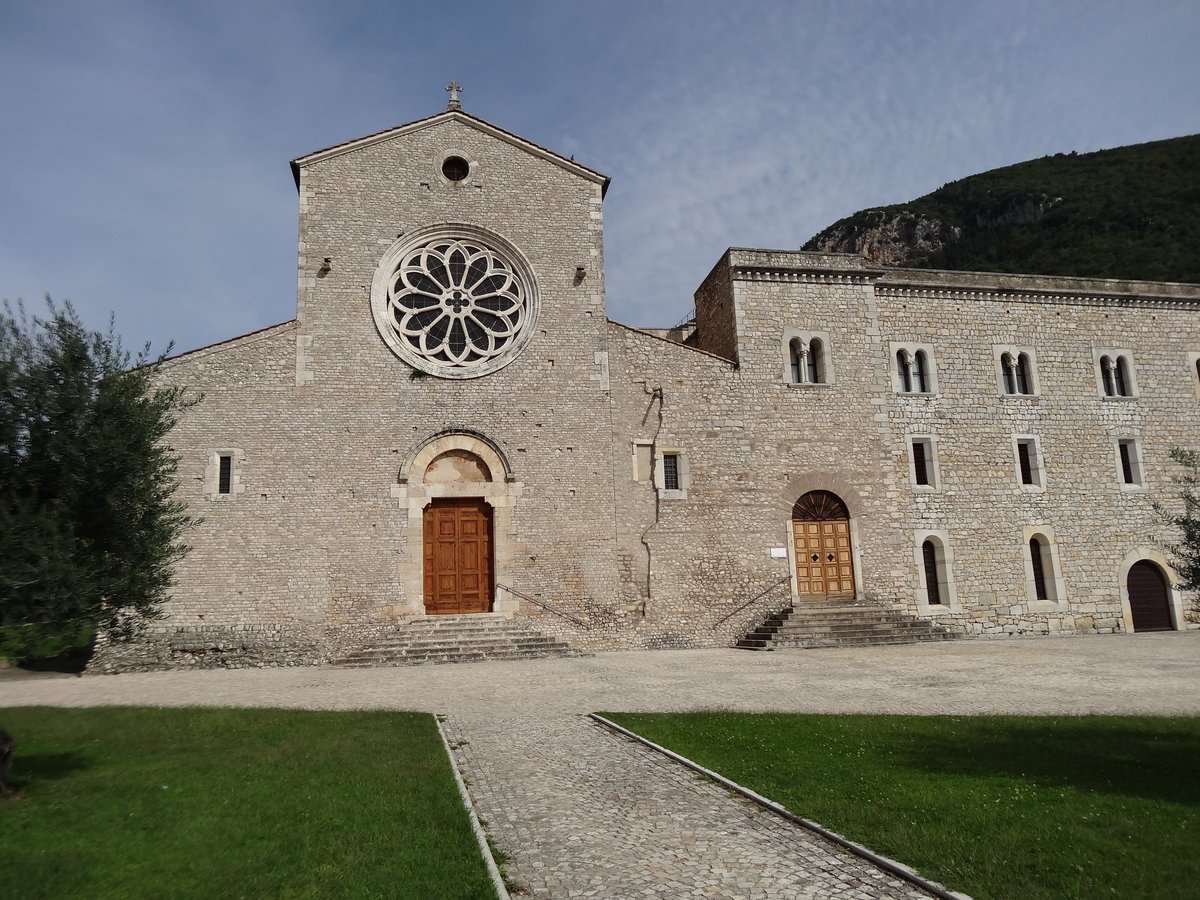 The Cistercian Abbey of Valvisciolo, dedicated to Saint Stephen, is one of those places that takes your breath away. Perched at the foot of Monte Corvino, about 100 meters above sea level, it overlooks the Pontine plain all the way to the sea. The name, perhaps "Valley of the Nightingale" or "Valley of Wild Cherries," immediately evokes an atmosphere suspended in time.
The history here is a fascinating weave: it begins with Basilian monks in the 8th century, then the Templars arrived (between the 12th and 14th centuries), and finally the Cistercians. The Templars left indelible marks: on the great 5-meter diameter rose window is a Templar cross, and in the cloister are engraved symbols such as the Triple Enclosure and the famous "SATOR AREPO TENET OPERA ROTAS", a palindrome arranged in concentric rings—unique of its kind. Legend has it that a crack on the architrave of the portal opened at the burning of Jacques de Molay in 1314.
The cloister is the heart of the monastery: a square with paired columns and sculpted capitals, around a garden with a well. It gives access to the chapter house and the refectory. The church, with three naves, is bare in the Cistercian style, but in the Chapel of San Lorenzo the frescoes by Pomarancio (1586-1589) stand out.
Visiting is free and open to all. The entrance is at Via Badia, 14 in Sermoneta. As you walk among these ancient walls, listening to the silence broken only by the wind, you feel part of a thousand-year history. Unmissable if you're in the area and love places full of mystery.
Capo Circeo Lighthouse: History and Breathtaking Views
- Go to the page: Capo Circeo Lighthouse: 360° View of National Park and Pontine Islands
- Piazza Antonio Valente, San Felice Circeo (LT)
- Open in Google Maps
- View on Google Images
 If you're in San Felice Circeo, you can't miss the Capo Circeo Lighthouse, a gem from 1866 that dominates the coast from nearly 38 meters above sea level. Built under Pope Pius IX, this lighthouse is still active and offers a postcard-perfect view of the Tyrrhenian Sea and the Pontine Islands. The 18-meter tower, clad in white majolica tiles to withstand salt and wind, is a true spectacle. To get there, you take via del Faro, an ancient Roman road – keep an eye out for the Roman marker carved into the rock just after the first bend. At the end, a parking area and then a short staircase leads to a viewpoint over the rocks. The place is quiet, frequented by hikers and cyclists. If you want to swim, you can easily access the sea from the rocks, but wear rock shoes and only if the sea is calm. Next to the lighthouse there's also a restaurant with a panoramic terrace overlooking the cliff, perfect for a sunset aperitif. In short, a place that combines history, nature, and relaxation.
Mausoleum of Lucius Munatius Plancus: A Roman Giant on Monte Orlando
- Via Lucio Munazio Planco, Gaeta (LT)
- Open in Google Maps
- View on Google Images
 Atop Monte Orlando, 166 meters above sea level, stands a monument that will leave you speechless: the Mausoleum of Lucius Munatius Plancus. Not just for its size—nearly 30 meters in diameter and 9 meters high—but for the story it tells. Built around 22 BC, it's the tomb of the Roman general who proposed the title 'Augustus' for Octavian, founded Lyon and Basel, and carved out this spot with a spectacular view. Locals call it Torre d'Orlando, but it's a perfect cylinder of ashlar masonry, with a Doric frieze stretching 93 meters. Inside, four cross-shaped chambers house a small antiquarium and a copy of the consul's statue. The real surprise? After a massive restoration (funded by PNRR and Lazio Region), it's now open on weekends and in summer, with a free electric shuttle from the Spaltoni parking lot. You climb up, take in the panorama—from Circeo to the Pontine Islands, all the way to Vesuvius—and understand why Plancus chose this very spot. The inscription on the door lists his achievements: consul, censor, conqueror of the Raeti. A dive into Republican Rome, just steps from the sea.
Tiberius' Villa: Imperial Legacy in the Sperlonga Cave
- Strada Regionale 213 Flacca, Sperlonga (LT)
- Open in Google Maps
- View on Google Images
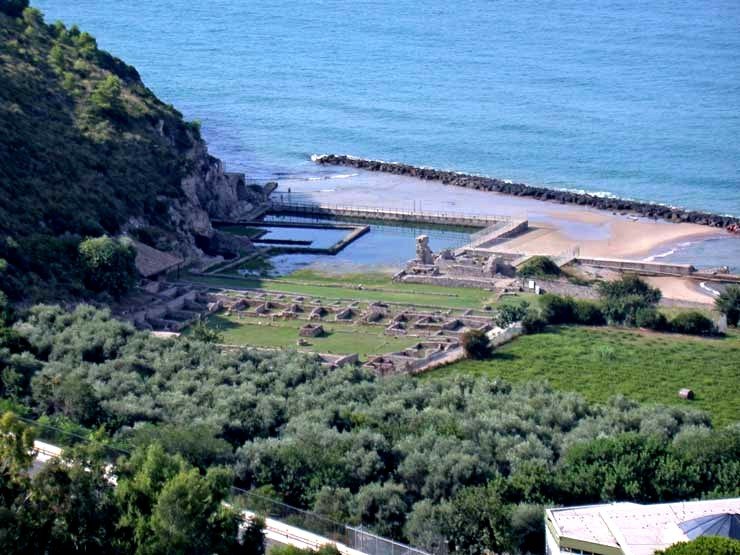 If there is a place that captures the essence of the Lazio coast, it is the Villa of Tiberius in Sperlonga. Discovered by chance in 1957 during work on the Via Flacca, this imperial residence from the 1st century AD is an archaeological gem that leaves you speechless. Emperor Tiberius, who fled Rome's politics here, transformed a natural cave into a sumptuous nymphaeum, with seawater pools and colossal sculptures inspired by the Odyssey. The complex stretches about 300 meters along the coast, with baths, barracks, and a fishpond. The heart of the site is the cave, where once banquets were held on an artificial island surrounded by water. Here, in 26 AD, a rockfall nearly killed the emperor, saved by the prefect Sejanus. Today, the recovered marble fragments are displayed in the National Archaeological Museum of Sperlonga, opened in 1963. Four sculptural groups tell you the deeds of Ulysses: the group of Scylla, the blinding of Polyphemus, the theft of the Palladium, and Ulysses dragging the body of Achilles. Restored with patience, these masterpieces – work of the same sculptors of the Vatican Laocoön – make you feel the Homeric epic. Walking among the ruins, with the scent of the sea and the view of the Gulf of Gaeta, you understand why Tiberius loved this place. The visit takes about an hour; wear comfortable shoes and bring water, because in summer the sun is strong. The ticket costs 5 euros (reduced 2), and the site is closed on Mondays. A place combining history and nature, perfect for those seeking authenticity.
Minturnae: A Dive into Ancient Rome Between Theater and Aqueduct
- Go to the page: Minturnae: Roman Theater, Baths and Via Appia in Lazio
- Via Parchi Ausente, Minturno (LT)
- Open in Google Maps
- View on Google Images
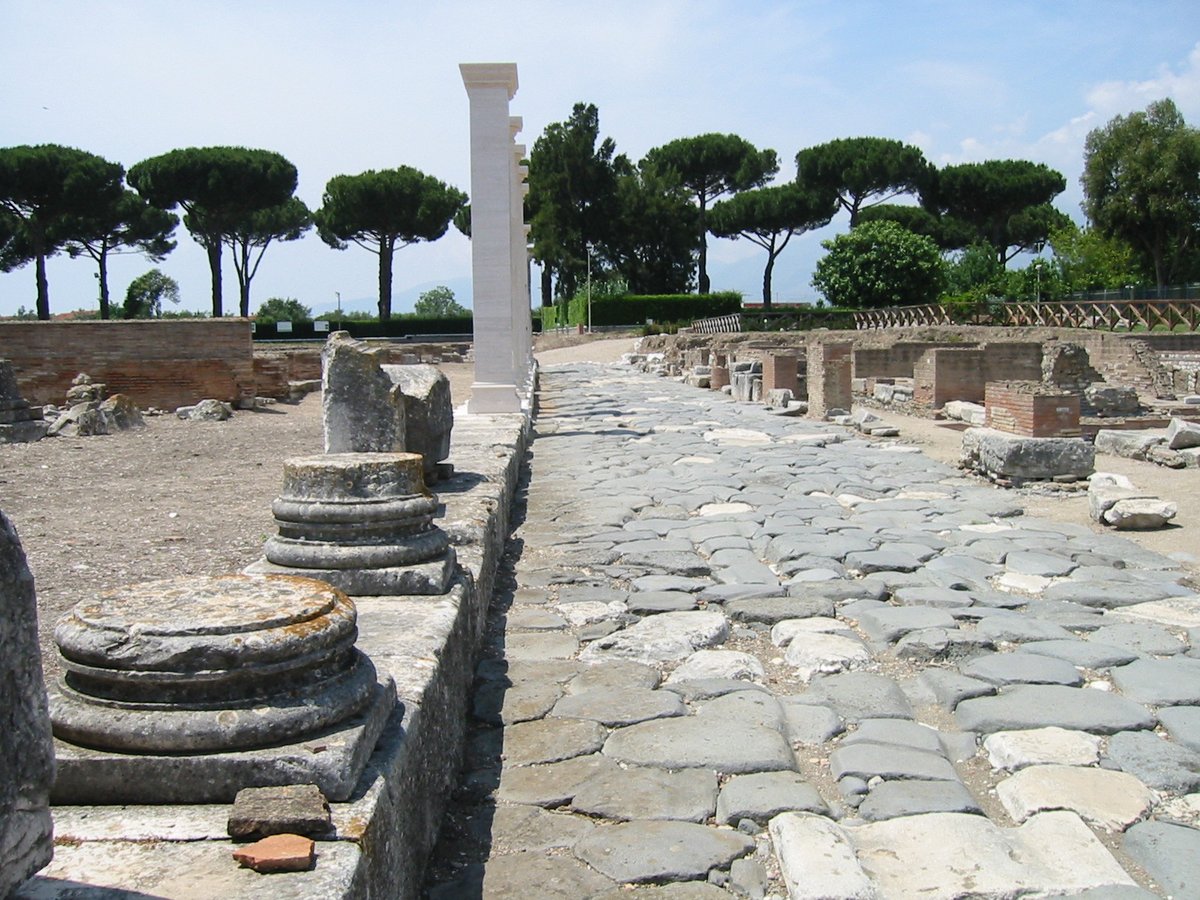 If you're passing through Minturno, don't miss the Archaeological Park of Minturnae. It's a place that takes you back 2,300 years, right where an ancient port city once stood. Founded by the Romans in 296 BC after destroying the Aurunci settlement, Minturnae controlled the crossing of the Garigliano River on the Via Appia. Today you walk on the same basaltic lava block streets of the Decumanus Maximus. The theater is the highlight: built in the 1st century AD, it could seat over 4,000 spectators and is still used for summer performances. Beneath the cavea is the museum with headless statues and artifacts from the river. Nearby, the imposing arches of the Roman aqueduct (11 km long) intersect with the modern Appian Way. Don't miss the Bourbon Bridge (Ponte Real Ferdinando), an engineering gem from 1832 with iron chains, the first of its kind in Italy. And if you feel like it, visit the ruins of the Temple of the nymph Marica near the mouth. The site is open year-round (8:30 AM - 7:00 PM in summer, 8 AM - 4 PM in winter), ticket €5, accessible to all. Wear comfortable shoes and bring lots of curiosity – here every stone tells a story.
Baronial Castle of Fondi: A Dive into History Amid Medieval Walls and Breathtaking Views
- Go to the page: Baronial Castle of Fondi: Crenellated Towers and Medieval Courtyards with Free Access
- Piazza Giacomo Matteotti, Fondi (LT)
- Open in Google Maps
- View on Google Images
 If you're passing through Fondi, the Baronial Castle (or Caetani) is a must-see. It stands right in the square, imposing and silent, with its walls telling centuries of history. Construction began in 1319 at the behest of Roffredo Caetani, a great-nephew of Pope Boniface VIII, and was expanded in subsequent centuries. The result? A mix of styles that immediately catches the eye: a 13th-century square keep supporting a 15th-century cylindrical tower, all crowned with battlements and corbels. The castle rests on Roman walls from the 1st century BC, a layering that stirs emotion. Inside, the Museo Civico displays Roman stone and ceramic artifacts, but the real gem is the graffiti of prisoners in the rooms that served as a jail until 1931. Climb to the terrace: the panoramic view of the Fondi plain, between mountains and sea, is unmissable. And then, consider that here the Antipope Clement VII was elected in 1378, an event that earned Fondi the nickname 'city of Satan.' Today, fortunately, the castle is a peaceful place, perfect for a cultural visit. Opening hours follow those of the museum: in winter, Monday to Friday 9 AM–1 PM and 4 PM–8 PM, Saturday and Sunday 9:30 AM–12:30 PM and 4 PM–8:30 PM. Check before you go, as they may vary. In short, a dive into the Middle Ages that I recommend to everyone.
Baronial Castle of Fondi: A Dive into History Amid Medieval Walls and Breathtaking Views
- Go to the page: Baronial Castle of Fondi: Fortress, Museum, and Panorama
- Piazza Giacomo Matteotti, Fondi (LT)
- Open in Google Maps
- View on Google Images
If you're passing through Fondi, the Baronial Castle (or Caetani) is a must-see. It stands right in the square, imposing and silent, with its walls telling centuries of history. Construction began in 1319 at the behest of Roffredo Caetani, a great-nephew of Pope Boniface VIII, and was expanded in subsequent centuries. The result? A mix of styles that immediately catches the eye: a 13th-century square keep supporting a 15th-century cylindrical tower, all crowned with battlements and corbels. The castle rests on Roman walls from the 1st century BC, a layering that stirs emotion. Inside, the Museo Civico displays Roman stone and ceramic artifacts, but the real gem is the graffiti of prisoners in the rooms that served as a jail until 1931. Climb to the terrace: the panoramic view of the Fondi plain, between mountains and sea, is unmissable. And then, consider that here the Antipope Clement VII was elected in 1378, an event that earned Fondi the nickname 'city of Satan.' Today, fortunately, the castle is a peaceful place, perfect for a cultural visit. Opening hours follow those of the museum: in winter, Monday to Friday 9 AM–1 PM and 4 PM–8 PM, Saturday and Sunday 9:30 AM–12:30 PM and 4 PM–8:30 PM. Check before you go, as they may vary. In short, a dive into the Middle Ages that I recommend to everyone.Cori: A Balcony Over the Lepini Among Temples and Polygonal Walls
- Via Stazione di Cori, Cori (LT)
- Open in Google Maps
- View on Google Images
 Perched on the Monti Lepini at nearly 400 meters altitude, Cori is one of those villages that grabs you immediately. Its origins? Ancient Cora, a Latin city from the Bronze Age, later a Roman municipium. Walking through the center, you come across polygonal walls almost 2 km long: a perfect ring with gates like Porta Romana and Porta Ninfina, dating back to the 6th-5th century BC. Climbing to the acropolis, the Temple of Hercules leaves you speechless: eight Doric columns 7 meters high, standing out against the sea of the Pontine Plain. It dates to the 1st century BC and the view is amazing. A little further, the remains of the Temple of Castor and Pollux with its Corinthian columns. Pagan cults here coexist with Christian ones: the Church of Santa Maria della Pietà, Romanesque from the 12th century, stands on a Roman temple, while the Sanctuary of the Madonna del Soccorso (16th century) has a Baroque interior and a 17th-century dome. If you love frescoes, don't miss the Cappella dell'Annunziata, a national monument with 14th-15th century paintings. To soak up the village atmosphere, walk along Via del Porticato, an ancient street covered by houses and towers, and stop at Piazza Pozzodorico, which hides a Roman building from the 2nd century BC. Below, the Roman bridge of Catena, a 20-meter-high arch from the 1st century BC. Noble palaces like Palazzo Landi-Vittori and Palazzo del Comune (12th century) complete the picture. For a green break, the Parco dell'Impero connects the upper and lower parts of the town. And don't forget to taste the wine-cooked ham and 'Mbriachelle al mosto (must cookies), typical sweets. In short, Cori is a gem that deserves a day (or more).
Cicero's Tomb: The Mausoleum on the Appian Way
- Via Marco Tullio Cicerone, Formia (LT)
- Open in Google Maps
- View on Google Images
 If you pass through Formia along the Appian Way, just after km 139 you'll come across an imposing structure: Cicero's Tomb. A mausoleum 24 meters high, with an 18-meter square base and a cylindrical tower made of stone rings, once covered in marble. At the top, a circular burial chamber with six niches and a central pillar.
The attribution to Cicero is uncertain – no inscription confirms it – but the clues are strong: he had one of his villas here, and on December 7, 43 BC, he was killed by Mark Antony's henchmen. The size of the tomb suggests a prominent figure. Local tradition is so deeply rooted that in the background you can see the remains of the Tomb of Tulliola, his daughter who died in childbirth.
Until 1938, the tomb was private and – incredibly – a donkey lived inside! A 1934 article in the Giornale d'Italia caused a scandal, and thanks to archaeologist Amedeo Maiuri and mayor Felice Tonetti, it was expropriated for 20,000 lire. Today the site is public, but to visit you must reserve with the National Archaeological Museum of Formia (tel. 349.5328280).
Note: access may be limited, but it's worth it. Arriving from the Appian Way, besides the basalt-paved stretch, you'll see two beautiful side gates, one in Greek style. It's one of the most evocative spots in Lazio, where ancient history blends with a touch of legend.
Frangipane Castle: The Rocca Traversa of Terracina
- Via Anxur, Terracina (LT)
- Open in Google Maps
- View on Google Images
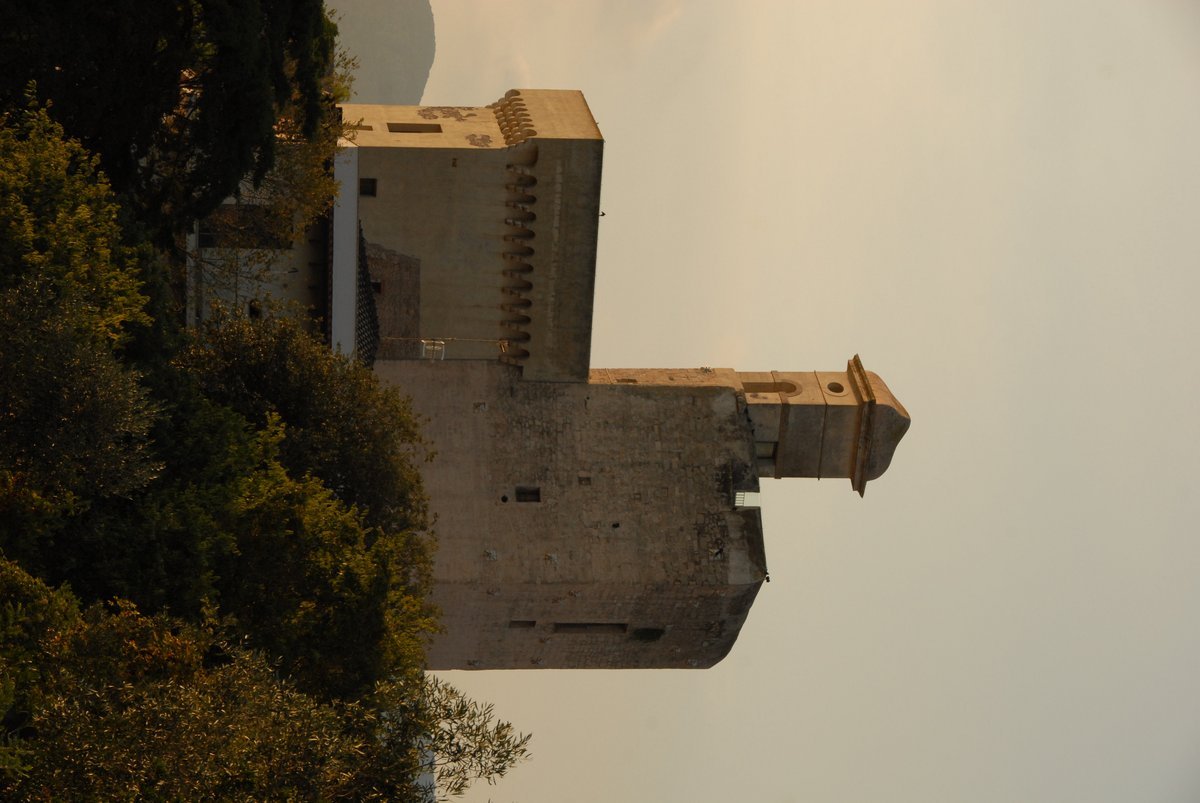 At the top of the upper town of Terracina, the Frangipane Castle (or Rocca Traversa) is a medieval gem that has withstood centuries and bombings. Built from the 10th century on a Roman foundation, it was expanded by the Frangipane family in the 12th century – who received it as a fief from Pope Celestine II – and again in the 15th century. Today, after being severely damaged during World War II and a restoration that lasted from 1998 to 2005, it finally opened to the public on May 1, 2019.
Upon entering, you immediately notice the grandeur of the central keep and what remains of the south wing. On the east wall, two inscriptions recall the works commissioned by Pope Eugene III (1145-1153). The atmosphere is that of a place that has experienced so much: from feuds among noble families to abandonment, and finally rebirth. To visit, a minimum contribution of 3 euros is required (free for Foundation members and children), and it is open from 9:00 to 12:30 and from 15:30 to 18:30. A dive into history that you can almost touch.
Santo Stefano Prison: The 'Tomb of the Living'
- Tunnel di Cala a Mare, Ventotene (LT)
- Open in Google Maps
- View on Google Images
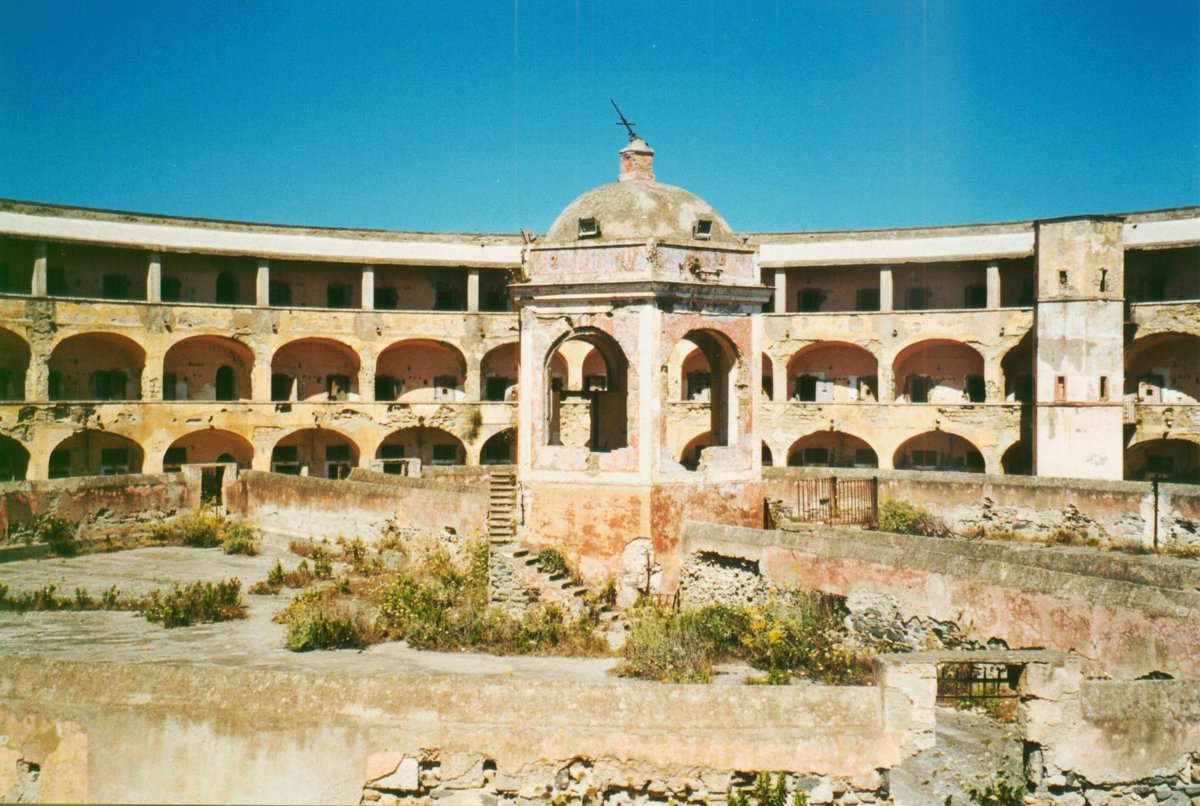 A mile from Ventotene, the island of Santo Stefano is home to one of Italy's most fascinating and dramatic prisons. Built between 1795 and 1797 by order of Ferdinand IV of Bourbon, the penitentiary was designed by architect Francesco Carpi, inspired by Jeremy Bentham's Panopticon: a horseshoe-shaped structure with 99 cells on three floors – called 'hell,' 'purgatory,' and 'paradise' – allowing a single guard to watch all inmates without being seen. Conditions were harsh: cramped cells, poor hygiene, and frequent abuses, earning it the nickname 'tomb of the living.' Notable prisoners included writer Luigi Settembrini, anarchist Gaetano Bresci (assassin of King Umberto I), and, during fascism, future president Sandro Pertini and federalists Altiero Spinelli and Ernesto Rossi, who wrote the Ventotene Manifesto in these very cells, considered a founding document of the European Union. The prison closed on September 2, 1965. After decades of neglect, a major restoration project funded with 70 million euros began in 2016, aiming to transform the island into a cultural and higher education hub. Safety works are underway, and the site can be visited after checking with the Municipality of Ventotene. A must-see for those who love history and the profound meaning of places.
Punta della Guardia Lighthouse: The Lighthouse Watching Over Ponza
- Chiusura della Provincia di Latina, Ponza (LT)
- Open in Google Maps
- View on Google Images
 The Punta della Guardia Lighthouse is one of the most fascinating symbols of Ponza. Built in 1886, it stands on a 112-meter-high cliff at the southern tip of the island, overlooking the Tyrrhenian Sea. Its white tower (about 17-20 meters tall) emits flashes visible up to 24 nautical miles, a powerful beacon that has guided sailors for over a century. Originally staffed by three lighthouse keepers, it was automated in 1975, but its story still lives on in the tales of old Ponza residents. Today, the lighthouse is at the center of a redevelopment project: a company from Cagliari obtained a concession to transform the adjacent buildings into a luxury hotel, while keeping the tower operational. Access is an adventure: starting from Piazza Vitiello, you follow a path carved into the rock called 'la Scarrupata,' which offers breathtaking views but has been partially impassable since 2017 (better to inquire beforehand). Those who make it are rewarded with a unique panorama of the coasts of Ponza, Palmarola, and Zannone, and pristine waters ideal for snorkeling. If you love authentic places, put the lighthouse at the top of your list – perhaps at sunset, when the light turns the tower red and the scent of Mediterranean scrub accompanies you.
Monte Orlando Urban Park: A Dive into Nature and History
- Gaeta (LT)
- Open in Google Maps
- View on Google Images
 One thing that struck me about Monte Orlando Urban Park is its ability to blend nature and history on a sliver of land perched above the sea. Spanning 58 hectares (7 of which are marine), this 171-meter-high promontory was established in 1986 and is now part of the Riviera di Ulisse Regional Park. It's the extension of the Aurunci Mountains towards the Tyrrhenian Sea, and as soon as you set foot on the trails, you'll understand why: the panorama stretches from the Gulf of Gaeta to the Ponziane Islands and, on clear days, even to Mount Vesuvius.
The crown jewel is the Mausoleum of Lucius Munatius Plancus, an imposing Roman tomb from 22 BC that towers atop the summit with a diameter of 29.5 meters. From here, trails like the Sentiero del Ghiro (less than a kilometer) wind through Mediterranean scrub to the Batteria Anulare, a Bourbon underground fortification complete with tracks for ammunition transport. But the most evocative route leads to the Montagna Spaccata, a 92-meter-deep gorge carved into the rock, and nearby Grotta del Turco: a staircase allows you to descend to the water lapping the cliff.
The vegetation is typical Mediterranean maquis: holm oaks, Aleppo pines, and on the cliffs, agaves and dwarf palms. And if you're into climbing, the sheer sea cliffs offer free and sport climbing routes (note: bolted routes are only allowed from August 1 to February 20). I recommend visiting in spring or autumn when the sun isn't too strong, and bring plenty of water—the park is very exposed. Sturdy hiking shoes and historical curiosity are all you need to enjoy this gem of Gaeta.