If you only have one day to visit Bolzano, skip the usual tours and follow this walking itinerary among lesser-known castles and Gothic churches. Cover 7 stops that will take you from Castel Hörtenberg to the Dominican Church, passing through the Archaeological Museum, where you can admire Ötzi. An original route, away from mass tourism, blending medieval history and Gothic art. Ideal for those who want to discover the city’s most authentic side without rushing, with practical tips to organize your day. It also includes stops at historic squares and markets for a taste of local life. This ‘Bolzano in 1 Day’ itinerary combines castles, Gothic churches, and culture in a perfect walk for a day trip.
🗺️ Your trip at a glance
Discover Bolzano in one day with this walking itinerary among lesser-known castles and Gothic churches. An original route combining history, art, and culture.
- Ideal for curious travelers who love hidden corners and less crowded monuments.
- What you do: 7 stops include Castel Hörtenberg, Dominican Church, and Archaeological Museum.
- Why it’s different: it focuses on little-known castles and Gothic churches, offering a unique perspective.
Itinerary stops
Stop no. 1
Castel Hörtenberg: A Renaissance Gem That Will Amaze You
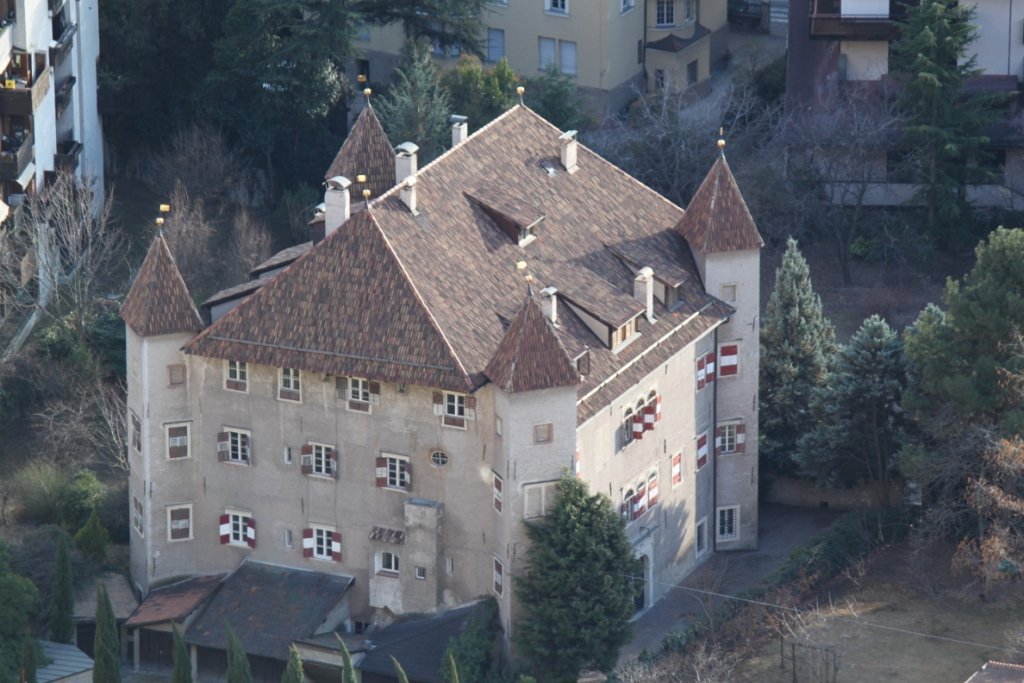 Starting a walking tour of Bolzano from a castle? It sounds counterintuitive, yet it’s the best way to begin your day. Castel Hörtenberg, also known as Ansitz Hörtenberg, is a Renaissance jewel that now houses a 5-star hotel, but its roots go back to the 15th century when it was a farmstead. The Hiertmair family transformed it into a noble residence, and later the Barons Giovanelli made it the seat of the municipality of Dodiciville. Strolling within its walls, you’ll immediately notice the four corner bay windows (Erker) with turrets, the signature of this style. The interior is a blend of antique furnishings and modern design, with artworks from the Podini collection. If time permits, step into the romantic garden: centuries-old trees and Mediterranean blooms frame the Dolomites, a UNESCO World Heritage site. Then, get ready to continue your journey: from here, the city center is just a few steps away, and the Dominican Church awaits you.
- Via Sant’Osvaldo – Oswaldweg, Bolzano (BZ)
- Open in Google Maps
- View on Google Images

You should go if…
Stop no. 2
Dominican Church: Gothic and Giotto-esque Frescoes
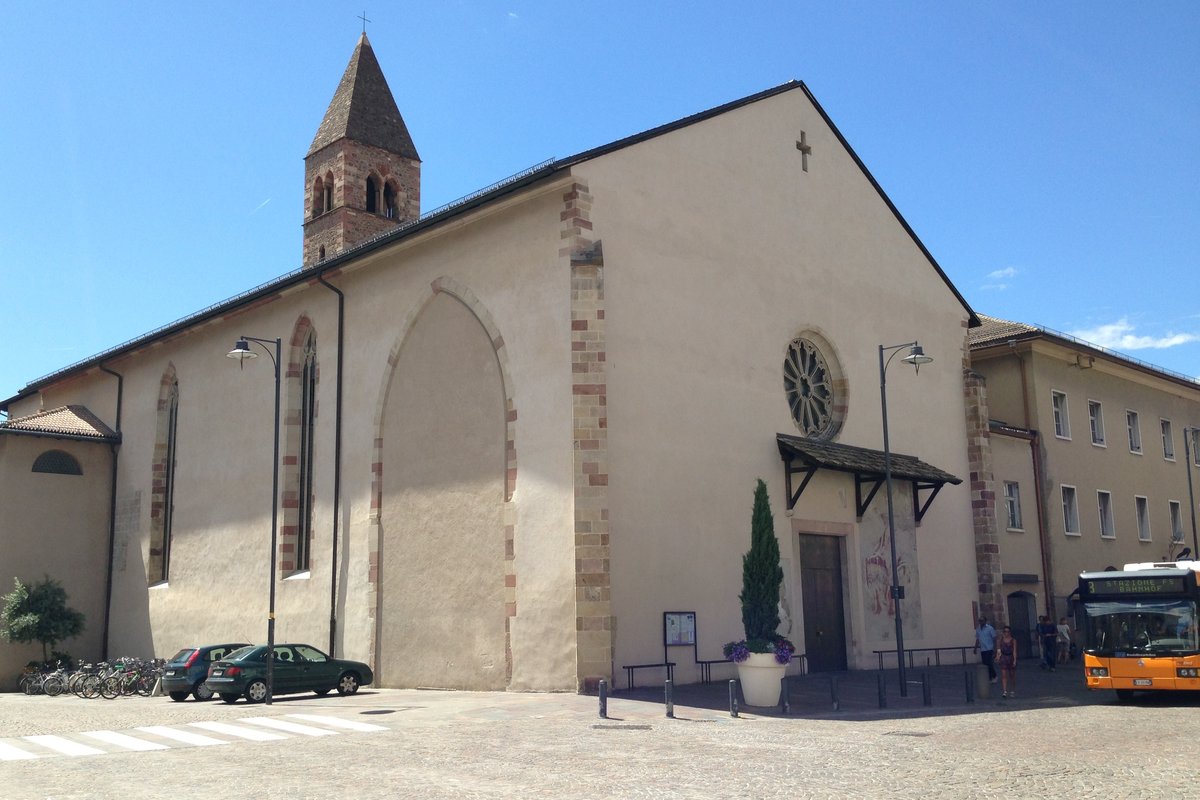 Leave Castel Hörtenberg behind and immerse yourself in the silence of Piazza Domenicani. Here, the Dominican Church welcomes you with its Gothic simplicity. Step inside and be amazed: three naves supported by octagonal pillars, ribbed vaults, and above the altar, a Guercino – the *Vision of Soriano* – that seems almost out of place in this medieval treasure chest. But the true gem is the Chapel of St. John to the right: a cycle of frescoes from the school of Giotto dating to the 14th century, depicting scenes from the lives of St. John and St. Nicholas. Look at the Triumph of Death and the Flight into Egypt – they look like they were painted yesterday. Don’t miss the cloister, accessible from Saturday: here Friedrich Pacher in 1496 frescoed the life of Christ, and the atmosphere of the convent still lingers. The church is open daily (Mon-Sat 9:30 AM – 5:00 PM, Sun 12:00 PM – 6:00 PM), admission is free. A corner of peace where the art of the past still speaks loudly.
- Piazza Domenicani – Dominikanerplatz, Bolzano (BZ)
- Open in Google Maps
- View on Google Images
You should go if…
Stop no. 3
The Statue of Walther von der Vogelweide
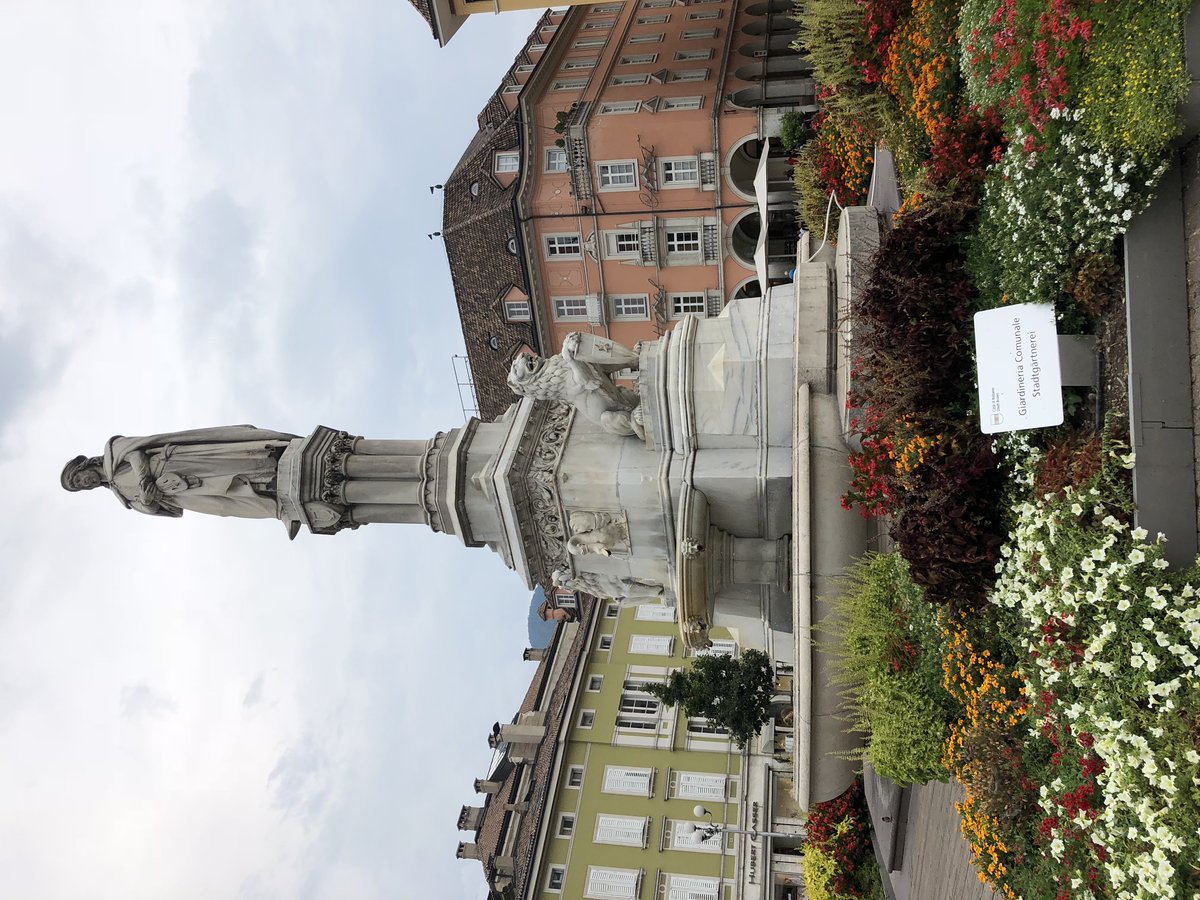 After the quiet of the church, the beating heart of Bolzano awaits you: Walther Square. At its center, the statue of Walther von der Vogelweide, in white Lasa marble, gazes at you pensively. Sculptor Heinrich Natter created it in 1889 in the Neo-Romanesque style: the poet sits on a rock, a vielle in hand, his gaze distant. The square is named after him, the most famous medieval Minnesänger, who sang of love and justice. On the base, inscribed verses that still seem to speak. The fountain at his feet, restored in 2020, offers a cool gurgle and reflections of light on the stone. During Fascism, the statue was removed and only in the 1980s did it return to its place, a symbol of this city’s dual soul. Now it’s a meeting point: tourists, cafés, bicycles. Stop for a moment: observe the details, the changing light, and think that here, in the Middle Ages, poets and emperors passed by.
- Piazza Walther – Waltherplatz, Bolzano (BZ)
- Open in Google Maps
- View on Google Images
You should go if…
Stop no. 4
South Tyrol Museum of Archaeology: The Ice of History
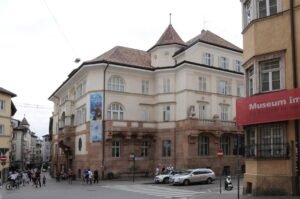
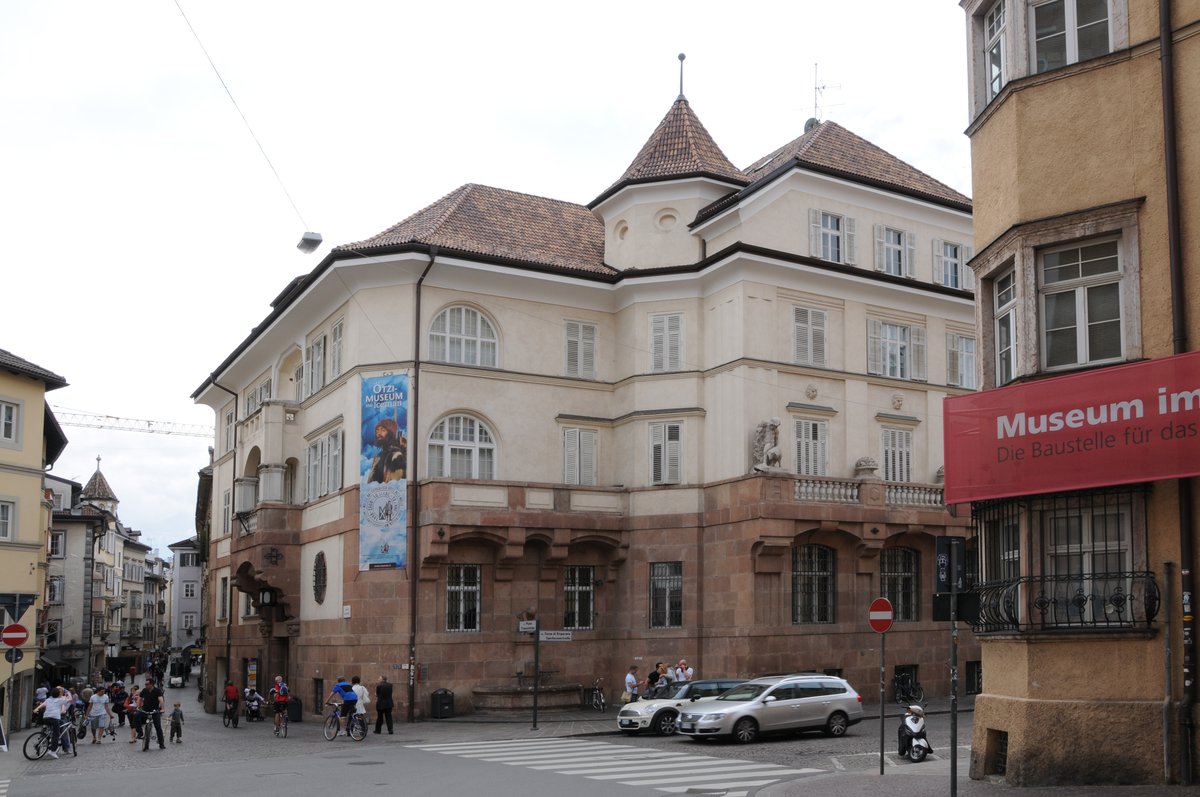 Leave Walther’s poetry behind and dive into prehistory: the South Tyrol Museum of Archaeology is just a few steps away. Here lies Ötzi, the Similaun mummy, discovered in 1991. The building, a former Bank of Italy from 1912, houses three floors of artifacts spanning from the Paleolithic to the Early Middle Ages. But the real star is him: Ötzi, who lived around 5,300 years ago. On the first floor, the cold storage chamber preserves the body and his original clothing—hides and woven straw. The tattoos on his back? Probably a form of prehistoric acupuncture. Every detail is an investigation: touch screens let you play detective in a cold case spanning millennia. Don’t miss the tools, like the birch bark container for carrying hot embers—a true lighter from the Copper Age. The museum is open Tuesday to Sunday, 10 am to 6 pm (closed Monday, except July and August). Full ticket €13, audio guide €4. Book online to avoid queues.
- Via Museo – Museumstraße 43, Bolzano (BZ)
- https://www.iceman.it
- Open in Google Maps
- View on Google Images
You should go if…
Stop no. 5
Frog Fountain – Froschbrunnen
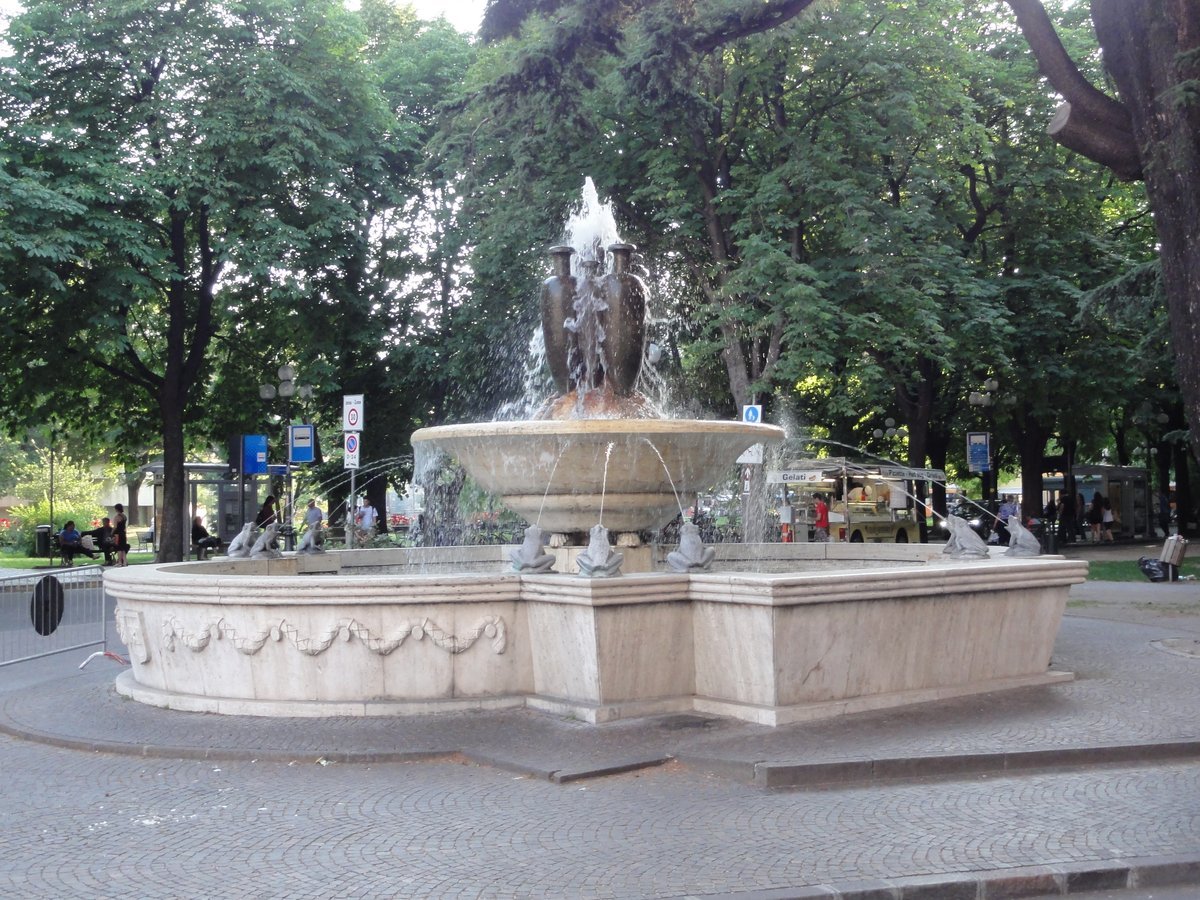 Just a few steps away lies another gem: the Frog Fountain, right in front of the station. Designed in 1929 by Ignaz Gabloner and Francesco Rossi, it was razed by a bomb on March 29, 1944, and rebuilt in 1955. Today it is a city symbol, with its 12 bronze frogs spraying water into a central bowl topped with 9 amphorae. The central jet once reached ten meters, now it settles for one. The basin is a 120-quintal travertine monolith, and in 2023 a €154,000 restoration brought back its former glory, with LED lighting enhancing it at night. It is the ultimate meeting point: ‘Meet me at the Frog Fountain,’ say Bolzano locals. A lively spot, perfect for a break before moving on.
- Viale della Stazione – Bahnhofsallee, Bolzano (BZ)
- Open in Google Maps
- View on Google Images
You should go if…
Stop no. 6
Victory Monument – Siegesdenkmal
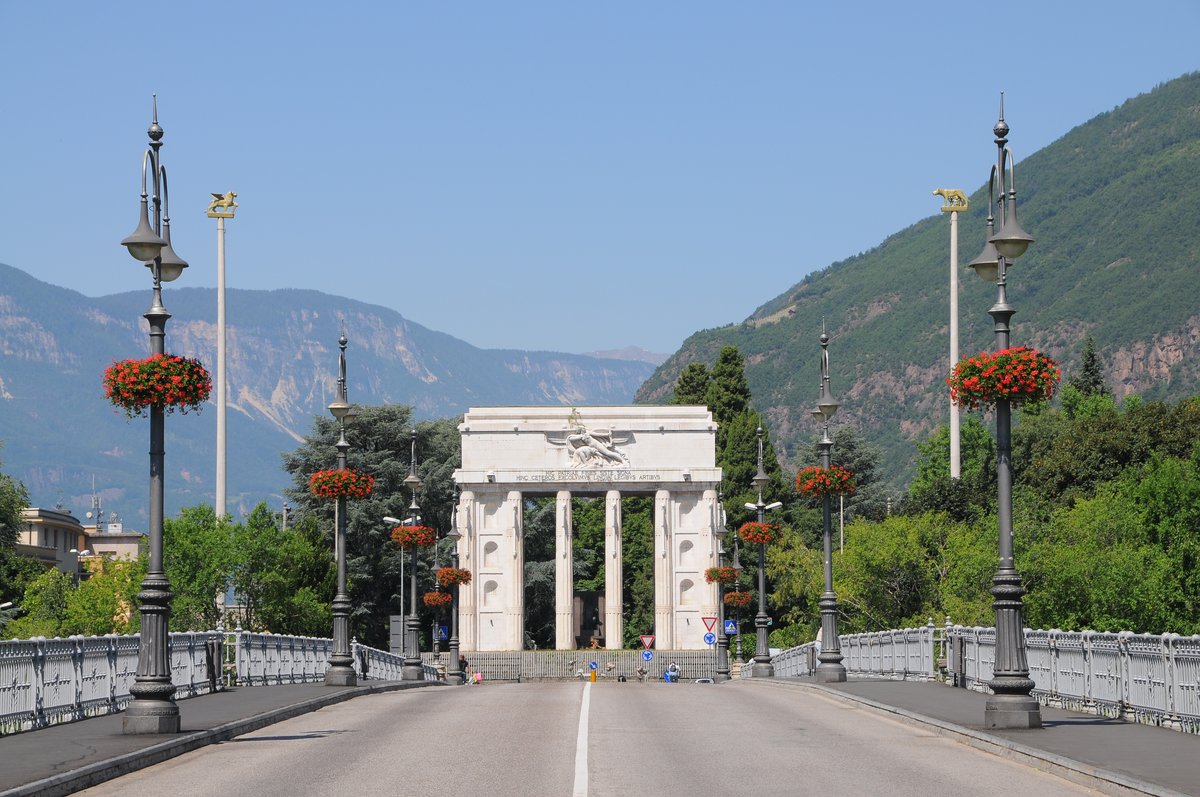 From the Frog Fountain, in a few minutes you arrive at the Victory Monument, an imposing marble triumphal arch commissioned by the fascist regime between 1926 and 1928. Designed by Marcello Piacentini, it celebrates the Italian victory in World War I, but for decades it was a symbol of division between linguistic groups. Today, however, it is an example of how a controversial monument can be transformed into a tool for peace: inside, since 2014, the exhibition “BZ ‘18–‘45. A monument, a city, two dictatorships” tells the local history between fascism and Nazism, with free admission (Tuesday–Sunday 10 AM–6 PM). The modern setup – with videos, panels, and a frescoed crypt – invites reflection without hiding contradictions. Outside, the monumental architecture impresses: columns with fasces, medallions, and a Latin inscription claiming the Italianness of the territory. A place that has turned from an offense into a history lesson, unmissable to understand Bolzano yesterday and today.
- Piazza della Vittoria – Siegesplatz, Bolzano (BZ)
- Open in Google Maps
- View on Google Images
You should go if…
Stop no. 7
Mariensäule, the Marian Column of Piazza Madonna
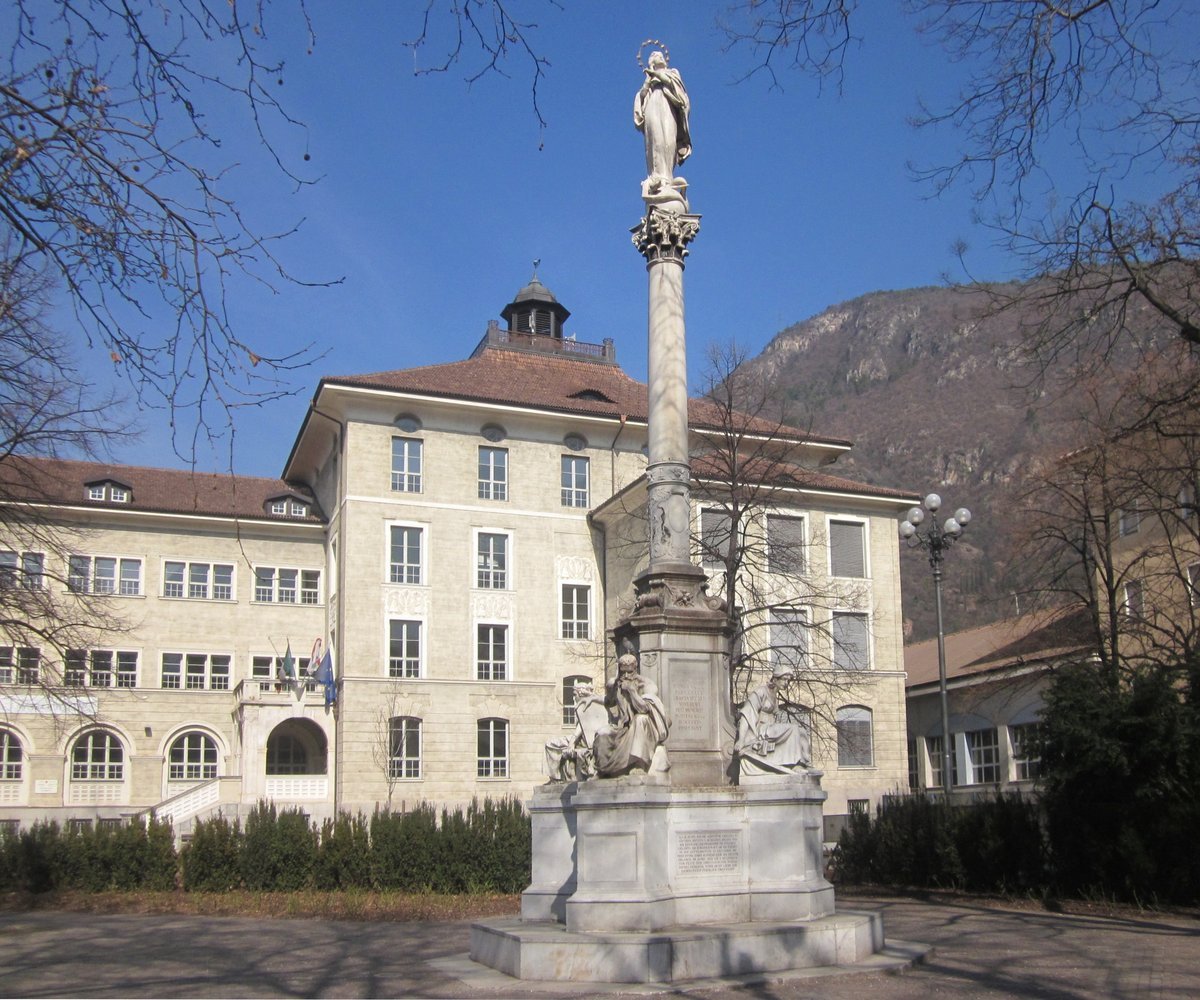 After reflecting on the complexities of the Victory Monument, you will find yourself in a completely different place: Piazza Madonna, with the Mariensäule at its center, a white marble Marian column dominating the square. It is not as imposing as the arch you just saw, but it has its own elegance: tall, slender, with the statue of the Immaculate Conception gazing toward the Goethe schools. Walking around it, you will notice that the marble is shiny, almost new. Thanks to the 2022 restoration, which cost 60,000 euros, it removed traces of vandalism and pollution. At the base, they added a metal band to stop micro-fractures – a detail that shows how much the community cares for this symbol. During my visit, there were some teenagers sitting on the steps chatting, and the statue seemed to watch over them. It is a peaceful corner, away from traffic, perfect for stopping for a moment and observing life go by. Here, history is not conflictual but serene: a votive column that has protected the city since the 1700s. A nice contrast from the monument before, isn’t it?
- Piazza della Madonna – Marienplatz, Bolzano (BZ)
- Open in Google Maps
- View on Google Images
You should go if…