
If you want to discover Ragusa authentically, away from the crowds, this one-day walking itinerary takes you through Baroque and hidden alleys. With 7 well-paced stops, you’ll start at Villa Margherita, pass through Palazzo della Cancelleria, and visit the historic center churches. Each stop is designed to soak up the city’s atmosphere without rushing. Ideal for those who love walking and want to immerse themselves in history. The route is all on streets and staircases, with some inclines but manageable. Don’t miss the architectural details of Baroque churches and the picturesque alley views. Practical: wear comfortable shoes and bring water. In one day you’ll have a complete experience of Ragusa.
🗺️ Your trip at a glance
This itinerary gives you an intense day among Baroque masterpieces and secret corners of Ragusa. Perfect for those wanting a slow but discovery-rich experience.
- Ideal for: curious travelers who love getting lost in historic alleys
- Highlights: 7 stops combining art, architecture, and old-world atmosphere
- For whom: those seeking a walking tour off the standard tourist circuit
Itinerary stops
Stop no. 1
Villa Margherita: Immersed in Greenery and History
 The first stop on this walking tour of Ragusa could only be a place where time seems to flow more slowly: Villa Margherita. This public garden, created in 1891 on a fill of mining waste materials, is now a 19,000-square-meter oasis in the heart of the city. As you enter from Via Palermo or Viale del Fante, a central avenue shaded by ancient trees welcomes you. Among them stands a majestic Ficus macrophylla, tall and mighty, with a circumference of 5 meters measured at chest height. Strolling among flowerbeds and benches, you’ll come across a small pond and a children’s playground. The villa, however, has a turbulent past: here once stood a basketball stadium and tennis courts, swallowed by a sinkhole in 1994. Today it’s a gathering place for families and young people, especially in summer. A perfect stop to calmly begin your itinerary through Ragusa’s baroque.
You should go if…
Stop no. 2
Church of Ecce Homo
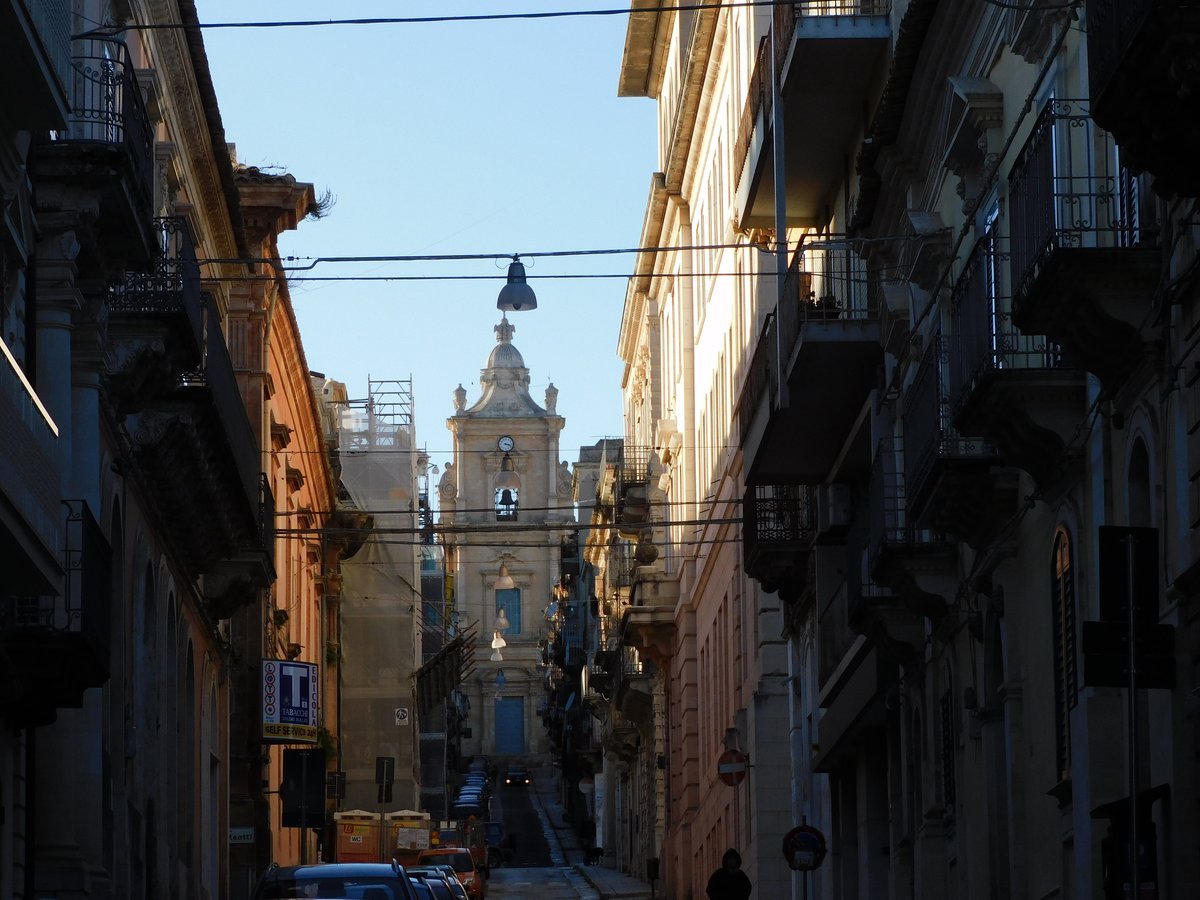 Leave the chaos behind and turn onto Via Ecce Homo: here the Church of Ecce Homo welcomes you with a tower facade that seems to reach for the sky. Built between 1808 and 1856 on the site of a small rural church dedicated to Our Lady of the Rosary, it is a gem of late Sicilian Baroque with neoclassical influences. As soon as you enter, you are struck by the particular light blue color of the stuccoes, unique in the Hyblaean area, crafted by the Sesta brothers in 1864. The 1857 Serassi organ is still functional, and if you’re lucky, you might hear its powerful sound. Don’t miss the artistic stained glass windows by Duilio Cambellotti (Nativity, Pentecost, and Christ Crowned with Thorns), which filter a warm light at sunset. In the left transept, an 18th-century wooden bust of Ecce Homo stares at you with an intense gaze. Take a moment of quiet: this church is often off the tourist trail, but it absolutely deserves a stop.
- Via Mentana, Ragusa (RG)
- Open in Google Maps
- View on Google Images
You should go if…
Stop no. 3
Church of St. Bartholomew
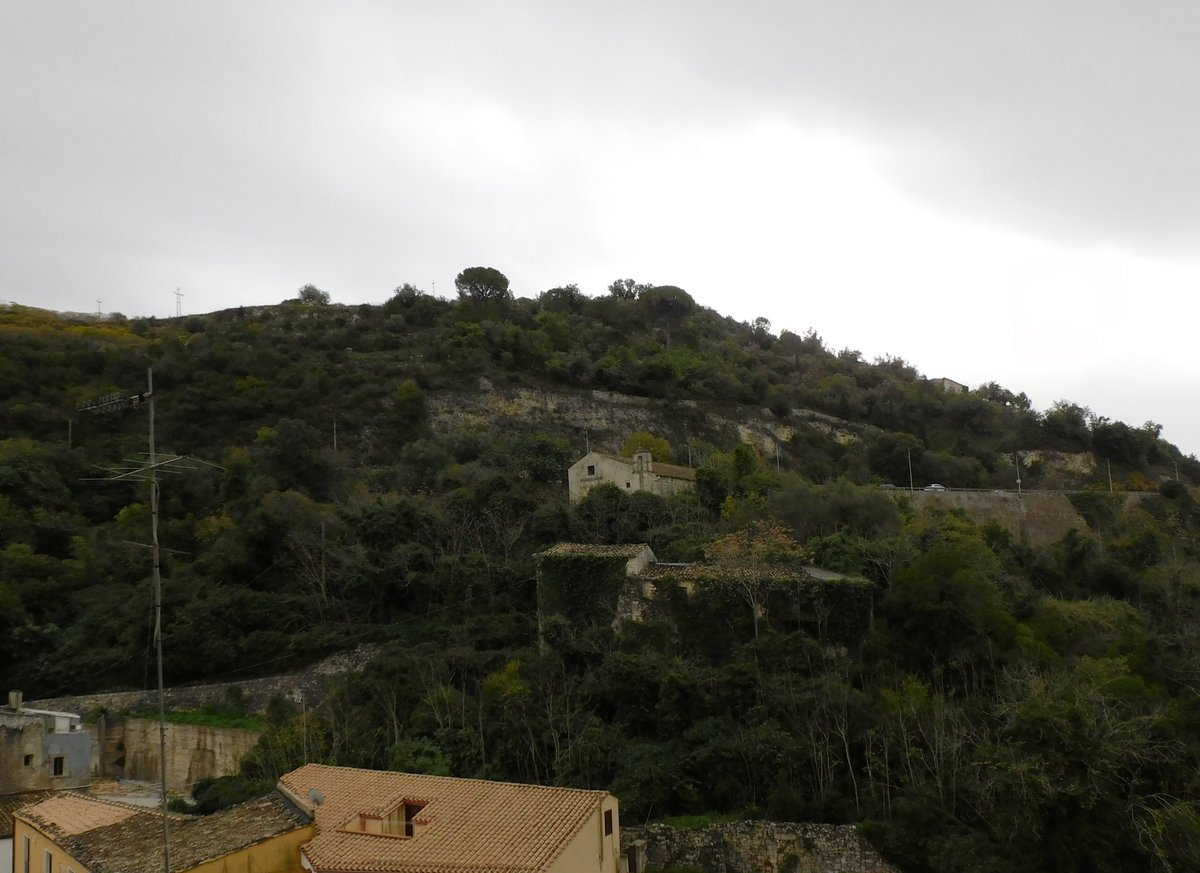 Continuing along via Risorgimento, in a few minutes you reach the Church of St. Bartholomew, one of the oldest in Ragusa. Built in the 16th century and survived the 1693 earthquake, it stands on a rocky spur overlooking the San Paolo neighborhood. The facade is simple, almost bare, with a small bell tower bearing the date 1696. Enter and let yourself be amazed by the intimate atmosphere: the single-nave interior preserves only a few remnants of altars, but the real surprise is the statue of St. Bartholomew, a gaunt face without limbs that seems to tell a story of abandonment and rebirth. Forgotten for decades in the storerooms of the curia, it was restored in 2016 and today is back here, in a side niche. From the church you enjoy an incredible view of Ragusa Ibla, a true balcony over the baroque city. Today the church is run by a cultural association that organizes events, concerts, and exhibitions: if you’re lucky, you might visit during a performance. A place off the tourist trail, which gives you an authentic emotion.
- Via Risorgimento, Ragusa (RG)
- Open in Google Maps
- View on Google Images
You should go if…
Stop no. 4
Church of Saint Joseph
 After leaving the Church of Saint Bartholomew, you wander through the alleys of Ragusa Ibla until you reach the majestic Church of Saint Joseph, overlooking Corso Venticinque Aprile. Built starting in 1756 to a design attributed to Rosario Gagliardi, it replaced the former church of Saint Thomas, destroyed by the 1693 earthquake. The convex façade, typical of Sicilian Baroque, is a triumph of sculpture: three orders rich with statues of Benedictine saints (Saint Benedict, Saint Maurus, Saint Gertrude, Saint Scholastica). The oval interior welcomes you with a quiet, almost intimate atmosphere. Here you can admire the fresco of the Glory of Saint Joseph by Sebastiano Monaco (1793) and the painting of the Holy Family by Matteo Battaglia, known as ‘Madonna of the Cherries’. Don’t miss the eighteenth-century statue of Saint Joseph clad in silver, a masterpiece of Neapolitan craftsmanship. The black and white stone floor and majolica tiles complete an environment that seems suspended in time, far from the tourist crowds.
- Go to the page: Church of San Giuseppe Ragusa: Baroque Convex Facade and Gilded Interiors
- Corso Venticinque Aprile, Ragusa (RG)
- Open in Google Maps
- View on Google Images
You should go if…
Stop no. 4
Church of Saint Joseph
After leaving the Church of Saint Bartholomew, you wander through the alleys of Ragusa Ibla until you reach the majestic Church of Saint Joseph, overlooking Corso Venticinque Aprile. Built starting in 1756 to a design attributed to Rosario Gagliardi, it replaced the former church of Saint Thomas, destroyed by the 1693 earthquake. The convex façade, typical of Sicilian Baroque, is a triumph of sculpture: three orders rich with statues of Benedictine saints (Saint Benedict, Saint Maurus, Saint Gertrude, Saint Scholastica). The oval interior welcomes you with a quiet, almost intimate atmosphere. Here you can admire the fresco of the Glory of Saint Joseph by Sebastiano Monaco (1793) and the painting of the Holy Family by Matteo Battaglia, known as ‘Madonna of the Cherries’. Don’t miss the eighteenth-century statue of Saint Joseph clad in silver, a masterpiece of Neapolitan craftsmanship. The black and white stone floor and majolica tiles complete an environment that seems suspended in time, far from the tourist crowds.- Go to the page: Church of St. Joseph: The Baroque Jewel of Ragusa Ibla
- Corso Venticinque Aprile, Ragusa (RG)
- Open in Google Maps
- View on Google Images
You should go if…
Stop no. 5
Church of San Francesco all’Immacolata
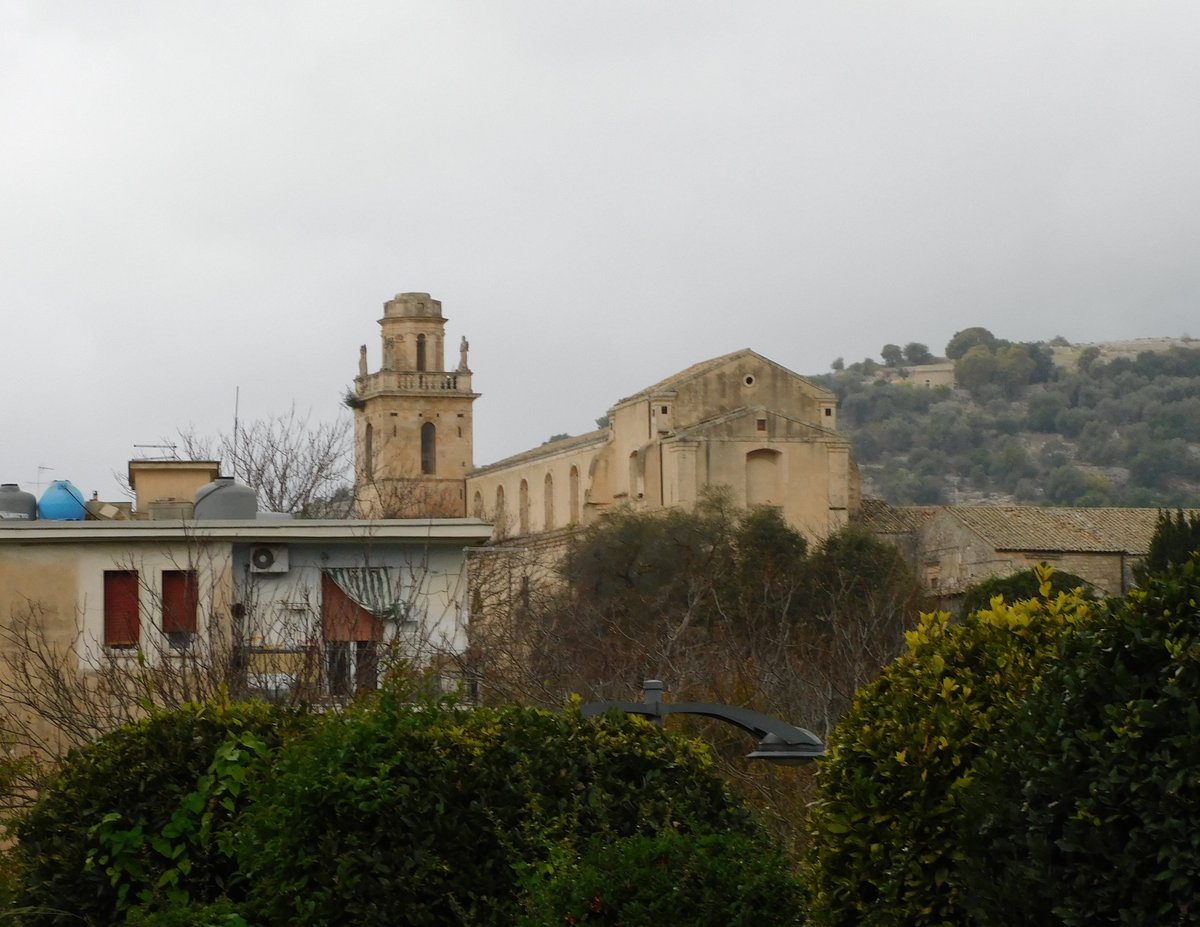 From San Giuseppe, you make your way up to the higher part of Ibla until you reach one of Ragusa’s oldest churches: the Church of San Francesco all’Immacolata. Its origins date back to the second half of the 13th century, when the Franciscans settled here, away from the center, to live in poverty. The 1693 earthquake caused enormous damage, but the Baroque reconstruction preserved precious Gothic remnants: the portal with hook-shaped capitals and the base of the bell tower from the Swabian era. You enter through the side door, and the three-nave interior surprises you with its spaciousness, among the largest in Ibla. The side aisles are a succession of small chapels with flattened domes, while on the high altar a wooden tribune from 1906 houses the statue of the Immaculate Conception. Don’t miss the Arezzo di Donnafugata chapel, with sarcophagi and a beautiful wrought-iron gate. The atmosphere is intimate, far from the tourist bustle: here, time seems to have stood still.
- Go to the page: Church of San Francesco all’Immacolata: Baroque Frescoes and 18th-Century Organ in Ragusa Ibla
- Discesa Peschiera, Ragusa (RG)
- Open in Google Maps
- View on Google Images
You should go if…
Stop no. 6
Former Church of San Vincenzo Ferreri: History and Rebirth
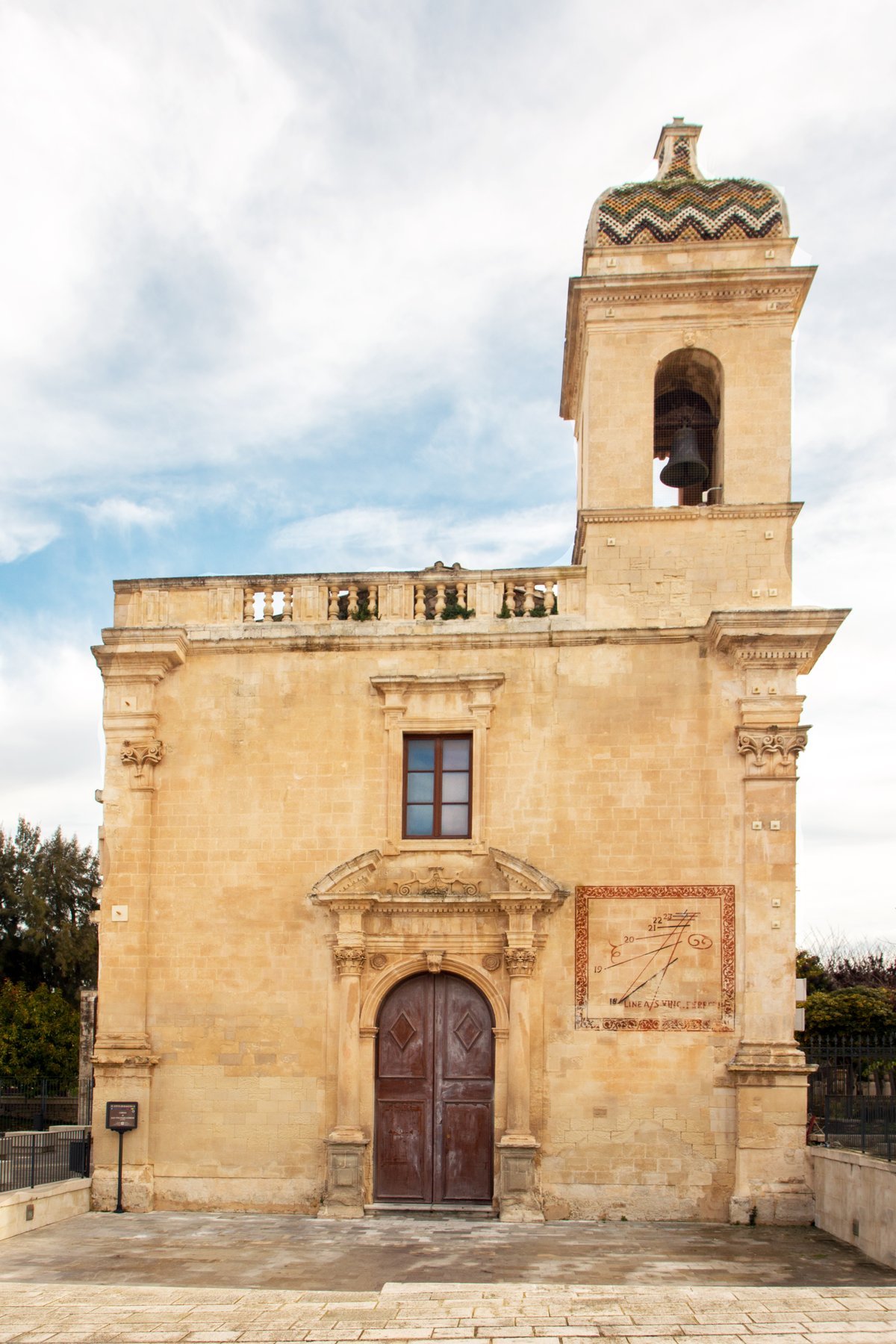 Continuing from the heart of Ibla, you arrive at the former church of San Vincenzo Ferreri, right at the entrance of the Giardini Iblei. Founded in 1509 by the Dominican friars, it was damaged by the 1693 earthquake but was repaired and enriched in the 18th century. In the 20th century, unfortunately, it fell into disuse and the roof collapsed. Only between 2004 and 2010 a restoration brought it back to life, transforming it into a public auditorium with 140 seats. The limestone ashlar facade features a Baroque portal and a bell tower with a spire decorated with colorful zig-zag tiles. Don’t miss the large sundial with Italian hours. Inside, a single nave and semicircular apse, with twisted columns and a fresco of an urban landscape. Today it hosts exhibitions, concerts, and conferences: a place that combines history and contemporary culture.
- Viale delle Palme, Ragusa (RG)
- Open in Google Maps
- View on Google Images
You should go if…
Stop no. 7
Palazzo della Cancelleria
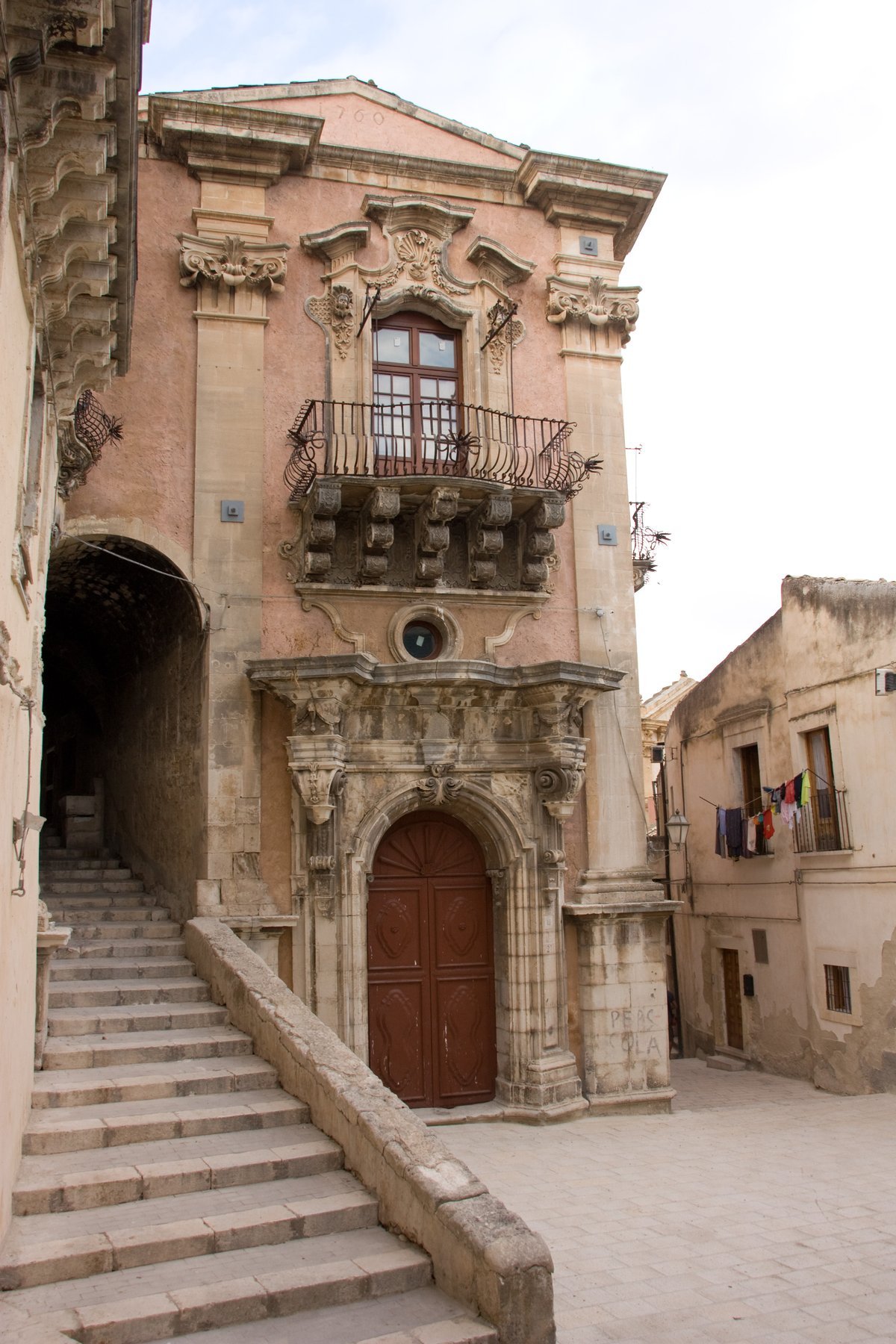 The final stop takes you to Salita Commendatore, where Palazzo della Cancelleria brings this itinerary to a beautiful close. Built by the Nicastro family in the first half of the 18th century and completed in 1760, it is a jewel of Ragusan Baroque. The main façade overlooks a small square where two ramps of the staircase that once connected the lower district to the upper one converge. The balcony is the highlight: supported by five enormous three-volute corbels, with a bulging wrought-iron railing and pilasters with cherub faces. Below, the entrance portal – added later – protrudes a bit awkwardly, but does not detract from the overall charm. The palace was purchased by the municipality in the 19th century and became the seat of the Chancellery, from which it takes its name. Today, after a 1 million euro restoration by the Fondo Cultura, it awaits a new life. Together with the Church of Itria and Palazzo Cosentini, it forms the city’s most important Baroque complex.
- Vico Evangelista, Ragusa (RG)
- https://www.comune.ragusa.gov.it/turismo/unesco/05cancelleria.html
- Open in Google Maps
- View on Google Images
You should go if…


