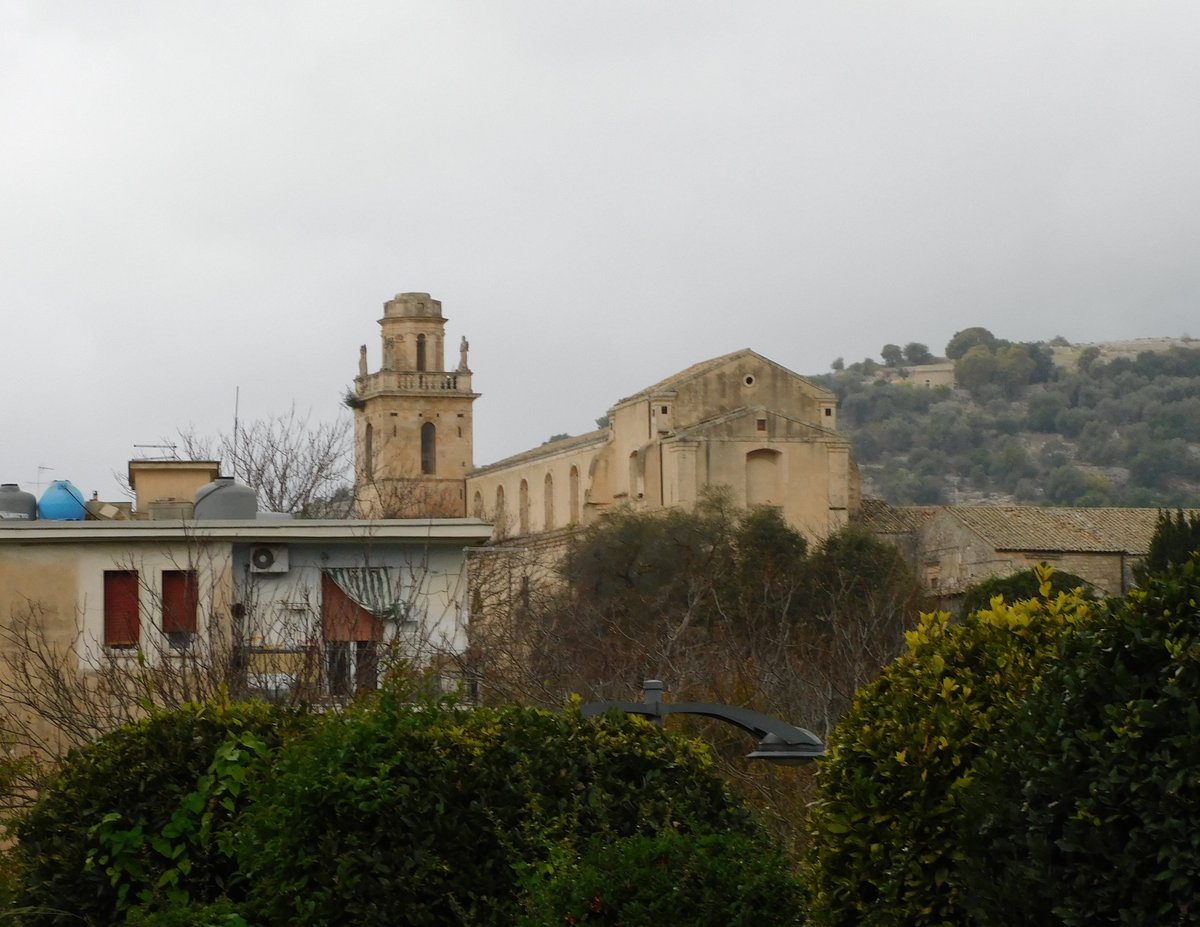
The Church of San Francesco all’Immacolata in Ragusa Ibla is a gem of Sicilian Baroque, rebuilt after the 1693 earthquake. Located in the heart of the UNESCO-listed historic center, it offers vivid frescoes, unique architectural details, and an authentic atmosphere, with free admission and proximity to points of interest like the Cathedral of San Giorgio.
- 18th-century frescoes on the vault depicting scenes from the life of Saint Francis
- Historic 18th-century organ still functioning for concerts
- Entrance portal with twisted columns and decorated capitals
- Strategic location in Ragusa Ibla, perfect for walking itineraries through the Baroque historic center
Introduction
As soon as you see it, you immediately understand that this church is not just another one. The Church of San Francesco all’Immacolata in Ragusa strikes you with its Baroque facade that seems to dance under the Sicilian sun. It’s one of those places that instantly makes you feel in the heart of the Val di Noto, without needing any explanation. Its location, at the top of a staircase in the historic center of Ragusa Ibla, gives an immediate sense of discovery. Upon entering, your eye is captured by the frescoes and golden details: it’s not just a monument, but a visual experience that stays with you. Personally, I stopped to watch for a long time the light filtering through the windows, creating plays of shadow on the marbles. It’s a place that speaks for itself, with a discreet yet powerful elegance.
Historical Background
The history of this church is inextricably linked to the 1693 earthquake that razed much of eastern Sicily to the ground. Rebuilt in the eighteenth century, it perfectly represents the Baroque rebirth of the Val di Noto. The works were led by local architects, and it is said that the interior stuccoes are the work of Ragusan craftsmen who also worked in other churches in the area. It is not a cathedral, but it has enormous social importance for the community: for centuries it has been a point of reference for confraternities. Upon close observation, additions and restorations from later periods can be noted, such as some nineteenth-century paintings. The timeline helps to frame the key moments:
- Before 1693: a previous church existed, of which few traces remain.
- After 1693: reconstruction begins in Sicilian Baroque style.
- Eighteenth century: completion of the facade and interiors with frescoes and stuccoes.
- Nineteenth and twentieth centuries: maintenance work and minor restorations.
- Today: it is an integral part of the UNESCO site “The Late Baroque Towns of the Val di Noto”.
The Frescoes That Tell Stories
Inside, what truly surprises are the frescoes. They are not mere decorations, but true pictorial narratives. One in particular, on the vault, depicts scenes from the life of Saint Francis with colors still vivid despite the centuries. You look at them and wonder how they managed to retain that freshness. The details are meticulous: facial expressions, the drapery of garments, architectural backgrounds that seem real. I noticed that many visitors pass by quickly, but it’s worth looking up and getting lost in these paintings. There is a particular technique in the use of pictorial light that creates almost three-dimensional effects. In my opinion, they are the soul of the church, even more so than the external architecture. Some attribute them to painters of the Neapolitan school, but there are no absolute certainties: the mystery remains, which makes them fascinating.
Architectural details not to be missed
Beyond the frescoes, the church is a treasure trove of small architectural details. The entrance portal, with its twisted columns and decorated capitals, is a masterpiece of Baroque sculpture. Then there are the stuccoes: they are not just ornamental elements, but hide religious symbols and floral motifs typical of Sicily. I counted at least three different types of marble used for the floor, each with unique veining. Another element that struck me is the arrangement of the side chapels: they are not all the same, each has its own personality, with different altars and niches housing statues. Even the dome, seen from the inside, has an optical effect that makes it appear taller than it actually is. These are details you might not notice immediately, but they make the difference between an ordinary church and a work of art.
Why Visit It
Visiting this church is worthwhile for at least three concrete reasons. First, it’s a perfect and accessible example of Sicilian Baroque, without the crowds of more famous cathedrals: you can admire it at your own pace. Second, the interior frescoes are in an exceptional state of preservation for a non-museum church, offering a glimpse into 18th-century sacred painting. Third, its location in Ragusa Ibla allows you to combine the visit with a stroll through the historic center, one of Italy’s most beautiful. Additionally, admission is free, which is not a given for monuments of this kind. Personally, I found it more authentic than other Baroque churches because it still feels alive, used by the local community for services. It’s not just a postcard, but a place that breathes.
When to go
The best time? Early afternoon, when the sun grazes the facade, highlighting every relief and decoration. In summer, avoid the hottest hours because it can get stuffy inside, despite the stone keeping it cool. In spring and autumn, however, the light is softer and the atmosphere more peaceful. I’ve noticed that early in the morning there are few people, but the facade is in shadow. A candid tip: go during a religious service? Perhaps yes, because hearing the organ play in that context is an emotional experience, but check the schedule as it’s not fixed. Generally, I prefer weekdays: weekends can be more crowded with tourists on day trips from Syracuse.
In the Surroundings
After your visit, I recommend two nearby experiences that complete the picture. First, a stroll through Ragusa Ibla, the UNESCO World Heritage Baroque quarter surrounding the church: alleyways, noble palaces, and panoramic viewpoints over the valley. Then, if you wish to delve deeper into Baroque art, there’s the Cathedral of San Giorgio, just a few minutes’ walk away, with its imposing dome dominating the skyline. For a thematic experience, seek out the artisan workshops working with pitch stone, a local material also used in the church. Or, if you’re hungry, stop by one of the historic pastry shops to taste Ragusa’s cannoli: the combination of Baroque art and Sicilian sweetness is perfect. No need to go far—everything is within walking distance.